Study Notes
Overview
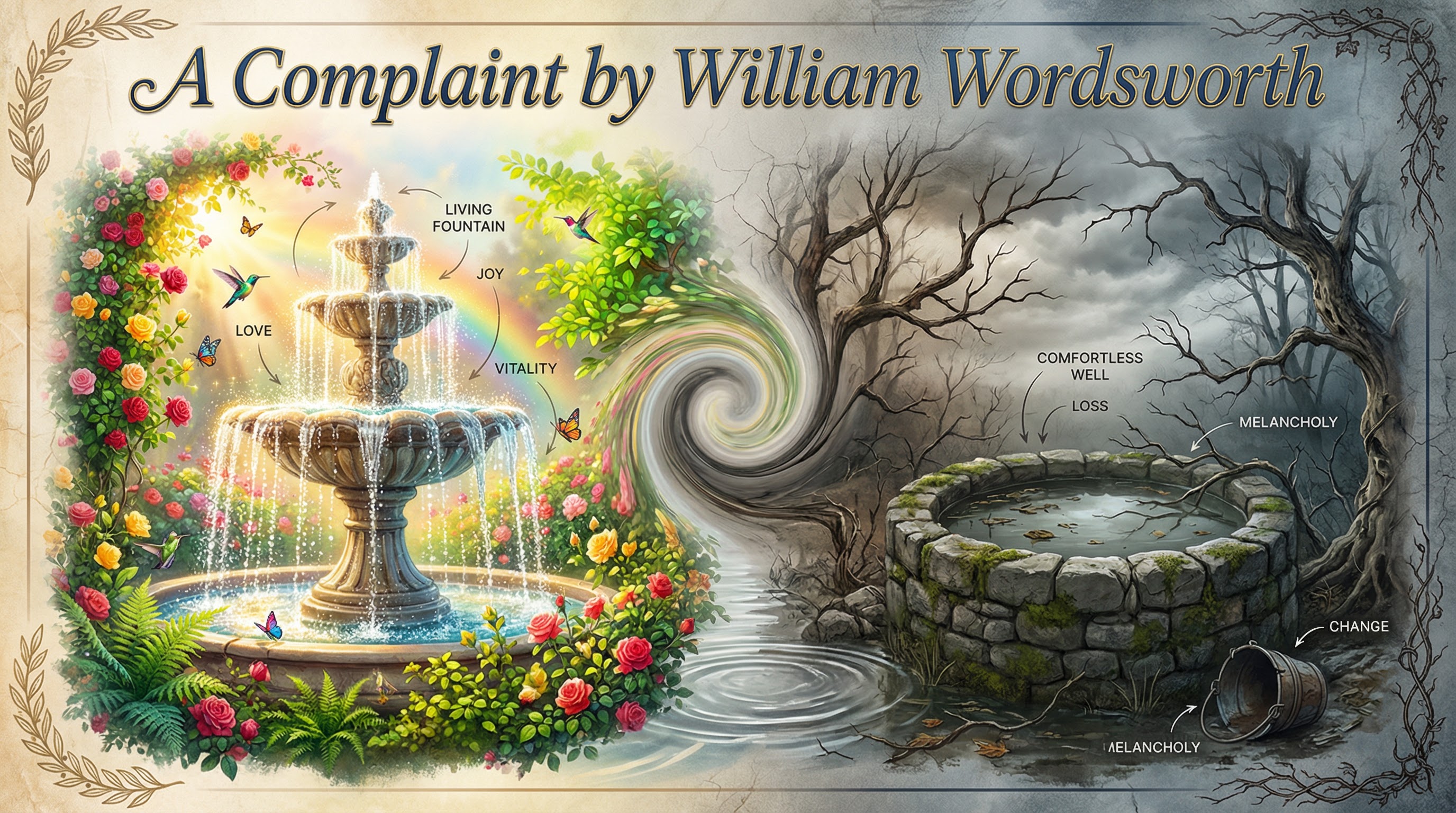
William Wordsworth’s 'A Complaint' is a short, fourteen-line lyrical poem that charts the speaker's profound sense of loss following the cooling of a close friendship. For the OCR GCSE English Literature exam, this poem is a gift for candidates who can confidently analyse its central extended metaphor: the transformation of a relationship from a dynamic, 'living' fountain to a 'comfortless', stagnant well. Examiners are looking for a clear understanding of this metaphor as a representation of the shift from spiritual wealth to emotional poverty. Credit is given for analysing the poem's tight structure, its shift in tense, and its melancholic tone. A strong response will also integrate contextual understanding of Romanticism, particularly the high value placed on intense emotional connections and the sanctity of friendship, possibly linking it to the well-documented rift between Wordsworth and his contemporary, Samuel Taylor Coleridge. The key to high marks is to sustain a comparative analysis with another poem from the 'Love and Relationships' cluster, focusing on how both texts explore themes of loss, memory, or estrangement.
Plot/Content Overview
The poem is not a narrative but a lyrical expression of feeling, structured in two distinct parts.
-
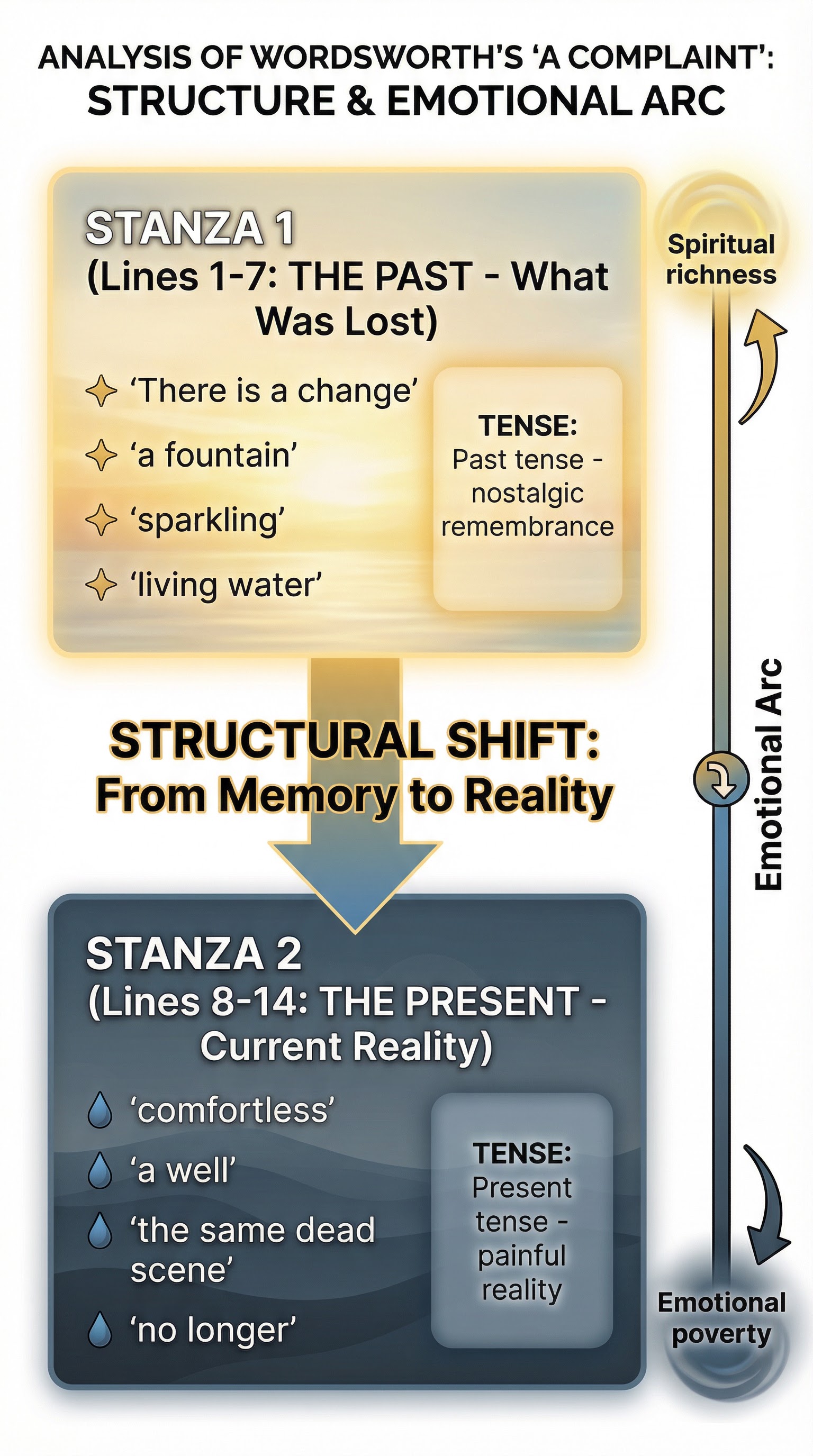
Stanza 1 (Lines 1-7): The Past. The speaker begins by stating bluntly, "There is a change, and I am poor." He reflects on a time when his friend's affection was like a "fountain" of "living water," a source of constant joy and vitality that he perhaps took for granted ("I lavish'd them, and did not fear"). This section is characterised by nostalgia and a sense of a vibrant, abundant past.
-
Stanza 2 (Lines 8-14): The Present. The tone shifts dramatically. The friendship is no longer a fountain but a "comfortless and hidden well." The speaker laments that while the love might still exist deep down ("I trust it is, — and never dry"), it is now inaccessible, sleeping "in silence and obscurity." The final rhetorical question, "What matter?", underscores his profound sense of desolation and the functional death of the connection.
Themes
Theme 1: The Pain of Loss and Change
This is the central theme of the poem. Wordsworth presents the change not as a dramatic event, but as a slow, painful decay that leaves the speaker in a state of emotional poverty. The poem is a lament for what has been lost, a feeling of grief for a connection that was once life-giving but is now stagnant.
Key Quotes:
- "There is a change; — and I am poor" - The caesura (the pause created by the dash) forces the reader to stop and absorb the weight of this declaration. The poverty described is purely emotional.
- "Such change, and at the very door / Of my fond heart, hath made me poor." - The repetition of "poor" at the end of the stanza emphasizes the totality of his loss. The phrase "at the very door" conveys the intimacy and shock of this change.
Theme 2: Memory vs. Reality
The poem is built on a stark contrast between the memory of the past and the reality of the present. The first stanza is a fond recollection of a joyful time, while the second is a bleak assessment of the current situation. This structural division highlights the speaker's inability to reconcile what was with what is.
Key Quotes:
- "A fountain, at my fond heart's door; / Whose only business was to flow" - This memory is of effortless, constant affection.
- "Now, for that consecrated fount / Of murmuring, sparkling, living love, / What have I? shall I dare to tell? / A comfortless and hidden well." - The direct contrast is made explicit with the word "Now". The series of questions reveals his hesitation and pain in confronting the new reality.
Writer's Methods
-
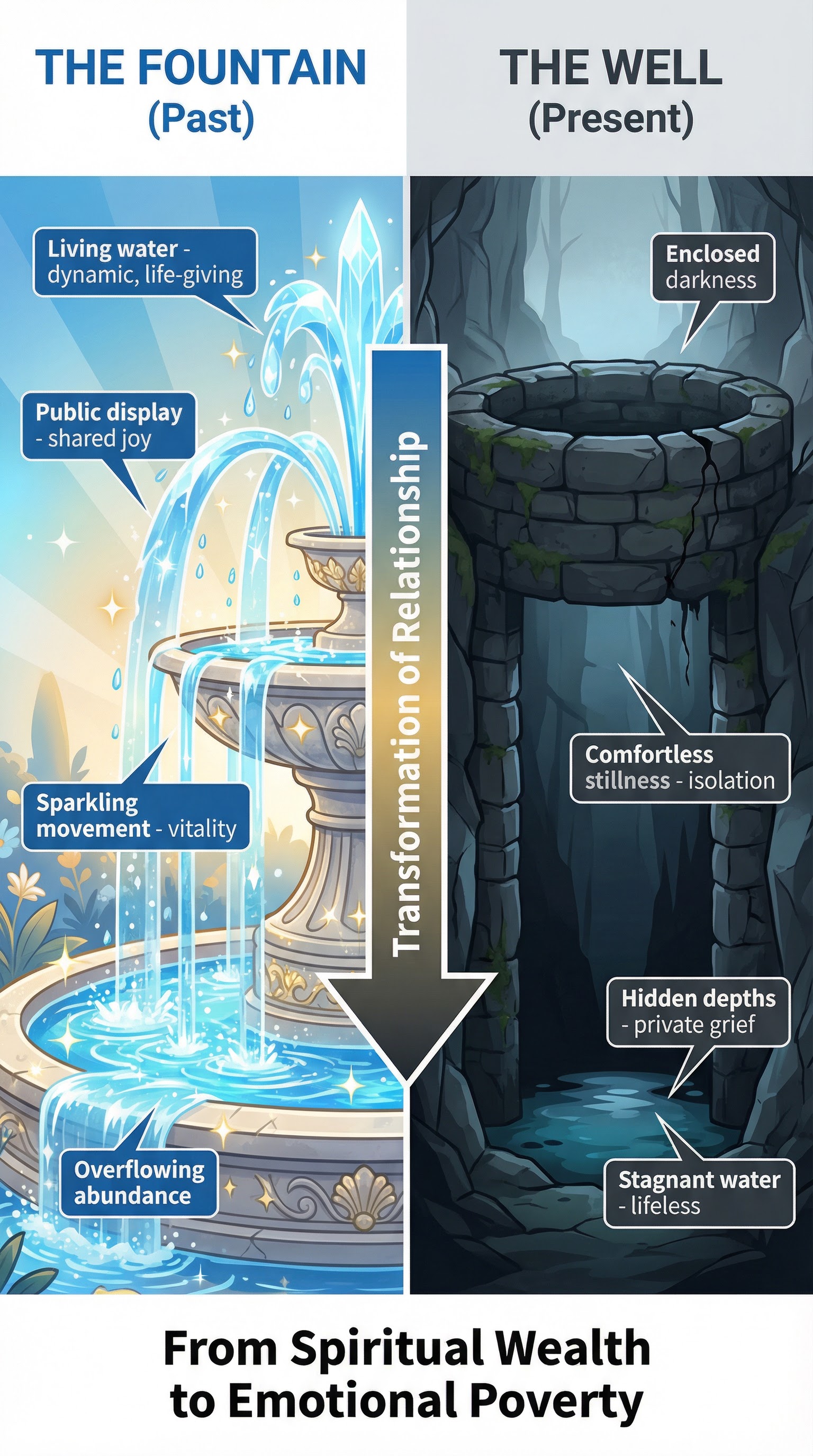
Extended Metaphor: This is the most important technique. The entire poem is built around the contrast between the fountain and the well. Candidates must analyse the specific connotations of each: the fountain represents life, dynamism, public joy, and abundance, while the well represents stagnation, darkness, hiddenness, and emotional death. Credit is given for exploring the semantic fields associated with each (e.g., 'sparkling', 'living' vs. 'hidden', 'sleep').
-
Structure: The poem's structure is crucial. It is composed of two seven-line stanzas (septets). The first stanza focuses on the past, using past tense verbs. The second stanza shifts to the present, using present tense verbs. This clear structural shift mirrors the emotional journey of the speaker from nostalgic remembrance to painful present reality. Examiners reward candidates who can comment on this structural device.
-
Tone: The tone is melancholic, resigned, and deeply sorrowful. It is not angry or bitter, which distinguishes it from other poems in the cluster like 'Neutral Tones'. The speaker is not accusing his friend but mourning the loss of their connection. The use of rhetorical questions ("What matter?") contributes to this sense of hopeless resignation.
-
Caesura and Enjambment: Wordsworth uses punctuation to control the pace and mood. The frequent use of caesurae (pauses within lines, often with dashes) creates a hesitant, pained rhythm, as if the speaker is struggling to articulate his grief. For example, "A well of love — it may be deep — / I trust it is, — and never dry:".
Context
-
Romanticism: As a key figure in the Romantic movement, Wordsworth valued intense personal emotion, the power of nature, and the sanctity of the individual's inner world. Friendships, for the Romantics, were not casual but profound spiritual bonds. The grief expressed in the poem is therefore not trivial but a deep spiritual wound. This is crucial AO3 information.
-
Biographical Context (Wordsworth and Coleridge): While not essential for high marks, understanding that the poem is likely inspired by Wordsworth's cooling friendship with fellow poet Samuel Taylor Coleridge can add a layer of depth. Their creative and personal relationship was incredibly intense and its breakdown caused Wordsworth significant pain. However, candidates must avoid simply narrating this story and instead link it to the poem's themes of lost intimacy and spiritual connection.
-
Lyrical Poetry: The poem is a lyric, a form that expresses personal emotions or feelings, typically spoken in the first person. Its purpose is not to tell a story but to explore a state of mind, which is exactly what 'A Complaint' does.