Study Notes
Overview
Jane Austen's Pride and Prejudice, first published in 1813, remains a cornerstone of English literature and a rewarding text for GCSE study. More than just a love story, the novel is a sharp and witty critique of the Regency era's social conventions, particularly the marriage market and the constraints placed upon women. For the OCR J352 Component 02 exam, candidates are expected to demonstrate a sophisticated understanding of the text, moving beyond plot summary to a critical analysis of Austen's methods and the interplay of character, theme, and context. Examiners look for a sustained, integrated argument that uses the provided extract as a launchpad to explore the entire novel. A successful response will seamlessly blend critical analysis (AO1), detailed exploration of language, form, and structure (AO2), and a nuanced understanding of the social and historical context (AO3).
Plot/Content Overview
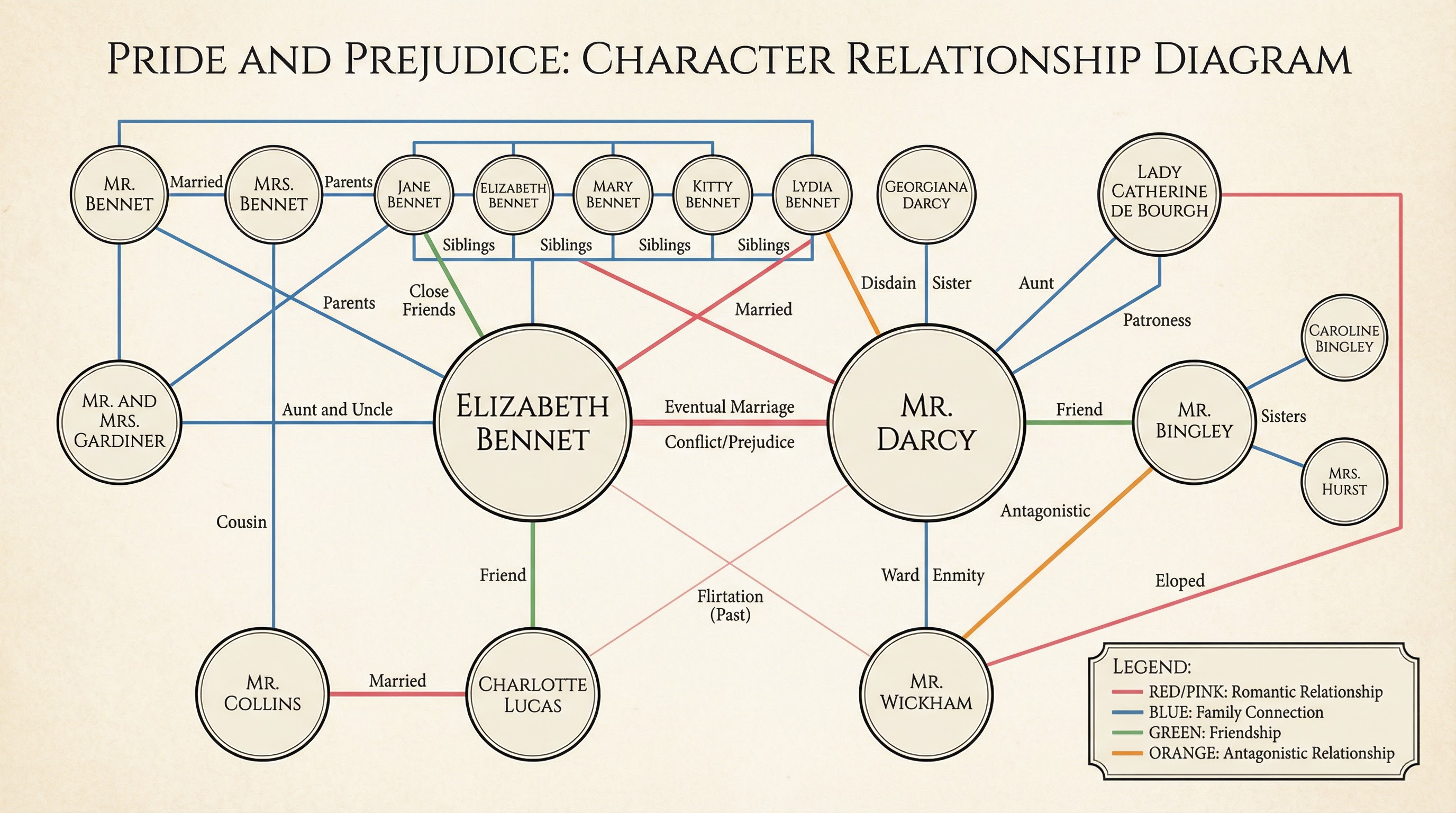
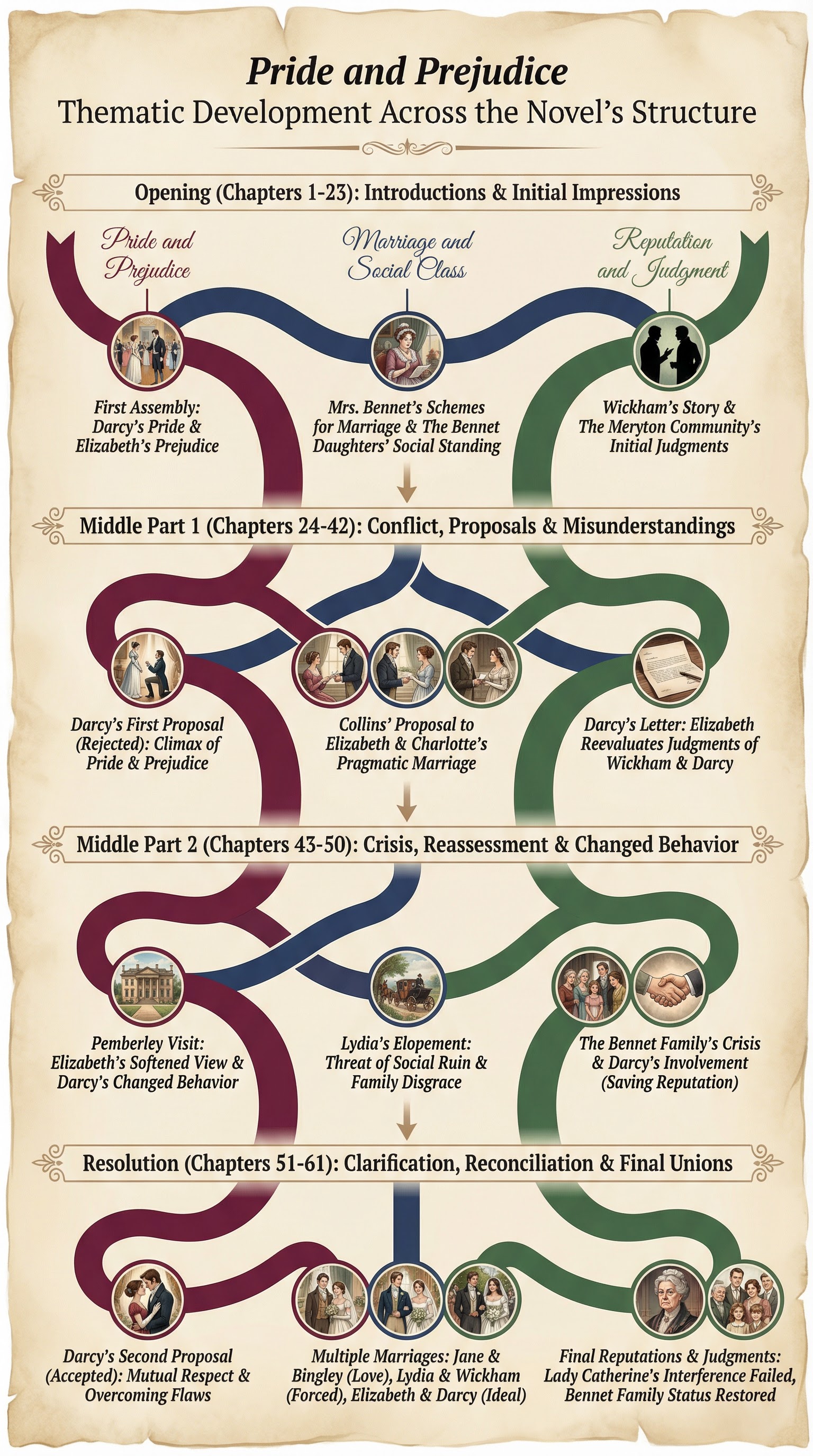
The novel follows the Bennet family, particularly the second daughter, Elizabeth, as she navigates the complexities of love, marriage, and social standing in early 19th-century England. The arrival of the wealthy and eligible Mr. Bingley and his proud friend, Mr. Darcy, sets in motion a series of events that challenge the characters' initial perceptions and prejudices. The plot is driven by the central conflict between Elizabeth's spirited intelligence and Darcy's aristocratic pride. Key events include the Meryton assembly, where Darcy snubs Elizabeth; Mr. Collins's absurd marriage proposal; Wickham's deceptive tales about Darcy; Darcy's first, disastrous proposal to Elizabeth; Lydia's scandalous elopement with Wickham; and finally, the resolution of misunderstandings, leading to the marriages of Jane and Bingley, and Elizabeth and Darcy.
Themes
Theme 1: Pride and Prejudice
This central theme is embodied by the two protagonists. Darcy's pride is evident from his first appearance, where he dismisses Elizabeth as "tolerable, but not handsome enough to tempt me." His arrogance is a product of his high social standing and wealth. Elizabeth's prejudice is formed by this initial insult and fueled by Wickham's lies. Her journey is one of recognizing her own prejudices, famously admitting, "Till this moment I never knew myself." Austen suggests that both pride and prejudice must be overcome for true understanding and happiness to be achieved.
Key Quotes:
- "She is tolerable, but not handsome enough to tempt me." (Chapter 3) - Darcy's initial assessment of Elizabeth, revealing his pride and class snobbery.
- "Till this moment I never knew myself." (Chapter 36) - Elizabeth's moment of anagnorisis after reading Darcy's letter.
Theme 2: Marriage and Social Class
In Regency England, marriage was often a financial transaction rather than a romantic union. Austen explores this theme through various couples. Charlotte Lucas's marriage to Mr. Collins is a pragmatic choice for security, as she explains, "I am not romantic, you know; I never was." Lydia's elopement with Wickham is driven by youthful infatuation and leads to near-disaster. The ideal marriage, as presented through Elizabeth and Darcy, is one based on mutual respect, love, and intellectual compatibility, transcending social barriers.
Key Quotes:
- "It is a truth universally acknowledged, that a single man in possession of a good fortune, must be in want of a wife." (Chapter 1) - The famous opening line, which satirizes the societal obsession with marriage for financial gain.
- "I am not romantic, you know; I never was. I ask only a comfortable home." (Chapter 22) - Charlotte Lucas's pragmatic view of marriage.
Theme 3: Reputation and Judgment
Reputation was paramount in the rigid social hierarchy of the Regency period, especially for women. A woman's reputation could be easily ruined, with devastating consequences. Lydia's elopement threatens the entire Bennet family with social disgrace. Darcy's intervention to save the family's reputation by forcing Wickham to marry Lydia demonstrates his moral growth and his love for Elizabeth. The novel also explores the theme of judgment, as characters frequently make snap judgments based on appearances and social status, often with erroneous and damaging results.
Key Quotes:
- "The death of your daughter would have been a blessing in comparison of this." (Chapter 47) - Mr. Collins's letter to Mr. Bennet after Lydia's elopement, highlighting the severity of the social disgrace.
- "My good opinion once lost, is lost forever." (Chapter 11) - Darcy's early declaration, which is later proven false as his opinion of Elizabeth changes dramatically.
Character Analysis
Elizabeth Bennet
Role: The protagonist of the novel, and the second of the five Bennet sisters.
Key Traits: Intelligent, witty, and independent, with a tendency to make hasty judgments.
Character Arc: Elizabeth's journey is one of self-discovery. She begins the novel with a strong sense of pride and a propensity for prejudice. Her initial dislike of Darcy is based on his arrogant behavior and her own wounded pride. However, as the novel progresses, she is forced to confront her own misconceptions and biases, particularly after reading Darcy's letter. By the end of the novel, she has shed her prejudice and found love with Darcy, based on mutual respect and understanding.
Essential Quotes:
- "There is a stubbornness about me that never can bear to be frightened at the will of others. My courage always rises at every attempt to intimidate me." (Chapter 31)
- "I, who have prided myself on my discernment!… Pleased with the preference of one, and offended by the neglect of the other, on the very beginning of our acquaintance, I have courted prepossession and ignorance, and driven reason away, where either were concerned. Till this moment I never knew myself." (Chapter 36)
Mr. Darcy
Role: The male protagonist and a wealthy, aristocratic landowner.
Key Traits: Proud, reserved, and initially arrogant, but also honorable and intelligent.
Character Arc: Darcy's character arc is one of humbling his pride. Initially, he is disdainful of the Bennet family's lower social standing and is overly conscious of his own status. His first proposal to Elizabeth is a disaster because he cannot conceal his sense of superiority. However, Elizabeth's rejection forces him to re-evaluate his behavior. He demonstrates his changed character through his secret intervention in Lydia's elopement and his second, more humble proposal to Elizabeth. He learns to value character over class and finds happiness in a marriage of equals.
Essential Quotes:
- "In vain I have struggled. It will not do. My feelings will not be repressed. You must allow me to tell you how ardently I admire and love you." (Chapter 34)
- "What did you say of me, that I did not deserve? For, though your accusations were ill-founded, formed on mistaken premises, my behaviour to you at the time had merited the severest reproof. It was unpardonable. I cannot think of it without abhorrence." (Chapter 58)
Writer's Methods
Austen's primary method is satire, which she uses to critique the social conventions of her time. Her use of irony is particularly effective. The opening line of the novel is a classic example of verbal irony. Free indirect discourse, a narrative technique that blends the third-person narrative with the first-person thoughts of a character, allows Austen to reveal the characters' inner lives and create a sense of intimacy with the reader. The novel's structure, which follows a pattern of proposal, rejection, and eventual acceptance, mirrors the development of the central relationship between Elizabeth and Darcy. The use of dialogue is also crucial, as it reveals character and drives the plot forward.
Context
To understand Pride and Prejudice fully, it is essential to consider its historical and social context. The novel is set in Regency England, a period of significant social and economic change. The patriarchal society meant that women had limited legal and economic rights. The entailment of the Longbourn estate to a male heir, Mr. Collins, highlights the precarious financial situation of the Bennet sisters. The marriage market was a reality for women of the gentry, who were expected to marry for financial security. The rigid class structure of the time is a central theme, and Austen uses the novel to critique the snobbery and prejudice associated with it.