Study Notes
Overview
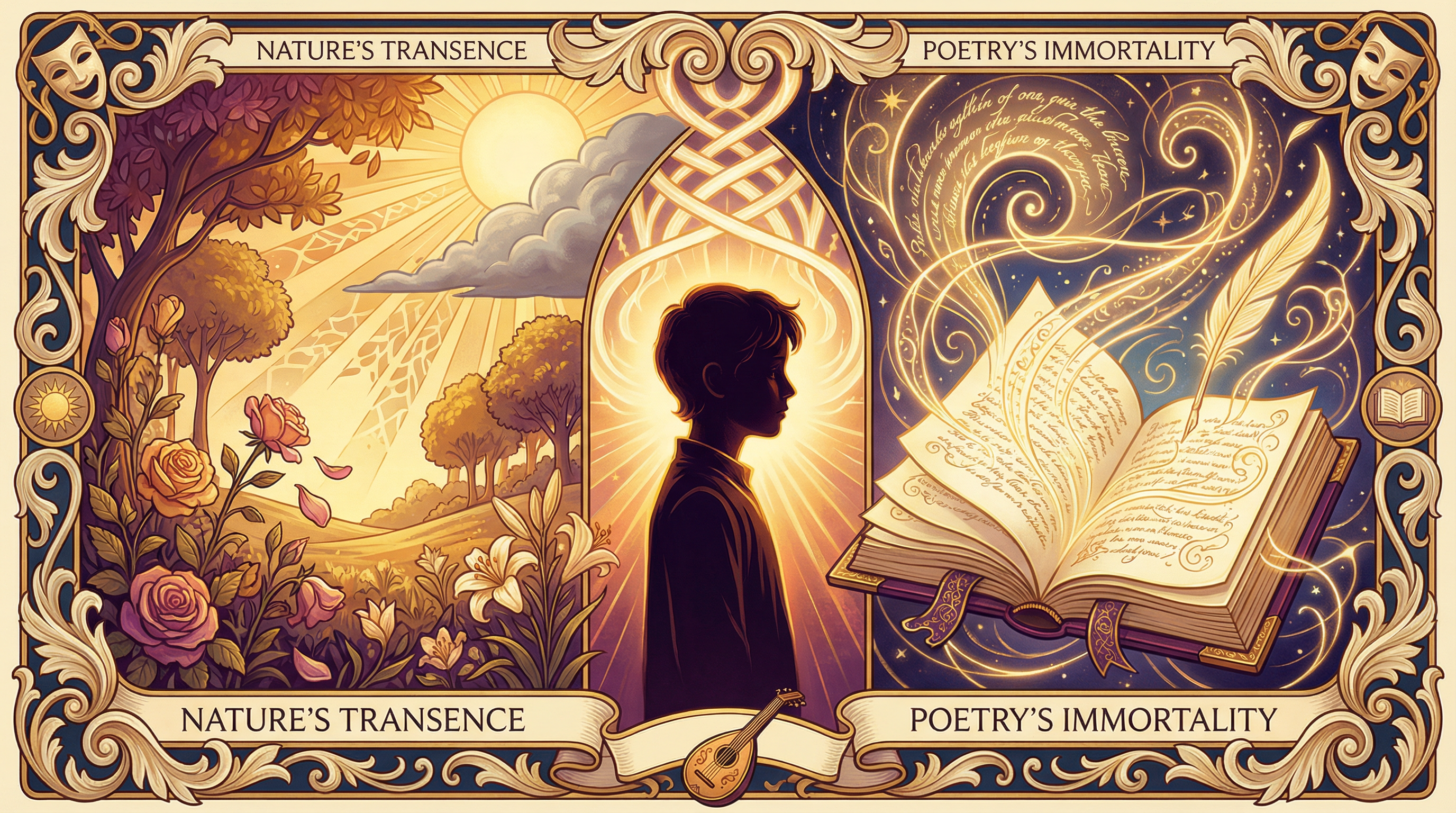
Shakespeare's Sonnet 18, beginning with the iconic line "Shall I compare thee to a summer's day?", is part of the Fair Youth sequence within his 154-sonnet collection. Written in the late 16th or early 17th century, the poem ostensibly praises the beauty of an unnamed subject by comparing them to a summer's day, only to conclude that the subject surpasses nature's beauty because they will be immortalised in poetry. What makes this sonnet exceptional for GCSE study is its layered sophistication: it is simultaneously a love poem, a meditation on time and mortality, and a meta-textual celebration of poetry's power. OCR examiners expect candidates to articulate a clear thesis about how Shakespeare presents eternal love through the vehicle of the sonnet form, integrating analysis of structure, language, and Renaissance literary context. Responses that demonstrate understanding of the volta at line 9, the subversion of the Petrarchan blazon, and the eternalising metaphor consistently achieve the highest levels.
The Poem: Full Text
Sonnet 18 by William Shakespeare
Shall I compare thee to a summer's day?
Thou art more lovely and more temperate:
Rough winds do shake the darling buds of May,
And summer's lease hath all too short a date:
Sometime too hot the eye of heaven shines,
And often is his gold complexion dimm'd;
And every fair from fair sometime declines,
By chance or nature's changing course untrimm'd;
But thy eternal summer shall not fade
Nor lose possession of that fair thou owest;
Nor shall Death brag thou wander'st in his shade,
When in eternal lines to time thou growest:
So long as men can breathe or eyes can see,
So long lives this, and this gives life to thee.
Themes
Theme 1: The Power of Poetry to Confer Immortality
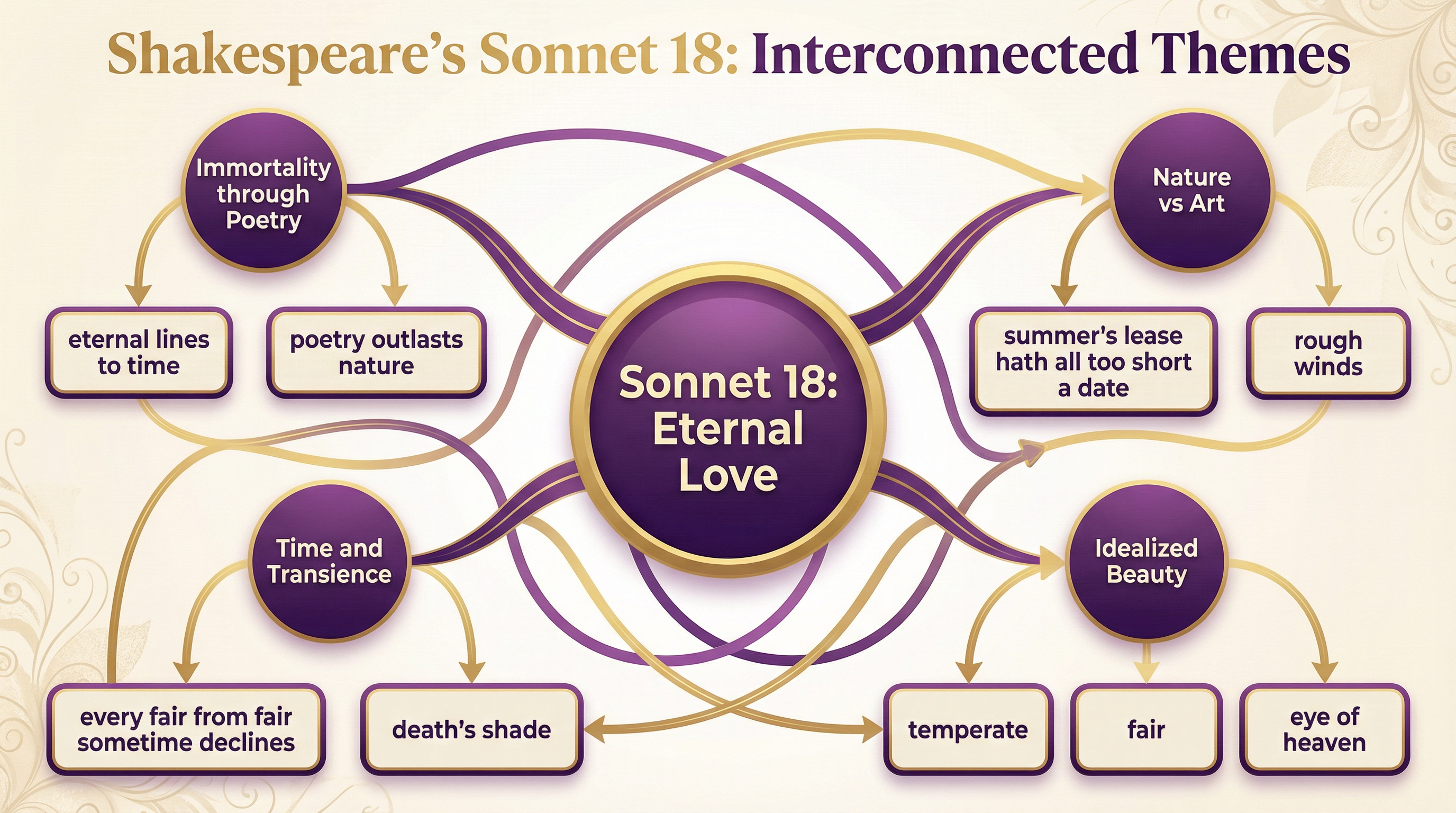
The central theme of Sonnet 18 is the eternalising metaphor: the Renaissance literary convention that poetry can grant immortality to its subject. Shakespeare's speaker does not merely praise the beloved's beauty; he asserts that "eternal lines to time" will ensure the subject "growest" forever, immune to death's "shade." This is a bold, meta-textual claim. The word "this" in the final couplet—"So long lives this, and this gives life to thee"—refers to the poem itself. Shakespeare is saying that as long as people read these lines, the subject will live. The poem thus becomes a self-fulfilling prophecy: over 400 years later, we are still reading it, and the subject (whether the Fair Youth or an abstract ideal) remains immortal. Examiners credit candidates who recognise this self-referential dimension and link it to the Renaissance patronage system, where poets often promised immortality in exchange for support.
Key Quotes:
- "When in eternal lines to time thou growest" (Line 12) – The phrase "eternal lines" is a pun: it refers both to the lines of poetry and the lineage or continuity of the subject's existence. The verb "growest" suggests organic, perpetual life, contrasting with nature's inevitable decay.
- "So long lives this, and this gives life to thee" (Line 14) – The demonstrative pronoun "this" is deictic, pointing to the poem itself. The chiasmic structure ("lives this" / "gives life") creates a circular, self-sustaining logic that mirrors the poem's claim to eternity.
Theme 2: Nature's Impermanence vs. Art's Permanence
Shakespeare structures the poem as a contrast between the transience of nature and the permanence of art. The first eight lines catalogue summer's flaws: "rough winds," the sun's excessive heat or dimness, and the inevitable decline of "every fair from fair." The phrase "summer's lease hath all too short a date" uses legal terminology ("lease," "date") to emphasise that nature operates on temporary contracts—nothing lasts. The volta at line 9 introduces the counter-argument: "But thy eternal summer shall not fade." The oxymoron "eternal summer" is crucial. Summer, by definition, is a season—temporary and cyclical. By creating an "eternal summer," Shakespeare claims that art can transcend natural laws. This theme resonates with the broader Renaissance humanist belief that human creativity and intellect can achieve what nature cannot.
Key Quotes:
- "And summer's lease hath all too short a date" (Line 4) – The metaphor of a "lease" (a temporary legal agreement) frames nature as bound by time, contrasting with the "eternal lines" of poetry.
- "And every fair from fair sometime declines, / By chance or nature's changing course untrimm'd" (Lines 7-8) – The repetition of "fair" (beauty) emphasises the universality of decay. "Untrimm'd" suggests both the loss of adornment and the lack of control over nature's processes.
Theme 3: Idealised Beauty and the Subversion of the Petrarchan Blazon
In the Petrarchan tradition, poets compared their beloveds to idealised natural imagery (roses, stars, summer days) in a rhetorical device called the blazon. Shakespeare begins Sonnet 18 by appearing to follow this convention—"Shall I compare thee to a summer's day?"—but immediately subverts it. Rather than praising the comparison, he spends the next seven lines explaining why summer is inadequate: it is too rough, too hot, too short, and too inconsistent. The beloved is "more lovely and more temperate," surpassing nature's imperfections. This subversion is significant because it positions the subject as superior to nature, not merely comparable to it. Examiners reward candidates who identify this rhetorical move and link it to Shakespeare's broader critique of conventional love poetry.
Key Quotes:
- "Thou art more lovely and more temperate" (Line 2) – The comparative adjectives "more lovely" and "more temperate" establish the subject's superiority over summer. "Temperate" connotes balance and moderation, contrasting with summer's extremes.
- "Rough winds do shake the darling buds of May" (Line 3) – The violent verb "shake" and the harsh alliteration of "rough winds" undermine the romantic idealisation of spring and summer, revealing nature's destructive potential.
Theme 4: Time, Mortality, and the Defeat of Death
Time and death are personified as adversaries in Sonnet 18, and the poem's triumph lies in the speaker's confident assertion that poetry can defeat both. The phrase "Nor shall Death brag thou wander'st in his shade" personifies Death as a boastful figure who claims dominion over mortals. The verb "brag" is dismissive, reducing Death's power to empty rhetoric. The subject will not "wander" in Death's "shade" (a metaphor for the afterlife or oblivion) because they exist in the "eternal lines" of the poem. This theme connects to the Christian and classical contexts of Shakespeare's era, where immortality was a central concern. However, Shakespeare offers a secular form of immortality: not through religious salvation or heroic deeds, but through art.
Key Quotes:
- "Nor shall Death brag thou wander'st in his shade" (Line 11) – The personification of Death as a braggart diminishes its terror. The possessive "his shade" suggests Death's limited domain, which does not include the subject preserved in poetry.
- "When in eternal lines to time thou growest" (Line 12) – The preposition "to" suggests that the subject grows in relation to time, rather than being diminished by it. This inverts the usual relationship between time and mortality.
Structure and Form
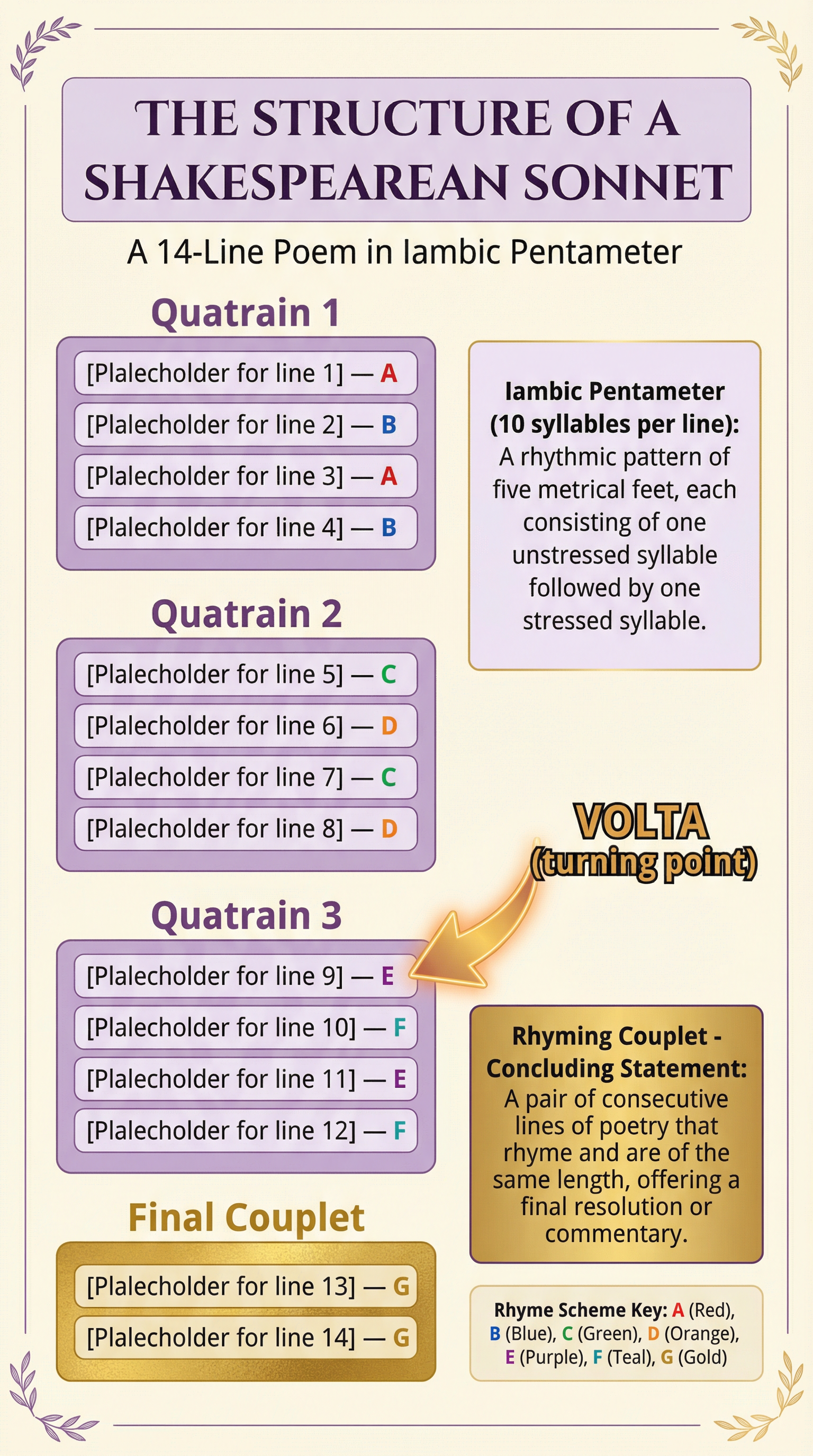
Sonnet 18 follows the Shakespearean (or English) sonnet form: 14 lines of iambic pentameter with the rhyme scheme ABAB CDCD EFEF GG. This structure is not merely decorative; it creates the poem's argument. The three quatrains (four-line stanzas) develop the comparison between the subject and summer, while the rhyming couplet delivers the concluding assertion of the poem's immortalising power. The volta (turning point) occurs at line 9 with the conjunction "But," which signals the shift from critique of nature to celebration of art. Candidates must analyse how this structural pivot reinforces the thematic contrast between transience and permanence.
The iambic pentameter (ten syllables per line, with five stressed beats: da-DUM da-DUM da-DUM da-DUM da-DUM) creates a regular, heartbeat-like rhythm that mirrors the constancy and reliability of the speaker's love. This regularity contrasts with the "rough winds" and "changing course" of nature described in the content. The rhyming couplet at the end provides closure and confidence, as the perfect rhyme of "see" and "thee" reinforces the certainty of the speaker's claim.
Language and Writer's Methods
Extended Metaphor: Summer as Inadequate Comparison
The poem's central conceit is the extended metaphor of summer as a comparison for the beloved. However, this metaphor is systematically dismantled. Summer is personified ("summer's lease," "the eye of heaven") but also critiqued for its imperfections. The "eye of heaven" (the sun) is sometimes "too hot" and often "dimm'd," suggesting inconsistency. This critique of summer functions as a critique of the Petrarchan tradition itself: conventional comparisons are inadequate because nature is flawed.
Personification
Shakespeare personifies both nature and death to dramatise the conflict between mortality and immortality. The sun becomes "the eye of heaven," with a "gold complexion" that can be "dimm'd." Death is personified as a boastful figure who cannot claim the subject. These personifications elevate the poem's stakes, transforming an abstract meditation into a narrative of triumph over adversarial forces.
Oxymoron: "Eternal Summer"
The phrase "eternal summer" is an oxymoron because summer, by definition, is a season—temporary and cyclical. By creating an "eternal summer," Shakespeare claims that art can achieve what nature cannot: permanence. This oxymoron encapsulates the poem's central argument.
Diction and Tone
The poem's diction shifts from the critical ("rough winds," "too hot," "dimm'd") in the first eight lines to the confident and celebratory ("eternal," "growest," "lives") in the final six lines. This tonal shift mirrors the structural volta and reinforces the speaker's assurance in poetry's power.
Context
Renaissance Literary Tradition: The Eternalising Metaphor
In Renaissance England, poets frequently promised patrons or beloveds that their verse would confer immortality. This eternalising metaphor was a conventional trope, seen in the works of Petrarch, Spenser, and others. Shakespeare participates in this tradition but also interrogates it. By making the poem's immortalising power its explicit subject, he engages in meta-textual commentary on the nature of poetry itself.
The Fair Youth Sequence
Sonnet 18 is part of the Fair Youth sequence (Sonnets 1-126), which are addressed to a young man of great beauty. While the identity of the Fair Youth remains debated (candidates should avoid the biographical fallacy of assuming it is a specific historical figure), the sequence explores themes of beauty, time, procreation, and immortality. Sonnet 18 is unique within the sequence for its unambiguous celebration of the beloved's superiority and the poet's confidence in his craft.
Patronage and the Role of the Poet
In Shakespeare's era, poets often relied on wealthy patrons for financial support. Promising immortality through verse was a way of demonstrating the poet's value. This context adds a layer of pragmatism to the poem's idealism: Shakespeare is not only celebrating love but also asserting the social and cultural importance of poetry.
Humanism and the Power of Art
The Renaissance humanist movement emphasised the potential of human creativity and intellect to achieve greatness. Sonnet 18 reflects this belief by asserting that art (the poem) can transcend the limitations of nature (mortality). This aligns with the broader cultural shift towards valuing individual achievement and artistic legacy.
Podcast: Deep Dive into Sonnet 18
Listen to this 10-minute podcast episode for an engaging exploration of Sonnet 18's key concepts, exam tips, common mistakes, and a quick-fire recall quiz. The podcast covers the structure of the sonnet, the significance of the volta, the eternalising metaphor, and how to integrate context into your exam responses. Perfect for revision on the go.
Comparative Analysis: Sonnet 18 and Other Anthology Poems
For OCR Paper 3.1, candidates must compare Sonnet 18 with another poem from the Love and Relationships cluster. Effective comparisons focus on contrasts in tone, structure, and presentation of love. For example:
- Sonnet 18 vs. "Valentine" (Carol Ann Duffy): While Shakespeare presents love as eternal and idealised, Duffy's speaker offers a realistic, unconventional symbol (an onion) to represent love's complexity and potential for pain. Shakespeare's confident tone contrasts with Duffy's ambivalent, cautionary approach.
- Sonnet 18 vs. "Love's Philosophy" (Percy Bysshe Shelley): Both poems use natural imagery, but Shelley's speaker employs nature to argue for physical union ("the winds of heaven mix for ever"), whereas Shakespeare critiques nature's impermanence. Shelley's rhetorical questions create urgency, while Shakespeare's rhetorical question is immediately answered with superiority.
- Sonnet 18 vs. "Neutral Tones" (Thomas Hardy): Hardy's poem presents love's decay and disillusionment, using bleak natural imagery ("the sun was white," "leaves lay grey"). This starkly contrasts with Shakespeare's assertion of eternal love. The retrospective, melancholic tone of "Neutral Tones" opposes Sonnet 18's forward-looking confidence.
When comparing, candidates should use comparative discourse markers ("whereas," "in contrast," "similarly," "both poets") and ensure that each paragraph addresses both poems, rather than treating them separately.