Study Notes
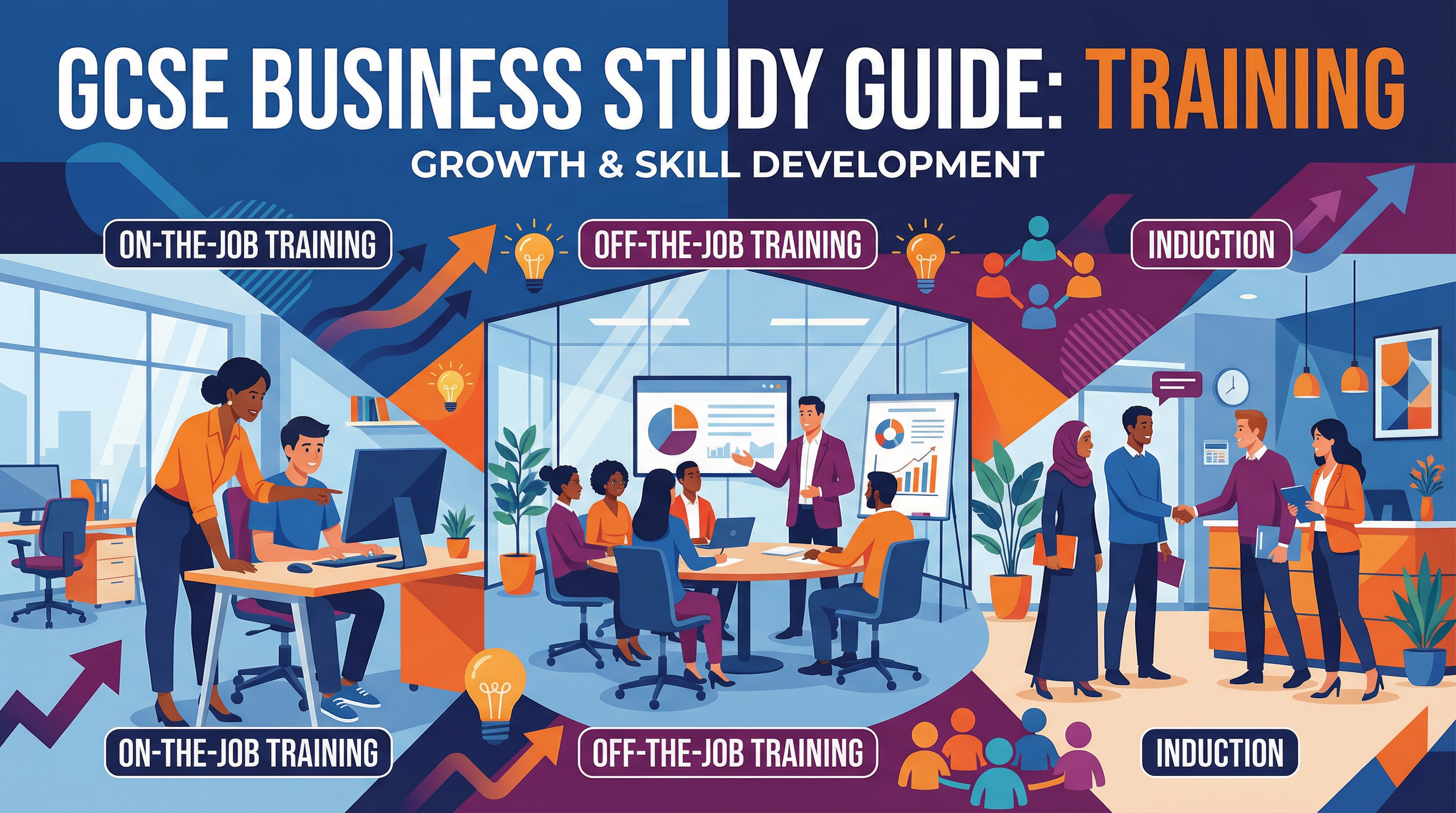
Overview
Training is a fundamental element of Human Resource Management, focusing on the development of employee skills and knowledge to enhance business performance. For the OCR GCSE Business specification (J204), a thorough understanding of training is essential for success in the 'People' component of the course. Examiners expect candidates to not only define the different types of training but also to analyse their application in various business contexts (AO2) and evaluate their strategic importance (AO3). This guide will break down the core concepts of induction, on-the-job, and off-the-job training, providing you with the tools to construct well-developed arguments that secure high marks. We will explore the costs, benefits, and suitability of each method, ensuring you can confidently tackle any question on this topic. A key focus will be on developing chains of reasoning to link training to key business objectives such as productivity, customer service, and profitability.
Key Training Methods
Induction Training
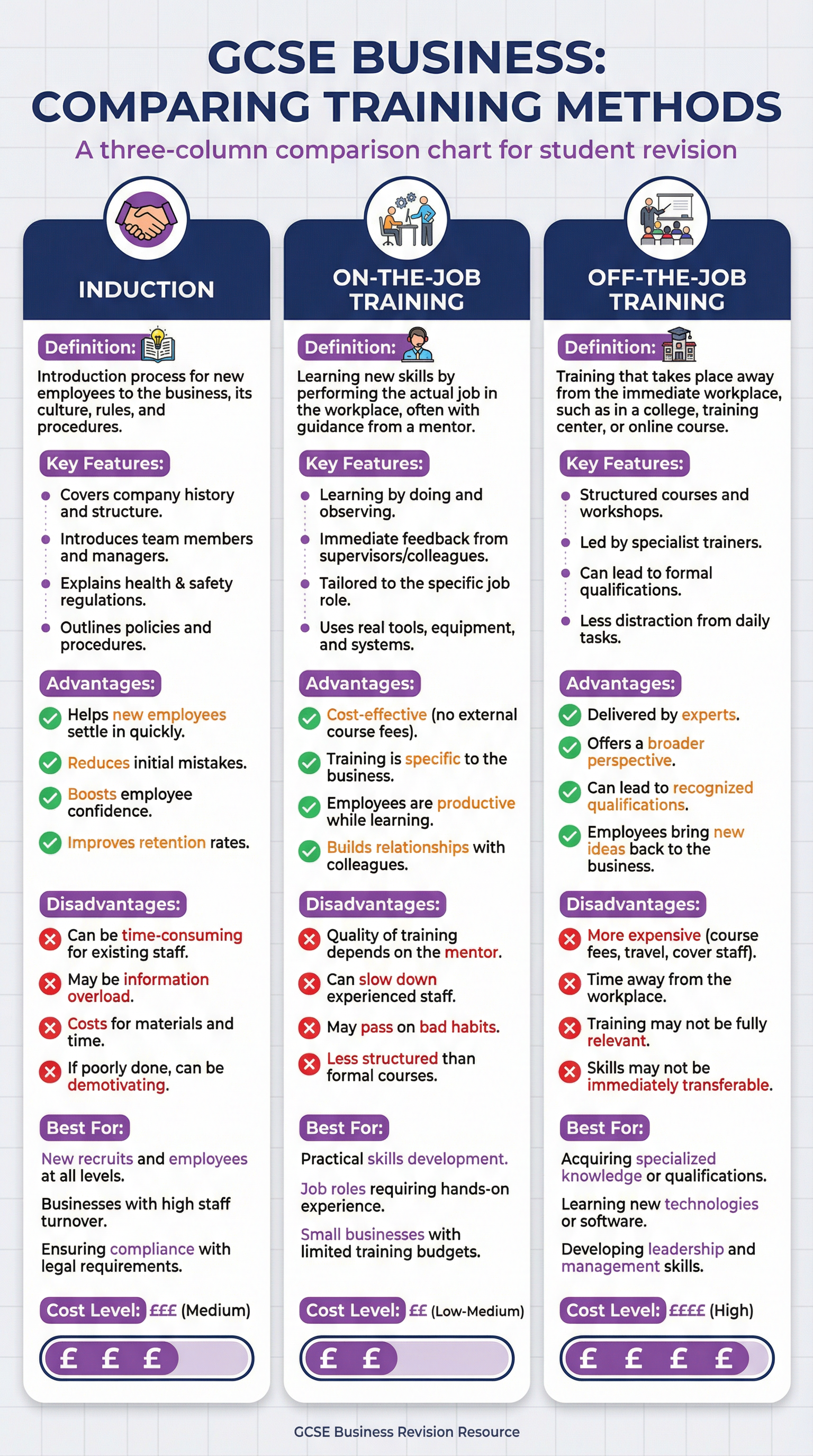
What it is: Induction training is the introductory training provided to new employees when they first join a business. It is a one-off process designed to help them settle in and understand the business's culture, policies, and procedures.
Why it matters: Effective induction is crucial for integrating new staff, reducing anxiety, and minimising initial mistakes. It sets the tone for the employment relationship and can significantly impact staff retention. Examiners will award credit for recognising that induction is about orientation, not advanced skill development.
Specific Knowledge: Candidates should be able to identify common elements of an induction programme, such as a tour of the premises, introduction to colleagues and managers, health and safety information, and explanation of company policies (e.g., dress code, IT usage).
On-the-Job Training
What it is: This method involves learning new skills by performing the actual job, typically under the supervision of a more experienced colleague or mentor. It is a practical, hands-on approach that takes place within the normal working environment.
Why it matters: On-the-job training is highly relevant and specific to the business's needs. It is often the most cost-effective method as it avoids external course fees and the employee remains productive. Candidates must be able to analyse the trade-off between this cost-effectiveness and the potential for passing on bad habits or the opportunity cost of the mentor's time.
Specific Knowledge: Examples include shadowing, coaching, mentoring, and job rotation. Candidates should be able to apply these to specific job roles, such as a trainee chef learning from the head chef in a restaurant kitchen.
Off-the-Job Training
What it is: This type of training takes place away from the immediate workplace, such as at a college, university, or specialist training centre. It can also include online courses.
Why it matters: Off-the-job training provides access to specialist expertise and can lead to formal qualifications. It allows employees to learn without the distractions of the workplace. However, it is typically more expensive and involves the employee being unproductive during the training period. A key evaluation point is the risk of the employee leaving for a competitor after gaining valuable qualifications.
Specific Knowledge: Examples include day-release courses at a local college, residential courses for management development, or online software training modules. Candidates should be able to quantify the costs involved (course fees, travel, accommodation, lost output).
Impact of Training on Business Performance
Effective training is not just a cost; it is an investment that can yield significant returns. Examiners expect candidates to build developed chains of reasoning (AO3) to show how training impacts the business.
Productivity and Profitability
Well-trained employees are more efficient and make fewer mistakes, which leads to higher output and reduced wastage. This increases productivity and lowers unit costs, directly contributing to higher profit margins. For example, a production line worker trained in lean manufacturing techniques can help reduce waste, improving the business's profitability.
Customer Service and Reputation
In service-based industries, training is vital for ensuring a positive customer experience. Employees trained in product knowledge and customer service skills can handle enquiries more effectively and build customer loyalty. This leads to repeat business and a stronger brand reputation, which can be a significant competitive advantage.
Staff Retention and Motivation
Investing in training shows employees that they are valued, which can boost morale and motivation. It provides a clear path for career progression, increasing job satisfaction and reducing staff turnover. Lower staff turnover means lower recruitment and selection costs, which is a direct financial benefit to the business.
{{asset:training_impact_diagram.png