Study Notes
Overview
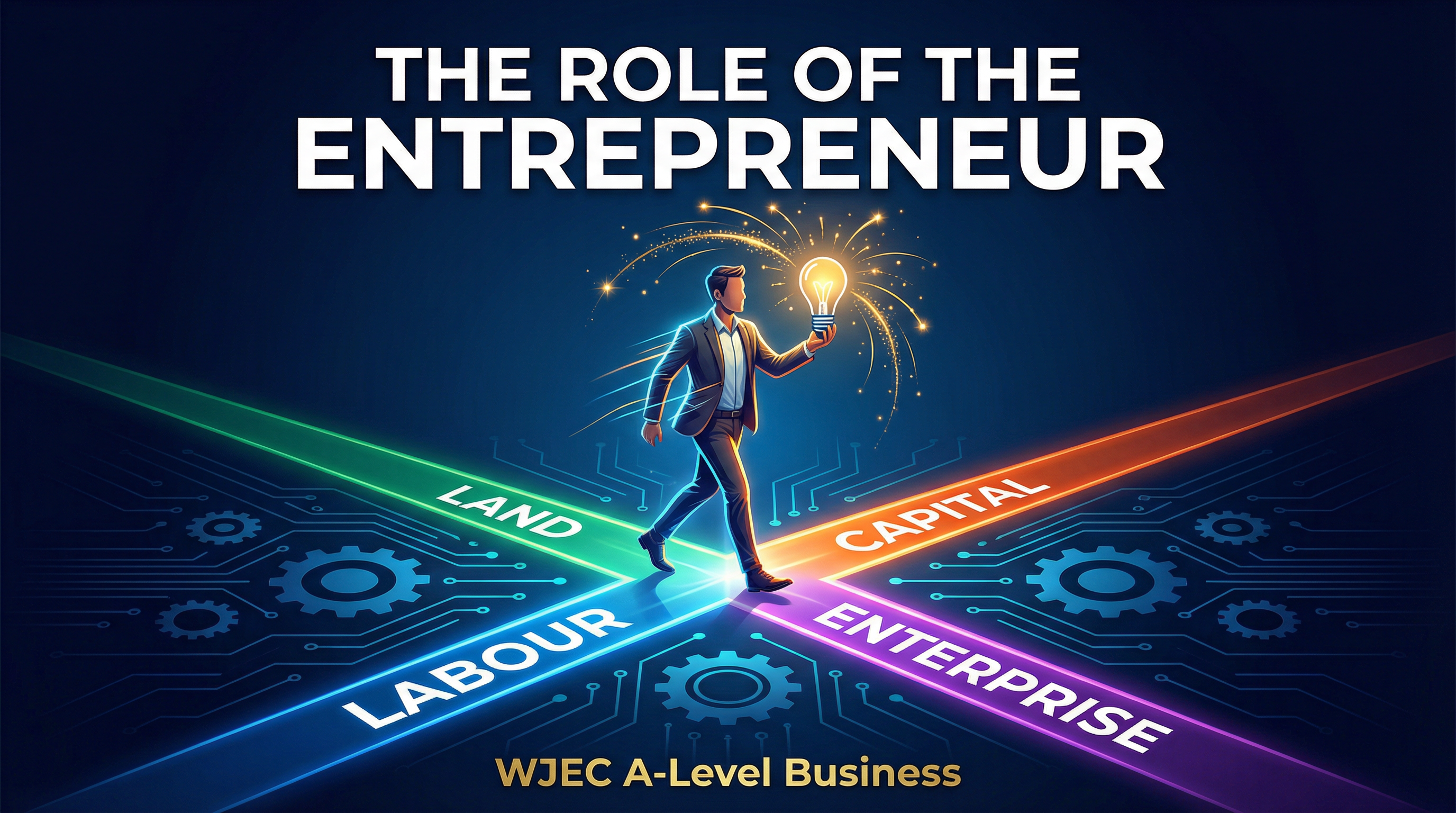
This guide provides a comprehensive analysis of the entrepreneur's role as required by the WJEC A-Level Business specification. For examiners, an entrepreneur is not merely a business owner but the fundamental driver of economic activity who organises the factors of production: Land, Labour, and Capital. A sophisticated understanding requires candidates to differentiate between quantifiable risk and unquantifiable uncertainty, appreciate the function of 'intrapreneurship' within established firms, and analyse motives beyond simple profit maximisation, such as ethical considerations and the pursuit of independence. This topic is foundational, and a thorough grasp of these concepts is essential for building the chains of analysis (AO3) and evaluative judgements (AO4) that are rewarded with the highest marks. Candidates are expected to apply these theoretical concepts to practical scenarios, demonstrating how entrepreneurial decisions shape a business's strategic direction and operational performance.
Key Concepts
The Factors of Production
What it is: The economic resources required for the production of goods and services. The entrepreneur's primary function is to combine these effectively.
Specific Knowledge: Candidates must be able to name and explain the four factors:
- Land: Natural resources available for production (e.g., raw materials, physical space).
- Labour: The human input into the production process (e.g., workers, managers).
- Capital: Man-made goods used to produce other goods (e.g., machinery, tools, finance).
- Enterprise: The entrepreneur who takes the risk to organise the other three factors.
Why it matters: Marks are awarded for identifying the entrepreneur as the organiser of these factors. In application (AO2), candidates should explain how a specific entrepreneur in a case study has combined these elements.
Risk vs. Uncertainty
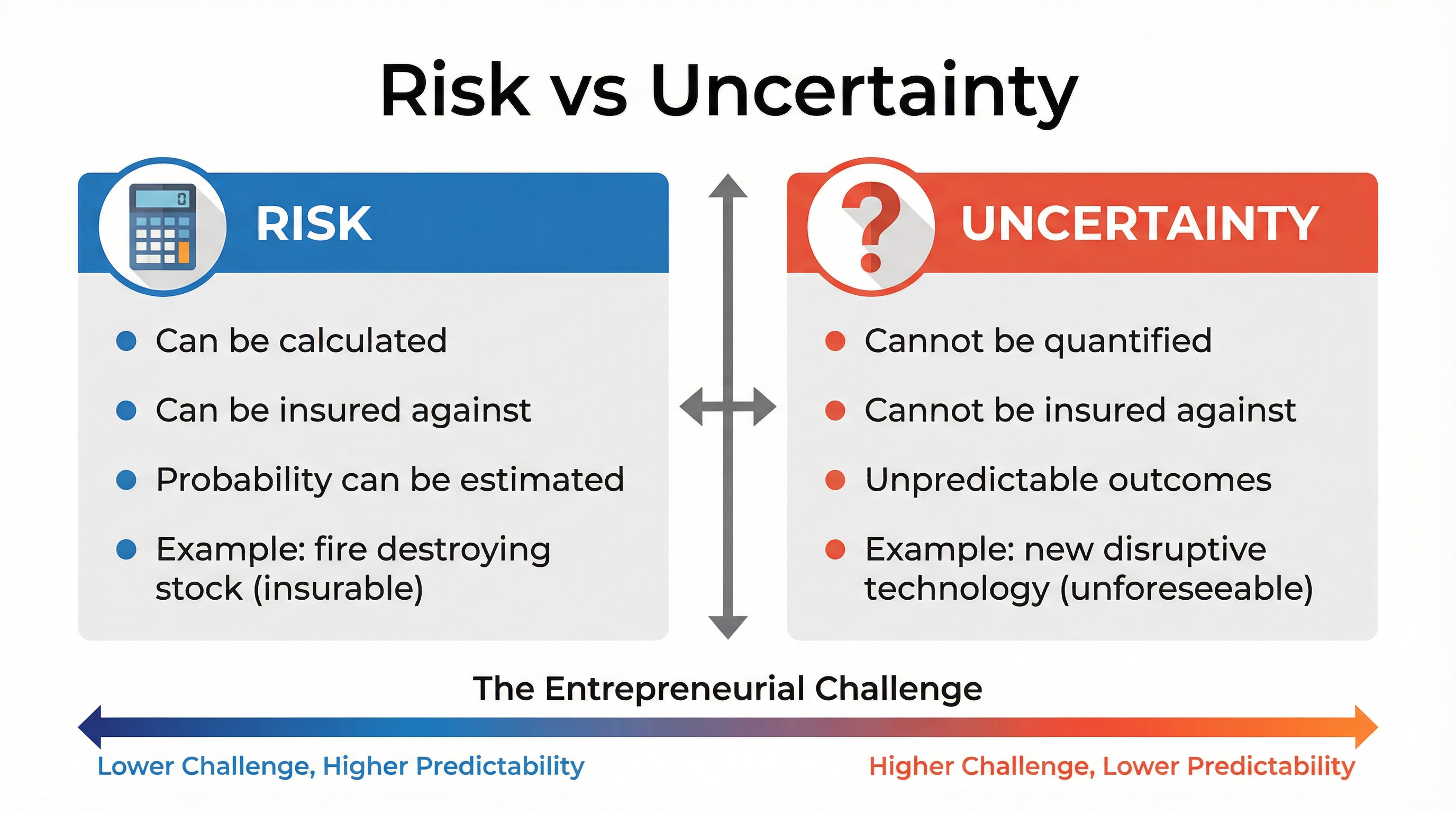
What it is: A critical distinction that top-level candidates must master. It is a common area for confusion.
Specific Knowledge:
- Risk: A situation where the potential outcomes are known and a probability can be assigned to each. It is quantifiable and can often be insured against (e.g., financial risk, operational risk).
- Uncertainty: A situation where the outcomes are unknown and no probability can be assigned. It is unquantifiable and unforeseeable (e.g., the impact of a new disruptive technology, a sudden political event).
Why it matters: Credit is given for the precise use of these terms. An entrepreneur is a calculated risk-taker, not a gambler. They must also possess the resilience and adaptability to navigate uncertainty. For AO4, one could evaluate that the primary challenge for an entrepreneur is not managing risk, but leading through uncertainty.
Intrapreneurship
What it is: Acting as an entrepreneur within a large, established organisation. Intrapreneurs are employees who identify and develop new ideas or projects, taking the lead on innovation from within.
Specific Knowledge: Candidates should be able to provide examples, such as Google's '20% time' policy which led to the creation of products like Gmail and AdSense, or Sony's PlayStation, which was developed by an employee, Ken Kutaragi, who championed the project internally.
Why it matters: This concept demonstrates a nuanced understanding of entrepreneurship. It shows that entrepreneurial behaviour is not limited to start-ups. Marks are awarded for recognising that large businesses need to foster a culture of intrapreneurship to remain competitive and avoid stagnation.
Entrepreneurial Motives
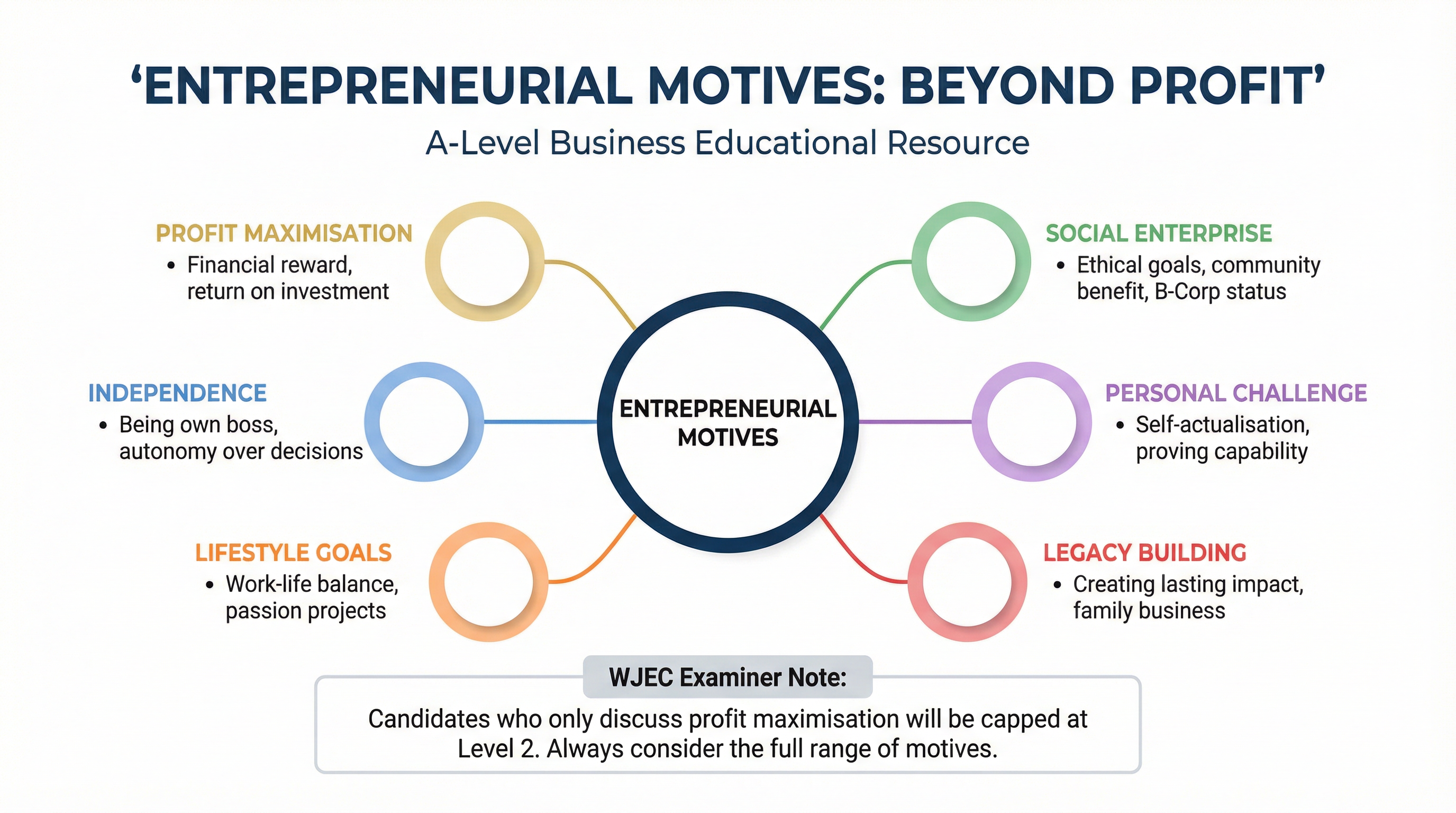
What it is: The various reasons that drive an individual to start and run a business. These extend far beyond financial gain.
Specific Knowledge: Candidates should be able to discuss a range of motives:
- Profit Maximisation: The traditional assumption, seeking the highest possible financial return.
- Profit Satisficing: Making enough profit to be comfortable, without striving for the maximum possible.
- Independence: The desire to be one's own boss and have control over one's work and decisions.
- Social Enterprise: A primary focus on achieving social or ethical goals, with profits reinvested to support that mission (e.g., The Big Issue).
- Lifestyle: Structuring a business to fit a desired lifestyle, often prioritising flexibility and passion over high growth.
Why it matters: This is crucial for AO3 and AO4. The motive of the entrepreneur directly influences business strategy. A social enterprise will make different decisions regarding suppliers and pricing compared to a profit-maximising firm. Candidates who only discuss profit will have their marks capped.
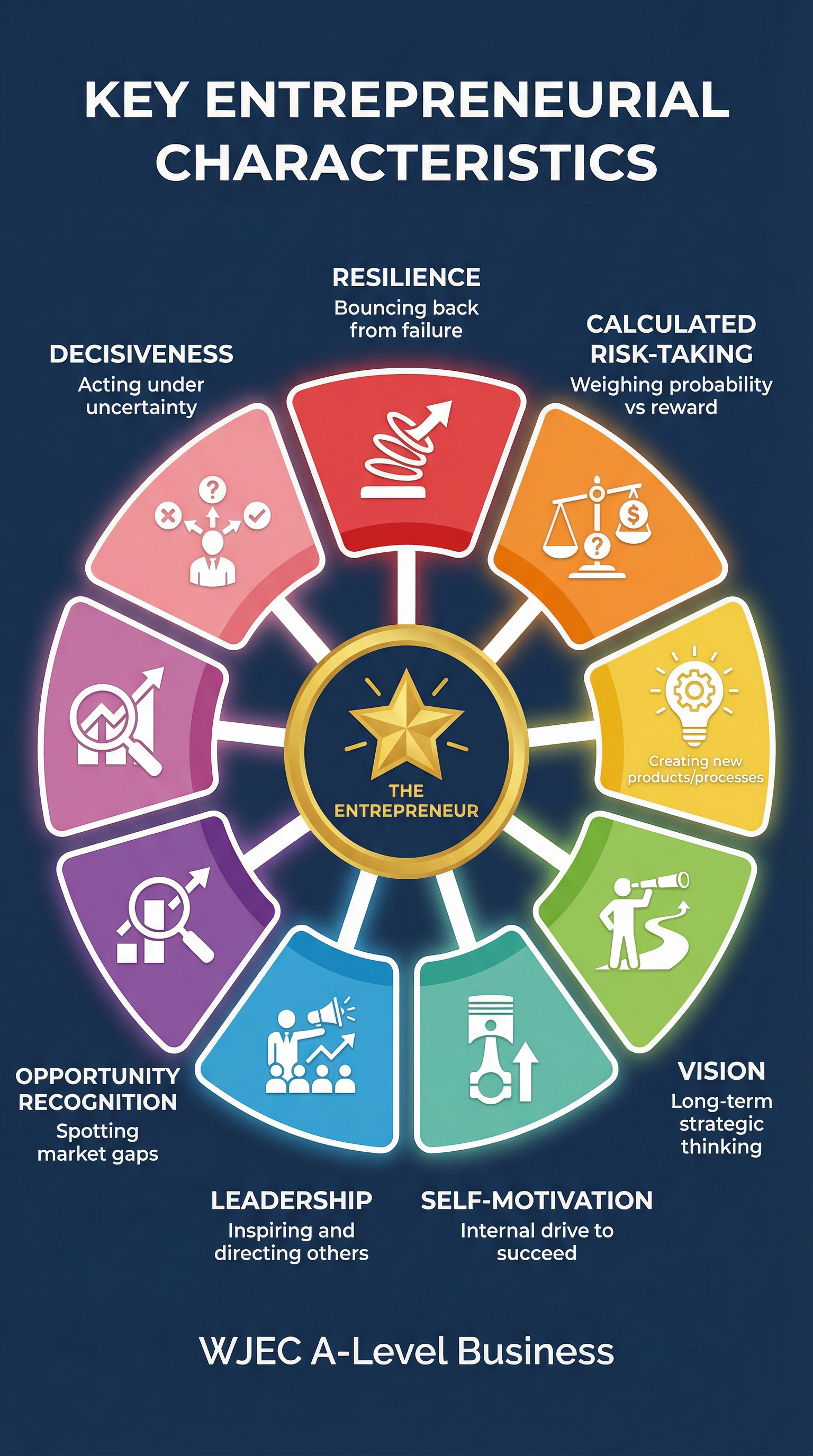
Key Entrepreneurial Characteristics