Study Notes
Overview
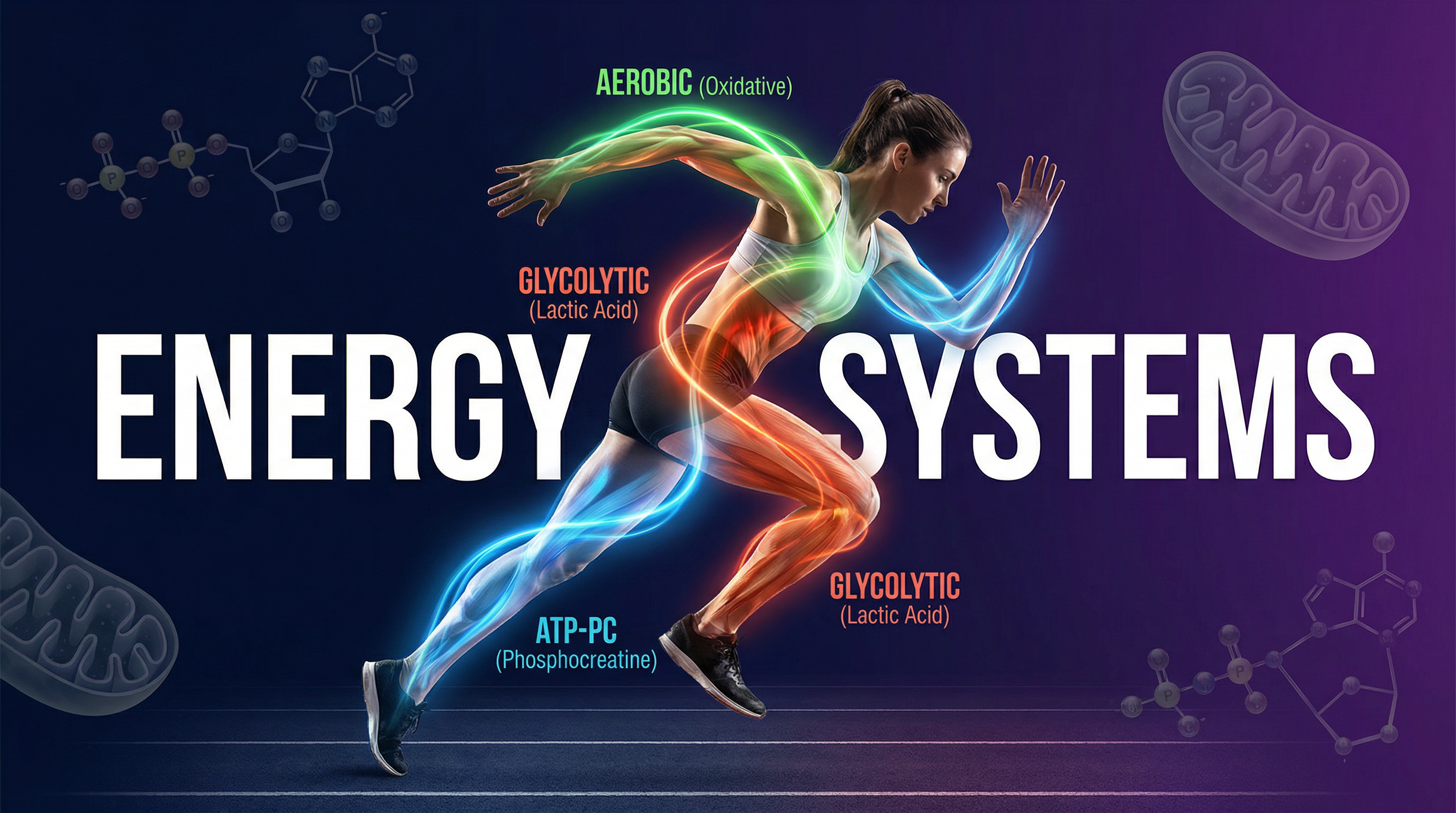
Understanding the body's energy systems is fundamental to A-Level Physical Education. It explains how we can produce explosive power for a 100m sprint, sustain high-intensity effort in a 400m race, and maintain endurance for a marathon. Examiners require candidates to move beyond simple descriptions and analyse how these systems work together along an 'energy continuum' to resynthesise ATP, the body's only usable energy currency. Mastery of this topic is essential for scoring highly in AO1 (knowledge), AO2 (application), and AO3 (analysis) questions.
Key Knowledge & Theory
Core Concepts
The primary role of the energy systems is to prevent the universal energy currency, Adenosine Triphosphate (ATP), from fully depleting. ATP consists of an adenosine molecule and three phosphate groups, held together by high-energy bonds. When the enzyme ATPase breaks the terminal phosphate bond, energy is released for muscle contraction, leaving Adenosine Diphosphate (ADP) and an inorganic phosphate (Pi). Since the body only stores enough ATP for 2-3 seconds of maximal work, it must be constantly rebuilt. This is where the three energy systems come into play.
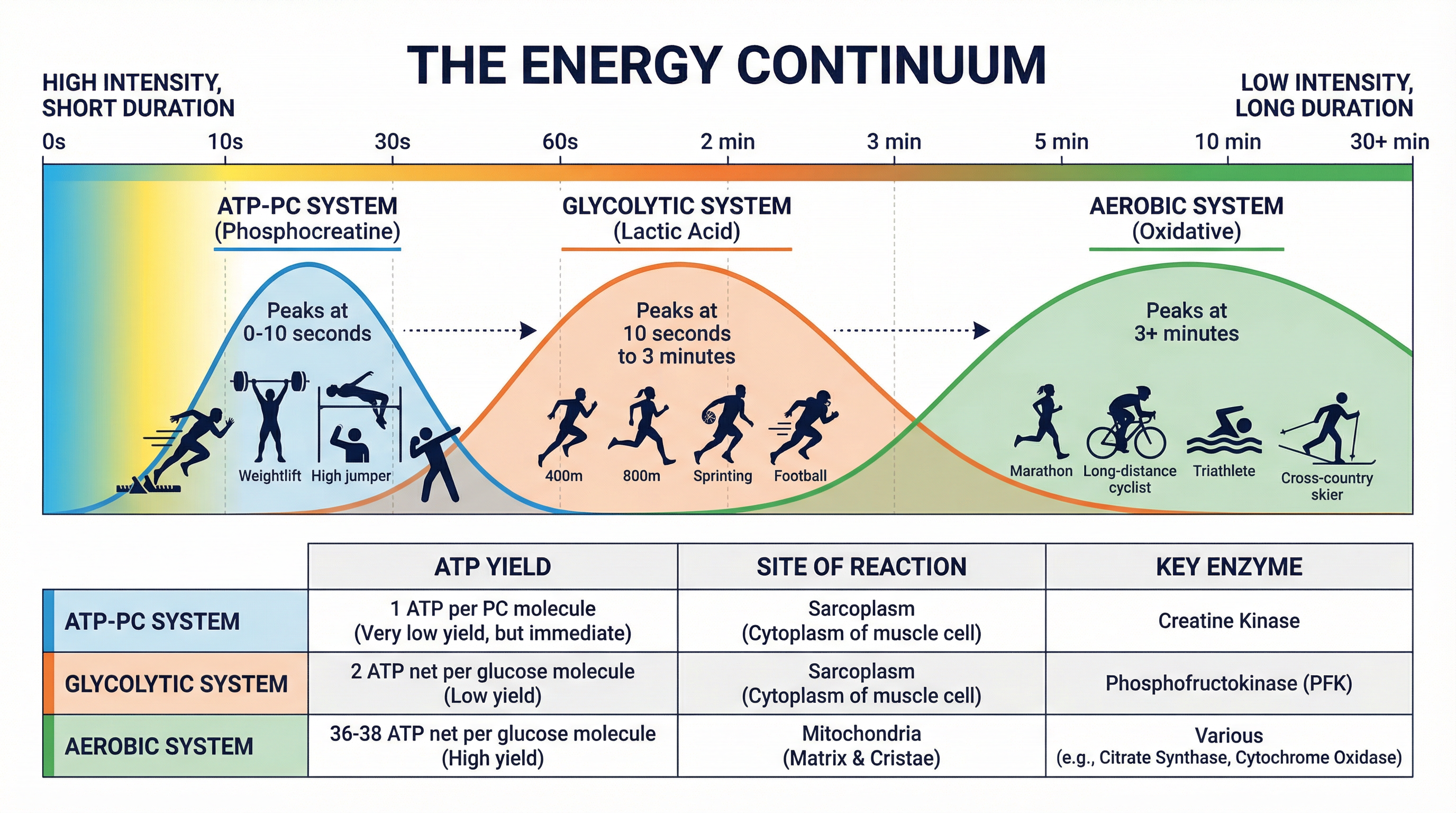
The Energy ContinuumA critical error is to state that the energy systems work in sequence, one after the other. They work concurrently, with one system being the dominant provider of ATP depending on the intensity and duration of the activity. This interplay is known as the energy continuum.
1. The ATP-PC (Phosphocreatine) System
- Intensity: Very High / Maximal (e.g., 100m sprint, shot put, weightlifting)
- Duration: 0-10 seconds
- Fuel: Phosphocreatine (PC), stored in the muscle sarcoplasm.
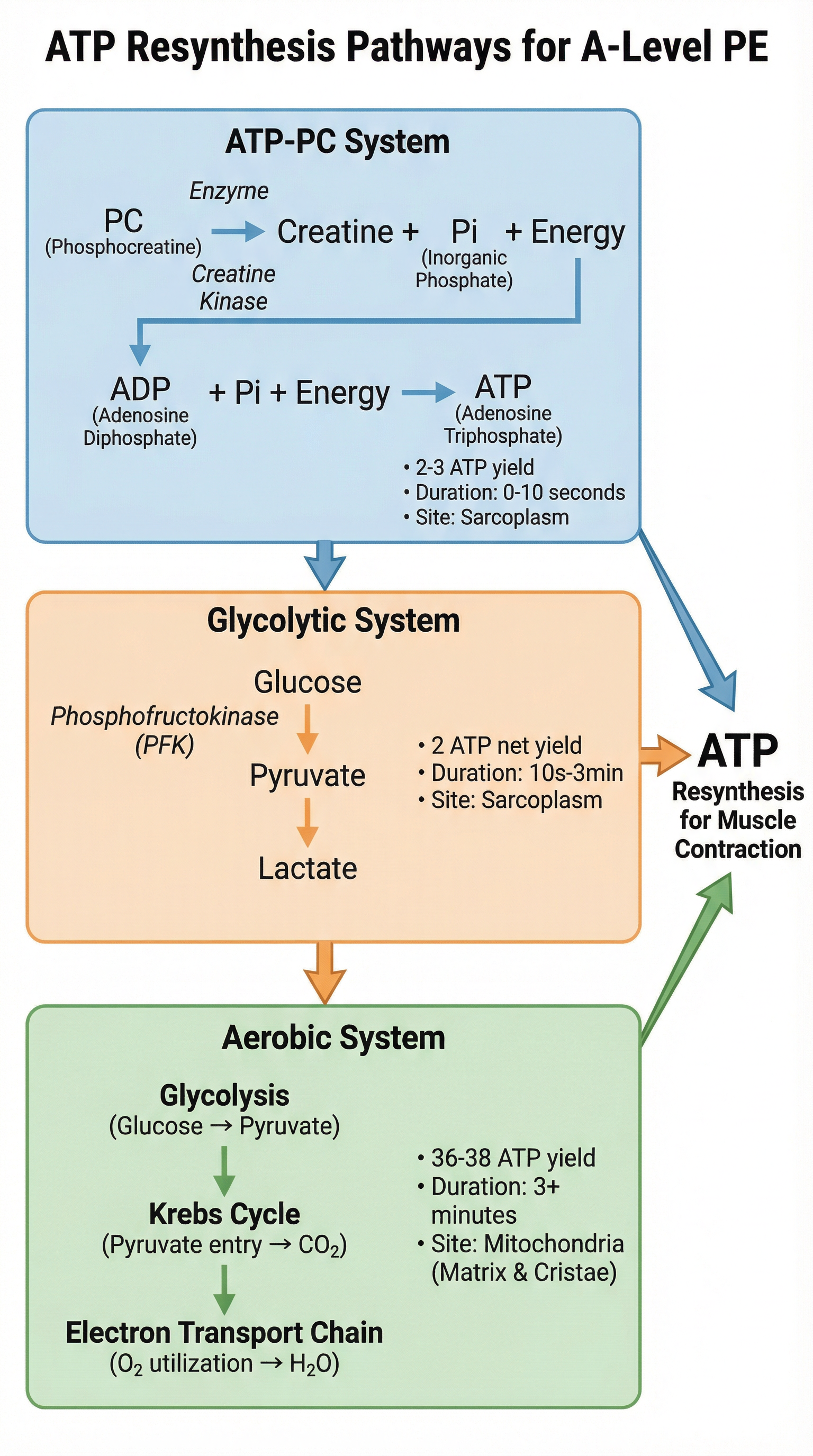
- Process: The enzyme Creatine Kinase detects high levels of ADP and initiates the breakdown of PC into Phosphate, Creatine, and Energy. This energy is used to immediately resynthesise ATP. It is an anaerobic process (does not require oxygen).
- ATP Yield: 1 mole of ATP per mole of PC. Very low yield, but extremely fast rate of production.
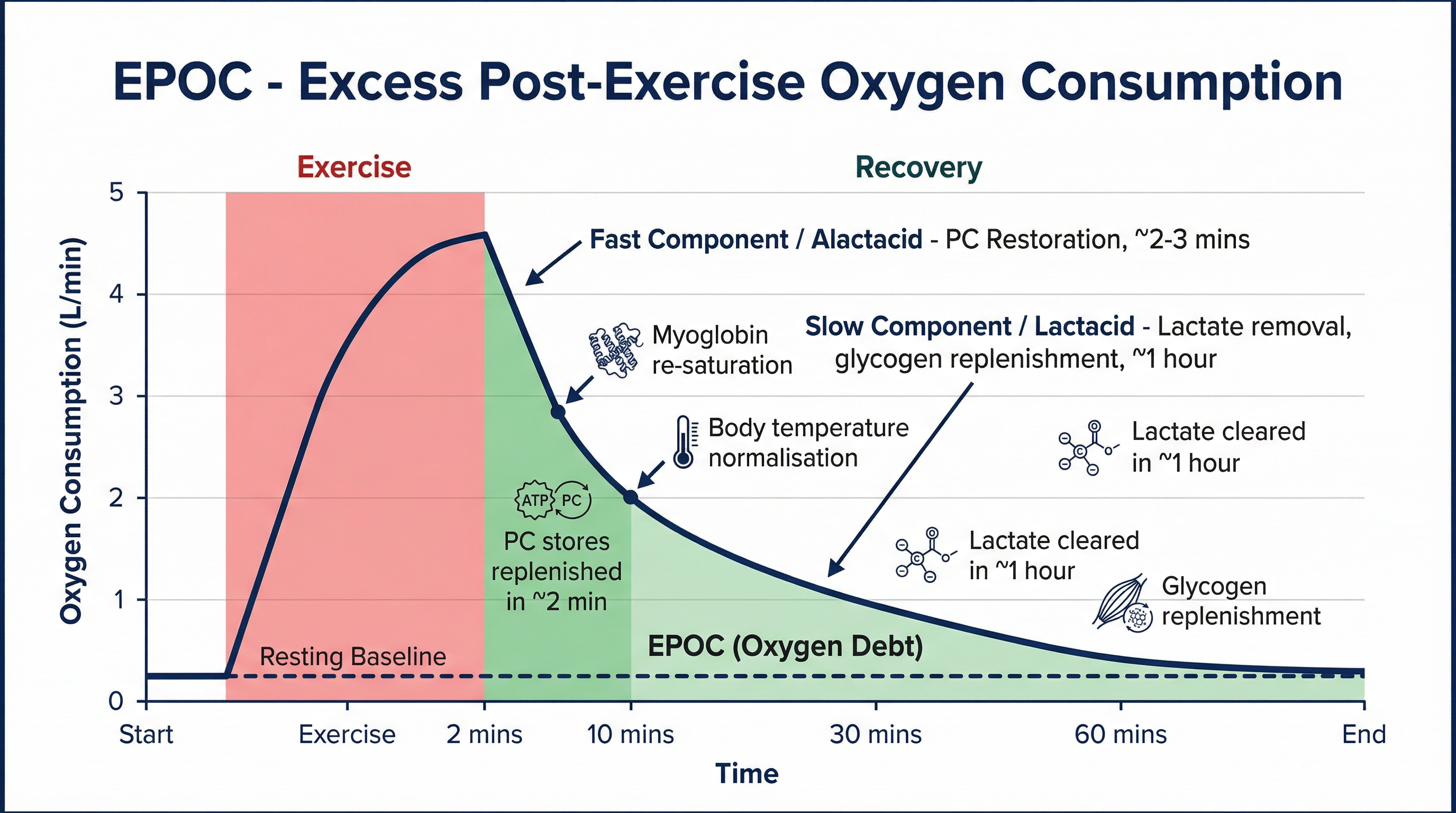
- Recovery: PC stores are depleted within 10 seconds and take approximately 2-3 minutes to fully replenish, using oxygen during the recovery phase (the fast component of EPOC).
2. The Glycolytic (Lactic Acid) System
- Intensity: High (e.g., 400m race, repeated sprints in football, boxing round)
- Duration: 10 seconds - 3 minutes
- Fuel: Glucose (from blood) and Glycogen (stored in muscles/liver).
- Process: This anaerobic process occurs in the sarcoplasm. Glucose is broken down into pyruvic acid via a process called glycolysis. The rate-limiting enzyme is Phosphofructokinase (PFK). Without sufficient oxygen, pyruvic acid is converted into lactic acid.
- ATP Yield: 2 net moles of ATP per mole of glucose.
- Fatigue: The accumulation of lactic acid leads to an increase in hydrogen ions (H+), which lowers the muscle pH (acidosis). This inhibits enzyme activity (like PFK) and interferes with the muscle contraction process, causing neuromuscular fatigue. The point at which lactate accumulation significantly exceeds its rate of removal is known as the Onset of Blood Lactate Accumulation (OBLA).
3. The Aerobic System
- Intensity: Low to Moderate (e.g., marathon, triathlon, jogging)
- Duration: 3 minutes onwards
- Fuel: Glycogen and Fats (Triglycerides).
- Process: This system requires oxygen and involves three stages:
- Aerobic Glycolysis (Sarcoplasm): Same as the glycolytic system, but as oxygen is present, pyruvic acid is not converted to lactic acid. It yields 2 ATP.
- Krebs Cycle (Mitochondrial Matrix): Pyruvic acid is converted to Acetyl CoA and enters the Krebs Cycle, producing CO2, 2 ATP, and hydrogen carriers.
- Electron Transport Chain (Mitochondrial Cristae): Hydrogen carriers are passed down the chain, releasing energy to resynthesise a large amount of ATP (approx. 34). Oxygen is the final electron acceptor, forming water (H2O).
- ATP Yield: Approximately 38 moles of ATP from one mole of glucose. Much higher from fats.
- Recovery & EPOC: After exercise, oxygen consumption remains elevated to facilitate recovery. This is known as Excess Post-exercise Oxygen Consumption (EPOC) or 'oxygen debt'. It has two components:
- Fast (Alactacid) Component: Restoration of ATP and PC stores, and re-saturation of myoglobin with oxygen (2-3 mins).
- Slow (Lactacid) Component: Removal of lactic acid, maintenance of breathing and heart rate, glycogen replenishment, and reduction of body temperature (can last over an hour).
Key Practitioners/Artists/Composers
| Name | Period/Style | Key Works | Relevance |
|---|---|---|---|
| Archibald Hill | 1920s | Nobel Prize-winning research on muscle heat production | Pioneered the concepts of maximal oxygen uptake (VO2 Max) and oxygen debt, laying the foundation for our understanding of aerobic and anaerobic metabolism. |
| August Krogh | 1920s | Nobel Prize-winning research on capillary motor regulating mechanism | Explained how blood flow is regulated to the muscles during exercise, a key component of the aerobic system's ability to supply oxygen. |
| Jonas Bergström | 1960s | Reintroduction of the muscle biopsy needle | Allowed scientists to directly measure muscle glycogen and lactate levels, providing direct evidence for the processes of the glycolytic and aerobic systems. |
Technical Vocabulary
- ATP (Adenosine Triphosphate): The only usable form of energy in the body.
- Energy Continuum: The concept that all three energy systems work simultaneously to resynthesise ATP, with one being dominant.
- Anaerobic: A process that does not require the presence of oxygen.
- Aerobic: A process that requires the presence of oxygen.
- Rate-limiting Enzyme: The enzyme in a metabolic pathway that controls the overall speed of the reaction (e.g., Creatine Kinase, PFK).
- OBLA (Onset of Blood Lactate Accumulation): The point at which lactate begins to accumulate rapidly in the blood (around 4mmol/L).
- EPOC (Excess Post-exercise Oxygen Consumption): The amount of oxygen consumed during recovery above that which would have been consumed at rest.
- Mitochondria: The site of aerobic respiration (Krebs Cycle and Electron Transport Chain).
Practical Skills
Techniques & Processes
Measuring & Improving Energy Systems
- ATP-PC: Assessed via tests like the 30m sprint or vertical jump. Trained using short, maximal-intensity intervals (e.g., 6 x 30m sprints with 3 minutes recovery).
- Glycolytic: Assessed via tests like the 400m sprint or the Wingate test. Trained using high-intensity intervals with incomplete recovery (e.g., 8 x 200m sprints with 90 seconds recovery).
- Aerobic: Assessed via tests like the Multi-Stage Fitness Test or VO2 Max test. Trained using continuous training (long, slow distance), Fartlek training, or long-interval training (e.g., 4 x 800m with 2 mins recovery).
Materials & Equipment
- GPS Trackers/Accelerometers: Used in team sports to quantify the work done by different players, allowing coaches to see the demands placed on each energy system.
- Lactate Analysers: Portable devices that measure blood lactate concentration from a small blood sample, allowing for the precise determination of the lactate threshold and OBLA.
- Gas Analysis Systems: Used in laboratory settings to directly measure VO2 Max, providing a precise assessment of an athlete's aerobic capacity.
Exam Component
Written Exam Knowledge
The theory of energy systems is a cornerstone of the written exam. Candidates must be able to:
- Describe the chemical processes for all three systems.
- Identify the dominant system for any given sporting activity.
- Explain the concept of the energy continuum.
- Analyse the causes of fatigue in relation to each system.
- Explain the process of recovery (EPOC) and its application to intermittent sports.
- Interpret graphs showing energy system contribution or EPOC.