Study Notes
Overview
Globalisation refers to the process of sport developing into a worldwide, commercialised industry. For AQA A-Level PE, candidates must understand this is not just about money in sport, but about the interconnected, global nature of modern sport, driven by the powerful relationship between sport, media, and sponsorship. This guide will break down the core concepts, analyse the impacts, and provide you with the tools to achieve top-band marks.
Key Knowledge & Theory
Core Concepts
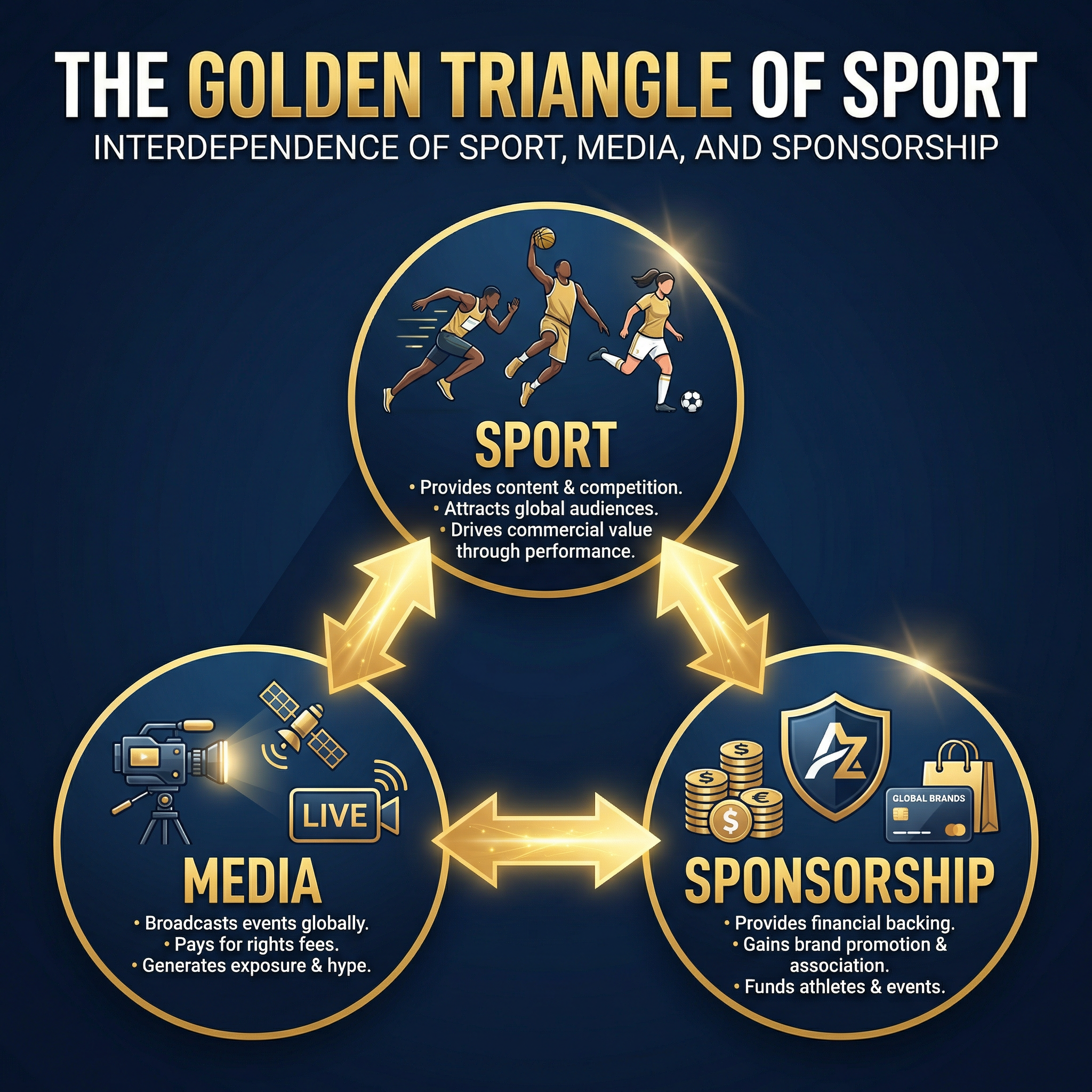
The Golden Triangle: This is the fundamental concept for understanding globalisation. It describes the interdependent relationship between the three key players:
- Sport: The product itself—the games, the teams, the athletes. It provides the drama and excitement that audiences and sponsors crave.
- Media: Global media conglomerates (e.g., Sky, ESPN, Amazon) pay vast sums for broadcasting rights. This exposure builds a global fanbase and increases the sport's commercial value. The media can also influence sport, demanding rule changes or schedule adjustments to maximise viewership.
- Sponsorship: Multinational corporations (e.g., Nike, Coca-Cola, Heineken) invest millions to associate their brand with high-profile sports, teams, or athletes. This provides the capital that funds ever-higher wages, stadium developments, and grassroots programmes.
Freedom of Movement & The Bosman Ruling: A critical element of globalisation is the increased migration of athletes. To earn the highest marks, candidates must reference the Bosman Ruling (1995). This ruling by the European Court of Justice allowed out-of-contract professional footballers within the European Union to move to another club without a transfer fee. This dramatically increased player mobility, leading to the multicultural make-up of top European leagues and arguably concentrating the best talent in the hands of the wealthiest clubs.
Commercialisation: This is the process of managing or running something principally for financial gain. In sport, this includes:
- Sale of Television Rights: The primary source of income for most major sports.
- Sponsorship and Advertising: From shirt sponsors to stadium naming rights.
- Merchandising: The sale of replica kits and other branded products.
Key Practitioners/Artists/Composers
| Name | Role | Key Contributions | Relevance |
|---|---|---|---|
| Jean-Marc Bosman | Professional Footballer | Pursued the legal case that led to the 1995 Bosman Ruling. | His case fundamentally changed football's transfer system, accelerating globalisation by enabling freedom of movement for players in the EU. |
| Rupert Murdoch | Media Mogul (Sky) | Revolutionised sports broadcasting in the UK by acquiring Premier League rights in 1992. | His investment and broadcasting strategy were key drivers in the commercialisation and globalisation of English football, creating the 'Golden Triangle' in practice. |
| Pierre de Coubertin | Founder of the Modern Olympics | Revived the Olympic Games with an ideal of internationalism and amateurism. | His vision created the world's foremost global sporting event, though it has since become heavily commercialised, representing a case study in the evolution of globalisation. |
Technical Vocabulary
- Globalisation: The process by which sport has developed into a global, commercialised industry, transcending national borders.
- Commercialisation: The process of managing sport for financial gain.
- The Golden Triangle: The interdependent relationship between sport, media, and sponsorship.
- Freedom of Movement: The principle that athletes can move between countries and clubs, significantly impacted by legislation like the Bosman Ruling.
- Media Rights: The fees paid by media companies to broadcast sporting events.
- National Identity: The sense of a nation as a cohesive whole, which some argue is diluted by the globalisation of sport.
Podcast: Globalisation in Sport
This 10-minute podcast provides a complete overview of the topic, including exam tips and a quick-fire quiz. The full script is available below.
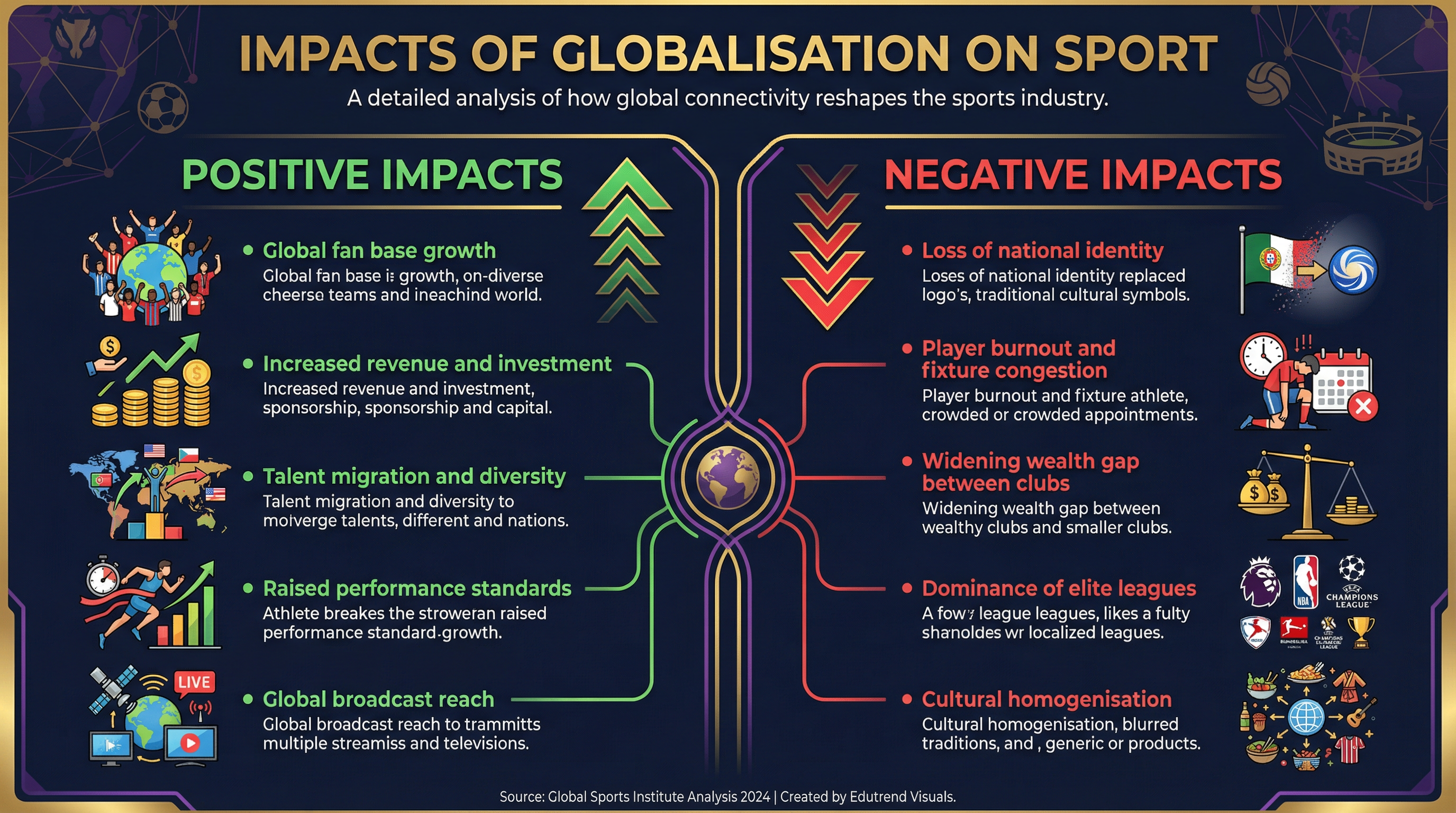
Impacts of Globalisation
Candidates must provide a balanced (AO3) evaluation of globalisation's effects.
Exam Component
Written Exam Knowledge
This topic is a major part of the 'Sport and Society' section of Paper 2. It is frequently tested through extended 8- and 15-mark questions that require candidates to apply their knowledge (AO2) and evaluate the impacts (AO3). You must be prepared to discuss specific examples from a range of sports (e.g., Premier League football, the Olympics, American sports like the NFL playing in London).