Study Notes
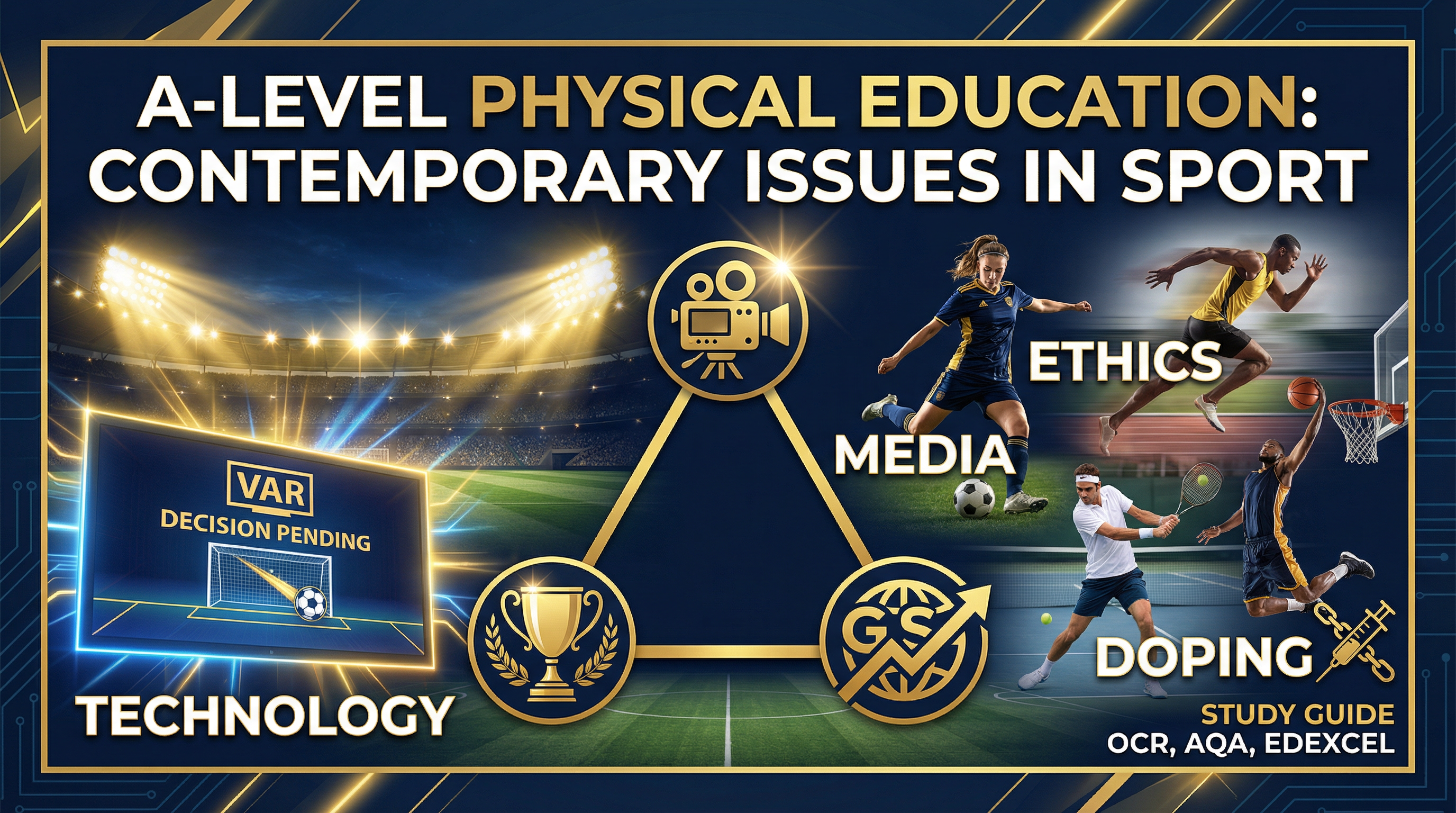
Overview
Welcome to one of the most dynamic and challenging topics in A-Level Physical Education: Contemporary Issues in Sport. This unit moves beyond the biomechanics and physiology to explore sport as a social and cultural phenomenon. Examiners are looking for candidates who can think critically about the complex interplay between sport, the media, commercial interests, and ethics. A strong performance in this section requires you to not only know the facts but to evaluate their impact on the integrity and nature of modern sport. This guide will equip you with the knowledge, analytical skills, and exam technique to deconstruct 10-mark questions and secure the highest grades.
Key Knowledge & Theory
Core Concepts
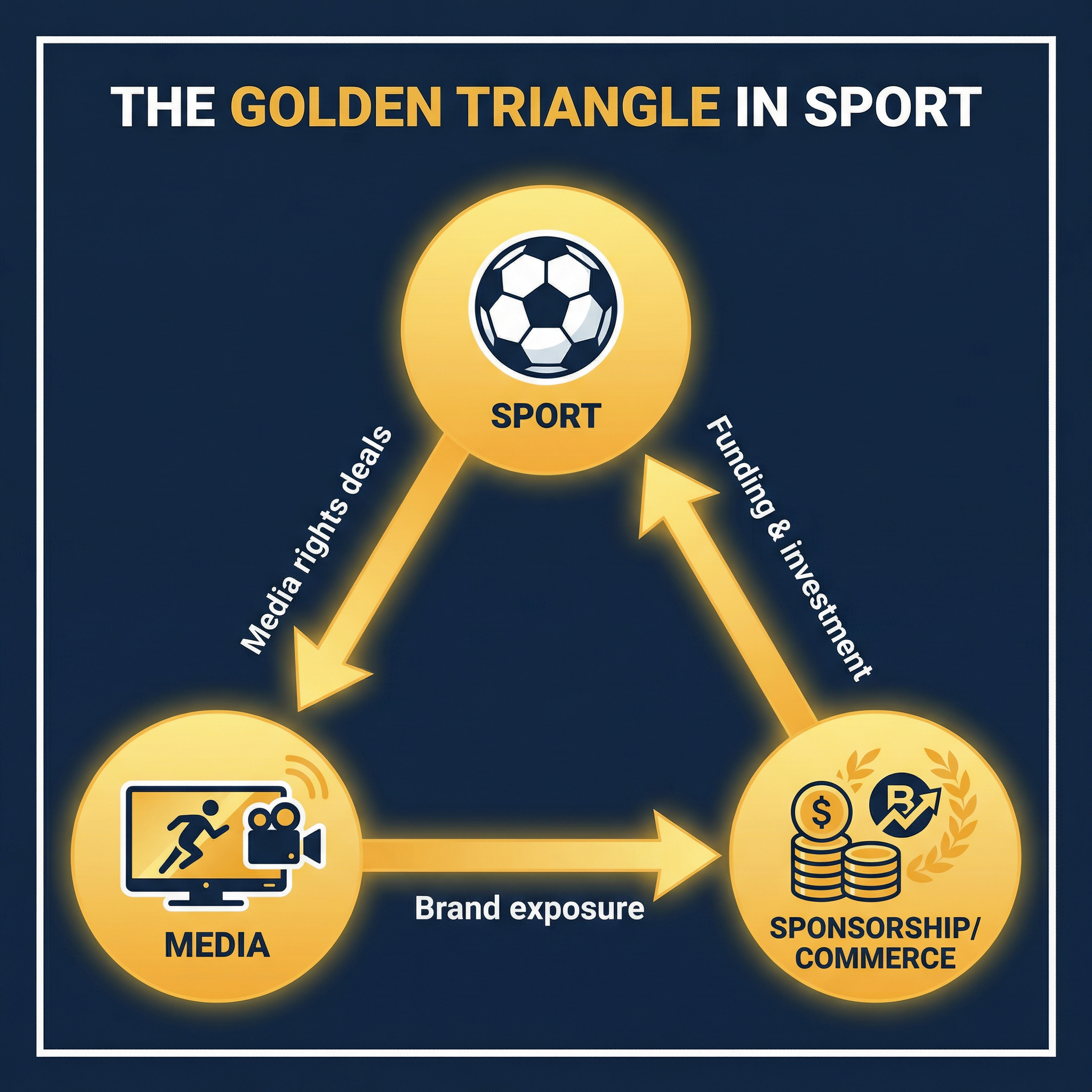
The Golden Triangle: This is the most critical concept in this topic. It refers to the interdependent, mutually beneficial relationship between Sport, the Media, and Sponsorship (commercialisation). Sport provides the exciting content, the media pays billions for the rights to broadcast it to a mass audience, and sponsors pay billions to have their brands associated with the sport and its media coverage. This cycle has led to unprecedented wealth in elite sport, but also to significant ethical dilemmas. Candidates must be able to evaluate the positive and negative impacts of this relationship.
Deviance: This refers to behaviour that falls outside the norms and values of a society. In sport, it ranges from minor rule-bending (gamesmanship) to serious cheating and criminal acts. It's crucial to understand the causes of deviance, such as the immense pressure to win created by commercialisation, and to be able to differentiate between different types of deviance.
Modern Technology: The impact of technology is a major area of assessment. You must be able to analyse how innovations like the Video Assistant Referee (VAR), Hawk-Eye, and advanced performance-monitoring equipment affect three distinct groups: performers, spectators, and officials. A common mistake is to simply describe the technology; credit is given for evaluating its specific positive and negative consequences for each group.
Doping: The use of prohibited substances to enhance performance is a central ethical issue. Candidates need to know the roles of the World Anti-Doping Agency (WADA) and National Governing Bodies (NGBs) in combating doping. The focus must be on evaluating the effectiveness of strategies like the Prohibited List, the Biological Passport, and educational initiatives like UKAD's 'Clean Sport'.
Key Practitioners/Organisations
| Name | Role | Key Actions | Relevance |
|---|---|---|---|
| WADA | World Anti-Doping Agency | Manages the Prohibited List, accredits labs, investigates doping | The global regulator for anti-doping. Its effectiveness is a key evaluative point. |
| UK Sport | UK's High Performance Sports Agency | Distributes National Lottery funding to elite Olympic & Paralympic sport | Embodies the 'no compromise' approach to elite funding, directly linking to commercialisation and pressure. |
| Sport England | Grassroots Sport Development Agency | Invests in community sport to increase participation | Provides a crucial contrast to UK Sport, highlighting the tension between elite success and mass participation. |
| IOC | International Olympic Committee | Owns the Olympic Games, selects host cities, manages broadcast rights | A prime example of a global sporting organisation navigating commercialisation, politics, and ethics. |
Technical Vocabulary
To earn marks in the top bands, you must use specialist terminology correctly. Key terms include: Commercialisation, Commoditisation, Sportsmanship, Gamesmanship, Deviance, Instrumental Aggression, Hostile Aggression, Strict Liability, Synoptic Link, Assessment Objectives (AO1, AO2, AO3).
Practical Skills
While this is a theory-based topic, the 'practical skill' lies in your ability to apply theoretical knowledge to real-world sporting contexts in your written answers.
Techniques & Processes
The AO1-AO2-AO3 Method for Extended Answers: This is the most important process for structuring 10-mark responses.
- AO1 (Knowledge): Start by defining your key terms. What is the Golden Triangle? What is deviance?
- AO2 (Application): Apply this knowledge to a specific, contemporary sporting example. Don't just say 'football'; say 'the Premier League's £5.1bn domestic TV rights deal'.
- AO3 (Evaluation): Critically assess the issue. What are the pros and cons? What is the overall impact? Make a justified judgement. For instance, 'While commercialisation has professionalised women's football, it has also created a performance gap between the top teams and the rest of the league.'
Materials & Equipment
Your 'equipment' for this exam is your bank of contemporary examples. You should be constantly updating this from the news. Effective examples include:
- Technology: VAR decisions in the Premier League, Hawk-Eye at Wimbledon.
- Doping: The Russian state-sponsored doping scandal (McLaren Report).
- Commercialisation: The FIFA World Cup in Qatar, the rise of the Saudi Pro League.
- Violence: Player-on-player assaults, instances of spectator hooliganism.
Exam Component
Written Exam Knowledge
This topic is assessed in Component 03 via a written examination. The paper will consist of short-answer questions (e.g., 4 marks) and extended response questions (e.g., 10 marks). The key is to understand the weighting of the Assessment Objectives.
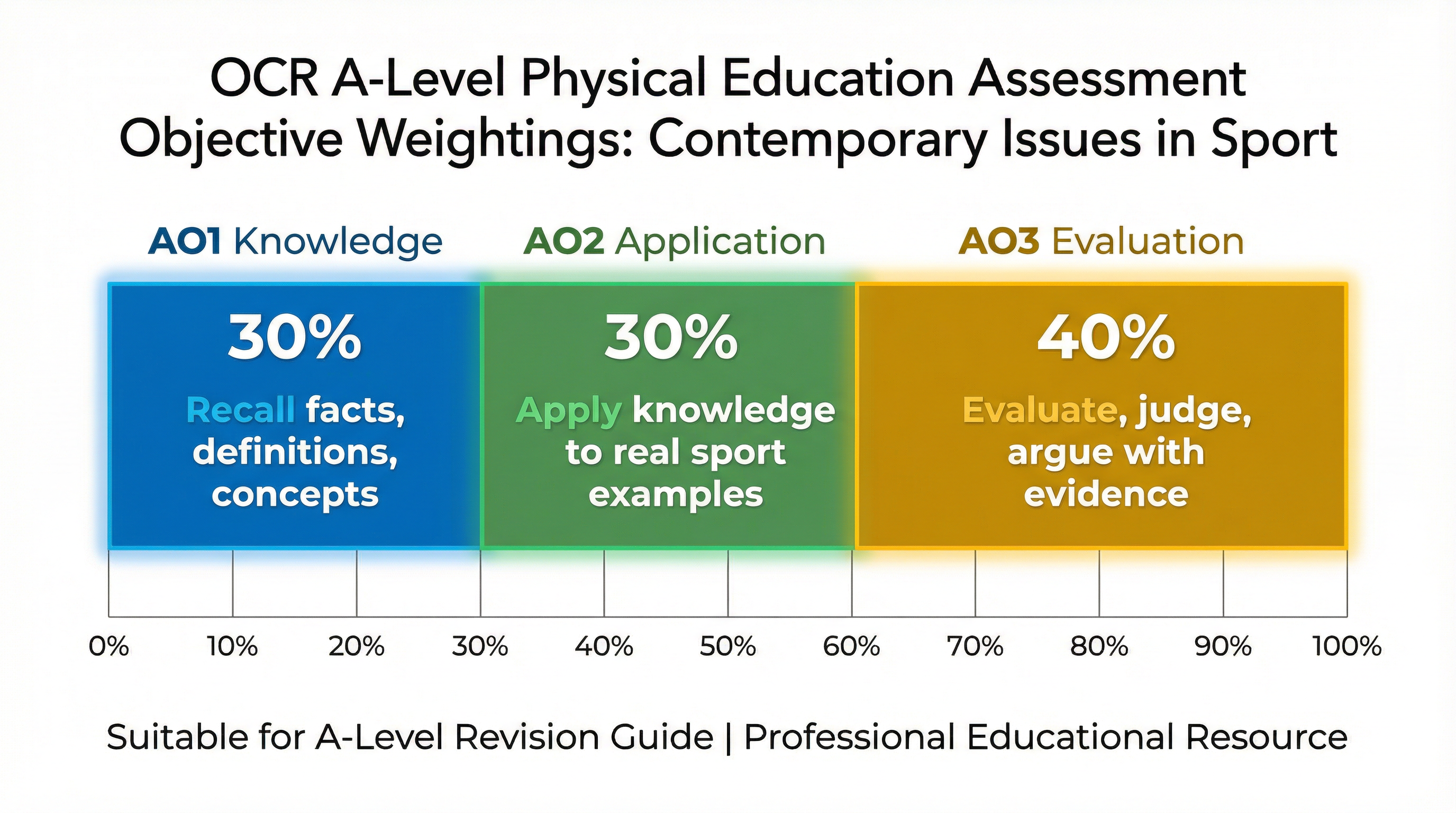
As you can see, AO3 (Evaluation) is the most heavily weighted. This means that for any question worth more than a few marks, a purely descriptive answer will be capped at a low grade. You MUST make judgements.
"