Study Notes
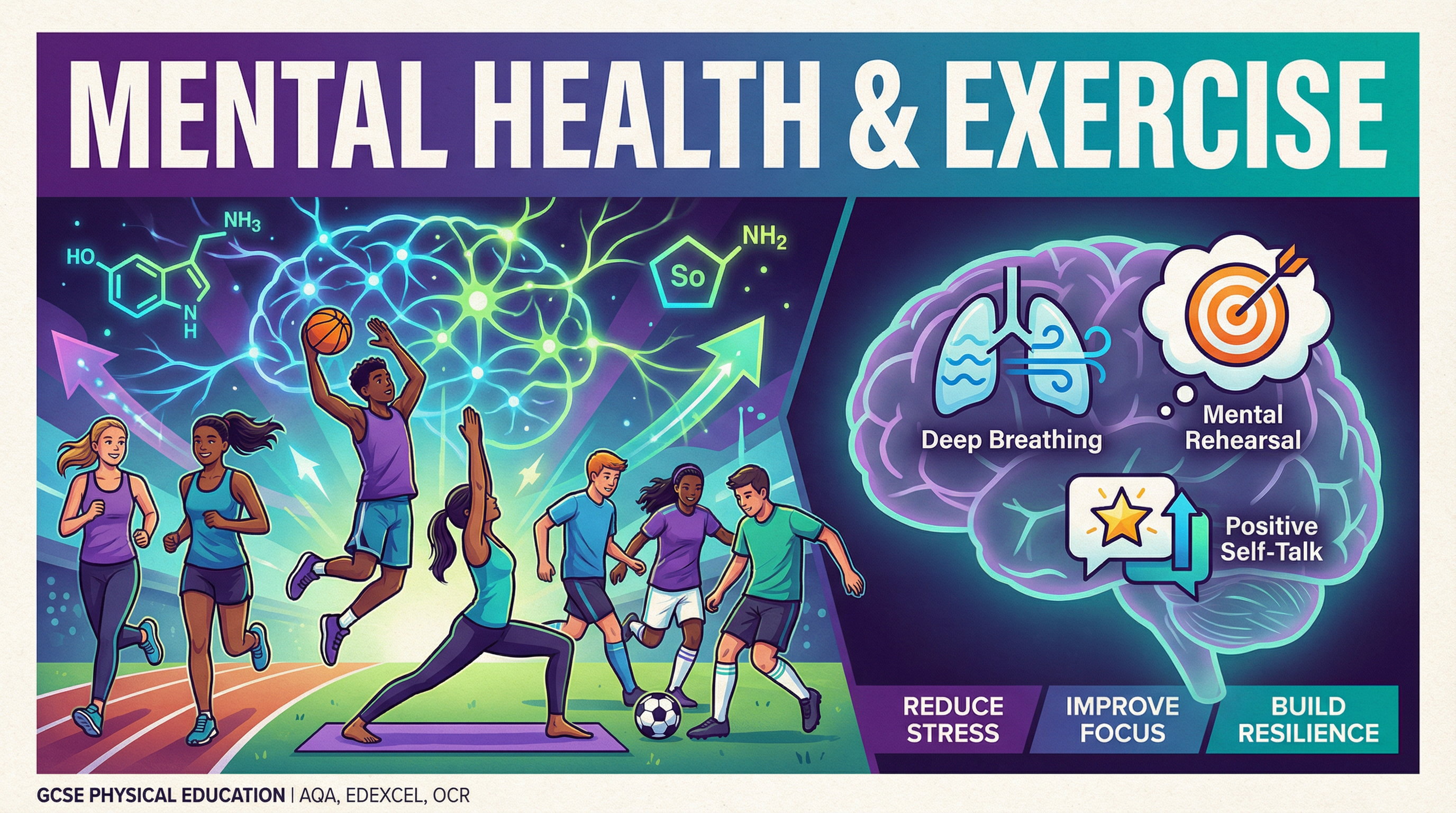
Overview
This topic, sitting within Component 01, is a cornerstone of the OCR GCSE PE specification, bridging the gap between physical performance and psychological resilience. Candidates are required to understand not just that exercise is good for mental health, but precisely how it confers these benefits. A clear grasp of the distinctions between Physical, Emotional, and Social (PES) health is essential for earning marks. Furthermore, this section delves into the practical application of sports psychology, equipping candidates with the knowledge to analyse and evaluate how elite athletes control arousal and manage stress to achieve peak performance. Mastery of this content is crucial for demonstrating the synoptic thinking required for higher grades, as it connects directly to training principles, skill acquisition, and overall wellbeing.
Key Knowledge & Theory
Core Concepts
The theoretical foundation of this topic rests on two pillars: the Benefits of Exercise and Stress Management Techniques. Candidates must be ableto recall and apply knowledge from both.
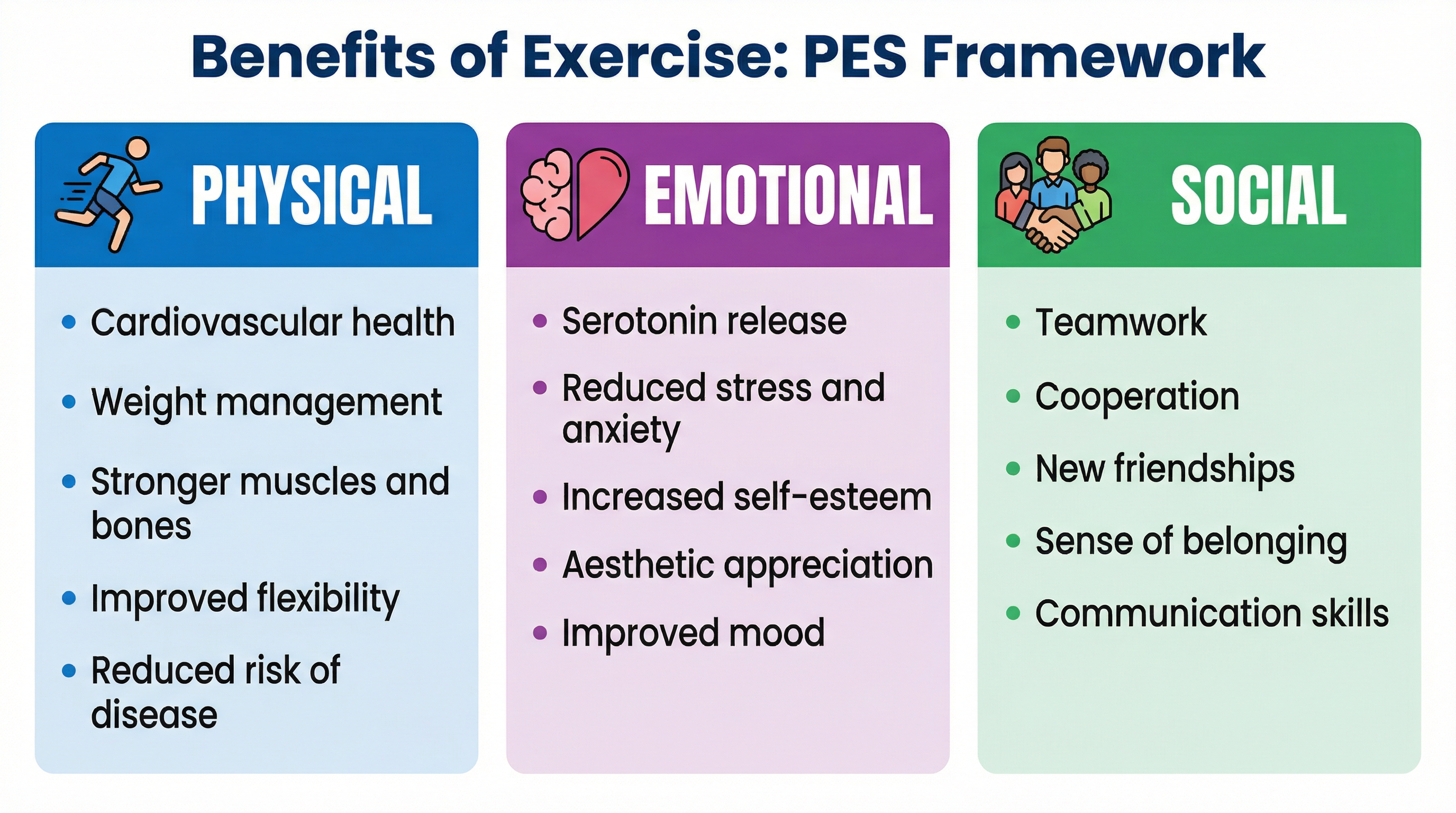
1. The PES Framework: Benefits of a Healthy, Active LifestyleExaminers expect candidates to classify the benefits of exercise into three distinct categories. Using the mnemonic PES is a highly effective strategy to ensure all three are considered in an answer.
- Physical Health: These are the most direct and observable effects on the body. Regular participation in physical activity leads to significant physiological adaptations, such as improved efficiency of the cardiovascular system (stronger heart, better circulation), maintenance of a healthy weight, increased bone density, and a reduced risk of developing chronic conditions like type 2 diabetes and certain cancers.
- Emotional Health: This category concerns the internal psychological state of the individual. A key point here, often worth a specific mark, is the role of serotonin. Exercise stimulates the release of this neurotransmitter, which acts as a mood elevator. Other emotional benefits include a reduction in stress and anxiety, an increase in self-esteem and confidence, and the experience of 'aesthetic appreciation' – the enjoyment derived from the beauty of skilled movement, either as a performer or a spectator.
- Social Health: This dimension focuses on an individual's ability to form and maintain relationships. Sport and physical activity provide a natural environment for developing teamwork, cooperation, and communication skills. It fosters a sense of belonging, helps in forming new friendships, and builds a supportive community.
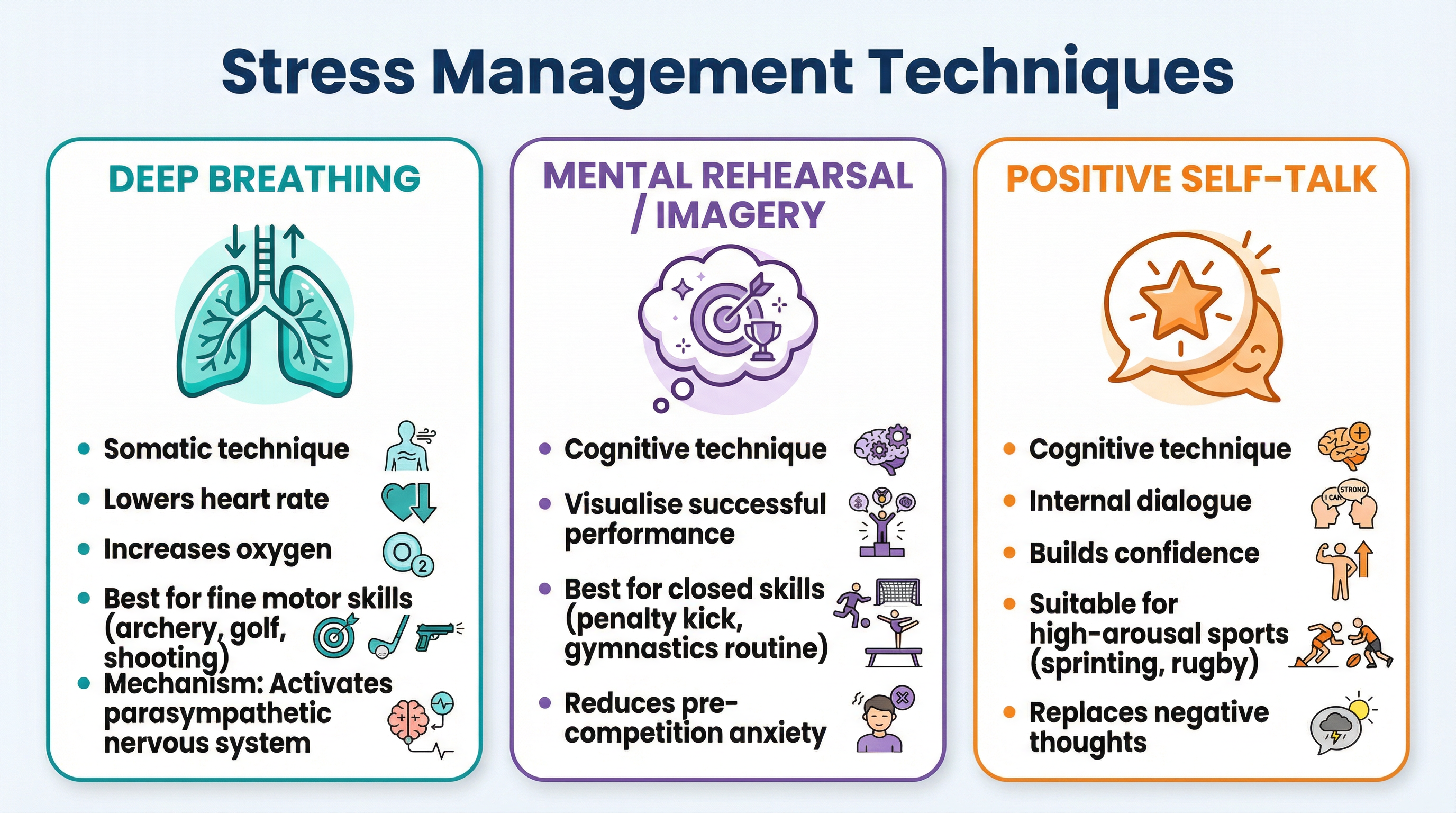
2. Stress Management & Arousal ControlIn high-stakes sporting situations, the ability to manage stress is as important as physical skill. Stress can be defined as the body's response to a demand placed upon it. Arousal is the level of activation or excitement of the central nervous system. The key is to find the optimal level of arousal for the specific task. The following techniques are used to control this.
- Deep Breathing (Somatic): A somatic technique, meaning it focuses on the body's physical state. By taking slow, deep breaths, an athlete can activate the parasympathetic nervous system, which counters the 'fight or flight' response. This leads to a lower heart rate, reduced muscle tension, and increased oxygen supply to the brain. It is most effective for sports requiring fine motor control and precision, such as archery, snooker, or golf, where high arousal would be detrimental.
- Mental Rehearsal / Imagery (Cognitive): A cognitive technique that involves the athlete creating a vivid, detailed mental picture of a successful performance. This is not simply 'thinking about the game'; it is a structured process of visualising the perfect execution of a skill from start to finish. It is most effective for closed skills – those performed in a stable, predictable environment like a penalty kick, a gymnastics routine, or a tennis serve. This process reduces anxiety by building a mental blueprint for success.
- Positive Self-Talk (Cognitive): Another cognitive strategy that focuses on the athlete's internal dialogue. It involves consciously replacing negative, anxious thoughts with positive, confident, and instructional ones (e.g., replacing "Don't miss" with "Focus on the target"). This technique is highly effective for maintaining motivation and confidence, particularly in high-arousal sports like sprinting or rugby, where the performer needs to be 'psyched up' but in a controlled manner.
Technical Vocabulary
Using precise terminology is a direct route to higher marks. Candidates should aim to use the following terms accurately in their written responses:
- Serotonin: The specific neurotransmitter that improves mood.
- Arousal: A state of alertness and activation of the central nervous system.
- Somatic: Relating to the body's physical state.
- Cognitive: Relating to the mental processes of the mind.
- Closed Skill: A skill performed in a predictable environment, where the performer dictates the start and pace.
- Open Skill: A skill performed in an unpredictable environment, often dictated by external factors (e.g., opponents).
- Parasympathetic Nervous System: The part of the nervous system responsible for the 'rest and digest' response, calming the body.
- Sympathetic Nervous System: The part of the nervous system responsible for the 'fight or flight' response, preparing the body for action.
- Aesthetic Appreciation: The enjoyment or admiration of the quality of movement.
Exam Component
Written Exam Knowledge
This topic is a frequent feature in the Component 01 written paper. Questions can range from simple 1-mark recall questions (e.g., 'Identify one social benefit of exercise') to complex 6-mark AO3 evaluation questions (e.g., 'Evaluate the use of two different stress management techniques for a named sport'). Candidates must be prepared to:
- AO1 (Knowledge): Define key terms and identify benefits and techniques.
- AO2 (Application): Apply the techniques to specific sporting scenarios, explaining how they would be used.
- AO3 (Evaluation): Judge the effectiveness of different techniques, comparing and contrasting them and justifying their choices based on the demands of the sport.
To excel, candidates must move beyond simple descriptions and provide detailed explanations and justifications. For instance, when discussing deep breathing, explaining why it lowers heart rate (by activating the parasympathetic nervous system) will access higher mark bands than simply stating that it does.