Study Notes
Overview
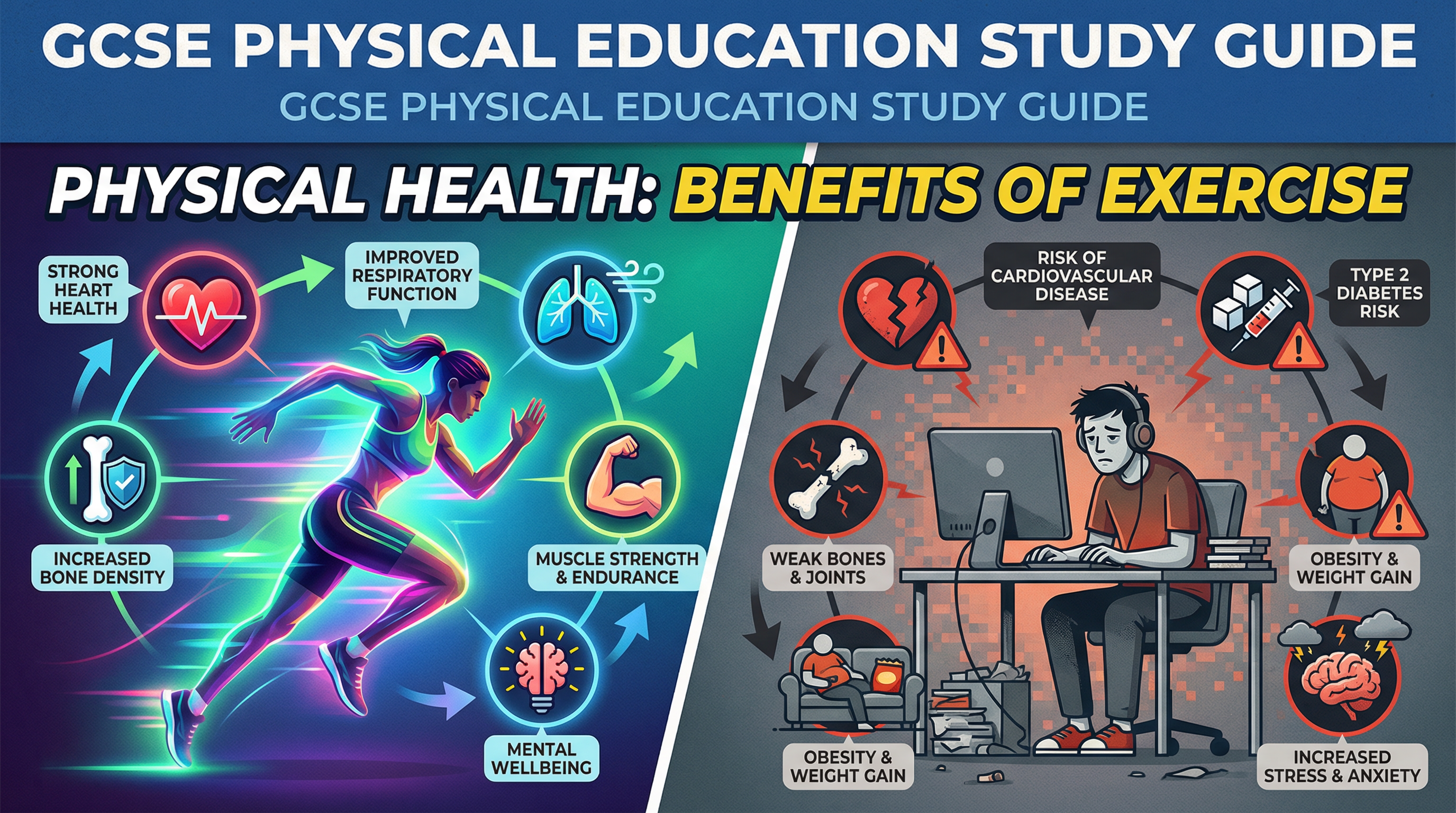
This topic explores the fundamental relationship between physical activity and health, a cornerstone of the OCR GCSE PE specification. Candidates must understand and be able to apply the tripartite benefits of exercise — physical, emotional, and social — and contrast these with the severe health risks posed by a sedentary lifestyle. Mastery of this area is crucial for securing high marks in both short-answer (AO1) and extended-response (AO3) questions.
Key Knowledge & Theory
Core Concepts
The core of this topic is understanding the distinct benefits of exercise and the specific consequences of inactivity. Examiners look for detailed, technical knowledge, not just common-sense answers.
The Tripartite Benefits of ExercisePhysical activity provides benefits across three interconnected domains. Candidates must be able to classify benefits accurately to gain credit.
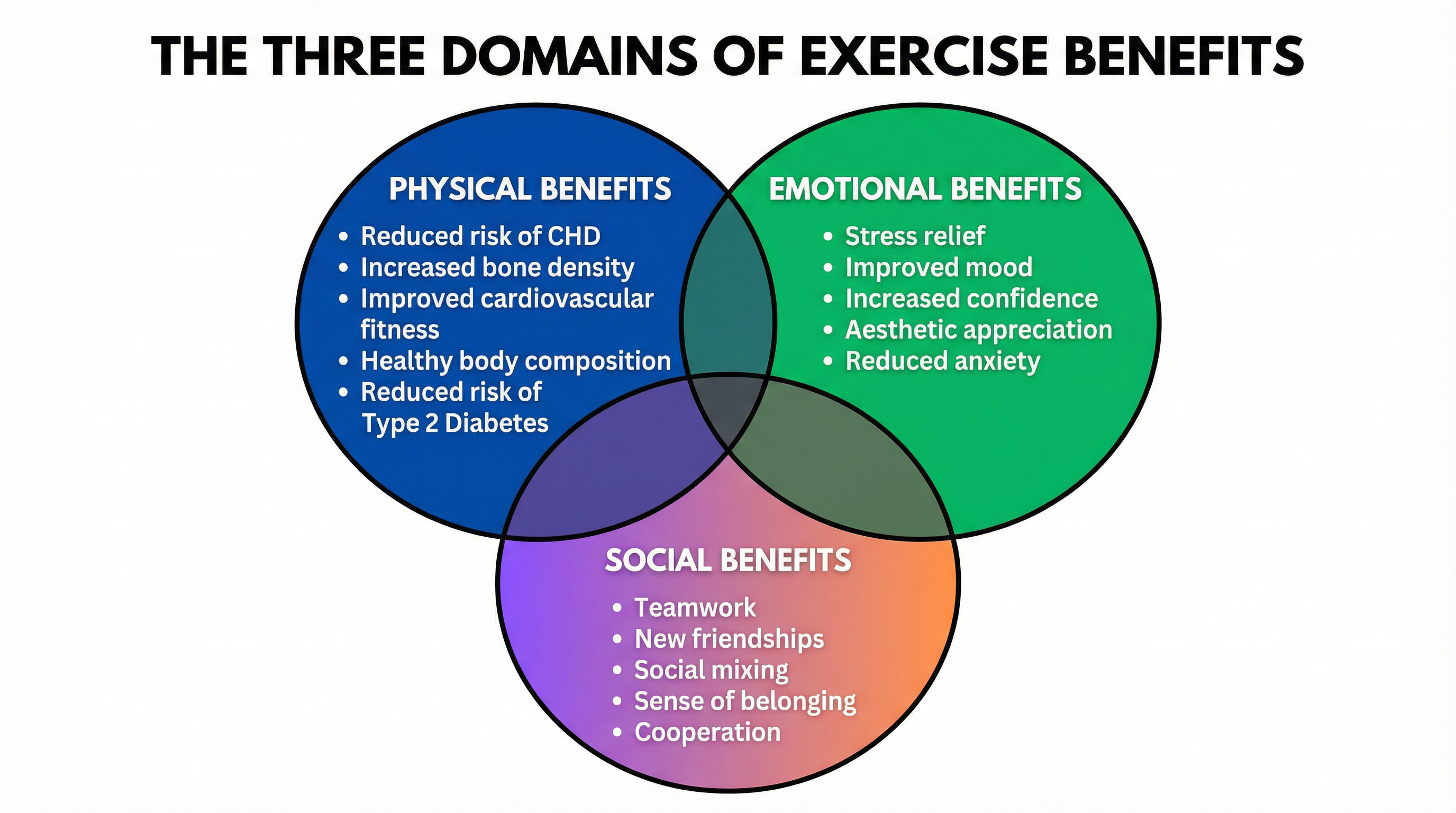
- Physical Benefits: These relate to the physiological improvements in the body's systems. Regular exercise leads to adaptations that reduce the risk of major diseases and enhance physical capacity.
- Emotional Benefits: These concern the psychological and mental health advantages of being active. Exercise is a powerful tool for managing mood and stress.
- Social Benefits: These involve the opportunities for interaction and community building that sport and physical activity provide.
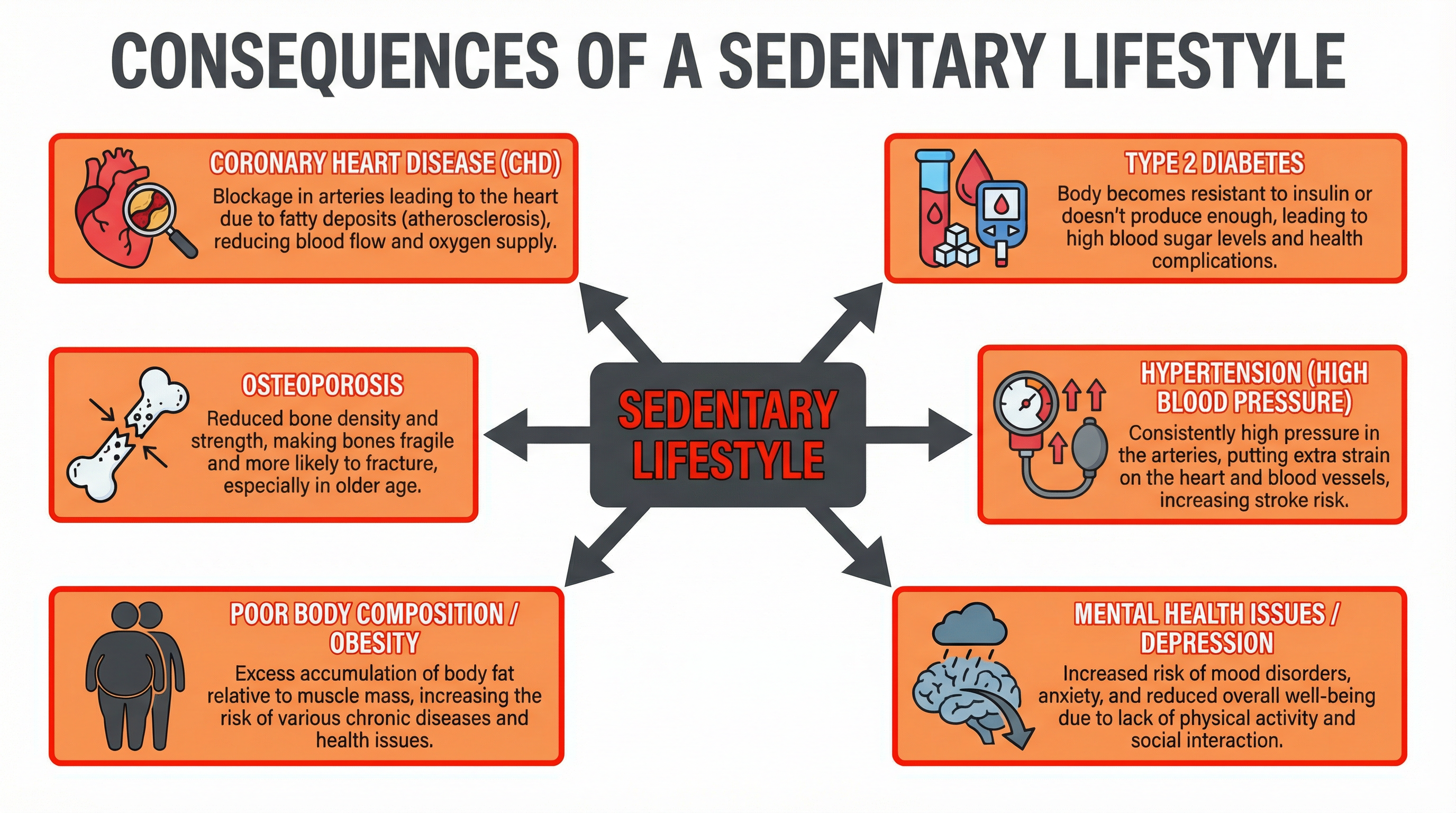
Consequences of a Sedentary LifestyleA sedentary lifestyle is characterized by prolonged periods of inactivity, such as sitting or lying down, with very low energy expenditure. It is a major risk factor for several chronic diseases.
Key Practitioners/Artists/Composers
While PE doesn't have 'practitioners' in the same way as art or music, it's crucial to understand the key health organizations and guidelines that inform our understanding of exercise.
| Name | Period/Style | Key Works | Relevance |
|---|---|---|---|
| UK Chief Medical Officers (CMOs) | 2019-Present | Physical Activity Guidelines | Sets the official evidence-based recommendations for physical activity for different age groups in the UK. Knowing the recommendation for young people (60 mins/day) is essential AO1 knowledge. |
| World Health Organization (WHO) | Global | Global Action Plan on Physical Activity | Provides the global context for the importance of physical activity in combating non-communicable diseases. Useful for AO3 analysis of the wider impact of exercise. |
| The NHS (National Health Service) | UK | NHS Live Well - Exercise | A key source of public health information that translates scientific guidelines into practical advice for the public. Often used as a basis for exam scenarios (AO2). |
Technical Vocabulary
Using precise, subject-specific terminology is mandatory for accessing higher mark bands. Candidates should use these terms instead of their simpler equivalents.
- Sedentary Lifestyle: A lifestyle with low levels of physical activity and high levels of inactivity.
- Coronary Heart Disease (CHD): A condition where the coronary arteries become narrowed by a build-up of fatty material.
- Osteoporosis: A condition that weakens bones, making them fragile and more likely to break.
- Type 2 Diabetes: A condition where the body does not produce enough insulin, or the body's cells don't react to insulin properly.
- Hypertension: The clinical term for high blood pressure.
- Cardiac Hypertrophy: The thickening and strengthening of the heart muscle wall as a result of regular aerobic exercise.
- Bone Density: A measure of the amount of bone mineral in bone tissue; a key indicator of bone strength.
- Caloric Surplus/Deficit: The state of consuming more calories than expended (surplus) or fewer calories than expended (deficit).
Practical Skills
Techniques & Processes
While this topic is theoretical, applying it to practical sporting contexts is key for AO2 marks. Candidates should be able to explain how different types of training elicit specific benefits.
- Weight-Bearing Exercise for Bone Density: Activities where you support your own body weight (e.g., running, gymnastics, tennis) put stress on the skeleton, stimulating osteoblasts (bone-building cells) to increase bone density. This is a direct mechanism for preventing osteoporosis.
- Aerobic Exercise for Cardiovascular Health: Continuous exercise that raises the heart rate for a sustained period (e.g., cycling, swimming, long-distance running) trains the heart to become more efficient (cardiac hypertrophy), reduces blood pressure, and improves circulation, thereby lowering the risk of CHD.
- Team Sports for Social Benefits: Participating in sports like football, netball, or hockey requires cooperation, communication, and teamwork, directly fostering social skills and a sense of belonging.
Materials & Equipment
Understanding the role of technology in monitoring health can be relevant.
- Heart Rate Monitors: Used to ensure an athlete is working in the correct aerobic training zone to achieve cardiovascular benefits.
- Fitness Trackers: Can be used to monitor daily step count and activity levels, helping to combat a sedentary lifestyle by providing data and motivation.
Portfolio/Coursework Guidance
This topic is primarily assessed in the written exam (Component 01), but understanding it can inform a candidate's Personal Exercise Programme (PEP) in their coursework (NEA). For example, a student could design a PEP to reduce their risk of future health problems by improving their cardiovascular fitness.
Exam Component
Written Exam Knowledge
This is a major part of Component 01. Candidates can expect multiple-choice, short-answer, and extended-response questions on this topic.
- AO1 (Recall): Naming the benefits, classifying them, and defining the consequences.
- AO2 (Application): Applying the benefits/consequences to a specific sporting or life scenario.
- AO3 (Analysis/Evaluation): Explaining the long-term impact of exercise or a sedentary lifestyle, often in a 6-mark question.