Study Notes
Overview
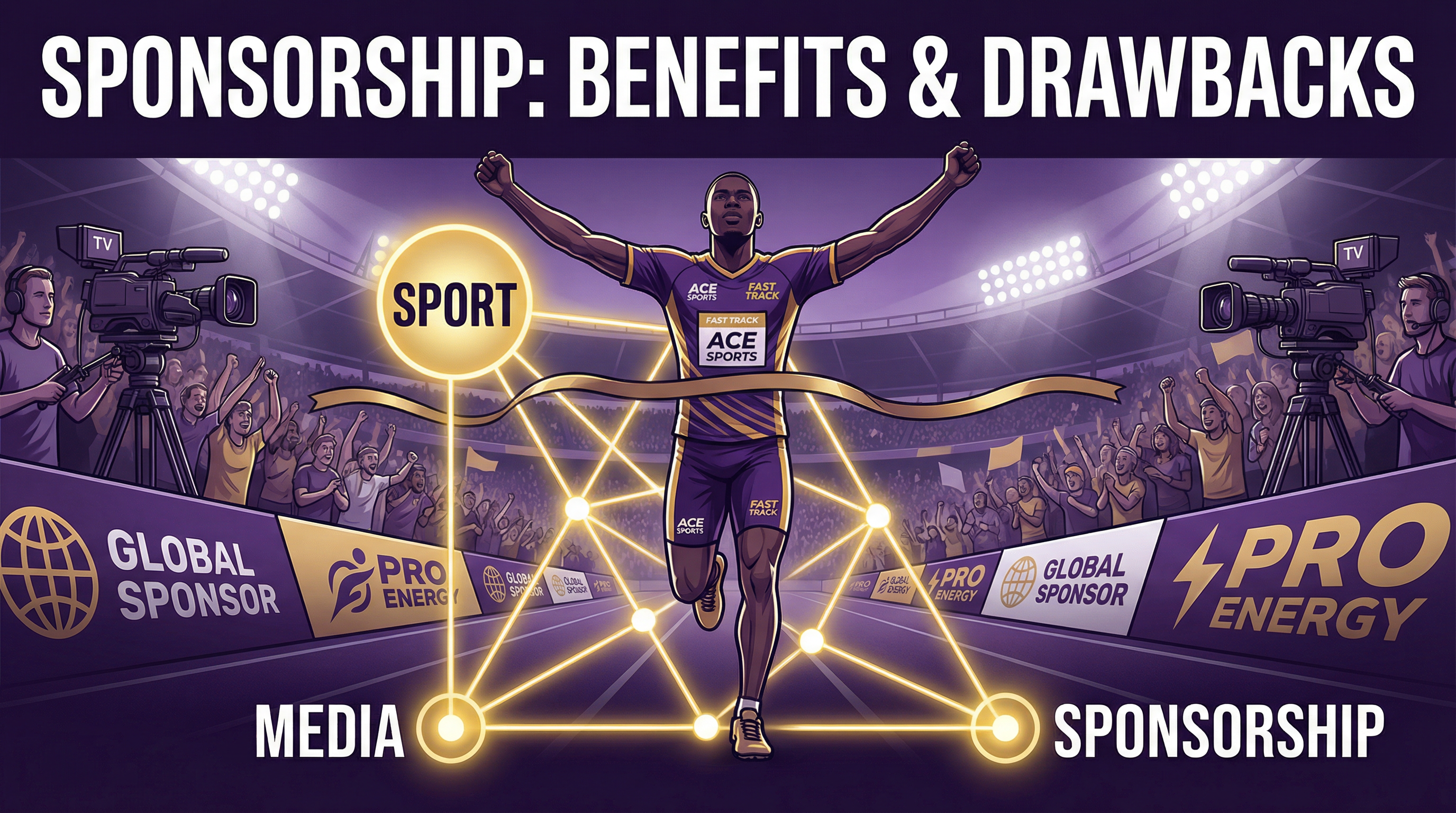
Sponsorship is a critical component of modern elite sport, representing the core of its commercialisation. For the OCR GCSE PE exam, candidates must move beyond a simple understanding of sponsorship as just 'money for sport'. Instead, you are required to analyse the complex, interdependent relationship between Sport, Sponsorship, and the Media — a concept known as the Golden Triangle. Full marks are awarded to candidates who can critically evaluate the specific positive and negative impacts of this relationship on five distinct stakeholders: the Performer, the Sport itself, the Officials, the Spectators, and the Sponsors. This topic is heavily weighted towards AO2 (Application) and AO3 (Evaluation), meaning you must apply your knowledge to specific scenarios and make well-reasoned judgements.
Key Knowledge & Theory
The Golden Triangle
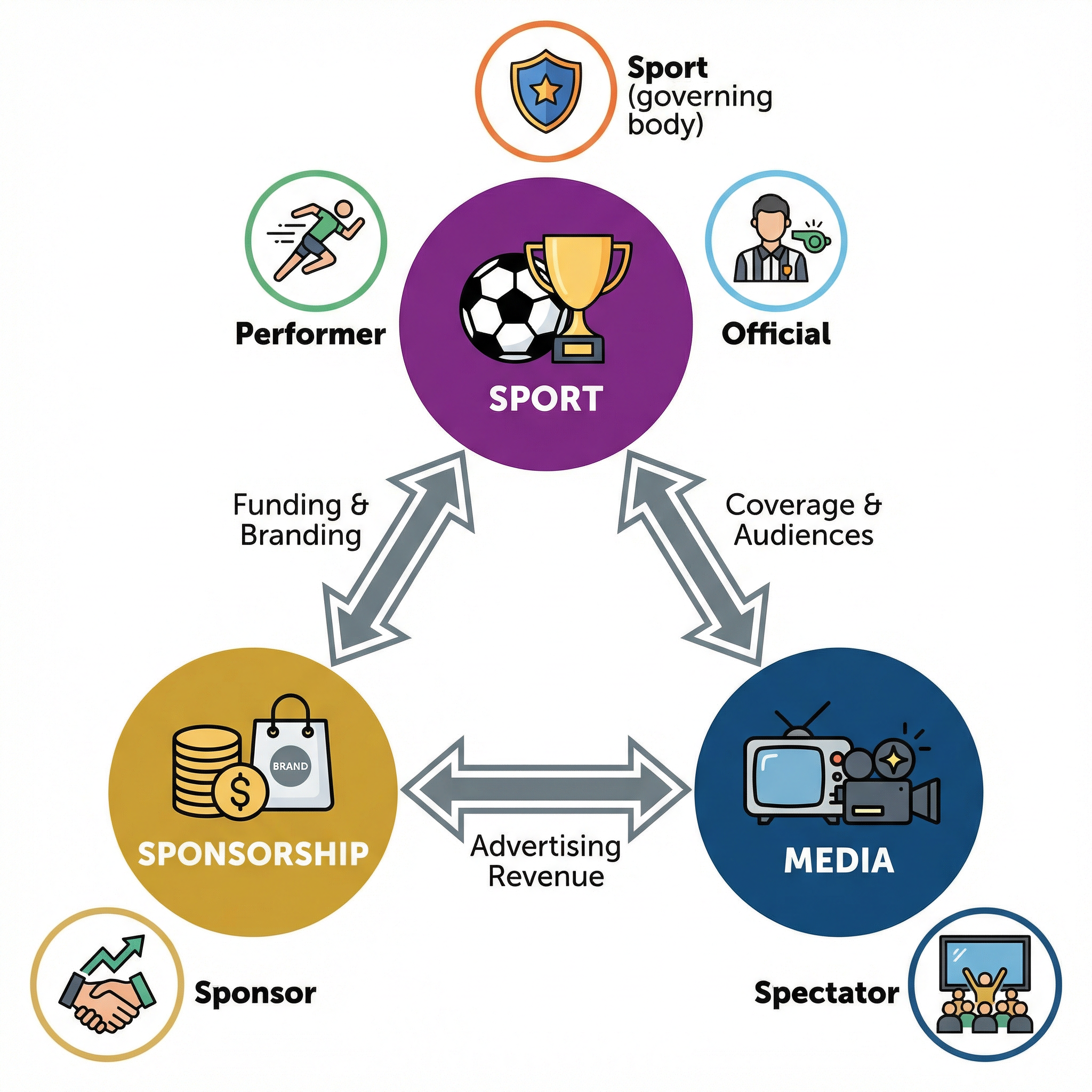
The Golden Triangle is the fundamental model for understanding the commercial structure of elite sport. It illustrates how three factors are intrinsically linked and mutually dependent. An examiner will credit a candidate who can explain this relationship clearly.
- Sport: Provides the core product — the competition, the athletes, the drama — that attracts large, passionate audiences.
- Media: Broadcasters like Sky Sports, BBC, and ITV pay enormous sums for the rights to televise live sport. They do this because sport delivers huge, reliable viewing figures that are highly valuable to advertisers.
- Sponsorship: Companies (sponsors) pay large sums of money to have their brand name and products associated with a sport, team, or performer. They need the media to broadcast this association to the millions of fans watching.
Essentially, the relationship works like this: the media needs sport to attract viewers, sport needs the media for exposure and revenue, and sponsors need both to advertise their products. This creates a powerful cycle that drives the commercialisation of sport.
Impact on Stakeholders
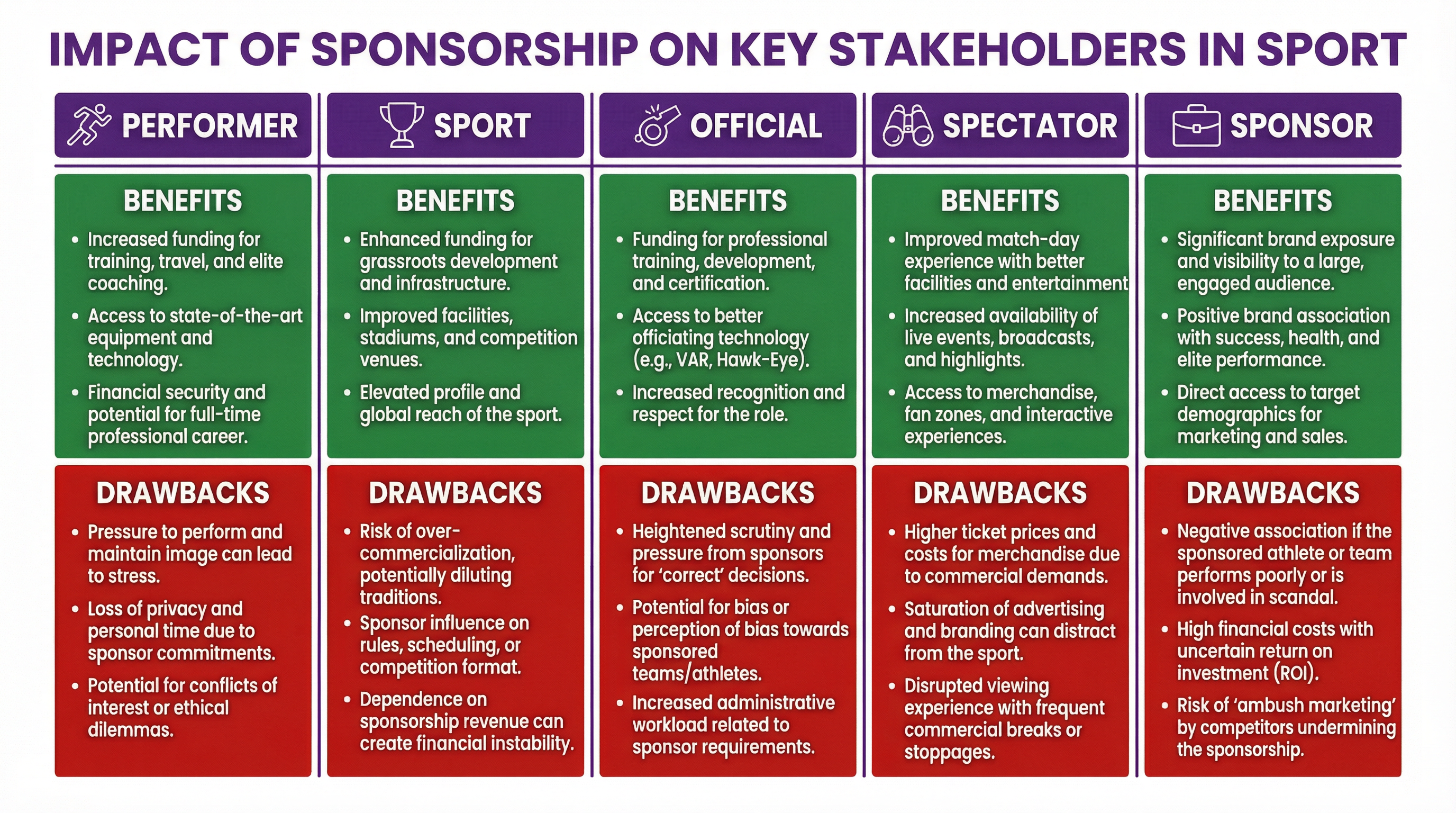
This is the area where most exam questions are focused. You must be able to detail the specific benefits and drawbacks for each of the five groups below. Credit is given for specific, well-explained points, not generic statements.
Technical Vocabulary
Using precise terminology is essential for achieving high marks. An examiner will be looking for these terms in your extended answers.
- Commercialisation: The process of managing or running something principally for financial gain.
- Sponsorship: Providing funds or resources in exchange for business benefits, primarily advertising.
- Golden Triangle: The interdependent relationship between Sport, Media, and Sponsorship.
- Brand Equity: The commercial value that derives from consumer perception of the brand name of a particular product or service, rather than from the product or service itself.
- Deviant Behaviour: Actions that violate the norms of sport, such as doping, cheating, or on-field violence.
- Return on Investment (ROI): A performance measure used to evaluate the efficiency of an investment. Sponsors expect a positive ROI from their deals.
- Grassroots Sport: Sport at a local, non-professional level, often for participation rather than excellence.
Practical Skills
While this is a theoretical topic, it connects directly to the practical world of sport that candidates experience. Understanding this link can strengthen your analysis.
Applying Theory to Practice
When watching or participating in sport, actively look for examples of the Golden Triangle in action.
- Identify Sponsors: Look at the kits worn by performers, the advertising hoardings around the pitch, and the names of competitions (e.g., the 'Emirates' FA Cup). Ask yourself: why has that company chosen to sponsor this sport or team?
- Analyse Media Coverage: Notice how broadcasters package sport. How many commercial breaks are there? How often are sponsors' logos shown on screen? How do slow-motion replays affect the perception of an official's decision?
- Consider the Performer: Think about the pressures on a professional athlete. How much of their time is dedicated to media interviews and sponsor commitments? How might this impact their training and performance?
Portfolio/Coursework Guidance
This topic does not directly relate to a practical performance portfolio. However, understanding the commercial pressures in elite sport provides crucial context for analysing performance. For example, when evaluating a professional's performance, you could consider how the pressure to win for sponsors might lead to gamesmanship or risk-taking.
Exam Component
Written Exam Knowledge
This topic will be assessed in the written exam paper. Questions can range from simple 1-mark definitions to 6 or 9-mark extended response questions requiring detailed analysis and evaluation.
- AO1 (Knowledge): You will need to know the definitions of key terms and be able to describe the Golden Triangle.
- AO2 (Application): You will need to apply your knowledge to specific stakeholders and sporting examples. For instance, 'Explain two drawbacks of sponsorship for a professional footballer.'
- AO3 (Evaluation): You will need to make judgements. For example, 'Evaluate the statement that sponsorship has had a purely negative impact on sport.' For these questions, you must present a balanced argument, considering both sides before reaching a justified conclusion."