Study Notes
Overview
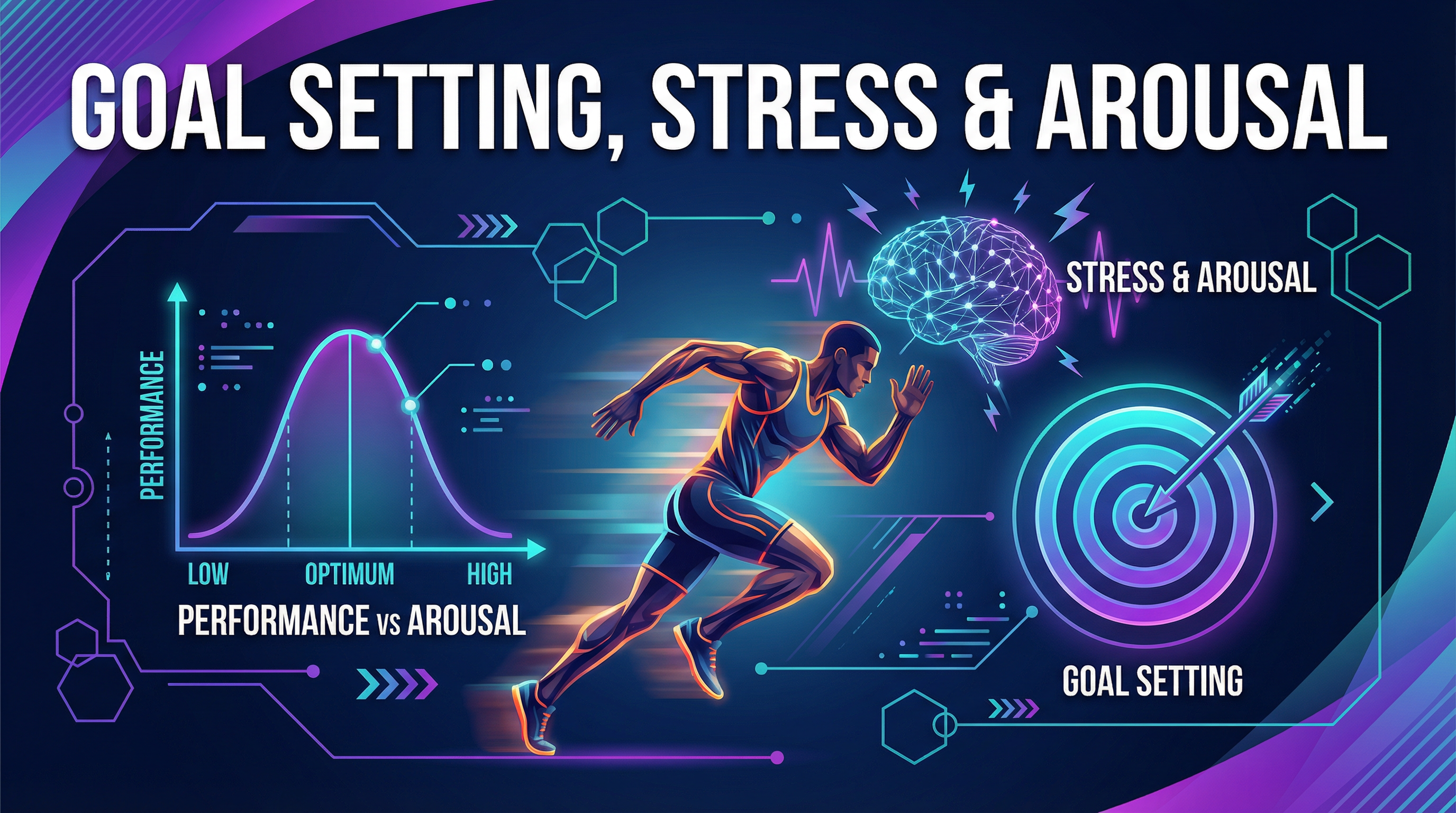
Welcome to your deep dive into Goal Setting, Stress, and Arousal (WJEC A-Level PE, Topic 3.2). This area of sports psychology is critical for understanding why some athletes thrive under pressure while others falter. Mastery of this topic is not just about memorising theories; it's about applying them to real-world sporting contexts to analyse and evaluate performance. Examiners are looking for candidates who can dissect the multidimensional nature of stress, critique arousal theories, and apply goal-setting principles to regulate anxiety and optimise performance. This guide will equip you with the knowledge, practical skills, and exam technique to do just that.
Key Knowledge & Theory
Core Concepts
Arousal and Performance
Arousal is a state of physiological and psychological activation, ranging on a continuum from deep sleep to intense excitement. The relationship between arousal and performance is not simple and is explained by several key theories that you must be able to compare and evaluate.
-
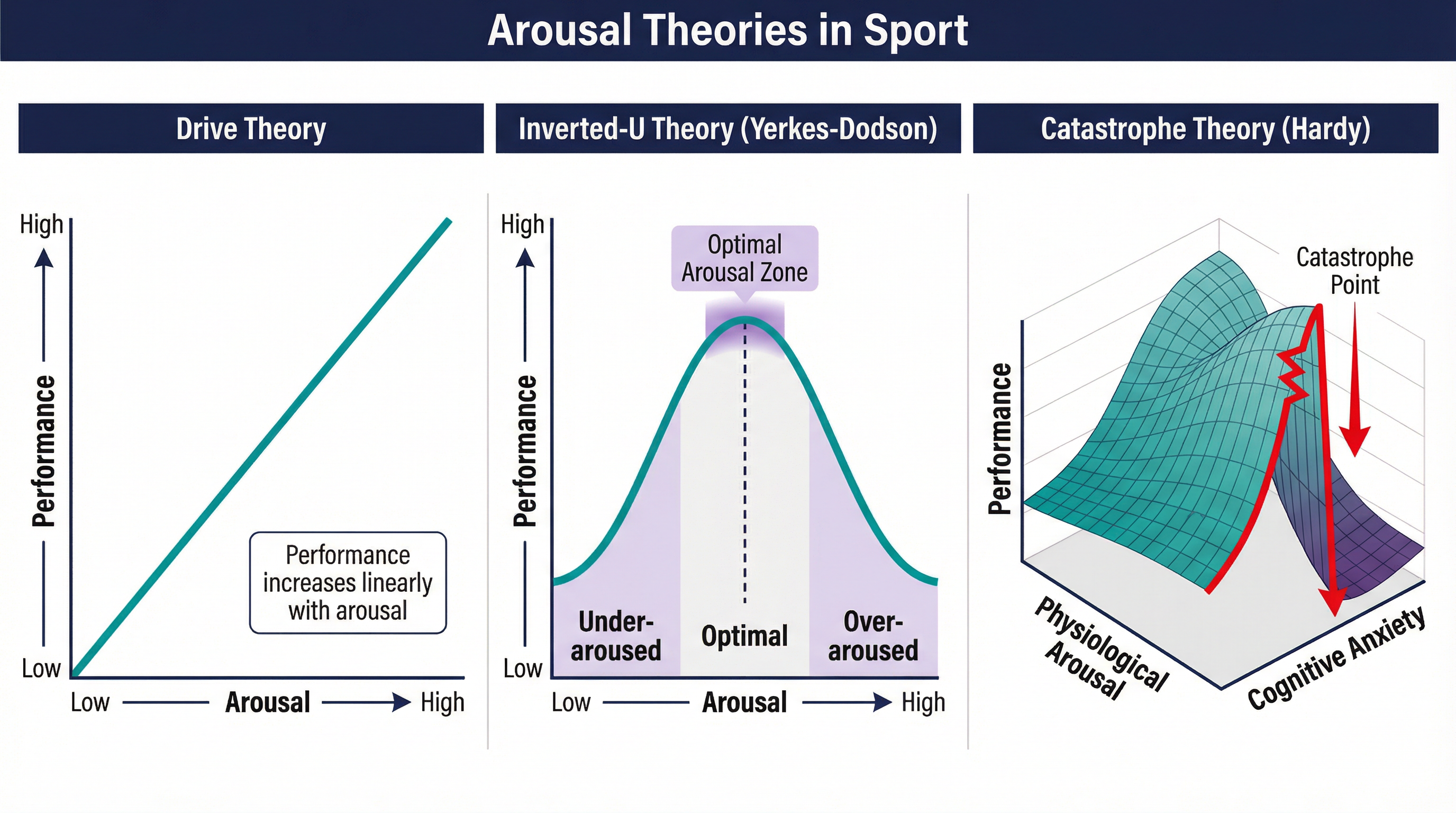
Drive Theory (Hull, 1943): This theory proposes a linear relationship: as arousal increases, so does performance. The formula is
Performance = Habit x Drive. However, this only holds true for expert performers executing well-learned (dominant) skills. For novices, high arousal often leads to a performance decrease as their dominant response may be incorrect. -
Inverted-U Theory (Yerkes-Dodson, 1908): This is a more accepted model, suggesting that performance increases with arousal but only up to an optimal point. Beyond this point, further increases in arousal lead to a gradual decline in performance. The optimal point is not fixed and depends on:
- Skill Level: Experts perform better at higher arousal levels than novices.
- Personality: Extroverts, who have lower levels of intrinsic arousal, require higher arousal levels to reach their optimum compared to introverts.
- Task Complexity: Simple, gross motor skills (e.g., a rugby tackle) require higher arousal than complex, fine motor skills (e.g., an archery shot).
-
Catastrophe Theory (Hardy & Fazey, 1987): This is the most complex and realistic model. It introduces cognitive anxiety (worry) as a key variable. When cognitive anxiety is low, the relationship mirrors the Inverted-U. However, when cognitive anxiety is high, continued increases in physiological arousal can lead to a sudden, dramatic, and vertical drop in performance—the 'catastrophe'. Recovery from this point requires a significant reduction in arousal; simply moving back along the curve is not possible.
Stress and Anxiety
Stress is the body's non-specific response to a demand placed upon it. It can be positive (Eustress), which enhances performance (e.g., the pre-race buzz), or negative (Distress), which impairs it. Anxiety is a negative emotional state of apprehension and worry. It has two main forms:
- State Anxiety: A temporary, situation-specific feeling of anxiety (e.g., feeling nervous before a penalty shootout).
- Trait Anxiety: A stable personality characteristic, making an individual more likely to perceive situations as threatening.
Goal Setting
Goal setting is a powerful motivational technique. For WJEC, you must apply the SMARTER principles.
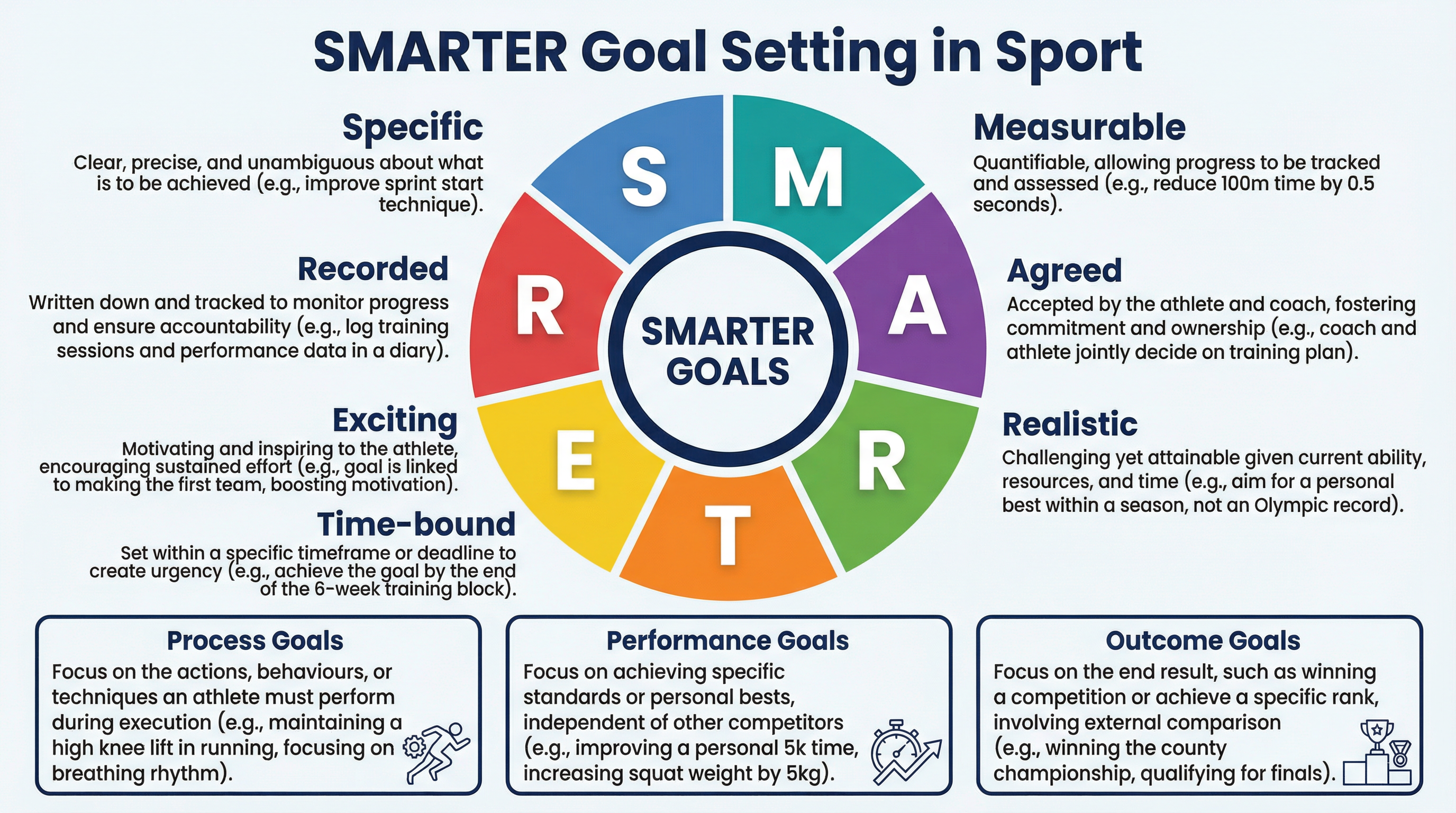
There are three types of goals:
- Outcome Goals: Focus on the end result (e.g., winning a match). They are highly motivating but can increase anxiety as they depend on external factors.
- Performance Goals: Focus on achieving a personal standard (e.g., achieving a personal best time). They are independent of others and are more controllable.
- Process Goals: Focus on the techniques and tactics required to perform well (e.g., maintaining a high elbow during a swim stroke). These are the most controllable and are excellent for reducing anxiety and improving focus.
Key Practitioners/Artists/Composers
| Name | Period/Style | Key Works | Relevance |
|---|---|---|---|
| Clark L. Hull | 1940s Behaviourism | Principles of Behavior (1943) | Developed Drive Theory, proposing a linear link between arousal and performance of dominant habits. |
| Yerkes & Dodson | 1908 Psychology | The relation of strength of stimulus to rapidity of habit-formation | Proposed the Inverted-U Hypothesis, establishing the concept of an optimal level of arousal for performance. |
| Hardy & Fazey | 1980s Sport Psychology | The Inverted-U Hypothesis: A Catastrophe for Sport Psychology | Developed Catastrophe Theory, adding cognitive anxiety as a key variable that can cause a sudden performance drop. |
| Yuri Hanin | 1980s-90s Sport Psychology | Zone of Optimal Functioning (ZOF) research | Proposed the Individual Zone of Optimal Functioning (IZOF), arguing that each athlete has a unique arousal zone where they perform best, challenging the single peak of the Inverted-U. |
Technical Vocabulary
- Arousal: A state of physiological and psychological activation.
- Somatic Anxiety: The physiological symptoms of anxiety (e.g., increased heart rate, sweating).
- Cognitive Anxiety: The psychological symptoms of anxiety (e.g., worry, negative thoughts).
- Dominant Response: The behaviour most likely to occur in a given situation, which may be incorrect for a novice.
- Eustress: A positive form of stress that can motivate and enhance performance.
- Distress: A negative form of stress that can impair performance and cause anxiety.
Practical Skills
Techniques & Processes
Stress Management Techniques
Candidates must be able to evaluate the effectiveness of different stress management techniques. These are broadly categorised as somatic or cognitive.
-
Somatic Techniques (target physiological symptoms):
- Progressive Muscular Relaxation (PMR): Involves tensing and then relaxing specific muscle groups in sequence. This helps an athlete recognise and release physical tension.
- Centering: A breathing control technique. The athlete focuses on their breathing, taking deep, slow breaths from the diaphragm to reduce heart rate and calm the body. It can be done quickly during a break in play.
- Biofeedback: Involves using electronic devices to monitor physiological responses like heart rate or muscle tension. The athlete receives real-time feedback, allowing them to learn to control these responses.
-
Cognitive Techniques (target the mind and thoughts):
- Imagery: The athlete creates a mental picture of a successful performance. This can involve visualising the perfect execution of a skill or imagining a calm, confident state of mind. It can be used to familiarise the athlete with a competition venue or to mentally rehearse strategies.
- Positive Self-Talk: Replacing negative, irrational thoughts with positive, constructive ones. For example, changing "I can't do this" to "I have trained for this and I am ready".
- Mental Rehearsal: A form of imagery where the athlete mentally practises a skill or sequence of skills in real-time.
Materials & Equipment
While this topic is largely theoretical, practical application might involve using equipment like heart rate monitors or biofeedback machines to demonstrate the physiological aspects of arousal and stress. For goal setting, a training diary or logbook is an essential tool for recording and tracking progress, aligning with the 'Recorded' principle of SMARTER.
Portfolio/Coursework Guidance
Assessment Criteria
While there isn't a traditional portfolio for this topic, in your practical performance assessment, you may be required to demonstrate psychological skills. Examiners will look for evidence that you can manage your arousal levels and maintain focus under pressure. Your coaching logs or performance diaries should explicitly reference the psychological strategies you are using.
Building a Strong Portfolio
To evidence your understanding, your written coursework or performance analysis should:
- Analyse your psychological state: Use the correct terminology to describe your levels of arousal, stress, and anxiety before and during performance.
- Justify your choice of goals: Explain how you have used SMARTER principles to set process, performance, and outcome goals.
- Evaluate stress management techniques: Detail which techniques you used (e.g., centering, imagery) and evaluate their effectiveness in controlling your anxiety and optimising your performance.
Exam Component
Written Exam Knowledge
This entire topic is a core component of the written theory paper. You will face questions requiring you to:
- AO1 (Describe): Describe the key theories (Drive, Inverted-U, Catastrophe) and goal-setting principles.
- AO2 (Apply): Apply these theories to a given sporting scenario. For example, explain why a golfer's performance might decline using the Inverted-U theory.
- AO3 (Evaluate): Critically evaluate the theories, comparing their strengths and weaknesses. For example, evaluate the effectiveness of PMR versus imagery for a specific athlete.
Practical Exam Preparation
In a practical exam or performance context, you are demonstrating your ability to apply these principles. Before performing, you should have a clear set of process goals. During performance, you should be able to use techniques like centering to manage any rise in anxiety. Post-performance, you should be able to reflect on whether you were in your optimal arousal zone.