Study Notes
Overview
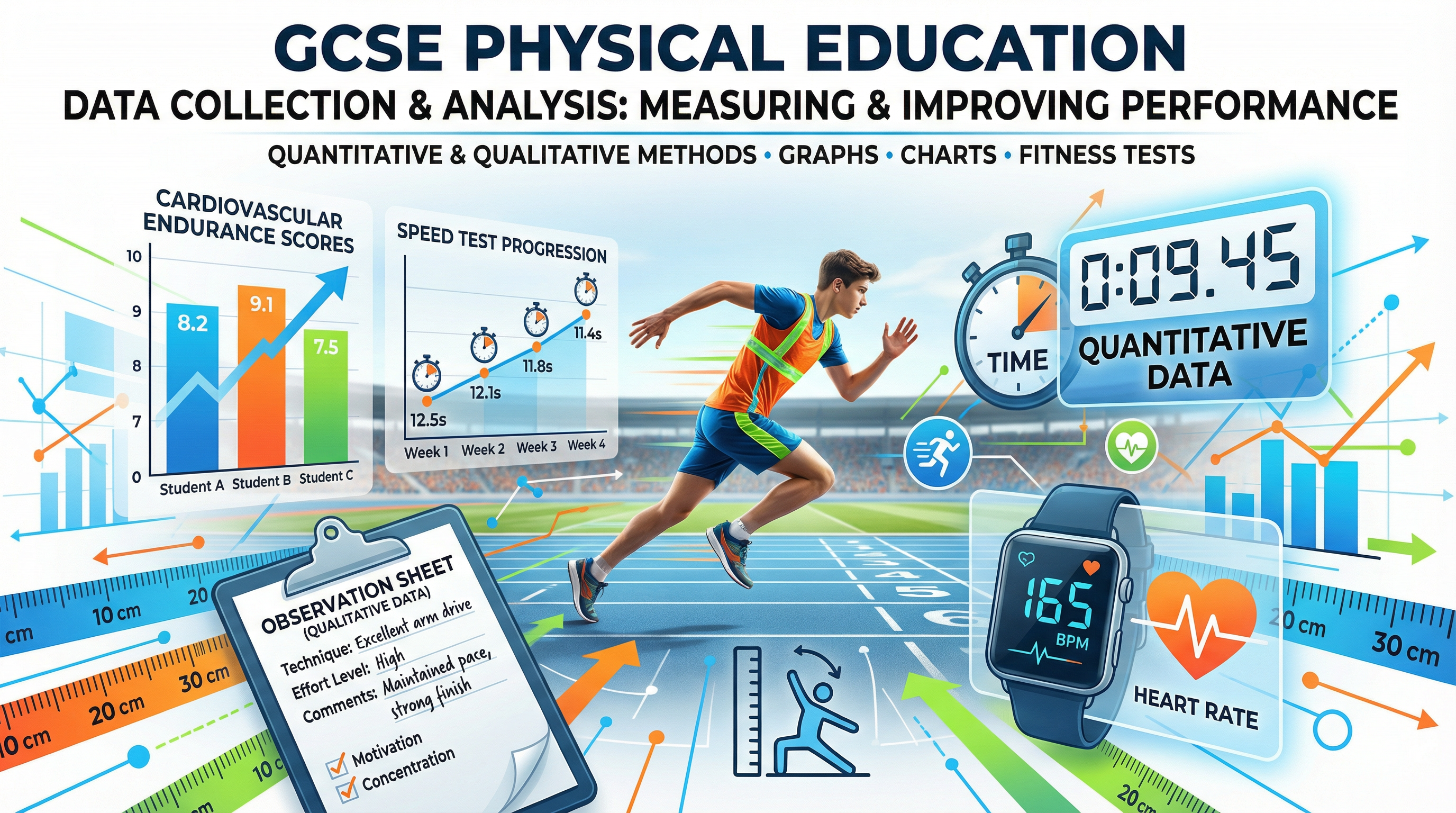
Welcome to the definitive guide for WJEC GCSE PE, Topic 7.1: Data Collection. This topic is fundamental to your success in both the written examination and your coursework. It explores how we gather, interpret, and use data to understand and improve physical performance. A strong grasp of these concepts will allow you to justify your choices in your Personal Fitness Programme (PFP) and provide high-level analysis in your exam answers. Examiners are looking for candidates who can move beyond simple descriptions and critically evaluate the methods used to measure fitness.
This guide will equip you with the knowledge of data types, collection methods, and the principles of validity and reliability. We will also delve into the practical application of these concepts, ensuring you can confidently select appropriate fitness tests, interpret the results, and use them to inform training design. Pay close attention to the specific terminology and examples provided, as using the language of an examiner is key to unlocking top marks.
Key Knowledge & Theory
Core Concepts
The foundation of this topic rests on understanding the different types of data and the methods used to collect them. This knowledge is not just for the exam; it is the bedrock of your Personal Fitness Programme.
Data Types
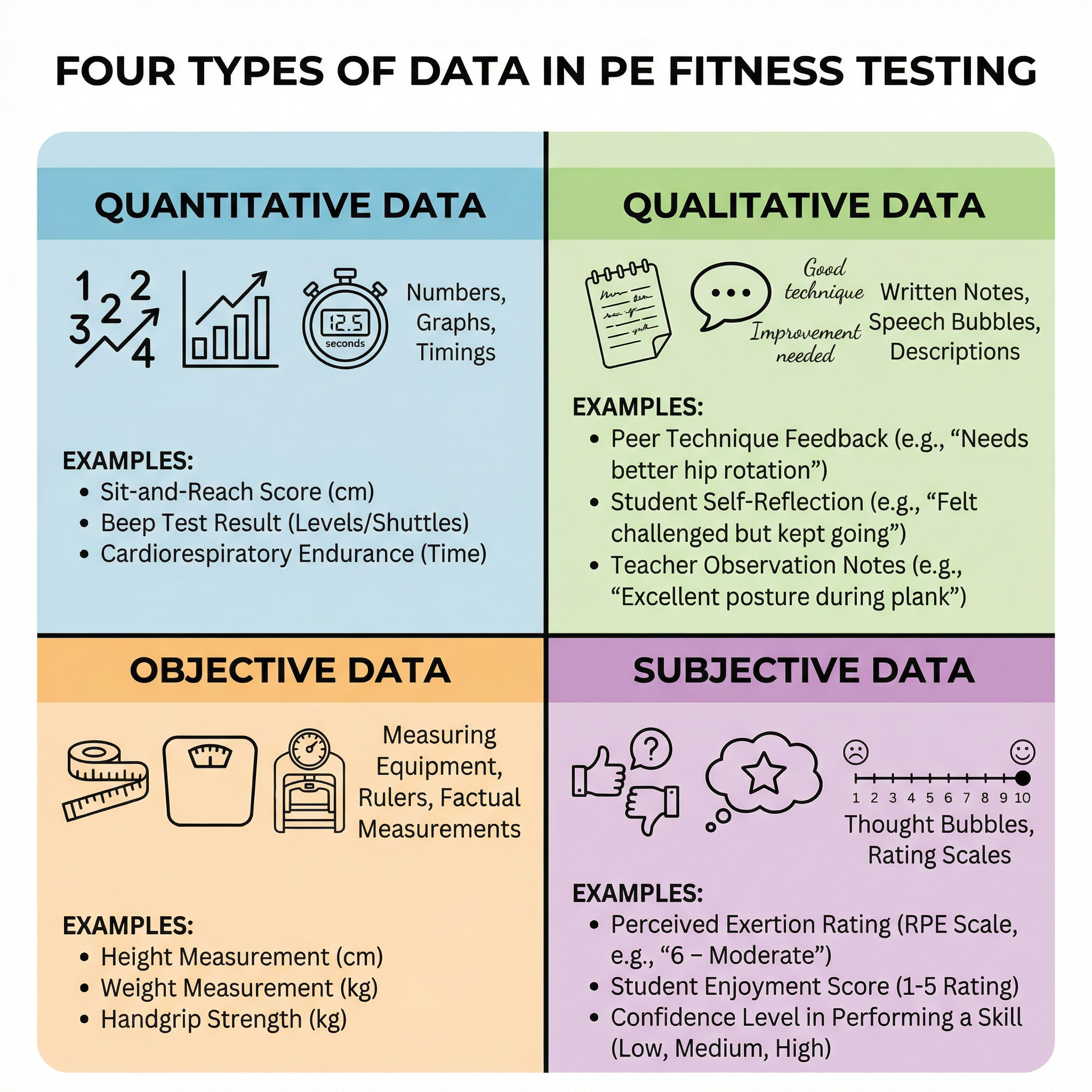
Data can be categorized in two primary ways: quantitative vs. qualitative, and objective vs. subjective. It is crucial to understand the distinctions and provide clear examples for each.
- Quantitative Data: This is numerical data. It answers the questions of "how much?" or "how many?" It is about quantities. For example, a score of 2500 metres in the Cooper 12-minute run is quantitative data. It is precise and easily comparable.
- Qualitative Data: This is descriptive data. It focuses on the quality of a performance, often based on observation. For example, a coach's comment that a performer shows "excellent arm drive" during a sprint is qualitative data. It provides context that numbers alone cannot.
Data Collection Methods
Data can also be classified by how it is collected:
- Objective Data: This is fact-based and measurable, free from personal opinion or bias. A reading from a calibrated set of weighing scales or a time from a stopwatch are examples of objective data. If the test is repeated by another person, the result should be the same.
- Subjective Data: This involves personal judgment, opinion, or feeling. The Rating of Perceived Exertion (RPE) scale, where a performer rates how hard they feel they are working, is a classic example of subjective data. It is valuable for understanding a performer's internal state but is open to interpretation.
Key Practitioners/Artists/Composers
In the context of PE, we look at key figures and organizations that have developed standardized tests and protocols.
| Name | Period/Style | Key Works | Relevance |
|---|---|---|---|
| Dr. Kenneth Cooper | 1960s | The Cooper Test (12-minute run) | Pioneered aerobic fitness testing for the masses. His work established a simple, valid, and reliable field test for cardiovascular endurance. |
| Dr. Frank Forearm | 1970s | The Sit-and-Reach Test | Developed a standardized and widely used test for lower back and hamstring flexibility. |
| Dr. T.K. Cureton | Mid-20th Century | Illinois Agility Test | Developed a reliable test to measure a performer's ability to change direction and speed, a key component of many sports. |
| Borg Scale | 1982 | Rating of Perceived Exertion (RPE) Scale | Gunnar Borg created a scale to quantify subjective feelings of exertion, linking psychological and physiological responses. |
Technical Vocabulary
Using precise terminology is essential for gaining marks. Here are some key terms you must know and use correctly:
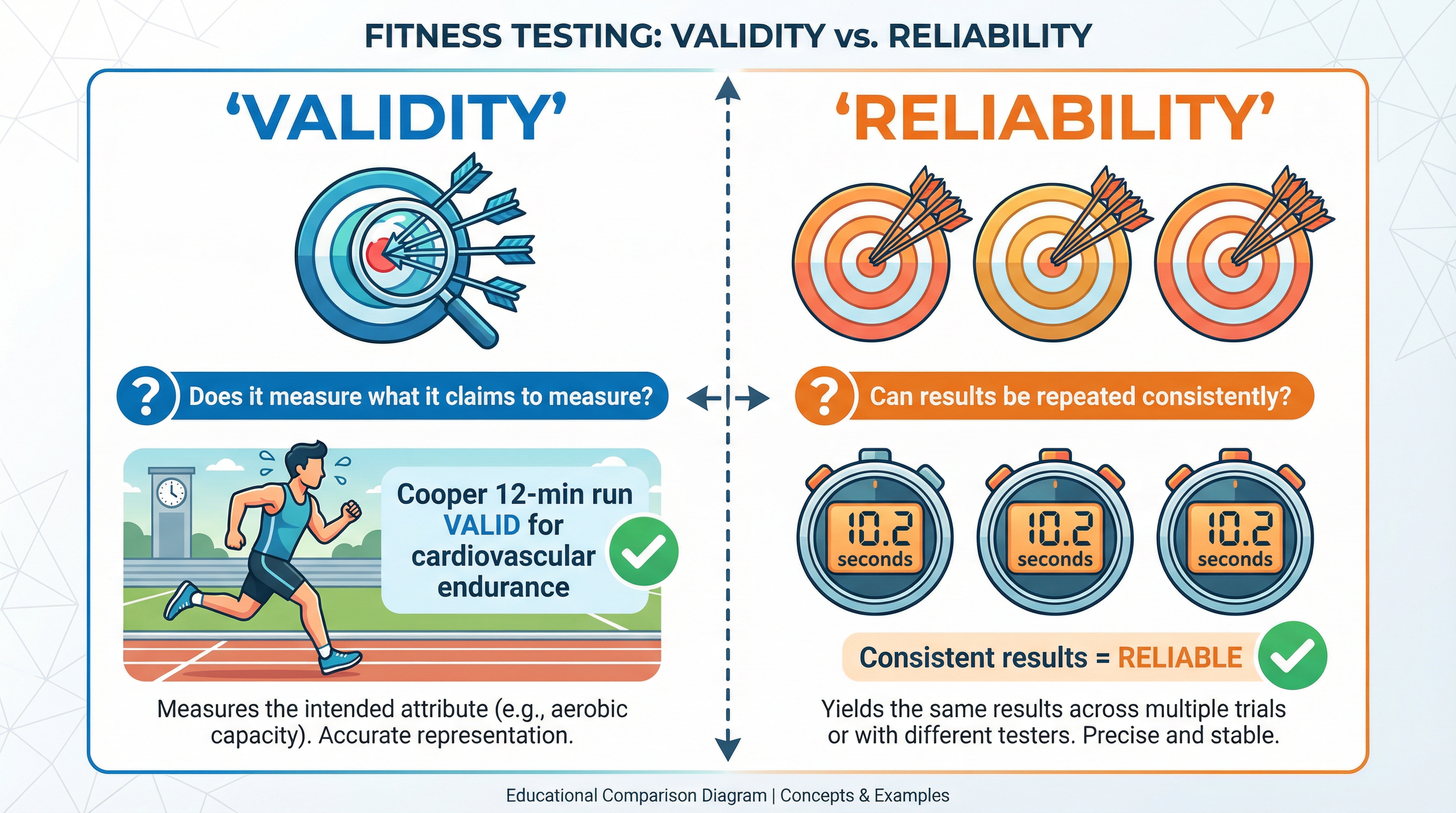
- Validity: The degree to which a test measures what it is supposed to measure.
- Reliability: The consistency and repeatability of a test. If the test were repeated, would the results be the same?
- Protocol: The strict, standardized procedure for conducting a test to ensure reliability.
- Normative Data: Data tables that show average scores for different age and gender groups, allowing for comparison and performance categorization (e.g., 'excellent', 'average').
- Component of Fitness: The specific aspect of fitness being measured (e.g., cardiovascular endurance, muscular strength, flexibility).
Practical Skills
Techniques & Processes
To collect reliable data, you must follow standardized test protocols precisely. Here are a few examples:
- Cooper 12-Minute Run (Cardiovascular Endurance):
- Setup: A flat, measured running track (e.g., 400m track). Stopwatch.
- Procedure: Performer runs or walks as far as possible in 12 minutes.
- Measurement: The total distance covered is recorded in metres.
- Reliability: Ensure consistent weather conditions and a flat surface. The timer must be accurate.
- Sit and Reach Test (Flexibility):
- Setup: Sit and reach box, performer with no shoes.
- Procedure: Performer sits with legs straight, feet flat against the box. They reach forward slowly and hold the furthest point for 2 seconds.
- Measurement: The distance reached is recorded in centimetres.
- Reliability: Ensure the performer does not bounce and that the knees remain straight.
Materials & Equipment
Understanding the correct equipment is vital for test validity and reliability.
| Equipment | Use | Safe Use & Calibration |
|---|---|---|
| Stopwatch | Timing speed, agility, and cardiovascular tests. | Ensure it is started and stopped accurately. Use digital stopwatches for precision. |
| Measuring Tape | Measuring distances for jumps or throws. | Ensure the tape is not stretched and is held flat. Start from the zero mark. |
| Sit and Reach Box | Standardized measurement of flexibility. | Check the zero point is correctly aligned with the feet. |
| Hand Grip Dynamometer | Measuring grip strength. | Calibrate before use according to manufacturer instructions. Adjust grip size for the performer. |
Portfolio/Coursework Guidance
Assessment Criteria
For your Personal Fitness Programme (PFP), examiners are looking for:
- Justification of Test Selection: Can you explain why you chose specific tests to measure your chosen components of fitness? This requires linking the test to the demands of your sport (validity).
- Accurate Data Collection: Have you followed the correct protocols and recorded your results accurately, including units?
- Analysis of Data: Can you compare your results to normative data and identify your strengths and areas for improvement?
- Use of Data: How has your data informed the design of your training programme? You must show a clear link between the data you collected and the training methods you chose.
Building a Strong Portfolio
- Record Everything: Keep a detailed log of your fitness test results, including the date, conditions, and any qualitative observations.
- Show Your Working: Don't just present the data. Annotate it. Explain what it means. Use graphs and charts to visualize your progress over time.
- Critically Evaluate: Reflect on the process. Was your data collection reliable? What factors might have affected your results? What would you do differently next time? This shows higher-level thinking.
Exam Component
Written Exam Knowledge
The theory paper will test your knowledge of data collection directly. Expect questions that ask you to:
- Define the key terms (quantitative, qualitative, objective, subjective, validity, reliability).
- Compare and contrast different data collection methods.
- Evaluate the suitability of a fitness test for a specific sport or performer.
- Analyse a set of data and draw conclusions.
Practical Exam Preparation
While there is no practical exam for this specific topic, your understanding of data collection is assessed through your coursework (PFP). Ensure your coursework demonstrates a deep understanding of the principles covered in this guide. Your ability to select, conduct, and analyze fitness tests is a practical skill that is assessed through your written portfolio.