Study Notes
Overview
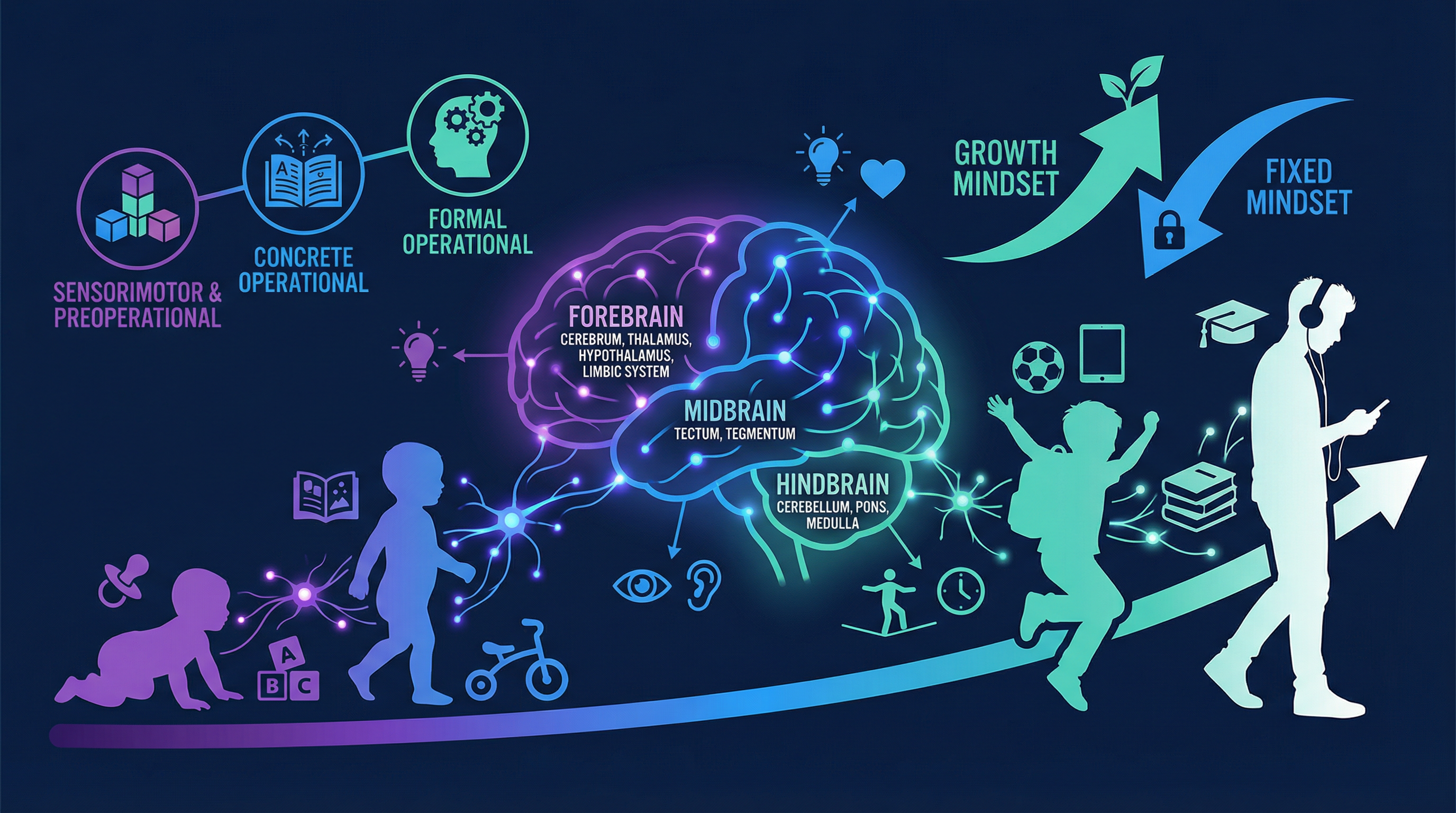
Welcome to your guide for Edexcel GCSE Psychology, Topic 1: Development. This topic explores the incredible journey of human development, from the wiring of the brain in infancy to the complex cognitive shifts in adolescence. Examiners expect candidates to demonstrate precise knowledge of brain structures, Piaget’s influential (and debated) stage theory, and the practical application of mindset theories in education. This guide will break down the core content, provide specific examples required to achieve AO2 (application) marks, and highlight the AO3 (evaluation) skills needed to critique key studies. Understanding this topic is crucial as it forms the foundation for many other areas of psychology, exploring the fundamental question: how do we become who we are?
Key Concepts & Theories
Early Brain Development
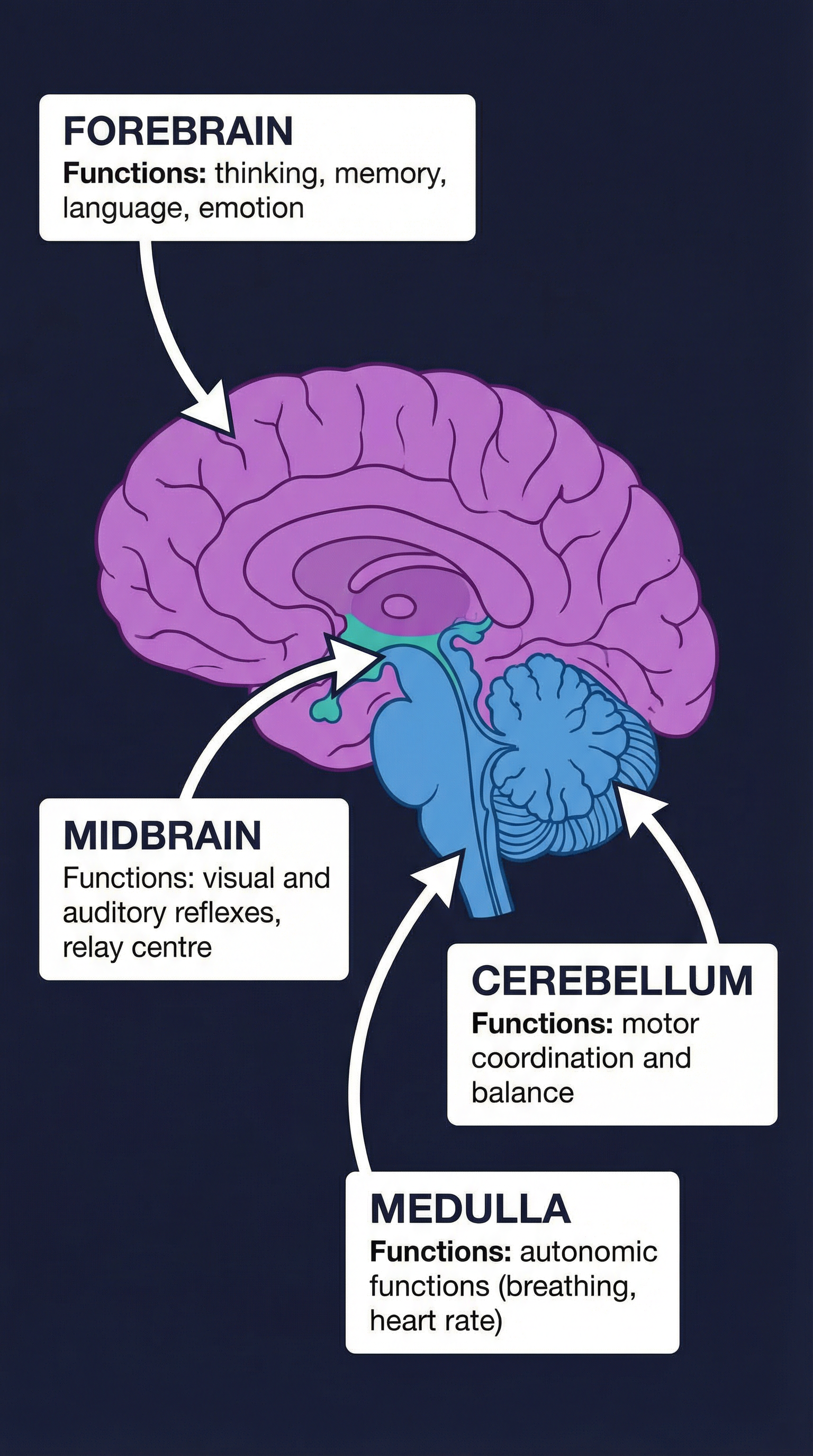
The brain develops rapidly from birth. For your exam, you must know the structure and function of the forebrain, midbrain, and hindbrain.
What you need to know:
- Forebrain: The largest part, responsible for higher-order functions. It includes the Cerebrum (thinking, memory, language), Thalamus (a relay station for senses), and Hypothalamus (regulates hunger, thirst, and temperature).
- Midbrain: Connects the forebrain and hindbrain, involved in visual and auditory reflexes.
- Hindbrain: Contains two structures candidates frequently confuse. The Cerebellum is crucial for coordinating motor skills and balance (think: riding a bike). The Medulla controls unconscious, autonomic functions like breathing and heart rate. Credit is given for distinguishing these clearly.
Piaget's Theory of Cognitive Development
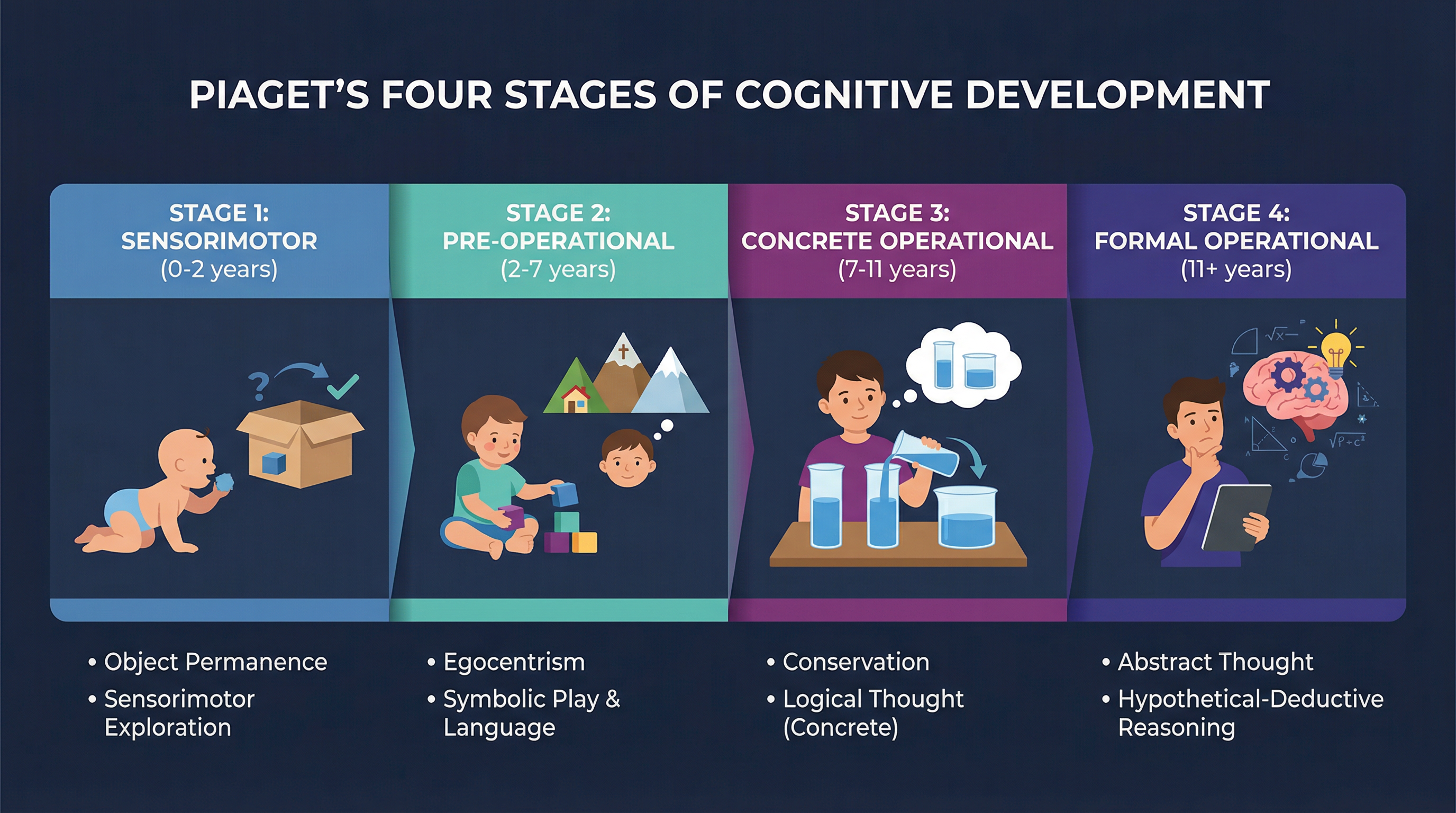
Jean Piaget proposed that children progress through four distinct stages of cognitive development. He argued that children's minds are not just smaller versions of adult minds.
Key Concepts:
- Schema: A mental framework for understanding the world (e.g., a child's schema for 'dog' might be 'four legs and furry').
- Assimilation: Fitting new information into an existing schema (seeing a different type of dog and calling it 'dog').
- Accommodation: Changing an existing schema or creating a new one to fit new information (seeing a cat and learning it's different from a dog, creating a new 'cat' schema). Marks are often lost by confusing these two terms.
Dweck's Mindset Theory
Carol Dweck's theory focuses on how our beliefs about intelligence affect our learning and resilience.
What you need to know:
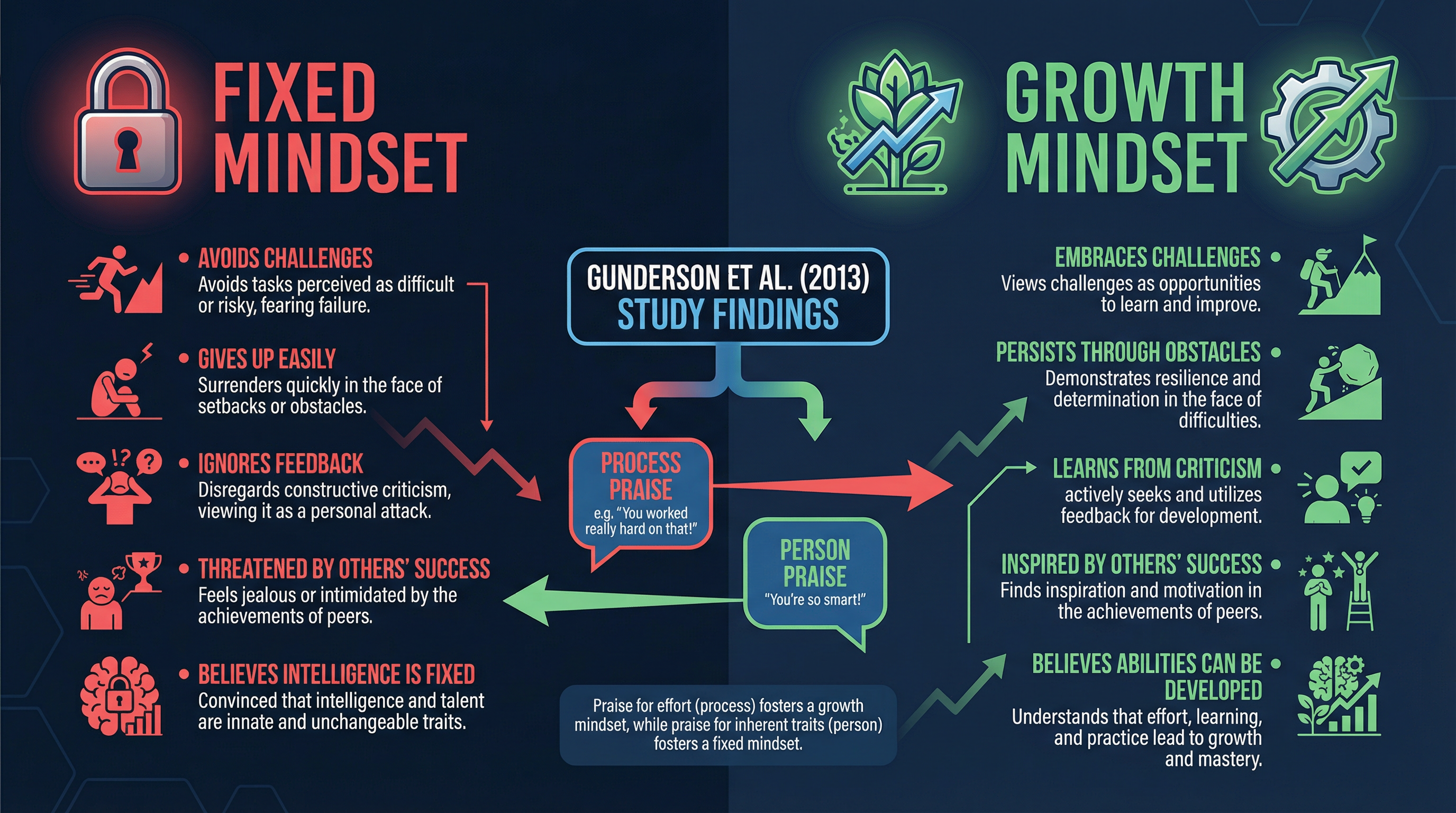
- Fixed Mindset: The belief that intelligence is a fixed, innate trait. Individuals with a fixed mindset tend to avoid challenges and give up easily.
- Growth Mindset: The belief that intelligence can be developed through effort and persistence. Individuals with a growth mindset embrace challenges and learn from criticism.
- Praise: Dweck's theory is supported by the work of Gunderson et al. (2013), who found that process praise (praising effort, e.g., "You worked so hard on that!") fosters a growth mindset, while person praise (praising ability, e.g., "You're so clever!") fosters a fixed mindset.
Willingham's Learning Theory
Daniel Willingham, a cognitive scientist, offers a critique of stage-based theories like Piaget's.
Key Arguments:
- Development is Continuous: Willingham argues that development is not a series of distinct stages but a more continuous process. A child's ability to think logically depends on their knowledge and practice in a specific domain, not a universal age-based stage.
- The Importance of Practice and Effort: Willingham emphasizes that skills like problem-solving and self-regulation can be learned and improved through deliberate practice, linking to Dweck's growth mindset.
- Meaningful Learning: For learning to be effective, it must be meaningful. This is a key evaluation point to use against Piaget's more artificial tasks.
Key Studies
Piaget & Inhelder (1956) - The Three Mountains Task
Aim: To demonstrate egocentrism in pre-operational children.
Procedure: Children were shown a model of three mountains and asked to choose a picture that showed the view a doll would see from a different position.
Findings: Pre-operational children typically chose the picture showing their own view, suggesting they could not see the world from another's perspective.
Evaluation (AO3): A key weakness is the task's lack of ecological validity. It was an artificial setup. Martin Hughes' (1975) 'Policeman Doll' study used a more meaningful task and found that younger children could take another's perspective, suggesting Piaget underestimated their abilities.
Gunderson et al. (2013) - Praise and Mindset
Aim: To investigate the relationship between the type of parental praise used in early childhood and a child's mindset five years later.
Procedure: A longitudinal study observing parent-child interactions at home at ages 1, 2, and 3. Researchers categorized praise as 'process' or 'person' praise. They later assessed the children's mindset at ages 7-8.
Findings: A higher proportion of process praise was correlated with a growth mindset and a belief that effort is important. Person praise was correlated with a fixed mindset.
Evaluation (AO3): A major strength is its high ecological validity, as it was a naturalistic observation in the child's home. A weakness is the potential for observer bias, as researchers' expectations could have influenced their interpretation of the praise given.