Study Notes
Overview
This topic explores whether criminal behaviour can be explained by a person's biology. For the OCR J203 exam, candidates must understand and evaluate two core biological explanations: the function of the amygdala within the limbic system and the genetic condition known as XYY syndrome. Examiners expect candidates to not only describe these explanations (AO1) but also apply them to scenarios (AO2) and critically evaluate their strengths and weaknesses (AO3). A key skill is to argue against biological determinism, using concepts like reductionism and contrasting biological views with environmental explanations, such as Social Learning Theory. Marks are awarded for precision, such as naming specific brain parts and using correct terminology, and for constructing balanced arguments that consider multiple viewpoints. This guide will equip you with the specific knowledge and exam techniques needed to achieve high marks.
Biological Explanation 1: The Amygdala & The Limbic System
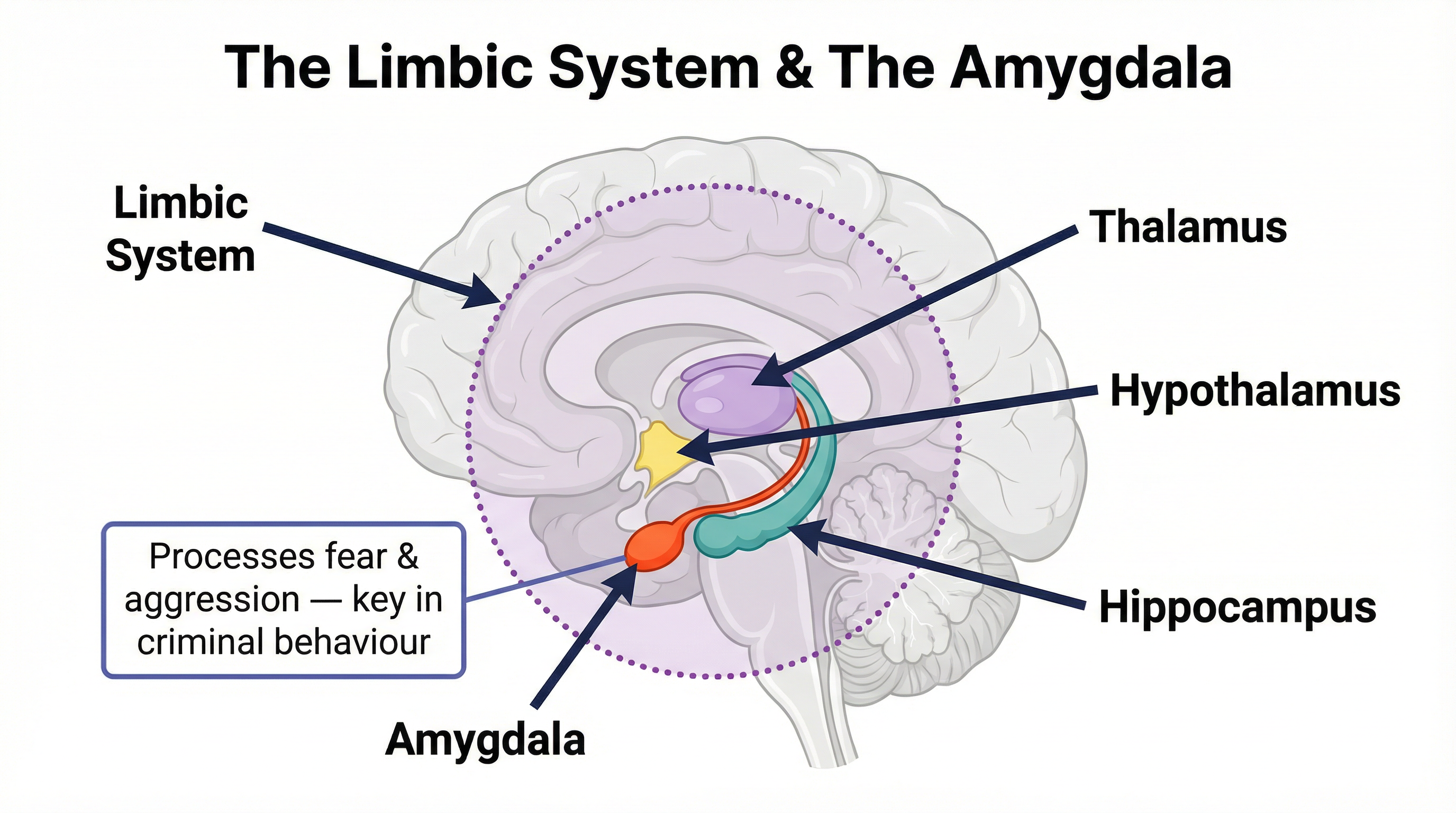
What it is: The limbic system is a collection of structures deep within the brain, often referred to as the "emotional brain". It includes the hippocampus, hypothalamus, and, crucially for this topic, the amygdala.
The Amygdala's Role: The amygdala is an almond-shaped structure responsible for processing emotions, particularly fear and aggression. It plays a vital role in our fight-or-flight response. Research suggests that dysfunction in the amygdala could lead to abnormal levels of aggression.
How it links to crime: A dysfunctional amygdala might be overactive, causing an individual to respond with excessive aggression to a perceived threat. Alternatively, an underactive amygdala might impair the ability to process fear and learn from punishment, making it harder for an individual to avoid anti-social behaviours. Studies, such as those by Raine et al., have used PET scans to show differences in the brains of violent offenders, noting reduced function in the prefrontal cortex which is supposed to regulate the amygdala.
Specific Knowledge:
- Structure: Amygdala
- System: Limbic System
- Function: Processes fear and aggression
- Key Study: Raine et al. (found abnormalities in the brains of murderers)
Biological Explanation 2: XYY Syndrome
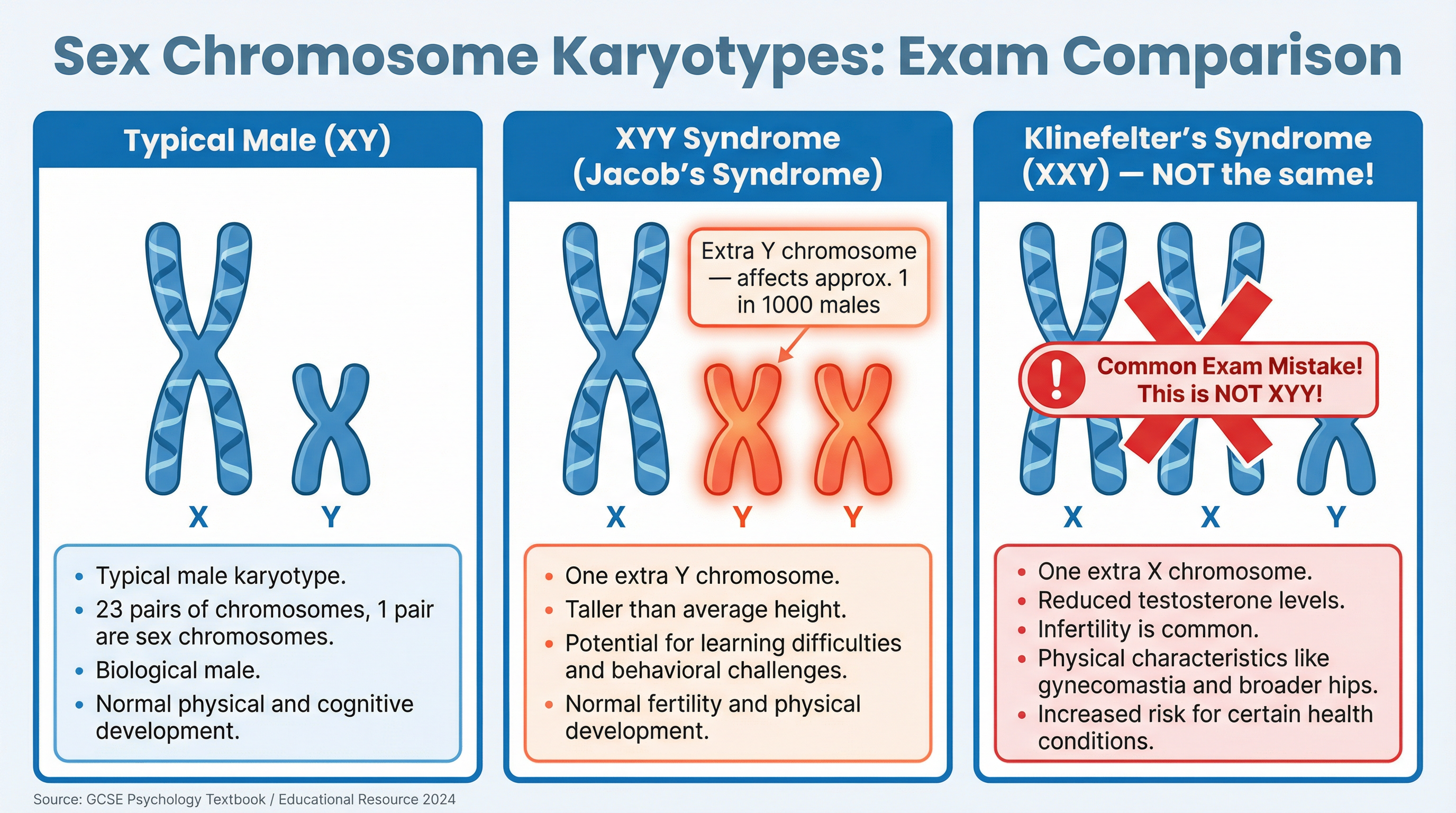
What it is: XYY syndrome (also known as Jacob's Syndrome) is a rare genetic condition where a male has an extra Y chromosome. Instead of the typical male XY karyotype, they have an XYY karyotype.
How it links to crime: The Y chromosome is associated with male characteristics, and early research in the 1960s (e.g., by Patricia Jacobs) found a higher-than-average number of XYY males in prisons and secure psychiatric hospitals. This led to the theory that the extra Y chromosome might predispose an individual to heightened aggression, impulsivity, and therefore a greater risk of criminal behaviour.
Evaluation & Nuance: This theory is highly controversial. The vast majority of men with XYY syndrome lead normal lives and are not criminals. The link is correlational, not causal. It is a classic example of the danger of biological determinism. Examiners will award credit for candidates who understand this nuance and argue that the link is weak and that environmental factors are likely more important.
Specific Knowledge:
- Condition: XYY Syndrome (Jacob's Syndrome)
- Karyotype: XYY
- Prevalence: Approx. 1 in 1,000 male births
- Common Mistake: Do NOT confuse with XXY (Klinefelter's Syndrome).
Second-Order Concepts: Evaluation (AO3)
Reductionism
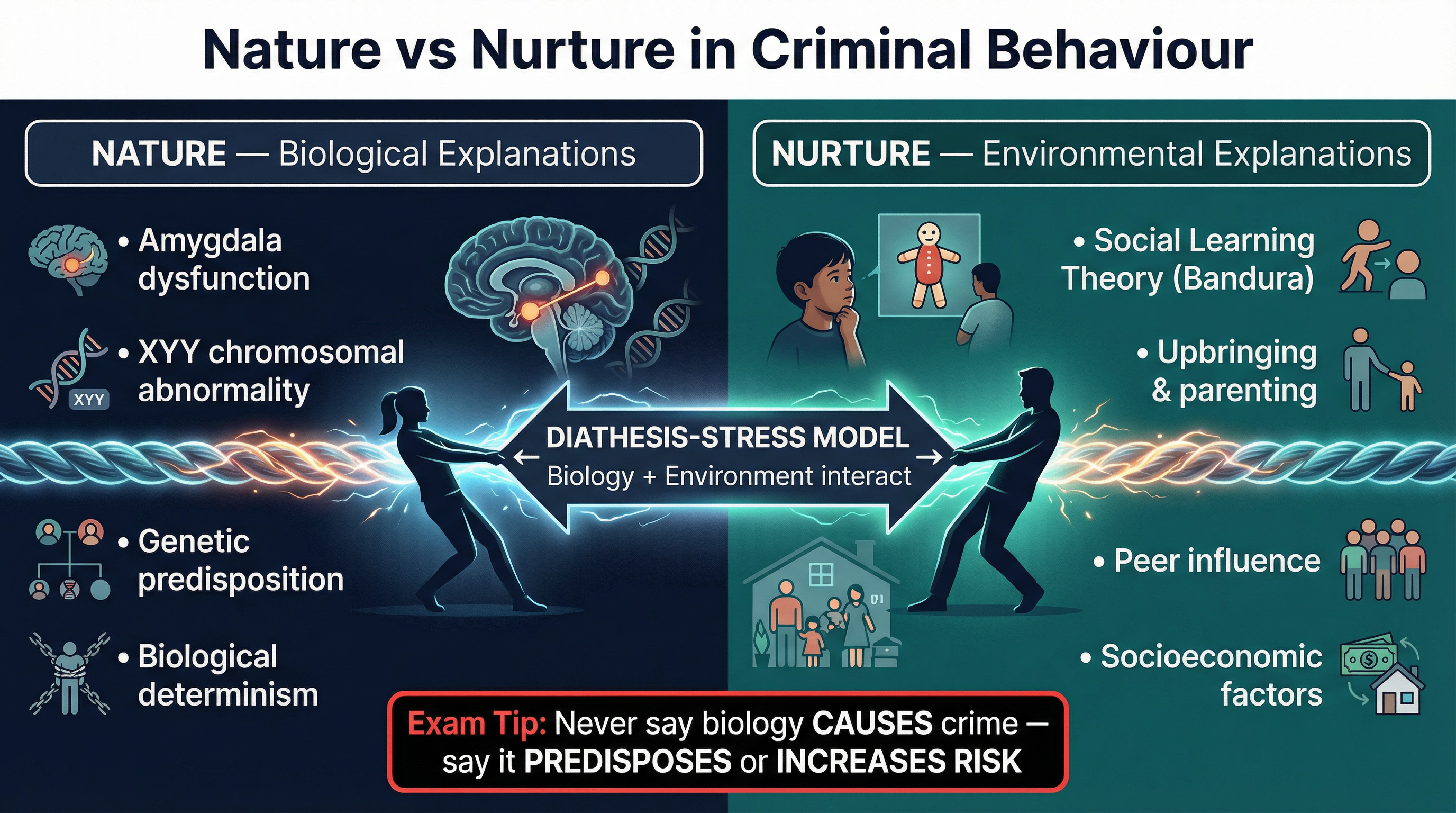
Biological explanations are often criticised for being reductionist. This means they reduce a very complex behaviour (like crime) down to a single, simple cause (like a brain part or a chromosome). This is a major weakness because it ignores other important factors.
The Nature-Nurture Debate
This topic is a perfect example of the nature-nurture debate. Biological explanations represent the 'nature' side. To achieve high marks, you must bring in the 'nurture' side. This means discussing environmental factors like upbringing, poverty, education, and peer groups. A good essay will argue that both nature and nurture interact, a concept known as the diathesis-stress model.