Study Notes
Overview
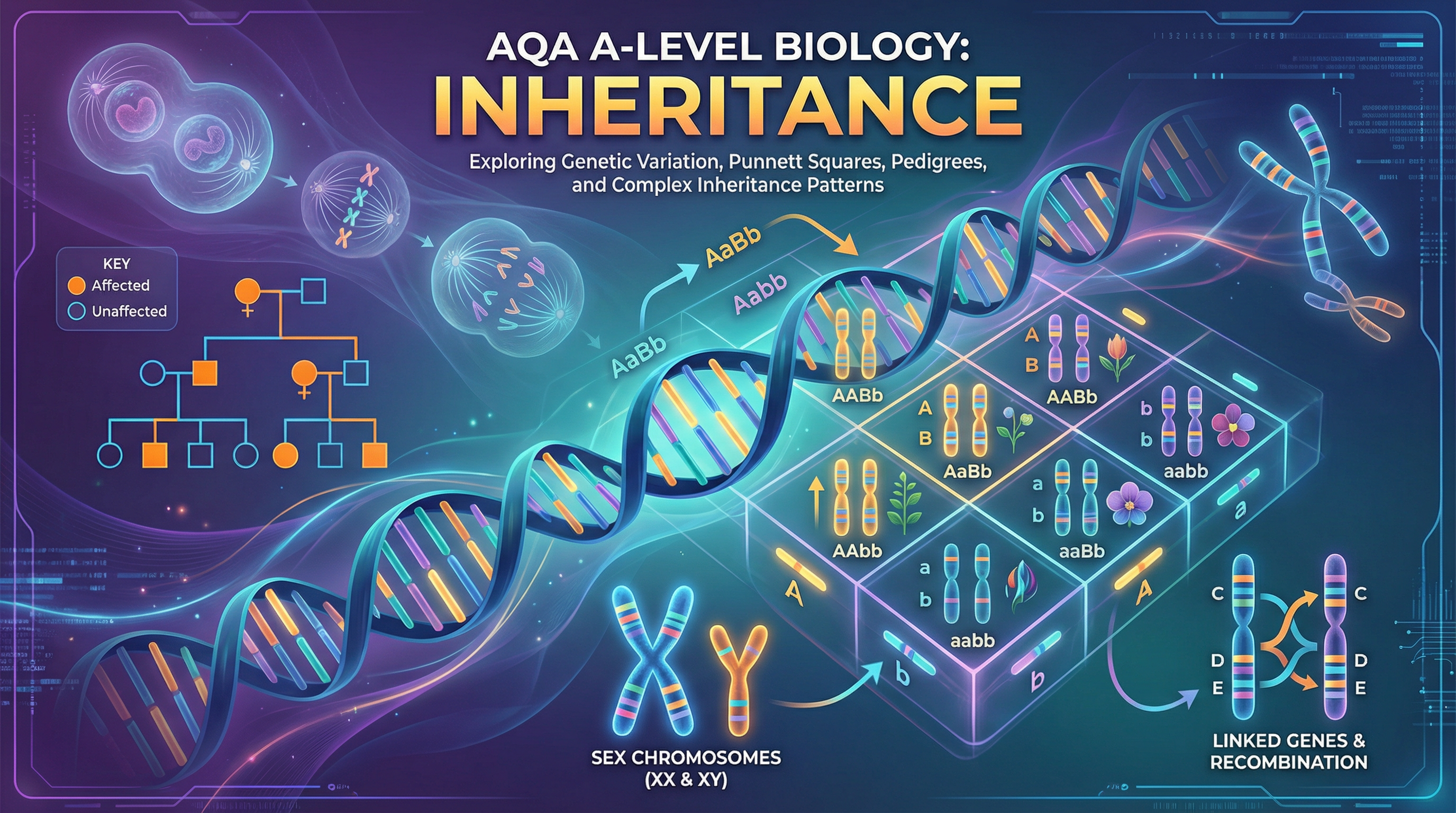
Inheritance is a cornerstone of A-Level Biology, exploring how genetic information is passed from one generation to the next. This topic (AQA specification 3.2) moves beyond basic genetics to cover complex interactions and statistical analysis, areas where examiners can really differentiate between candidates. You will be expected to apply your knowledge of monohybrid and dihybrid crosses, understand the nuances of sex linkage, autosomal linkage, and epistasis, and critically, use the Chi-squared test to validate your genetic diagrams. A significant portion of marks in this area are awarded for AO2 (Application), meaning you must be able to use these principles to solve problems in unfamiliar contexts. Expect questions that require you to construct detailed genetic diagrams, interpret pedigree charts, and explain why observed results might deviate from expected ratios. Mastering this topic is not just about memorising ratios; it’s about developing a deep, logical understanding of genetic principles.
Key Concepts
Concept 1: Monohybrid and Dihybrid Crosses
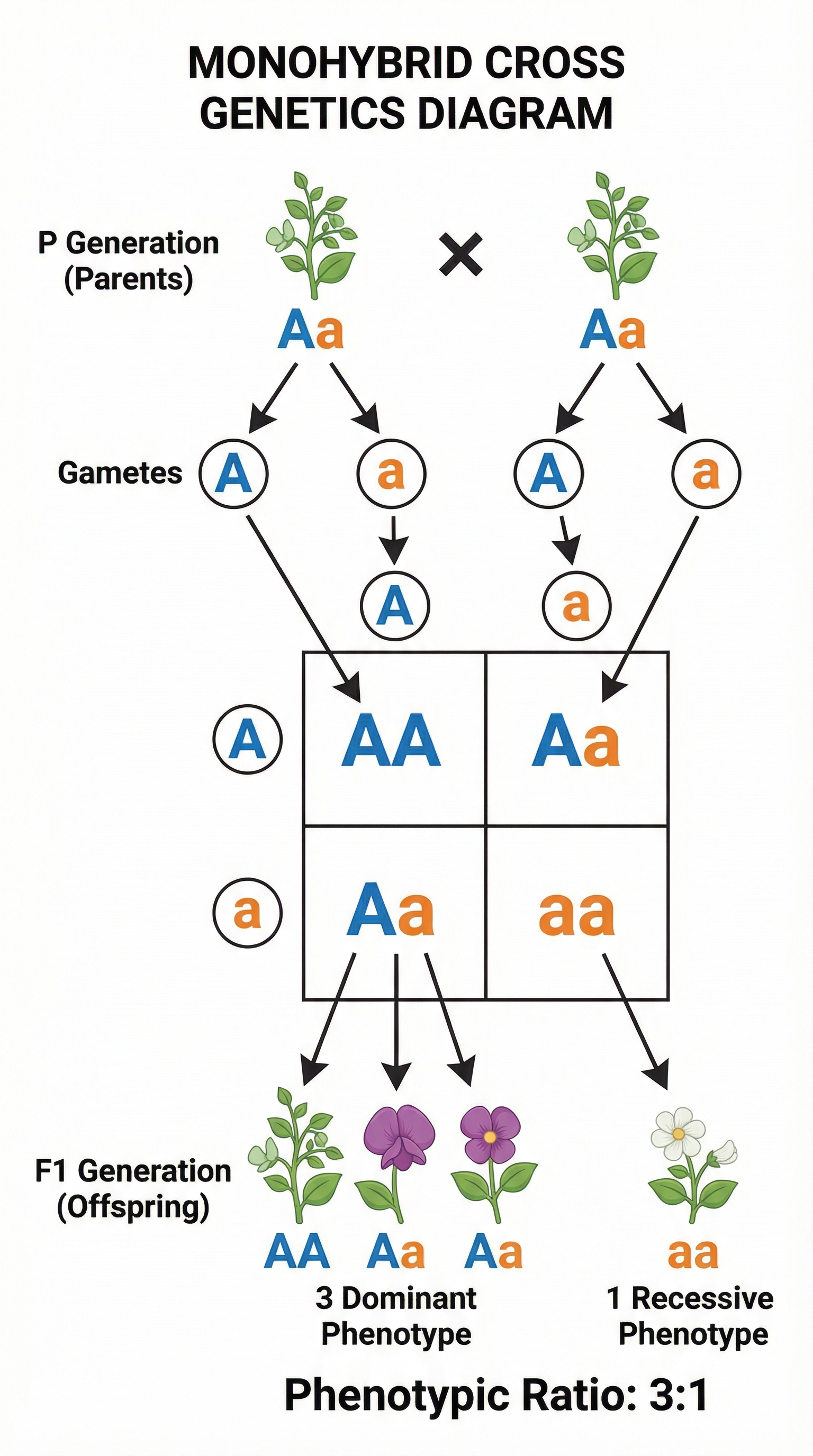
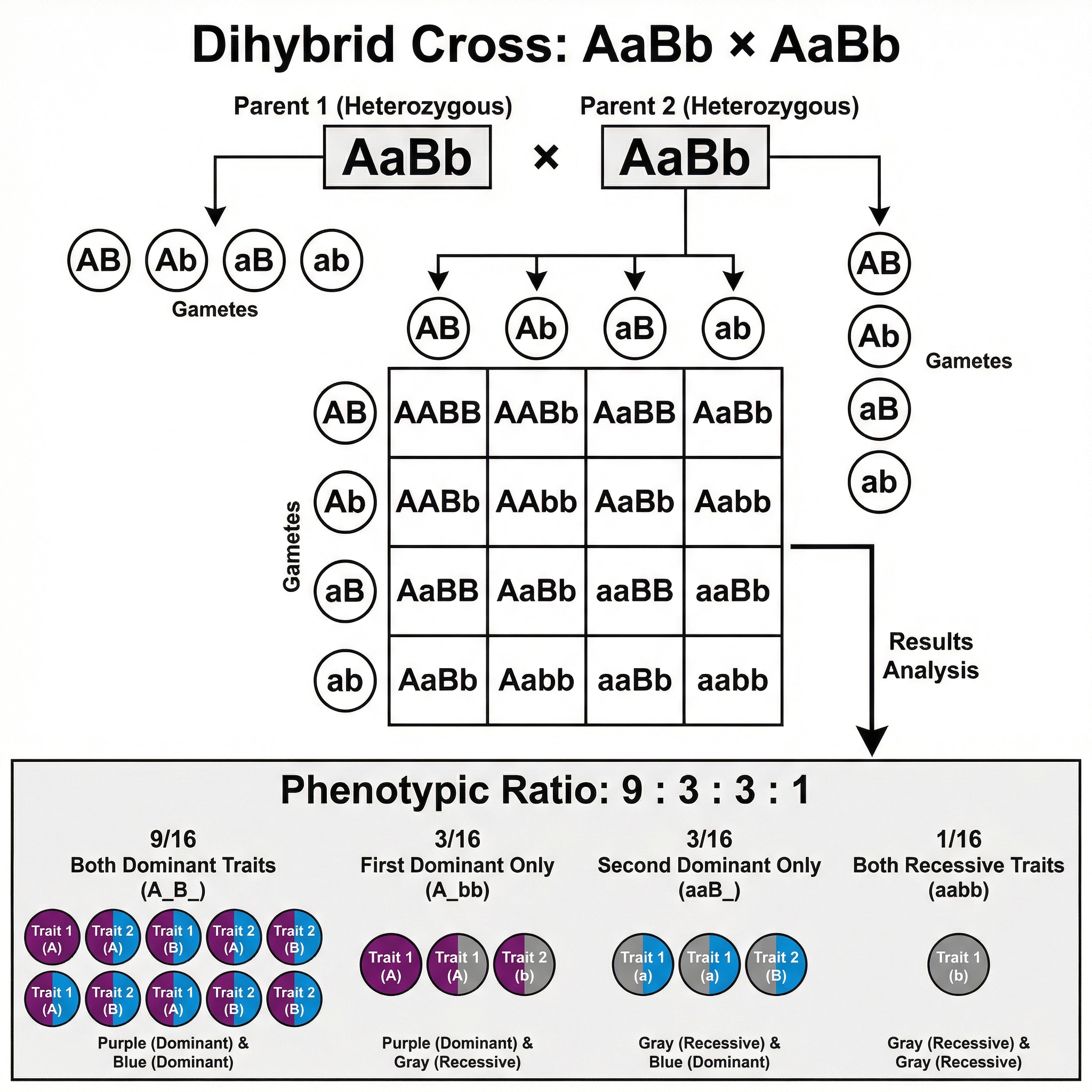
A monohybrid cross involves the inheritance of a single gene. When crossing two heterozygous individuals (e.g., Tt x Tt), the expected phenotypic ratio in the offspring is 3:1 (dominant:recessive). A dihybrid cross involves two genes on different chromosomes. For a cross between two individuals heterozygous for both genes (e.g., RrYy x RrYy), the expected phenotypic ratio is 9:3:3:1, assuming independent assortment. It is crucial to lay out your genetic diagrams clearly, showing parental phenotypes, genotypes, gametes (circled), the Punnett square, and the resulting offspring phenotypes and their ratios. Marks are explicitly awarded for this structure.
Concept 2: Linkage (Sex and Autosomal)
Sex linkage refers to genes located on the sex chromosomes (X or Y). Most are on the X chromosome. Males (XY) are more likely to express recessive X-linked traits because they only have one X chromosome (hemizygous). Notation is key: use X and Y with the allele as a superscript (e.g., X^H, X^h, Y). Autosomal linkage occurs when two or more genes are located on the same autosome (non-sex chromosome). They are inherited together and do not assort independently. This results in an excess of parental phenotypes and a shortage of recombinant phenotypes compared to the expected 9:3:3:1 ratio. Crossing over can separate linked alleles, but this is a low-frequency event.
Concept 3: Epistasis
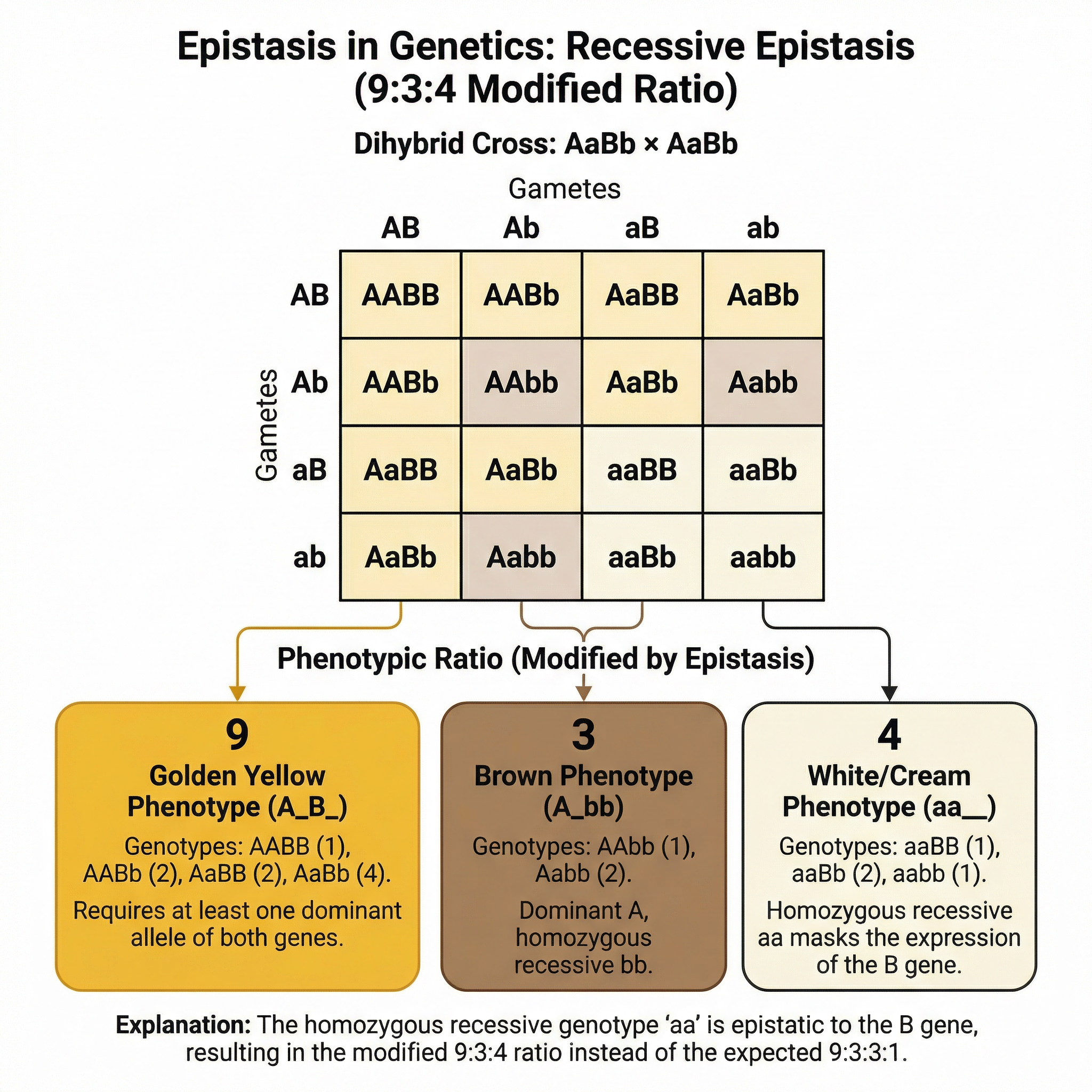
Epistasis is a form of gene interaction where one gene locus masks or modifies the expression of another gene locus. This leads to modified dihybrid ratios. For example, in recessive epistasis, a homozygous recessive genotype at one locus (e.g., ee) masks the expression of the other gene, resulting in a 9:3:4 ratio. In dominant epistasis, a dominant allele at one locus masks the expression of the other, leading to ratios like 12:3:1 or 13:3. Recognising these non-standard ratios is a common exam challenge.
Mathematical/Scientific Relationships
The Chi-Squared (χ²) Test
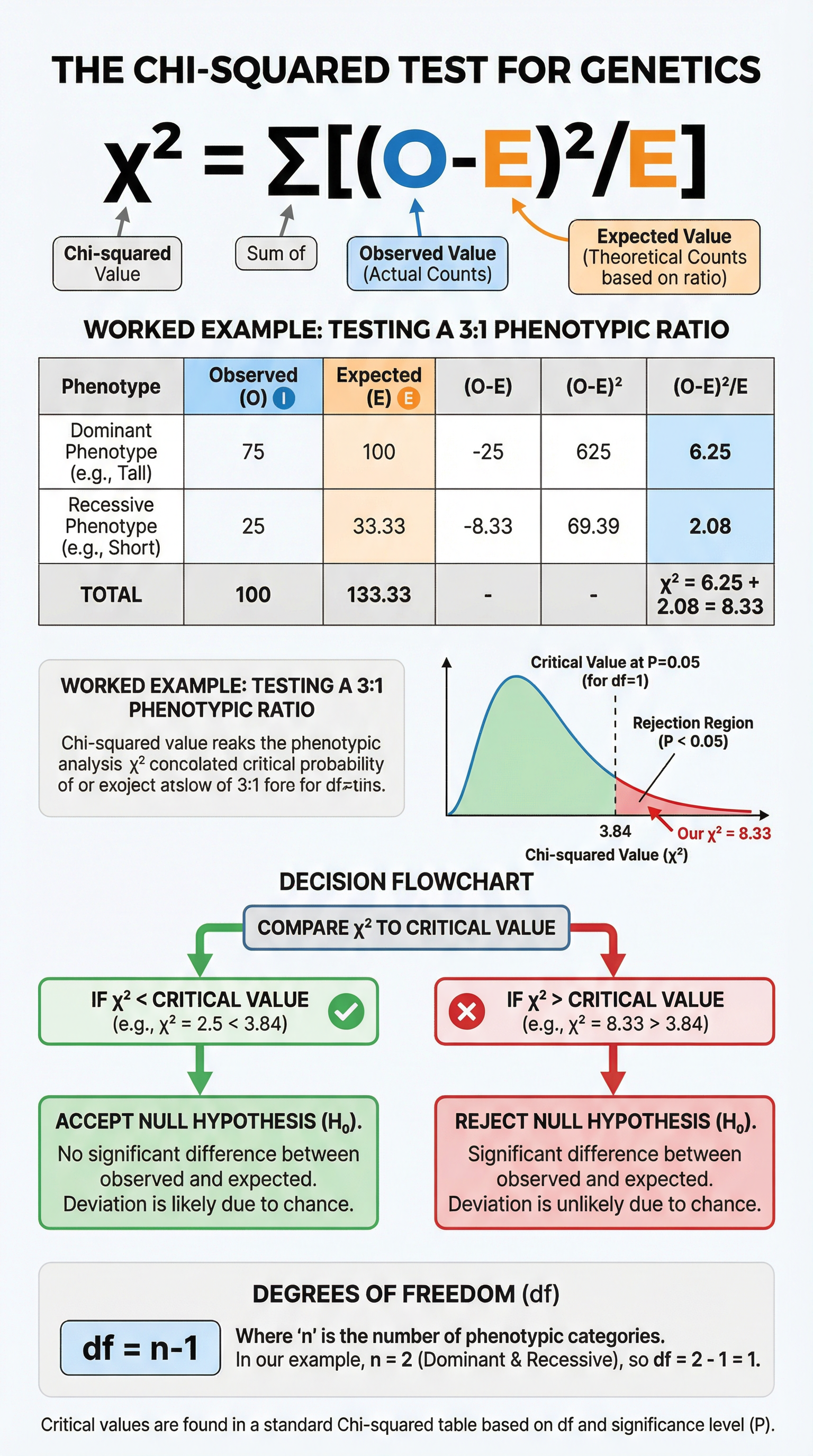
This statistical test is used to determine if the difference between observed (O) and expected (E) results is statistically significant or due to chance. It is a critical part of this topic.
Formula (Must memorise):
χ² = Σ [ (O - E)² / E ]
- Σ = Sum of
- O = Observed frequency
- E = Expected frequency
**Degrees of Freedom (df):**df = n - 1
where 'n' is the number of phenotypic categories.
Interpretation:
- State the null hypothesis (H₀): 'There is no significant difference between the observed and expected frequencies.'
- Calculate the χ² value.
- Find the critical value from a table at P=0.05 for the correct degrees of freedom.
- Compare:
- If χ² < critical value: Accept H₀. The probability that the difference is due to chance is greater than 5%.
- If χ² > critical value: Reject H₀. The probability that the difference is due to chance is less than 5%. There is a significant underlying factor (e.g., linkage, epistasis).
Practical Applications
This topic is fundamental to understanding genetic diseases (e.g., cystic fibrosis, sickle-cell anaemia), selective breeding in agriculture, and conservation genetics. Pedigree analysis, a key skill, is used in genetic counselling to advise families on the probability of inheriting genetic disorders. The principles of inheritance also underpin modern gene technologies and our understanding of evolution.