
Study Notes
Overview
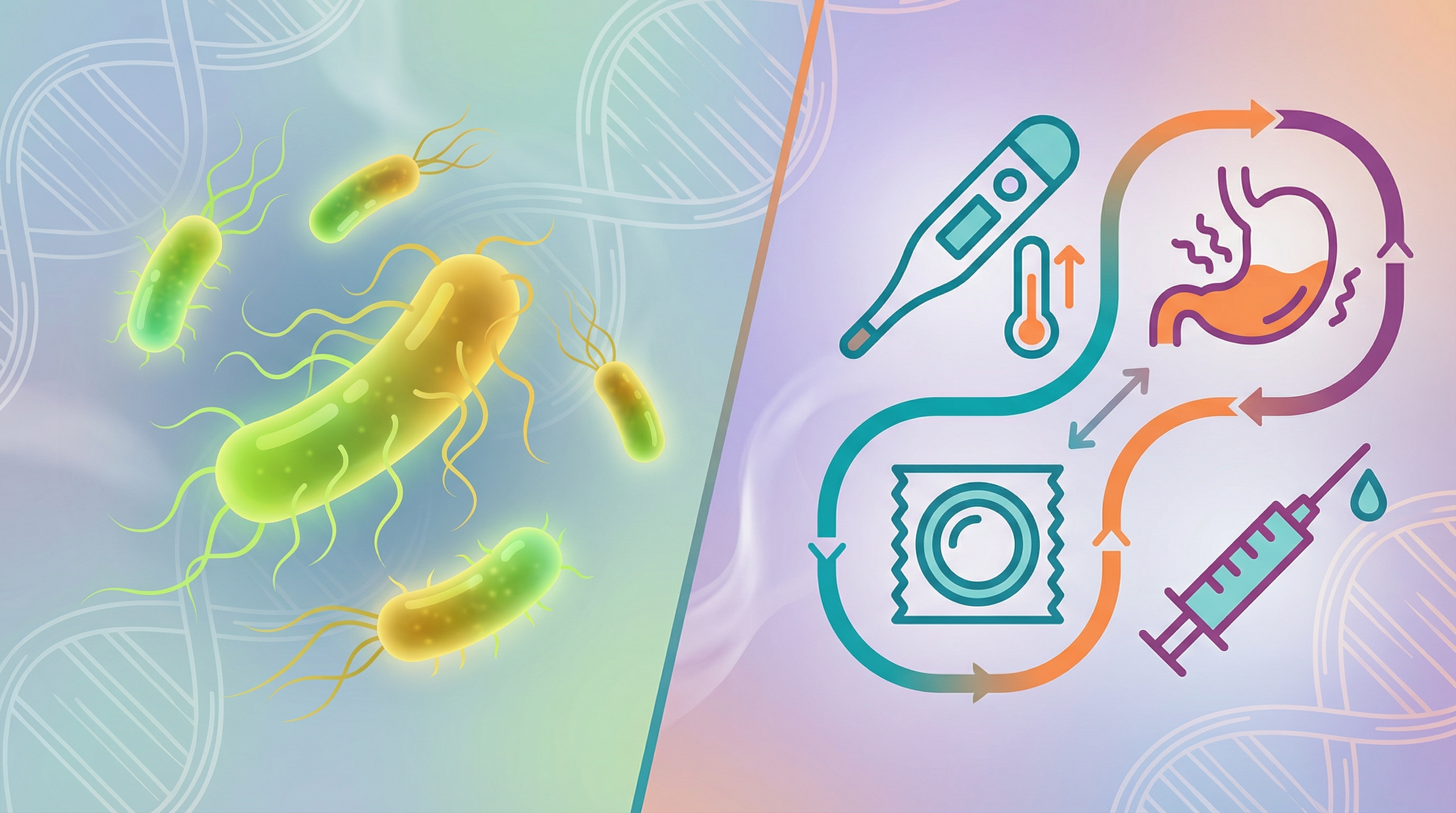
This guide explores the pathology of two significant bacterial diseases as required by the AQA GCSE Biology specification (3.3): Salmonella and Gonorrhoea. Understanding these pathogens is crucial, not just for grasping the principles of infectious disease, but also for appreciating the societal impact of antibiotic resistance. AQA exams frequently test candidates' ability to distinguish between transmission vectors, link specific pathogens to their symptoms, and evaluate control methods. Expect to see structured questions requiring you to describe, explain, and compare these diseases, often with a focus on applying your knowledge to unfamiliar scenarios. This topic provides a direct link to concepts like cell biology, infection and response, and evolution.
Key Concepts
Concept 1: Salmonella - Food Poisoning
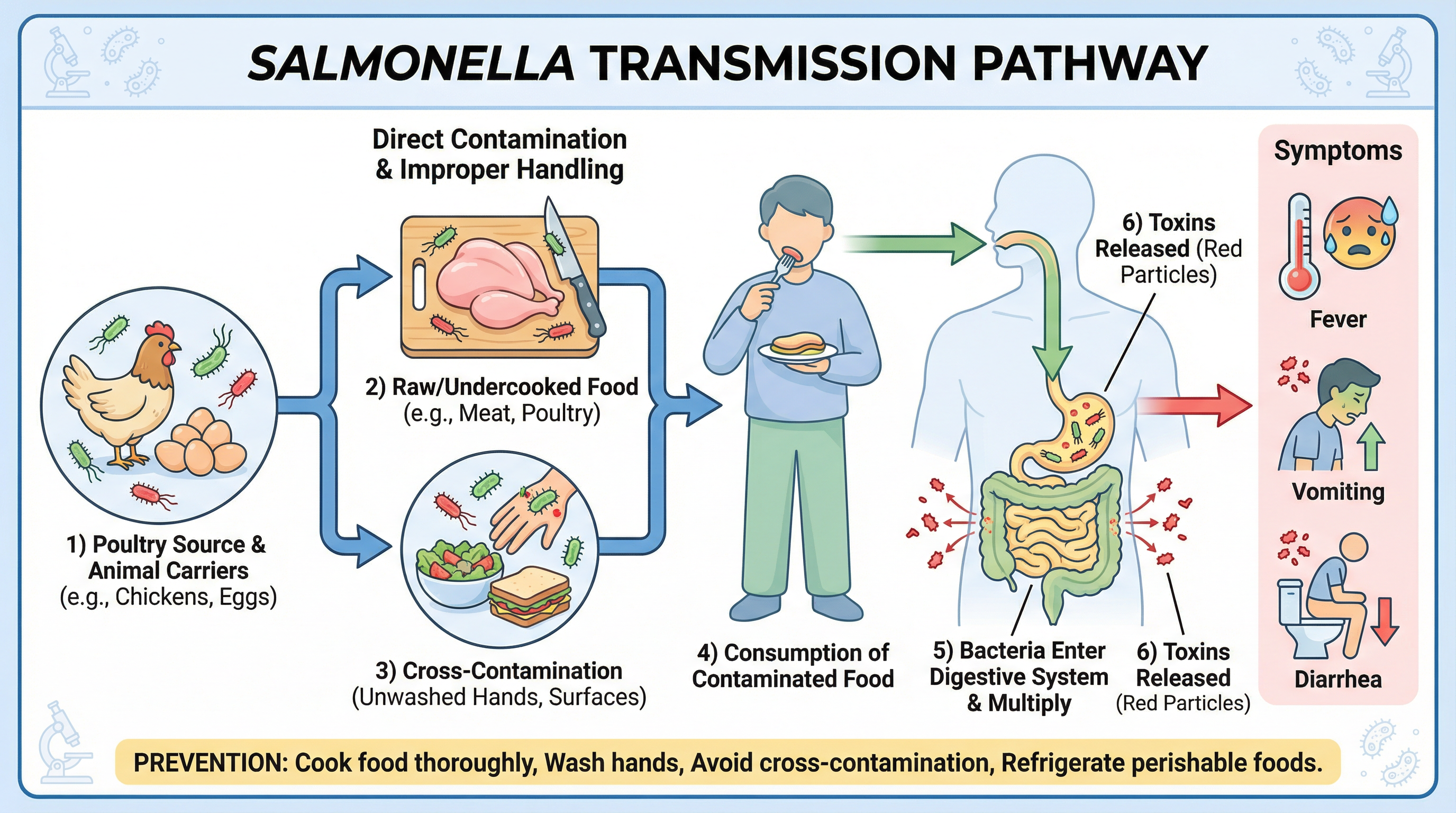
Salmonella is a genus of bacteria that causes the disease salmonellosis, a common form of food poisoning. The bacteria are typically ingested through contaminated food or water. Once in the gut, they invade the intestinal lining and begin to multiply. The key to understanding the symptoms lies in the production of toxins. These are poisonous substances released by the bacteria that disrupt the normal function of the intestinal cells. This disruption leads to the characteristic symptoms of Salmonella infection: fever, abdominal cramps, vomiting, and diarrhoea. For AQA, it is vital that candidates explicitly link the secretion of toxins to these symptoms to gain full credit.
**Transmission and Control:**The primary transmission route is through the consumption of contaminated food products, particularly poultry and eggs. The bacteria can spread in several ways:
- Undercooked Food: Not cooking food to a high enough temperature fails to kill the bacteria.
- Cross-Contamination: Spreading bacteria from raw food (like chicken) to other ready-to-eat foods, often via unwashed hands, chopping boards, or utensils.
In the UK, the most significant control measure has been the widespread vaccination of poultry. This has dramatically reduced the incidence of Salmonella in eggs and chicken, making it a key fact to remember for exams. General hygiene practices, such as washing hands and cooking food thoroughly, are also critical control methods.
Concept 2: Gonorrhoea - A Sexually Transmitted Infection (STI)
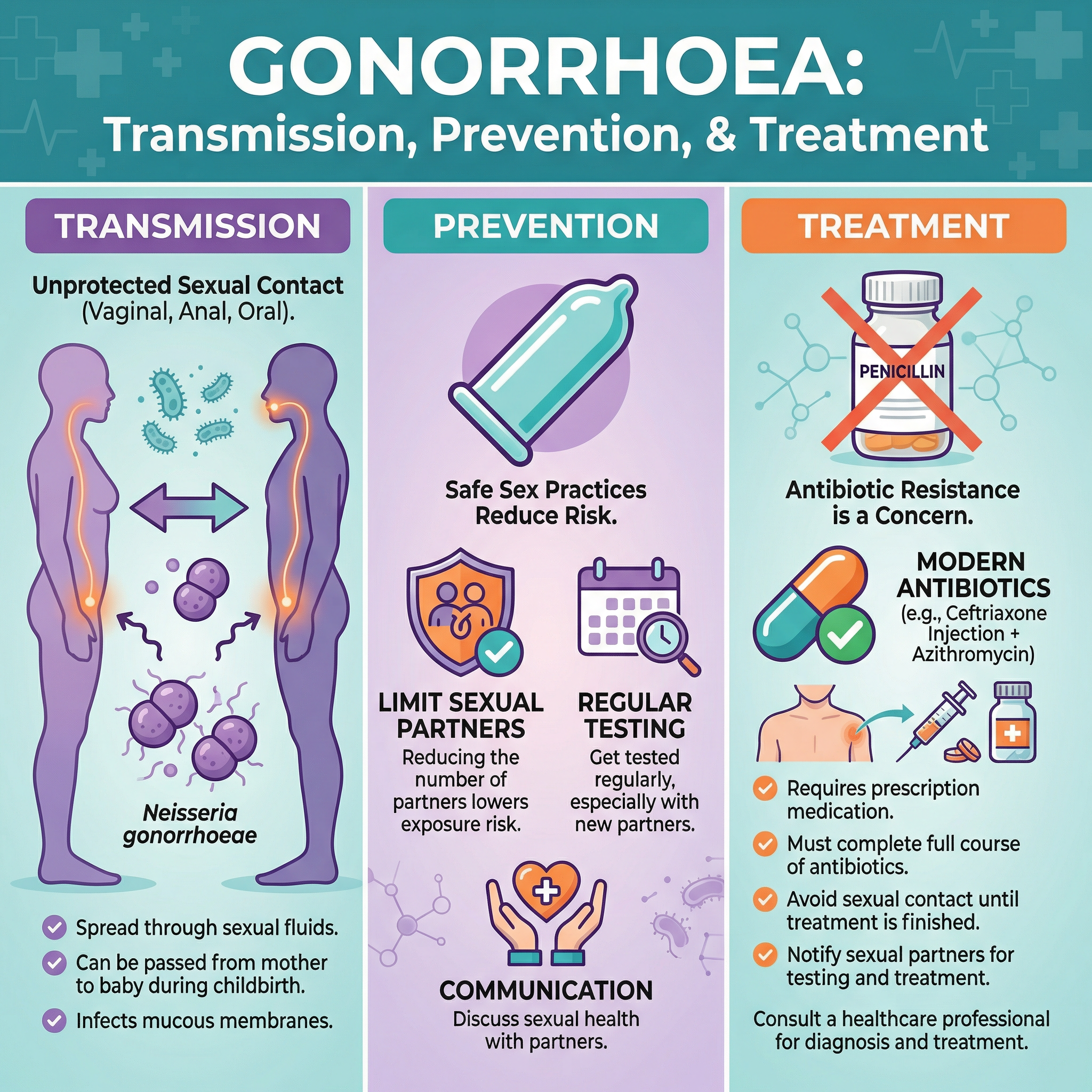
Gonorrhoea is an STI caused by the bacterium Neisseria gonorrhoeae. It is spread through unprotected sexual contact (vaginal, anal, or oral) and can also be passed from an infected mother to her baby during childbirth. The bacteria thrive in warm, moist mucous membranes, such as those in the cervix, urethra, rectum, and throat.
**Symptoms and Prevention:**Symptoms can be noticeable and unpleasant. Examiners expect you to recall these specific signs:
- A thick yellow or green discharge from the vagina or penis.
- Pain upon urination.
Many people, however, may have no symptoms, making it easier to spread the infection unknowingly. Prevention is therefore crucial. The most effective methods are:
- Using barrier methods of contraception, such as condoms, during sexual activity.
- Limiting the number of sexual partners to reduce the risk of exposure.
Concept 3: Antibiotic Resistance (Higher Tier)
This is a critical concept, especially for Higher Tier candidates, and Gonorrhoea is a prime example. Antibiotics are drugs that kill bacteria or inhibit their growth. For many years, Gonorrhoea was easily treated with the antibiotic penicillin. However, due to overuse and misuse of antibiotics, many strains of Neisseria gonorrhoeae have evolved resistance. This happens through natural selection: a random mutation in a bacterium's DNA might make it resistant to an antibiotic. While non-resistant bacteria are killed off, the resistant one survives, reproduces, and passes the resistant gene to its offspring. Over time, this leads to a population of 'superbugs'.
As a result, penicillin is no longer the first-line treatment. Doctors now use other antibiotics, but the bacteria are continually evolving, creating a major public health challenge. In an exam, you must be able to explain this evolutionary process and link it to the changing treatment strategies for Gonorrhoea.
Podcast Episode
Mathematical/Scientific Relationships
There are no specific mathematical formulas to memorise for this topic. However, you may be presented with data related to the effectiveness of antibiotics or the spread of disease. You should be prepared to:
- Calculate percentage changes in the number of cases.
- Interpret graphs showing trends in infection rates or antibiotic resistance over time.
- Draw and interpret bar charts or line graphs from given data.
Practical Applications
While there isn't a specific required practical for this topic, understanding bacterial growth is fundamental. The principles are tested in the context of the 'Investigating the effect of antiseptics or antibiotics on bacterial growth' required practical. In this experiment, bacteria are grown on an agar plate, and paper discs soaked in different antibiotics are placed on the surface. The antibiotic diffuses into the agar, creating a 'zone of inhibition' where bacteria cannot grow. The larger the zone, the more effective the antibiotic. This practical directly demonstrates the principles of antibiotic action and can be used to test for antibiotic resistance, linking directly to the issues seen with Gonorrhoea.