
Study Notes
Overview
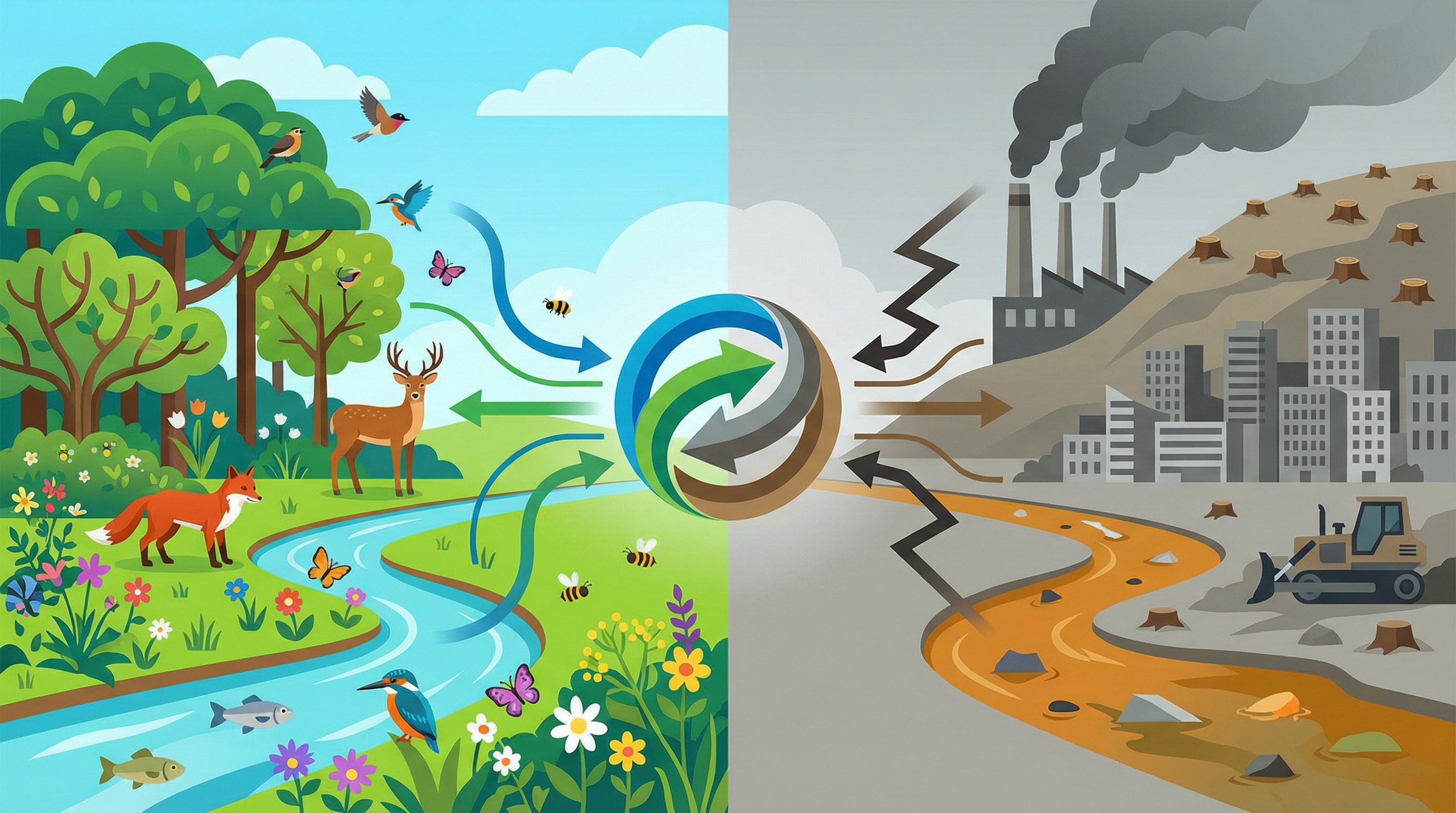
Biodiversity and human impact on the environment is one of the most exam-relevant topics in Edexcel GCSE Biology. This topic examines how the variety of species in ecosystems (biodiversity) is affected by human activities such as pollution, deforestation, introduction of non-indigenous species, and intensive farming practices. Understanding this topic is essential because it connects to broader themes of sustainability, food security, and climate change, all of which are increasingly important in modern biology. Examiners frequently test this content through data analysis questions where you interpret population graphs or pollution levels, extended response questions requiring you to explain multi-step processes like eutrophication, and evaluation questions where you must weigh competing priorities such as food production versus environmental protection. The assessment objective weighting is AO1: 30%, AO2: 40%, AO3: 30%, meaning the majority of marks come from applying your knowledge to novel contexts rather than simple recall. Typical question styles include: six-mark "Explain" questions on eutrophication, four-mark "Evaluate" questions on fish farming, and data interpretation questions worth three to four marks where you analyse trends in biodiversity or pollution.
Key Concepts
Concept 1: Biodiversity and Ecosystem Stability
Biodiversity refers to the variety of different species living in a particular ecosystem. High biodiversity means many different species coexist, while low biodiversity means only a few species dominate. Ecosystems with high biodiversity are more stable and resilient to changes because different species perform different roles. If one species is affected by disease or environmental change, others can fill similar ecological niches, maintaining ecosystem function. Think of it like a support network: if you rely on just one friend and they move away, you're isolated, but if you have many friends, losing one is less devastating. The same principle applies to ecosystems. When biodiversity is reduced, ecosystems become fragile and more susceptible to collapse.
Example: A coral reef with hundreds of fish species, corals, and invertebrates can withstand the loss of one species because others perform similar functions. However, a monoculture crop field with only wheat is devastated if a wheat-specific disease appears.
Concept 2: Pollution and Eutrophication
Eutrophication is a six-step process caused by nutrient pollution, typically from agricultural fertilizers. This is the single most important process you must memorize for this topic. Here's the complete sequence:
Step 1 - Leaching: Fertilizers containing nitrogen (N), phosphorus (P), and potassium (K) are applied to farmland. Rainwater washes these nutrients into nearby rivers, lakes, or ponds. This runoff is called leaching.
Step 2 - Algal Bloom: The excess nutrients cause algae populations to grow rapidly, creating a dense layer on the water surface called an algal bloom. The water often turns bright green.
Step 3 - Light Blocked: The thick algal bloom prevents sunlight from penetrating to underwater plants. Without light, these submerged plants cannot carry out photosynthesis.
Step 4 - Plant Death: Unable to photosynthesise, the underwater plants die from lack of glucose for respiration.
Step 5 - Bacterial Decomposition: Decomposer bacteria feed on the dead plant matter. With abundant food, bacterial populations multiply rapidly.
Step 6 - Oxygen Depletion: The bacteria carry out aerobic respiration to break down the dead organic matter. This process consumes dissolved oxygen from the water. As oxygen levels drop, fish and other aquatic animals suffocate and die.
Critical Point: It is the bacteria decomposing dead plants that use up the oxygen, NOT the algae. This is the most common mistake students make.
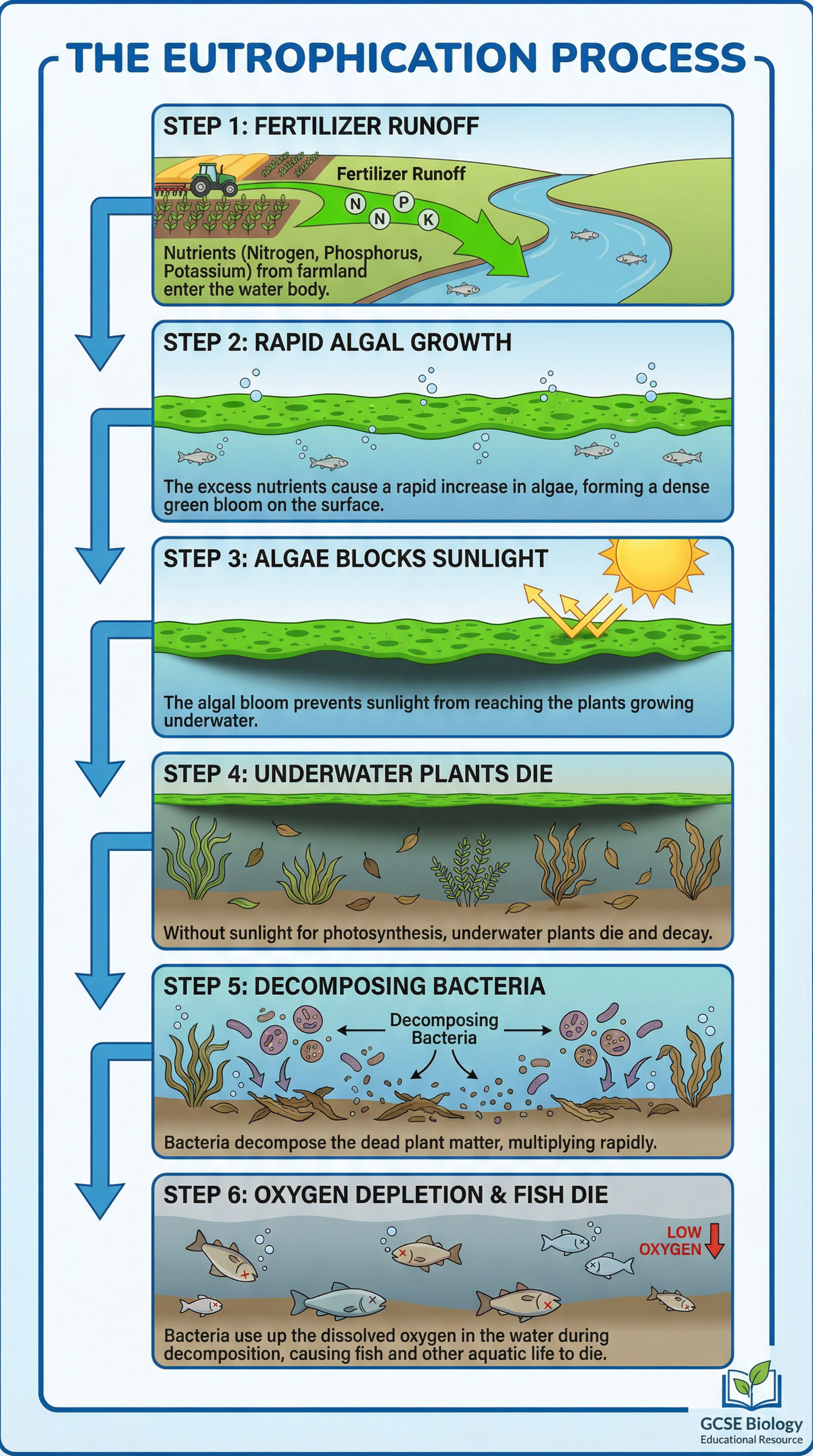
Example: A farmer applies NPK fertilizer to a wheat field in spring. Heavy rainfall causes nutrient runoff into a nearby lake. Within weeks, the lake surface is covered in green algae. Underwater plants die from lack of light. Bacteria decompose the dead plants, consuming oxygen. By summer, dead fish float on the surface due to oxygen depletion.
Concept 3: Deforestation and Habitat Loss
Deforestation involves cutting down forests, usually to create agricultural land, extract timber, or build urban developments. This has a dual impact on the environment. First, it directly reduces biodiversity by destroying habitats. When forests are cleared, the species that lived there lose their homes, food sources, and breeding grounds. Many species cannot adapt quickly enough and face local extinction. Second, deforestation contributes to climate change because trees absorb carbon dioxide during photosynthesis. When forests are removed, less CO₂ is taken out of the atmosphere, and if trees are burned, stored carbon is released back as CO₂, accelerating global warming. This creates a feedback loop: climate change further threatens biodiversity by altering habitats faster than species can adapt.
Example: The Amazon rainforest is cleared for cattle ranching. Jaguar populations decline because they lose hunting territory. Simultaneously, millions of tonnes of CO₂ are released into the atmosphere, contributing to global temperature rise.
Concept 4: Non-Indigenous Species
Non-indigenous species (also called invasive or alien species) are organisms introduced to ecosystems where they do not naturally occur. They may be introduced deliberately (e.g., for pest control or as ornamental plants) or accidentally (e.g., in ship ballast water). The problem arises because these species often lack natural predators in their new environment, allowing their populations to explode. They then outcompete native species for resources such as food, light, and space. Additionally, non-indigenous species may introduce diseases or parasites to which native species have no immunity, causing population crashes. The result is reduced biodiversity as native species decline or become locally extinct.
Example: Grey squirrels were introduced to the UK from North America. They outcompete native red squirrels for food and habitat, and they carry squirrelpox virus, which is lethal to red squirrels but harmless to greys. Red squirrel populations have declined dramatically across the UK.
Concept 5: Fish Farming (Aquaculture)
Fish farming, or aquaculture, involves raising fish in controlled environments such as cages in coastal waters or inland tanks. This practice has both benefits and drawbacks, and you must be able to evaluate both sides in exam questions.
Benefits: Fish farming increases food security by providing a reliable source of protein for growing human populations. It reduces pressure on wild fish stocks, which are often overfished. It also creates employment and economic opportunities in coastal communities.
Drawbacks: Overcrowding in fish farms leads to the rapid spread of diseases and parasites, such as sea lice. These can spread to wild fish populations when farmed fish are kept in open cages. Waste products (uneaten food and fish faeces) accumulate beneath fish farms, polluting local waterways and causing eutrophication. If farmed fish escape, they may interbreed with wild populations, reducing genetic diversity, or outcompete wild fish for resources.
Example: Salmon farms in Scotland produce thousands of tonnes of fish annually, supporting local economies. However, sea lice from farms have infected wild salmon populations, and waste from farms has caused oxygen depletion in nearby sea lochs.
Concept 6: Conservation Methods
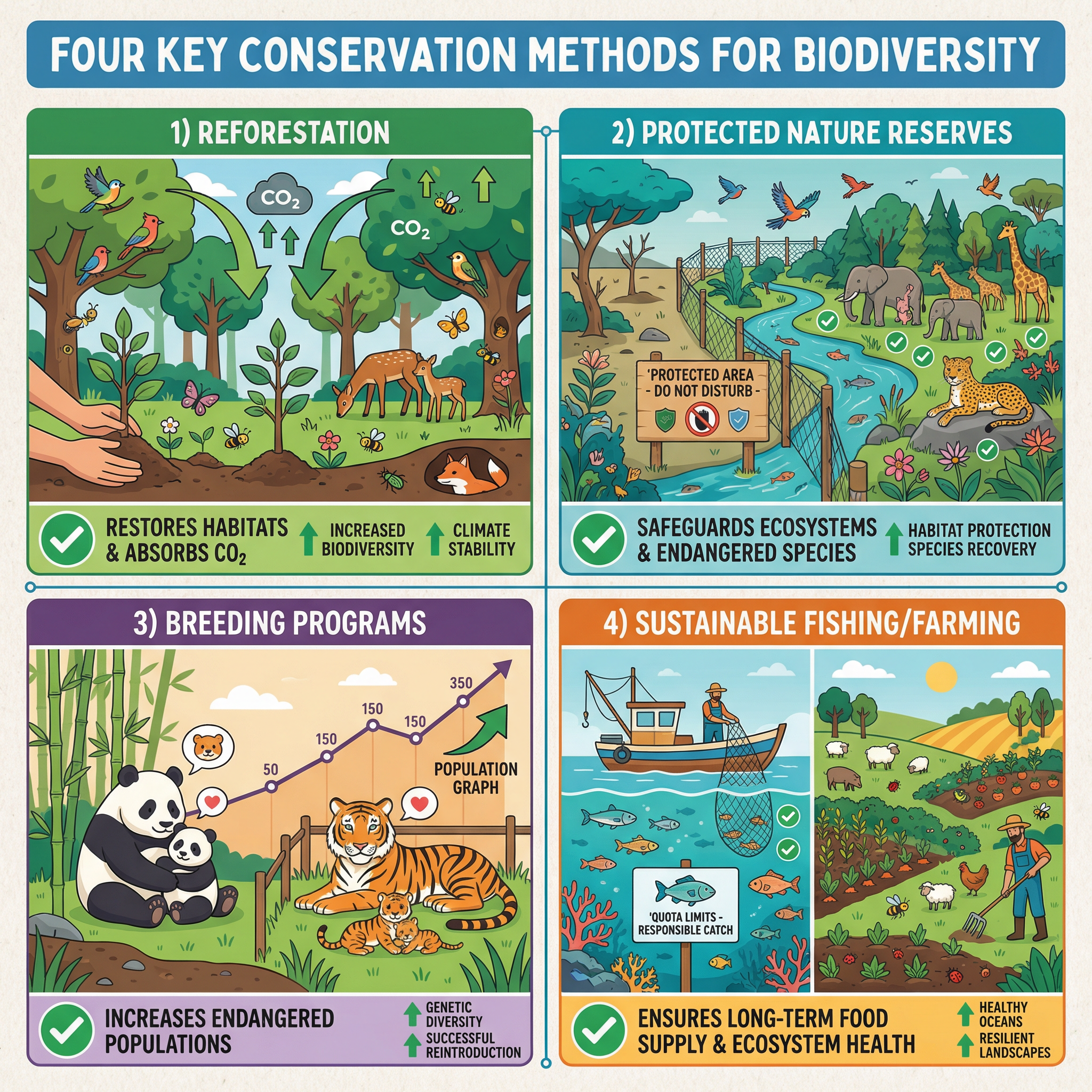
Conservation strategies aim to protect biodiversity and restore damaged ecosystems. You should know at least four methods:
Reforestation: Planting trees in deforested areas restores habitats, increases biodiversity, and removes atmospheric CO₂ through photosynthesis. This helps combat both biodiversity loss and climate change.
Protected Nature Reserves: Designating areas where human activity is restricted or prohibited allows ecosystems to recover naturally. These reserves provide safe breeding grounds for endangered species and protect critical habitats from development.
Breeding Programs: Captive breeding programs increase populations of endangered species in zoos or wildlife centers. Individuals may later be released into the wild to boost wild populations and maintain genetic diversity.
Sustainable Fishing and Farming: Setting catch quotas, using selective fishing gear, and implementing seasonal fishing bans ensure fish populations can recover. Sustainable farming practices, such as crop rotation and reduced pesticide use, protect soil health and biodiversity.
Example: The reintroduction of beavers to the UK through breeding programs has restored wetland habitats, increased biodiversity, and reduced flooding by creating natural dams.
Mathematical/Scientific Relationships
There are no formulas to memorize for this topic. However, you must be able to interpret data presented in graphs and tables. Common data analysis tasks include:
- Population graphs: Interpreting trends in species populations over time and linking changes to environmental factors such as pollution or habitat loss.
- Oxygen concentration graphs: Analysing how dissolved oxygen levels in water bodies change following nutrient pollution, typically showing a sharp decline after an algal bloom.
- Biodiversity indices: Understanding that higher values indicate greater biodiversity and being able to compare biodiversity between different ecosystems or time periods.
When analysing data, always quote figures from the graph or table to support your answer. For example: "Oxygen concentration decreased from 9 mg/L in May to 2 mg/L in July, indicating eutrophication occurred during this period."
Practical Applications
While there are no required practicals specifically for Topic 7.3, you may encounter practical-based questions that test your understanding of:
- Sampling techniques: Using quadrats or transects to measure biodiversity in different habitats.
- Water quality testing: Measuring dissolved oxygen, nitrate levels, or pH to assess pollution.
- Indicator species: Identifying pollution-sensitive species (e.g., mayfly larvae indicate clean water) versus pollution-tolerant species (e.g., bloodworms indicate polluted water).
Examiners may present data from these types of investigations and ask you to interpret results, suggest improvements, or evaluate conclusions.
Podcast Episode
Listen to this 10-minute podcast episode for a comprehensive audio review of the topic, including exam tips, common mistakes, and a quick-fire recall quiz.