
Study Notes
Overview
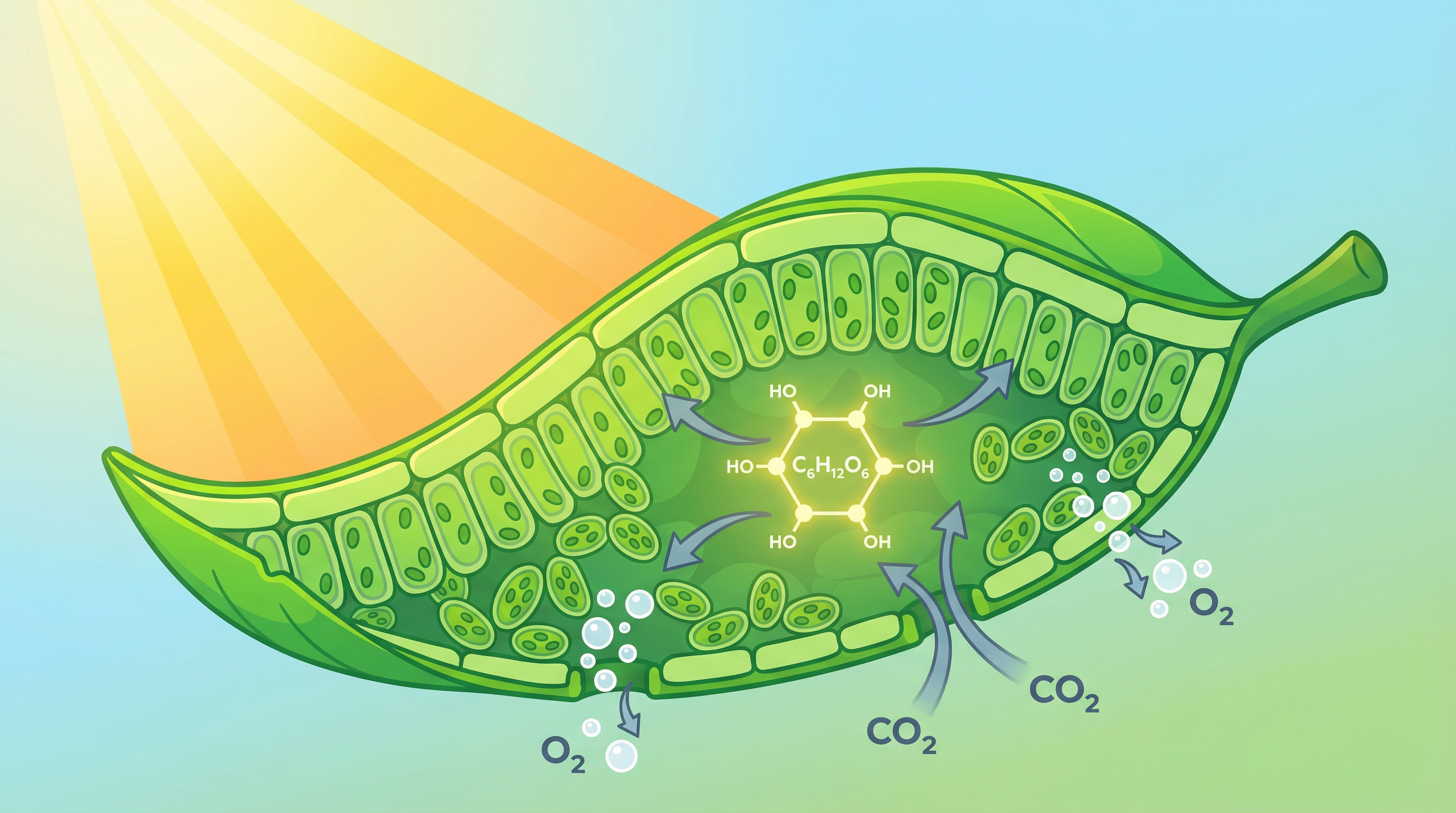
Photosynthesis is arguably the most important biological process on Earth. It is the foundation of almost all food chains and is responsible for the oxygen in our atmosphere. For your GCSE exam, understanding photosynthesis as an endothermic reaction that converts light energy into chemical energy is fundamental. This topic, specification point 4.1, requires you to know the word and balanced symbol equations, explain how different environmental factors affect the reaction's rate, and understand how a plant uses the glucose it produces. Examiners frequently test this area through data interpretation questions (graphs) and a 6-mark question on the required practical for testing a leaf for starch. A solid grasp of this topic is essential as it links to broader concepts like energy transfer, ecosystems, and plant adaptations.
Key Concepts
Concept 1: The Photosynthesis Reaction
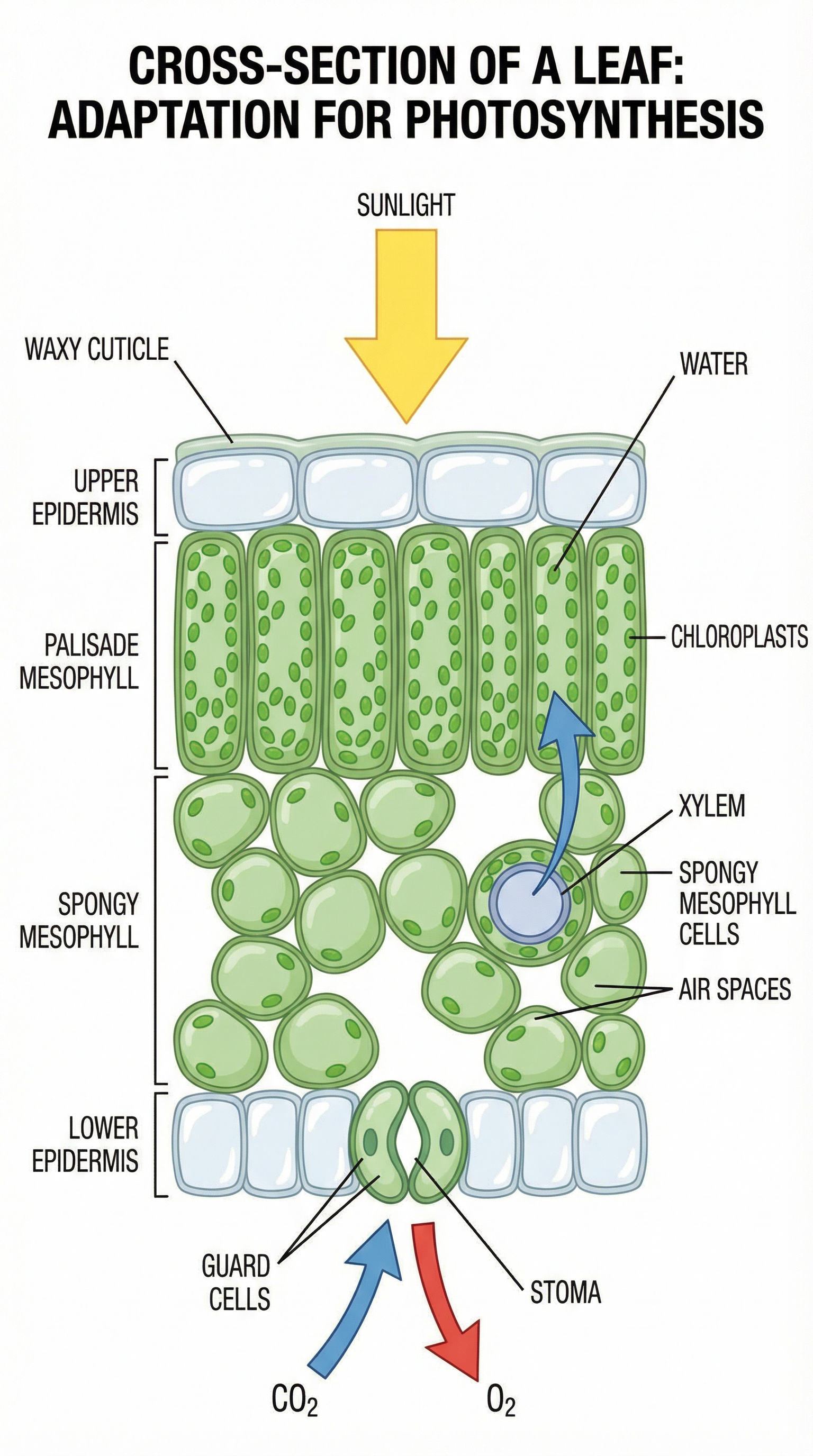
Photosynthesis is an endothermic reaction, meaning it takes in energy from the surroundings – in this case, light energy. This energy is captured by a green pigment called chlorophyll, found inside chloroplasts within plant cells. The plant uses this energy to convert carbon dioxide and water into glucose (a sugar) and oxygen.
**Word Equation:**Carbon Dioxide + Water --(Light Energy)--> Glucose + Oxygen
Balanced Symbol Equation (Higher Tier Only):
6CO₂ + 6H₂O --(Light Energy)--> C₆H₁₂O₆ + 6O₂
It is crucial to remember that chlorophyll is not a reactant but the catalyst that absorbs light energy. A common mistake is to include it in the equation itself. Credit is given for understanding that the reaction converts simple inorganic molecules (CO₂ and H₂O) into a complex, energy-rich organic molecule (glucose).
Concept 2: Limiting Factors
The rate of photosynthesis can be limited by several factors. A limiting factor is something in the environment that, if in short supply, will restrict the rate of the reaction, even if other factors are optimal. The three main limiting factors you need to know are:
- Light Intensity: Without enough light, photosynthesis cannot happen, no matter how much water or CO₂ is available. As light intensity increases, the rate of photosynthesis increases, but only up to a certain point. Beyond that, another factor is limiting the rate.
- Carbon Dioxide Concentration: CO₂ is a key reactant. If its concentration is too low, the rate will be slow. Increasing CO₂ concentration will increase the rate until another factor becomes limiting.
- Temperature: Photosynthesis is controlled by enzymes. As temperature increases, the rate increases as enzymes work more efficiently. However, if the temperature gets too high (typically above 45°C), the enzymes begin to denature, their active site changes shape, and the rate of photosynthesis plummets.
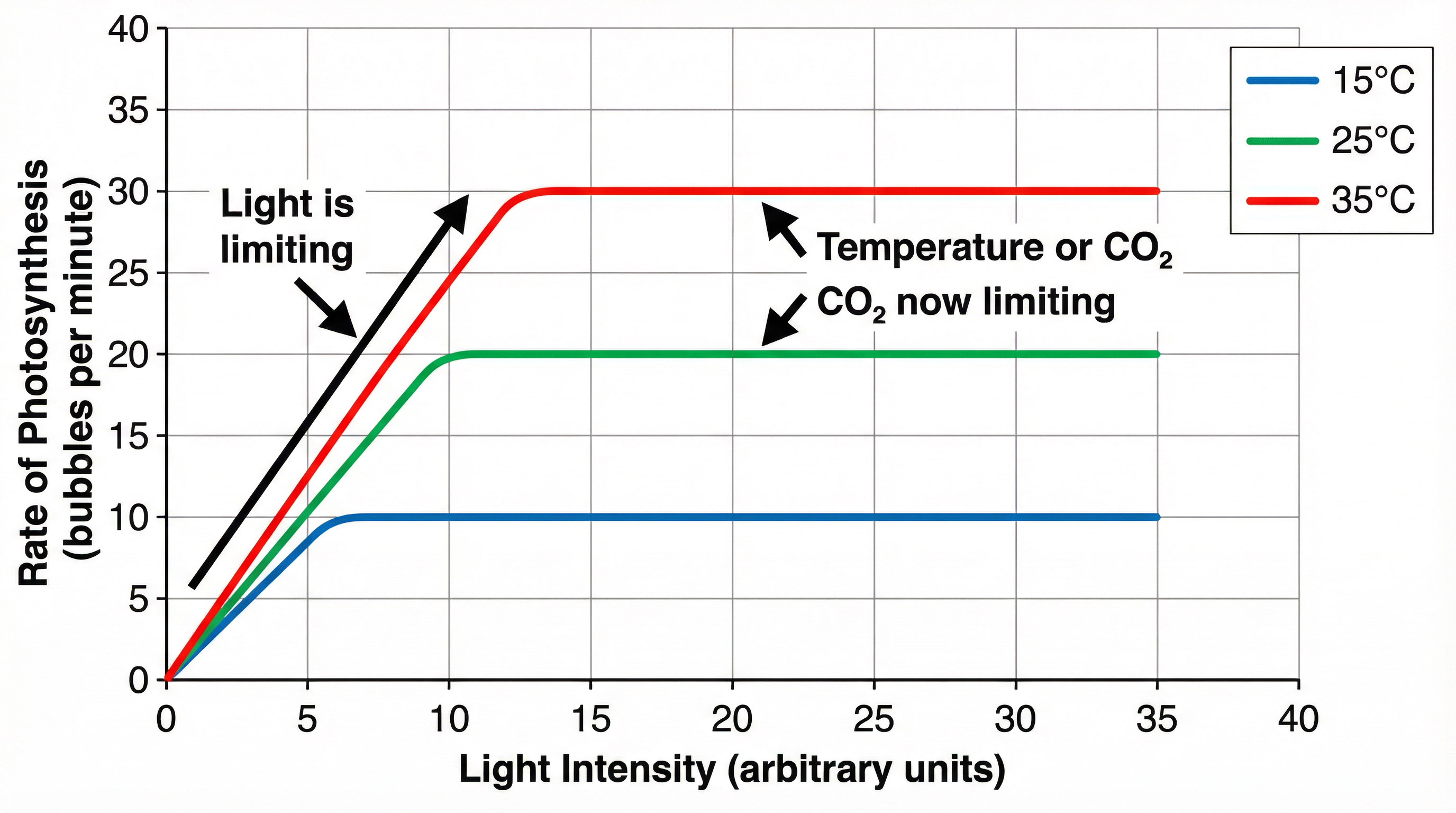
Understanding how these factors interact is a high-level skill. For example, on a warm, sunny day, the CO₂ concentration is likely to be the limiting factor. At night, light intensity is the limiting factor.
Concept 3: The Fate of Glucose
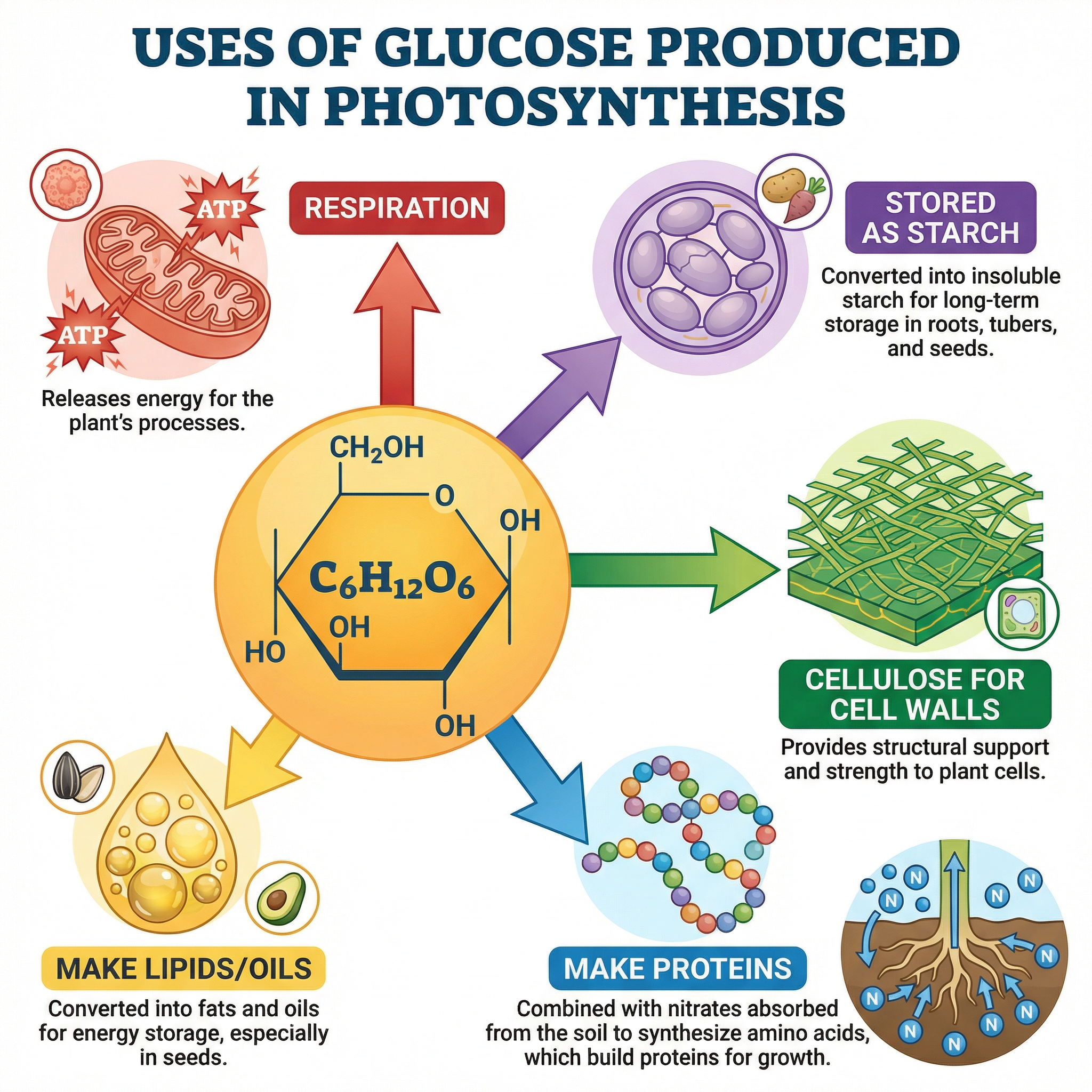
Plants don't just make glucose to store it. This energy-rich molecule is vital for the plant's survival and growth. Examiners award marks for describing several uses:
- For Respiration: This is the most important use. Glucose is broken down in respiration to release energy for all cellular processes (like growth and nutrient transport). Remember: plants respire 24/7, not just in the dark!
- Stored as Starch: Glucose is soluble in water, which would affect the plant's water balance (osmosis). To store it, plants convert many glucose molecules into a large, insoluble carbohydrate called starch. This is why we test for starch, not glucose.
- To Make Cellulose: Glucose is converted into cellulose to build strong cell walls, providing structural support to the plant.
- To Make Proteins: Glucose is combined with nitrate ions (absorbed from the soil) to synthesise amino acids, which are then joined together to make proteins for growth and repair.
- To Make Lipids (Fats and Oils): Glucose can be converted into lipids for energy storage, particularly in seeds.
Required Practical: Testing a Leaf for Starch
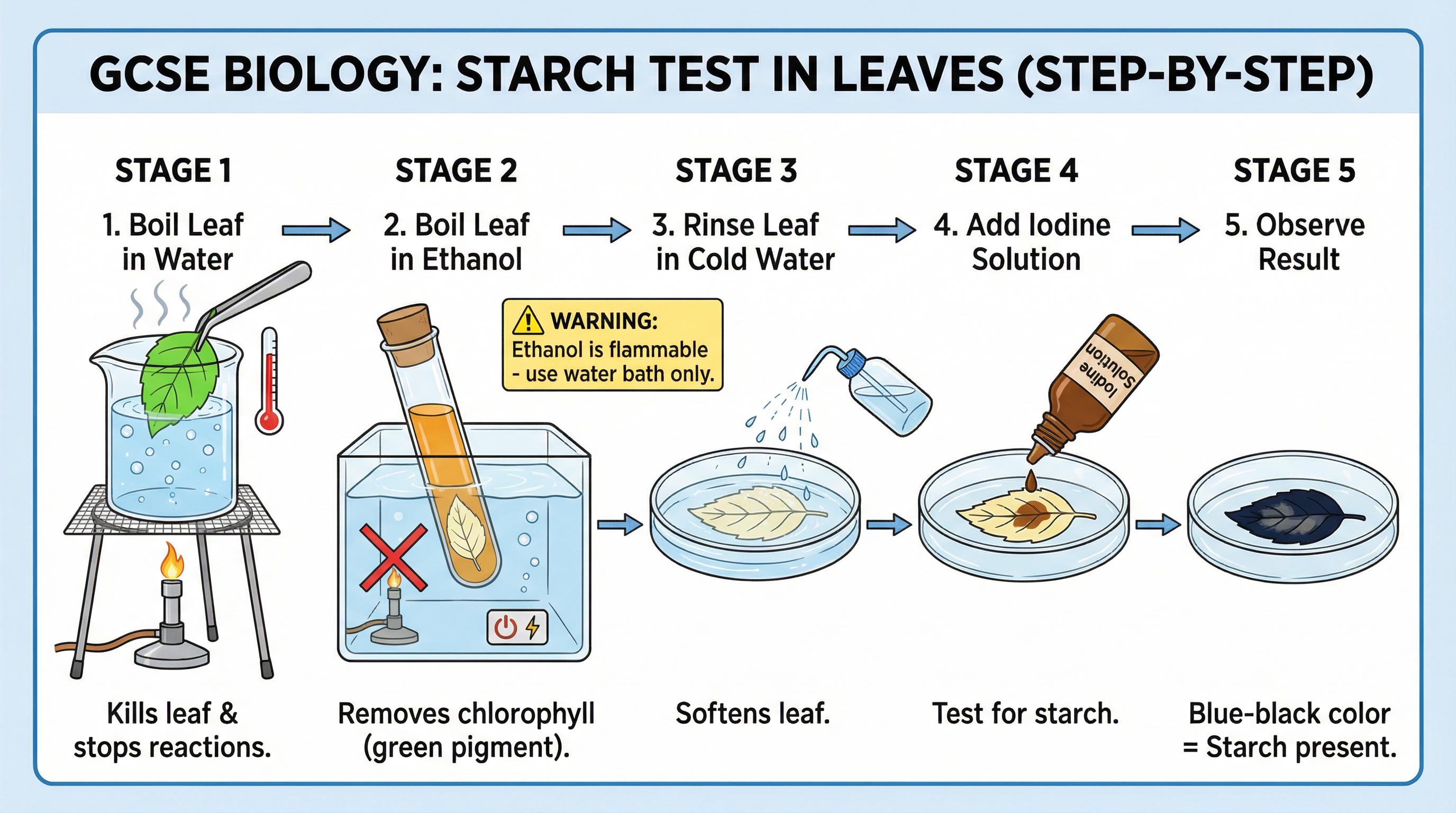
This is a classic 6-mark QER question. You must describe the method logically and, crucially, explain the safety precautions.
Apparatus:
- Beaker
- Tripod, gauze, and heat-proof mat
- Bunsen burner
- Test tube
- Forceps
- Ethanol
- Iodine solution
- Petri dish
- A leaf from a plant that has been in the light for at least 24 hours
Method:
- Kill the leaf: Place the leaf in a beaker of boiling water for about 1 minute. This stops all chemical reactions by denaturing the enzymes.
- Remove the chlorophyll: Place the leaf in a test tube containing ethanol and stand the test tube in the beaker of hot water (a water bath). The ethanol will boil and dissolve the chlorophyll, turning the leaf pale. Crucial Safety Point: Ethanol is highly flammable. NEVER heat it with a direct flame. Marks are consistently lost for this.
- Soften the leaf: The ethanol makes the leaf brittle. Dip the leaf back into the hot water for a few seconds to soften it.
- Test for starch: Spread the leaf out on a petri dish and add a few drops of iodine solution.
Expected Result:
- If starch is present, the iodine solution will turn from a yellowy-brown to a blue-black colour.
- If starch is absent, it will remain yellowy-brown.