Study Notes
Overview
The Balance of Payments is a crucial topic in macroeconomics, and for the OCR J205 specification, your focus is squarely on the Current Account. This guide will equip you with the precise knowledge and skills needed to excel. Examiners expect candidates to not only define the four key components but also to interpret data, calculate balances, and analyze the real-world consequences of current account deficits and surpluses on the UK economy. This involves understanding the impact on major macroeconomic objectives like employment, economic growth, and inflation. Mastery of this topic is essential for demonstrating AO2 (Application) and AO3 (Analysis) skills, which together constitute 65% of your final grade. This guide will walk you through the theory, provide worked examples, and highlight common pitfalls to ensure you are fully prepared.
The Four Components of the Current Account
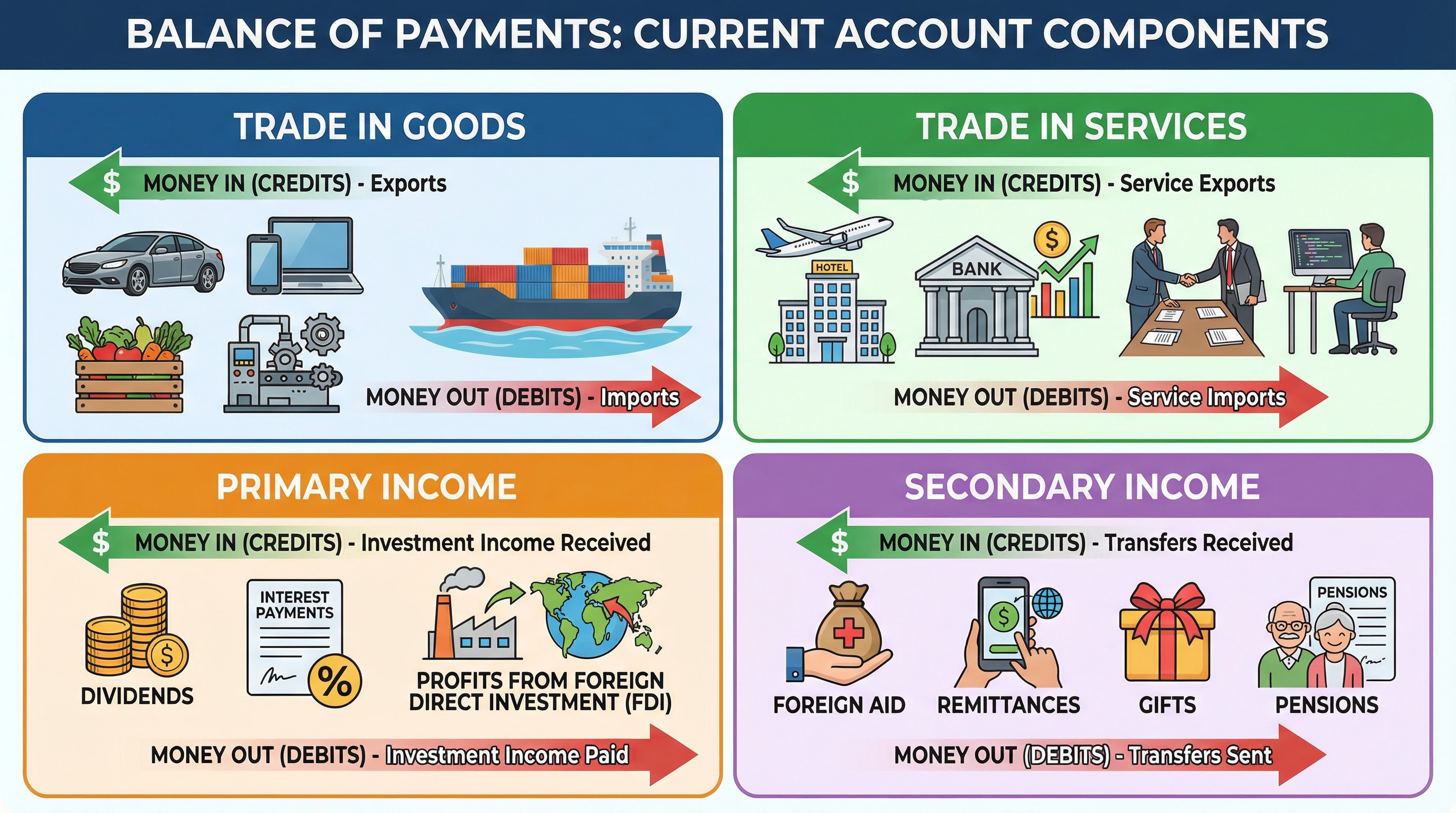
To secure full marks, you must be able to define and distinguish between the four components of the Current Account. These are the channels through which money flows into (credits) and out of (debits) the country.
1. Trade in Goods
What it is: This is the most straightforward component, representing the buying and selling of physical, tangible items.
- Exports (Credits): Goods produced in the UK and sold to other countries, leading to an inflow of money. For example, the sale of a UK-manufactured car to a customer in France.
- Imports (Debits): Goods produced abroad and bought by UK residents, leading to an outflow of money. For example, the purchase of a smartphone made in South Korea.
Key Term: The difference between the value of goods exported and imported is known as the Balance of Trade in Goods.
2. Trade in Services
What it is: This component tracks the buying and selling of intangible services.
- Exports (Credits): Services provided by UK firms to foreigners. Examples include a US tourist paying for a hotel in London, a German company using a UK-based law firm, or an overseas student paying tuition fees to a UK university.
- Imports (Debits): Services provided by foreign firms to UK residents. For example, a UK citizen flying with an Irish airline or using a US-based streaming service.
Key Fact: The UK typically runs a significant surplus on its trade in services, thanks to its strong financial, legal, and educational sectors.
3. Primary Income
What it is: This is income earned from investments and employment abroad. It's a return on factors of production. Examiners look for precision here.
- Credits: Income flowing into the UK. This includes dividends from shares owned in foreign companies, interest on loans made to foreign entities, and profits repatriated by UK firms from their overseas operations (Foreign Direct Investment - FDI).
- Debits: Income flowing out of the UK. This includes profits sent abroad by foreign-owned companies operating in the UK or interest paid to overseas lenders.
4. Secondary Income
What it is: These are one-way transfers where no good or service is exchanged. They are often referred to as 'current transfers'.
- Credits: Money transferred to the UK. Examples include remittances sent home by UK citizens working abroad or pension payments received from a foreign government.
- Debits: Money transferred from the UK. This includes UK government contributions to international organizations (like the UN) or foreign aid payments to developing countries.
Current Account Deficits and Surpluses
A country's Current Account balance is calculated by summing the balances of all four components.
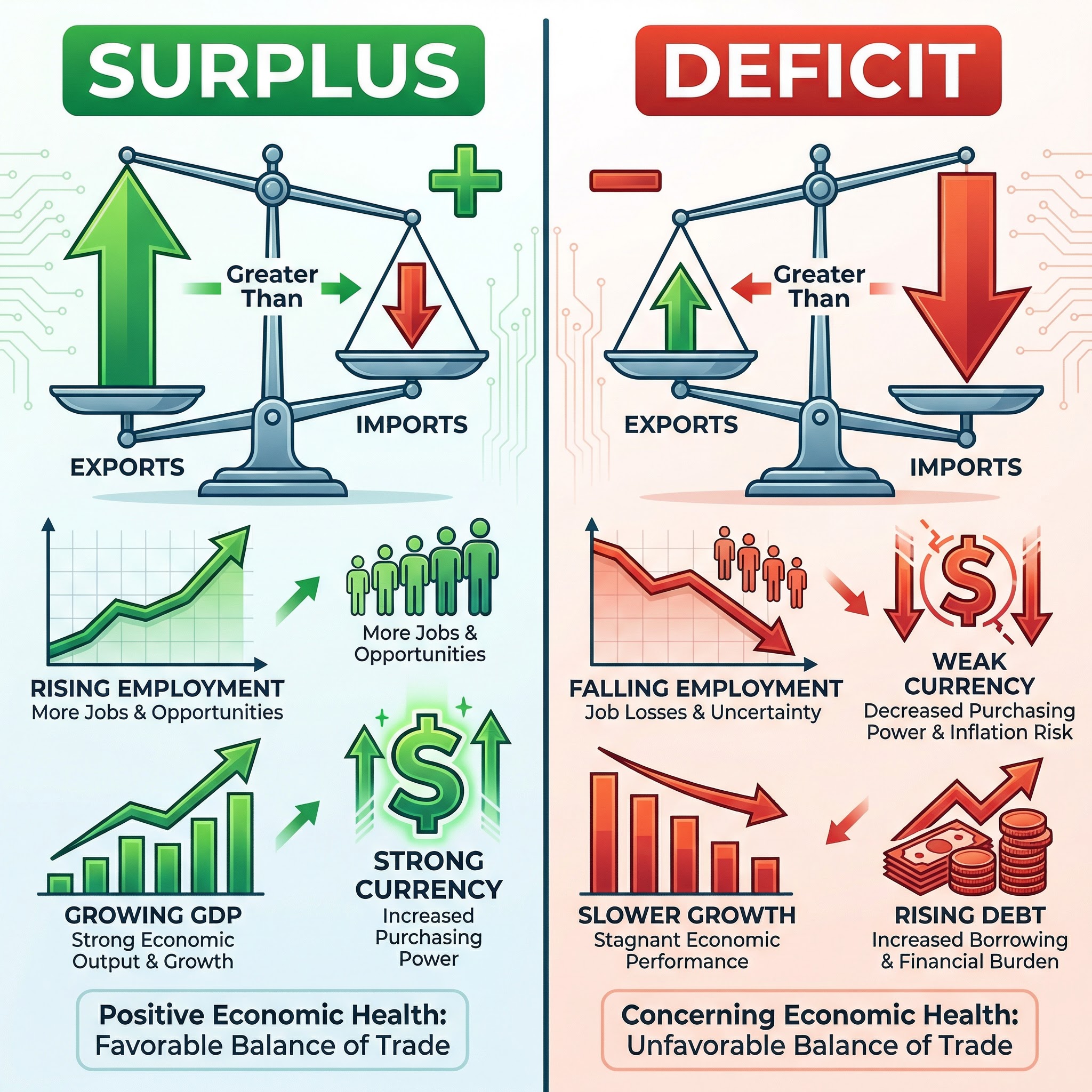
- Current Account Deficit: Total debits exceed total credits. More money is flowing out of the economy than is flowing in. This has been the UK's typical position for many years.
- Current Account Surplus: Total credits exceed total debits. More money is flowing into the economy than is flowing out.
Consequences of a Current Account Deficit
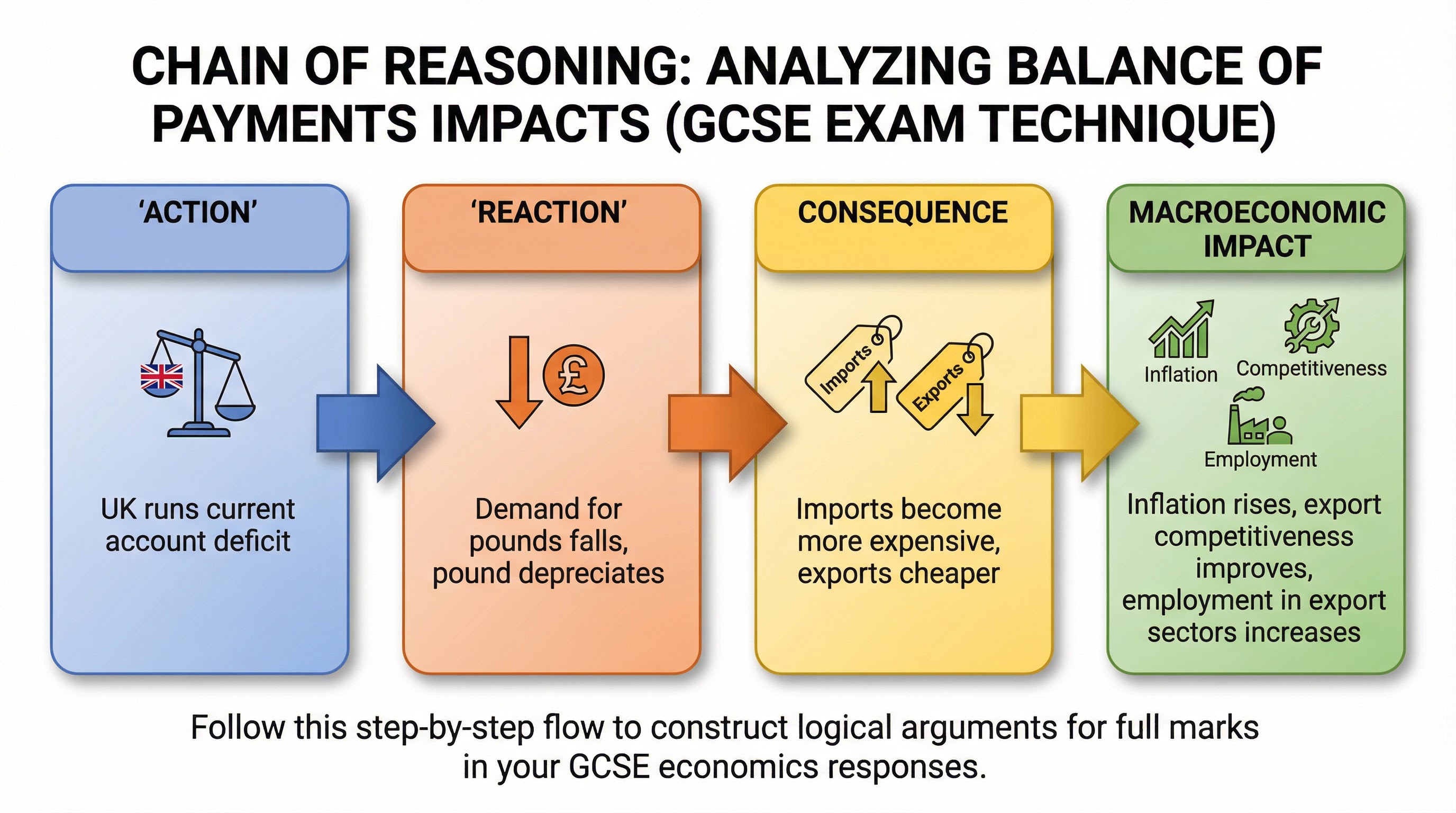
- Currency Depreciation: A deficit means there is a higher supply of pounds (as UK residents sell them to buy imports) than demand for pounds (from foreigners buying UK exports). This can cause the value of the pound to fall.
- Financing the Deficit: A persistent deficit must be financed by borrowing from abroad or selling domestic assets to foreigners, which can lead to an increase in national debt and future income outflows (debits on the primary income account).
- Indication of Uncompetitiveness: A large deficit may signal that a country's industries are struggling to compete internationally, potentially leading to job losses in those sectors.
- Potential for Growth: However, a deficit can also be a sign of a strong economy where confident consumers are spending heavily, including on imported goods.
Consequences of a Current Account Surplus
- Currency Appreciation: A surplus increases the demand for a country's currency, causing its value to rise. This can make exports more expensive and imports cheaper, potentially harming export-focused industries over time.
- Sign of Competitiveness: It indicates that a country is selling a high volume of goods and services that are in demand globally.
- Potential for Weak Domestic Demand: A surplus could also suggest that domestic consumption is too low, with consumers saving instead of spending, which could restrain economic growth.