Study Notes
Overview
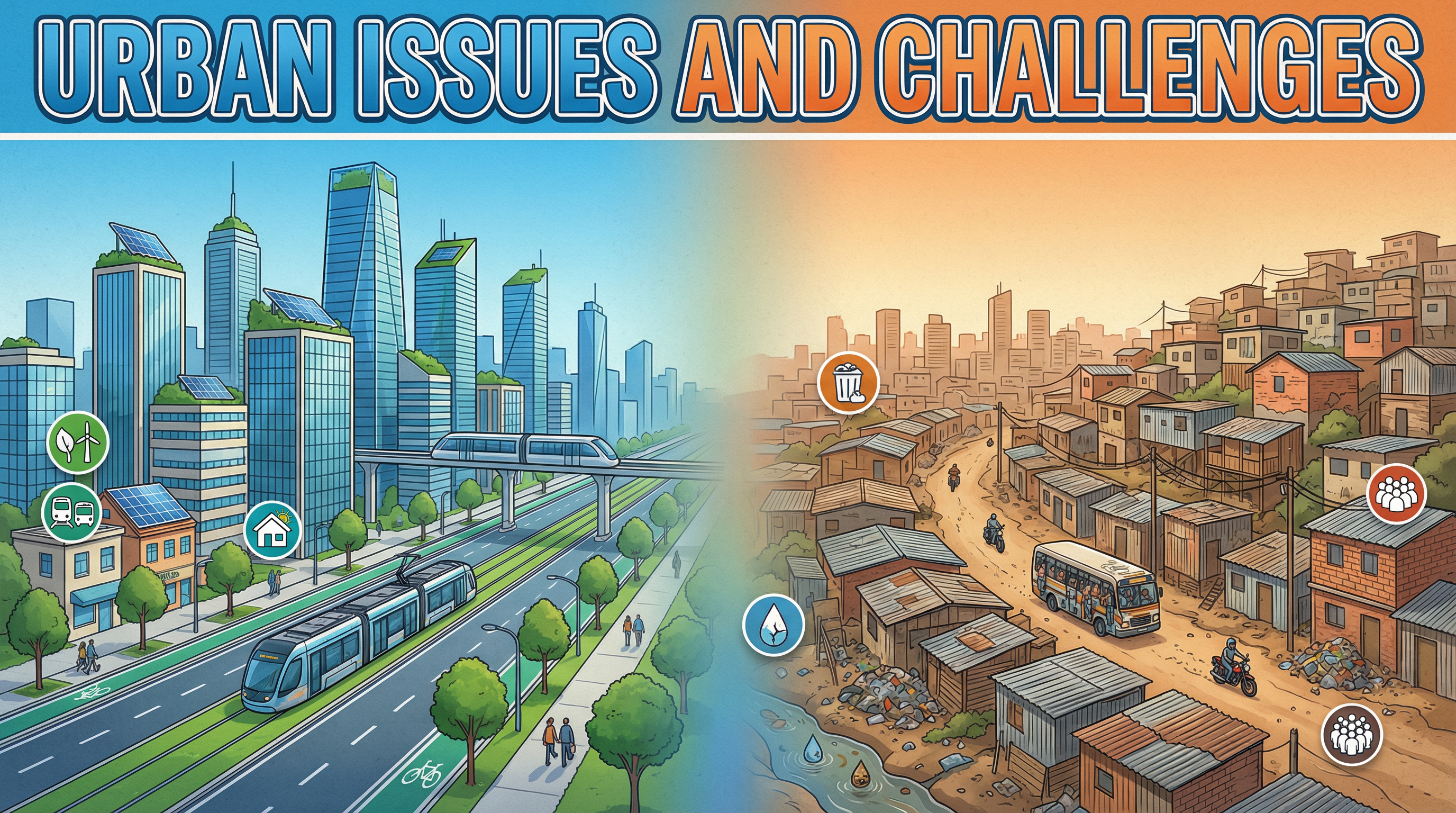
This study guide focuses on Urban Issues and Challenges, a core component of the OCR (Specification B) GCSE Geography course. Understanding urbanisation is critical, as more than half of the world's population now lives in cities. This topic explores the dramatic differences between urban areas in Advanced Countries (ACs) and those in Low-Income Developing or Emerging Developing Countries (LIDCs/EDCs). Examiners are looking for candidates who can analyse the causes, processes, and consequences of urban trends, and evaluate the strategies designed to manage them. Success in this unit requires not just knowing the facts, but applying them with Place Specific Detail (PSD) to contrasting case studies. You will need to demonstrate a clear understanding of the interrelationships between people and their urban environments, and the urgent need for sustainable solutions to modern urban problems. This guide will equip you with the key knowledge, exam techniques, and specific examples needed to achieve the highest marks.
Key Concepts & Case Studies
Urbanisation Trends
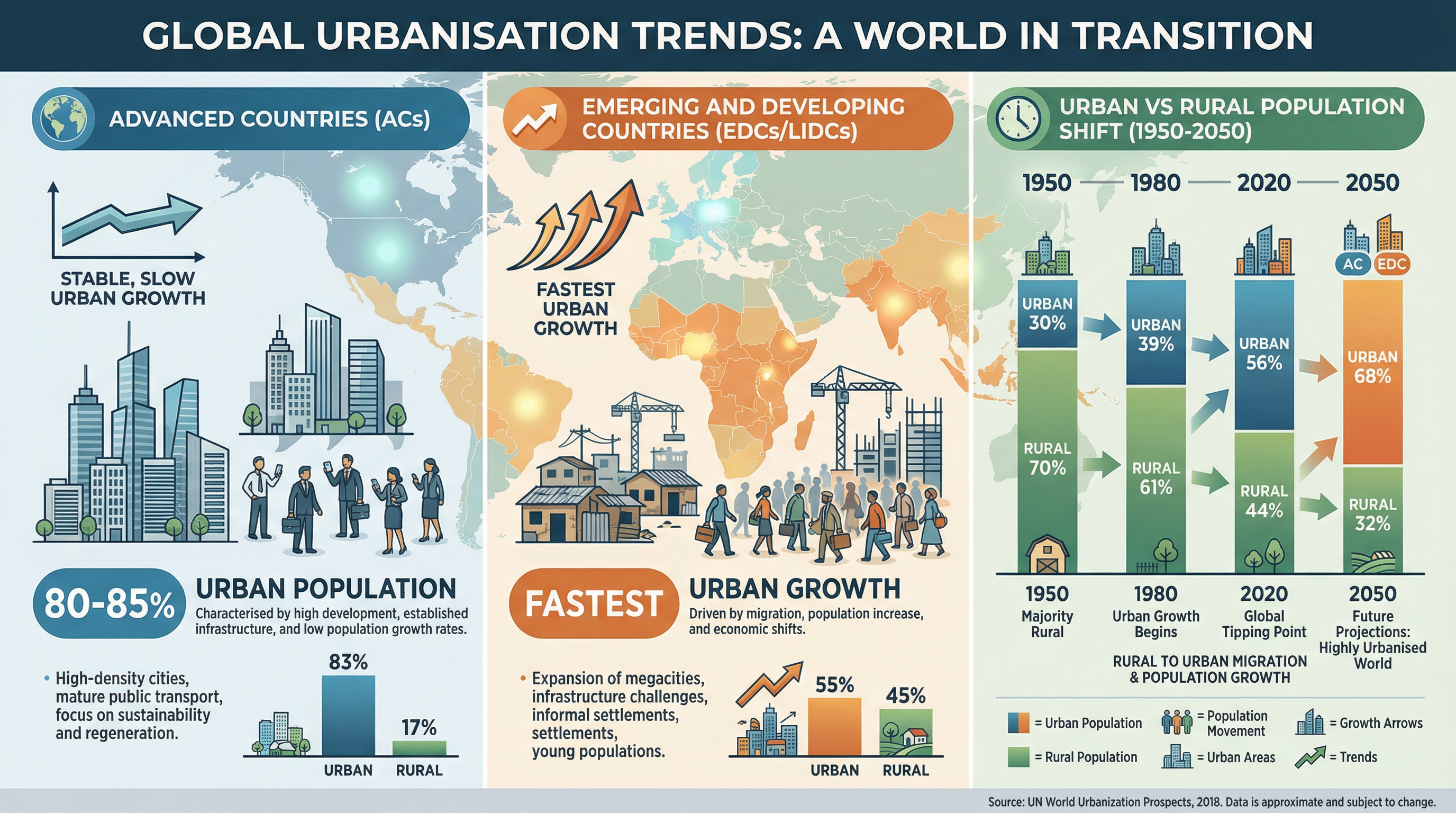
What is it?: Urbanisation is the increase in the proportion of a country's population that lives in urban areas. This is primarily driven by rural-to-urban migration and natural increase.
Why it matters: The rate and character of urbanisation differ hugely between ACs and LIDCs/EDCs. In ACs like the UK, urbanisation was a slow process linked to the Industrial Revolution and has now stabilised. In contrast, many LIDCs/EDCs are experiencing rapid, often uncontrolled, urbanisation today. This distinction is fundamental to the entire topic.
Specific Knowledge:
- Global Shift: Since 2007, more than 50% of the world's population lives in urban areas.
- ACs: Slow growth, stable urban population (e.g., UK ~83% urban).
- LIDCs/EDCs: Rapid growth, often leading to the development of megacities (cities with over 10 million people).
Case Study 1: London (An Advanced Country City)
Context: London is the UK's capital and a major world city. Its challenges are typical of a mature, post-industrial city in an AC.
Key Challenges & Management:
-
Housing Shortage & Inequality:
- Challenge: High demand and overseas investment have driven house prices to be among the highest in the world, creating a severe affordability crisis. This leads to social segregation, with wealthy residents in central areas and lower-income groups pushed to the outskirts.
- Management: The London Plan includes targets for building 65,000 new homes a year, with a focus on affordable housing. Regeneration schemes like the London Docklands aimed to create new housing and economic opportunities. However, this often leads to gentrification, where rising property values displace original residents.
-
Transport & Pollution:
- Challenge: A dense, historic road network combined with high car ownership leads to chronic congestion and poor air quality. Nitrogen Dioxide (NO2) levels have frequently breached EU legal limits.
- Management: Transport for London (TfL) has implemented several strategies:
- The Congestion Charge: A fee for driving in central London, designed to deter car use.
- The Ultra Low Emission Zone (ULEZ): Requires vehicles to meet strict emission standards or pay a daily charge. This has helped reduce NO2 levels by an estimated 44% in the central zone.
- Crossrail (Elizabeth Line): A new high-capacity railway line designed to improve east-west connectivity and reduce pressure on the Tube.
-
Urban Regeneration - The London Docklands:
- What happened: The old port area fell into dereliction in the 1960s and 70s. The London Docklands Development Corporation (LDDC) was created in 1981 to regenerate the area.
- Successes: Attracted massive private investment (£1.86bn public to £7.7bn private), created over 100,000 jobs (e.g., Canary Wharf financial hub), built 24,000 new homes, and improved transport with the Docklands Light Railway (DLR).
- Failures: High-end housing was unaffordable for original residents, leading to gentrification and the breakdown of traditional communities. Many new jobs went to commuters rather than the local unemployed population.
Case Study 2: Lagos (An LIDC/EDC City)
Context: Lagos is the largest city in Nigeria and one of the fastest-growing megacities in the world. Its challenges are characteristic of rapid, large-scale urbanisation in an EDC.
Key Challenges & Management:
-
Informal Housing & Squatter Settlements:
- Challenge: With a population growing by over 500,000 people per year, formal housing cannot keep pace. An estimated 66% of the population lives in informal settlements or slums.
- Case Study - Makoko: A floating slum built on stilts over the Lagos Lagoon. Residents (estimated 100,000+) lack access to basic services like clean water, sanitation, and formal education. Evictions are a constant threat.
- Management: The Makoko Floating School was a prototype for a sustainable building that could be replicated to provide educational facilities. While it collapsed in a storm, it provided a model for community-led, locally adapted solutions. Larger-scale government housing projects are often too expensive for the poorest residents.
-
Waste Management:
- Challenge: The city generates over 10,000 tonnes of waste daily, but only about 40% is officially collected. Waste is often dumped in informal tips, blocking drains and polluting water sources.
- Case Study - Olusosun Landfill: One of the largest dumps in Africa, where hundreds of people work in the informal economy, sorting through waste to find materials to sell. This exposes them to toxic fumes and health hazards.
- Management: The Lagos Waste Management Authority (LAWMA) is working to formalise waste collection and recycling, creating jobs and reducing environmental risks. Community-based initiatives also play a role in local clean-up efforts.
-
The Informal Economy:
- Challenge: The formal economy cannot provide enough jobs for the rapidly growing population. Around 60% of the workforce is employed in the informal sector (e.g., street vendors, waste pickers, artisans).
- Why it matters: While providing a vital economic lifeline for millions, the informal economy is unregulated, untaxed, and offers no job security or legal protection for workers.
Sustainable Urban Futures
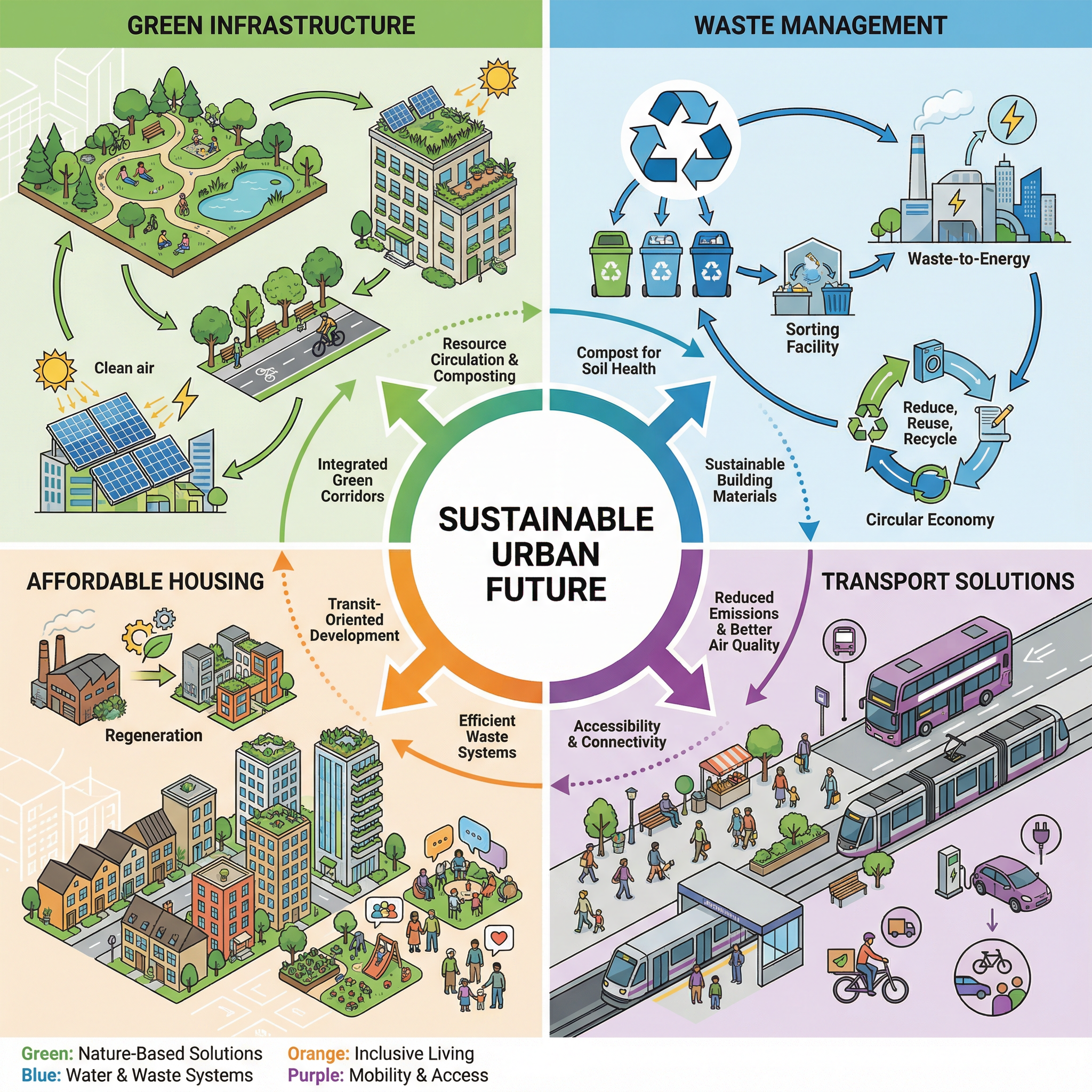
What is it?: A sustainable city is one that can meet the needs of its residents today without compromising the ability of future generations to meet their own needs. It involves balancing social, economic, and environmental factors.
Key Strategies:
- Green Infrastructure: Creating and maintaining green spaces like parks and green roofs to reduce flood risk, improve air quality, and enhance wellbeing.
- Integrated Transport Systems: Promoting public transport, cycling, and walking to reduce car dependency and emissions.
- Waste Reduction & Recycling: Moving towards a circular economy where resources are reused and recycled, minimising landfill.
- Energy Efficiency: Using renewable energy sources and designing energy-efficient buildings.
Exam Technique & Command Words
Understanding what the question is asking is half the battle. OCR uses specific command words, and each requires a different approach.
Describe (typically 2-4 marks): Provide factual information about features or characteristics. No explanation needed—just state what you observe or know. For example, "Describe two features of informal settlements in Lagos." You would write: "Informal settlements like Makoko are built on marginal land such as lagoons. They lack basic services like clean water and sanitation."
Explain (typically 4-6 marks): Show understanding by giving reasons or causes. Use connectives like 'because', 'this leads to', 'as a result'. For example, "Explain why rural-to-urban migration occurs in LIDCs." You would write: "People migrate from rural to urban areas because cities offer better job opportunities and access to services like healthcare and education. This is driven by push factors such as rural poverty and pull factors such as the prospect of higher wages."
Assess or To what extent (typically 8-12 marks): Make a judgement. Weigh up different sides of an argument and reach a conclusion. For example, "Assess the success of the London Docklands regeneration." You would discuss successes (jobs, investment, housing) and failures (gentrification, displacement), then conclude with an overall judgement on whether it was more successful than not, and why.
Using a named example or case study: This is your cue to use Place Specific Detail (PSD). Name the place, provide statistics, name specific projects or areas. Generic answers will not access the higher mark bands.
Chain of Reasoning: Cause → Process → Impact → Consequence
Examiners reward candidates who can show how one thing leads to another. This is especially important in longer answers. For example:
- Cause: Rapid rural-to-urban migration in Lagos
- Process: Leads to the growth of informal settlements like Makoko
- Impact: Results in overcrowding, poor sanitation, and health risks
- Consequence: Limits residents' life chances and puts pressure on government resources
By structuring your answers this way, you demonstrate analytical thinking, which is essential for accessing Level 3 marks.