Study Notes
Overview
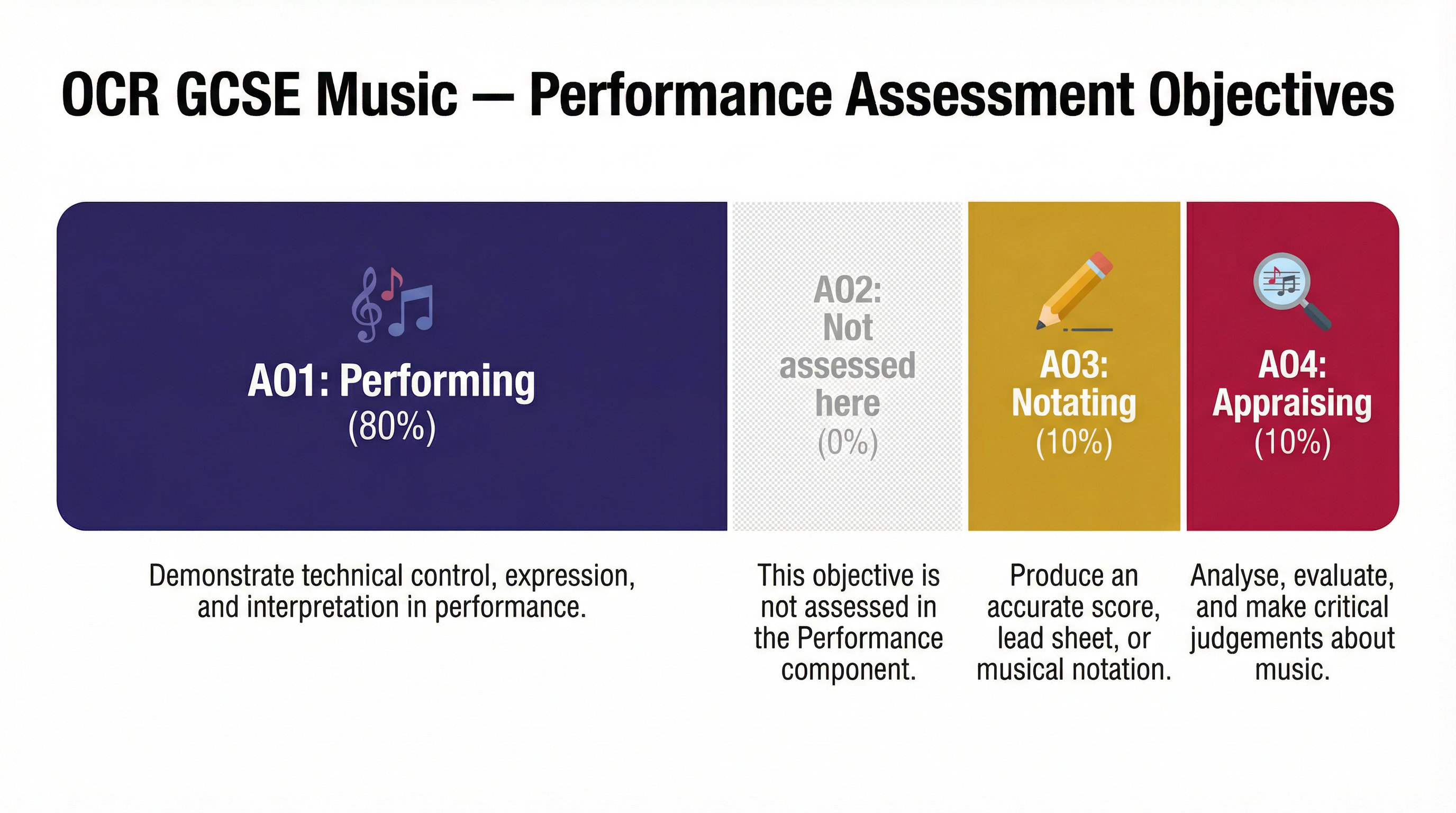
Welcome to the study guide for one of the most crucial areas of your OCR GCSE Music performance: Appropriate Stylistic Interpretation. This topic isn't just about playing the right notes; it's about bringing music to life. It is the single biggest differentiator between a technically proficient performance and a truly musical one. Examiners are not just listening for accuracy; they are listening for your ability to communicate the composer's intentions through a sophisticated and authentic application of musical elements. In your performance assessment, this falls under AO1: Performing, which accounts for a massive 80% of the available marks. Mastering this skill is therefore essential for any candidate aiming for the higher mark bands.
This guide will equip you with the knowledge and practical skills to analyse, understand, and apply stylistic features from different musical periods, ensuring your performance is not just correct, but also convincing and communicative.
Key Knowledge & Theory
Core Concepts
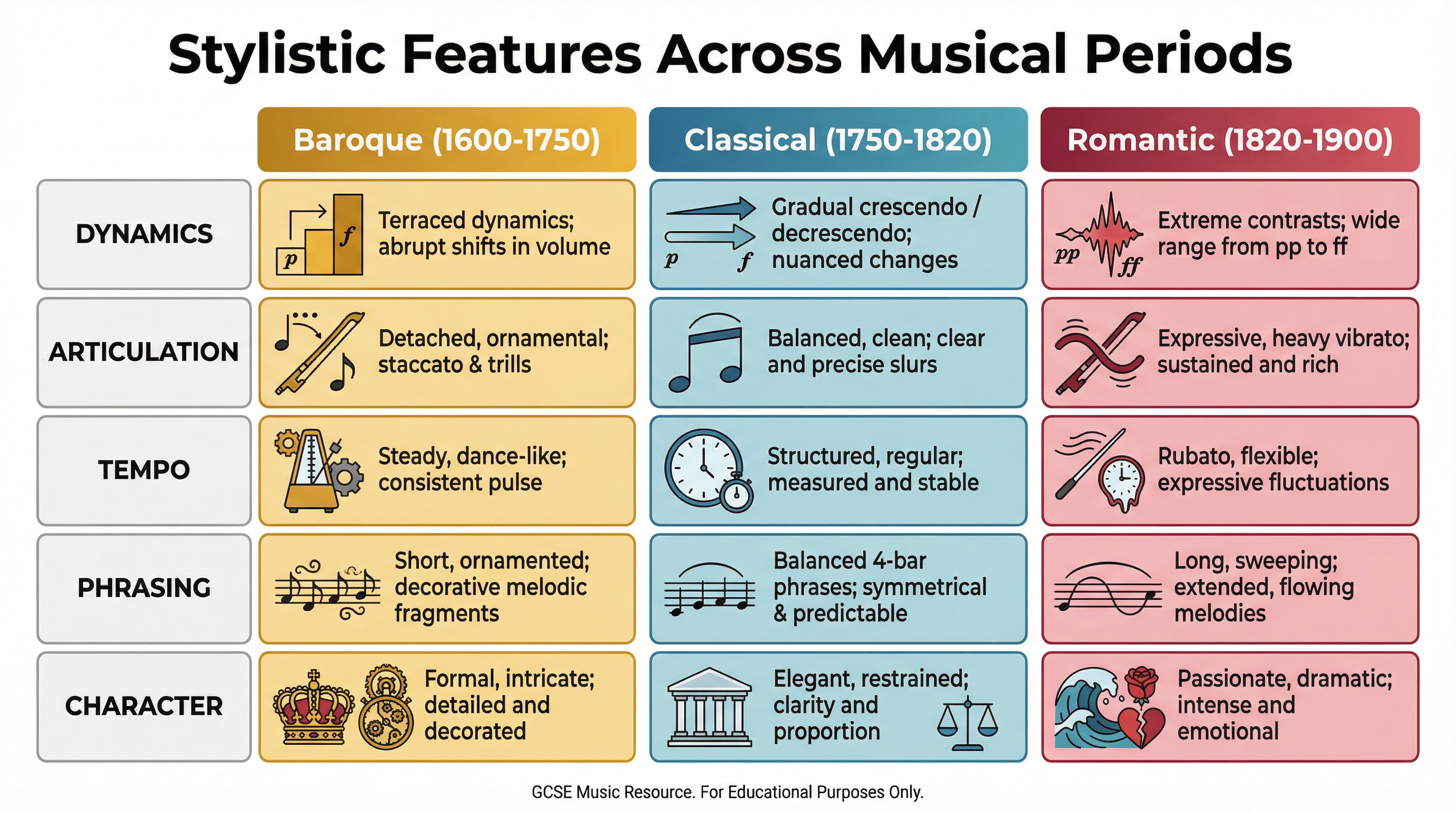
To achieve a stylistically appropriate interpretation, candidates must demonstrate a deep understanding of how musical elements are manipulated to create character and mood. The core of this lies in four key areas:
- Dynamics: This is not merely about playing loudly or softly, but about using the full spectrum of volume to shape phrases, build tension, and create emotional impact. The application of dynamics varies hugely between musical periods.
- Articulation: This refers to the way notes are attacked and shaped. Is the style detached and crisp (staccato), or smooth and connected (legato)? Are there specific accents or slurs that define the character of the music? Authentic articulation is a key signifier of stylistic awareness.
- Tempo and Rubato: While tempo is the overall speed, rubato (the expressive and flexible manipulation of tempo) is a powerful interpretive tool. A high-scoring performance will demonstrate flexibility and control, using rubato appropriately for the style without losing the underlying rhythmic pulse.
- Phrasing and Character: This is the synthesis of all other elements. It is about shaping musical sentences, projecting a clear mood, and communicating the narrative or emotional journey of the piece to the listener.
Key Practitioners/Artists/Composers
Understanding the composers is key to understanding their music. Listening to and analysing the work of great performers will provide a model for your own interpretation.
| Name | Period/Style | Key Works | Relevance |
|---|---|---|---|
| J.S. Bach | Baroque | Brandenburg Concertos, The Well-Tempered Clavier | Master of counterpoint and intricate, formal structures. His music requires clarity, rhythmic precision, and terraced dynamics. |
| W.A. Mozart | Classical | Piano Sonatas, Symphonies No. 40 & 41 | Embodies elegance, balance, and clarity. His music demands precise articulation, controlled dynamics, and beautifully shaped phrases. |
| Frédéric Chopin | Romantic | Nocturnes, Ballades | The archetypal Romantic composer. His works are defined by their emotional depth, expressive use of rubato, wide dynamic range, and singing melodic lines. |
| Claude Debussy | Impressionist | Clair de Lune, Prélude à l'après-midi d'un faune | Focused on mood and atmosphere over clear-cut structures. His music requires a subtle and nuanced approach to colour, dynamics, and pedalling. |
Technical Vocabulary
Using this terminology in your coursework annotations and any written exam answers will demonstrate your understanding to the examiner.
- Rubato: Expressive flexibility of tempo, 'robbing' time and paying it back.
- Terraced Dynamics: Abrupt, block-like shifts in volume, characteristic of the Baroque period.
- Legato: Playing notes smoothly and connectedly.
- Staccato: Playing notes detached and short.
- Sforzando (sfz): A sudden, forceful accent on a single note or chord.
- Crescendo / Decrescendo: A gradual increase or decrease in volume.
- Vibrato: A rapid, slight variation in pitch on a sustained note, used to add expression and warmth.
- Cantabile: In a singing style.
Practical Skills
Techniques & Processes
- Score Annotation: Before you even play a note, analyse your score. Use different coloured pencils to mark dynamics, articulation, and phrasing. Write in expressive instructions to yourself, such as 'build tension here' or 'play with a lighter touch'. This turns passive reading into active interpretation.
- Dynamic Exaggeration: In the practice room, deliberately exaggerate all dynamic markings. Make your pianos so quiet they are almost inaudible and your fortes powerful and resonant. This expands your expressive range, and what feels like an exaggeration in practice often sounds just right in performance.
- Rhythmic Control for Rubato: Practice a passage with a metronome to establish a solid underlying pulse. Then, practice it again, allowing yourself to stretch and pull the tempo for expressive effect, but always returning to the metronome's beat. This develops controlled, musical rubato rather than just insecure rhythm.
- Comparative Listening: Choose three different professional recordings of your piece. Listen to them with the score, noting how each performer interprets the same passage. One might use more rubato, another might have a wider dynamic range. This will give you a palette of interpretive ideas to experiment with.
Materials & Equipment
- A well-maintained instrument: A poorly regulated piano or an old set of strings will limit your ability to control dynamics and articulation.
- Recording device: Your phone is perfectly adequate. Regularly record your practice sessions and listen back critically. This is the most honest feedback you will ever receive.
- Metronome: Essential for building a solid rhythmic foundation.
- High-quality recordings: Use platforms like Spotify, Apple Music, or YouTube to access a wide library of professional performances.
Portfolio/Coursework Guidance
Assessment Criteria
For your performance coursework, examiners are assessing you against the AO1 criteria. They are looking for evidence that you can:
- Demonstrate technical control: Can you play the notes accurately and in time?
- Demonstrate expression: Do you use dynamics, articulation, and phrasing to create a musical shape?
- Demonstrate interpretation: Is your performance stylistically authentic and communicative? Does it convey a clear character and mood?
Building a Strong Portfolio
- Choose appropriate repertoire: Select pieces that are not only within your technical grasp but also allow you to demonstrate a range of expressive and interpretive skills.
- Annotate your journey: Keep a practice diary or annotate your scores with your developing interpretive ideas. You can submit this as supporting evidence to show the examiner your thought process.
- Show refinement: Your submitted performance should be the result of a process of experimentation and refinement. Early recordings might be technically focused, while later ones should show increasing musical and stylistic maturity.
Exam Component
Written Exam Knowledge
While this topic is primarily assessed through performance, questions in the listening exam (Section A of the written paper) will require you to identify and comment on stylistic features in unfamiliar music. You might be asked to identify the period of a piece based on its use of dynamics or articulation, or to describe the character of a melody.
Practical Exam Preparation
For the performance component, your preparation is key. The final submitted performance should feel like the 100th time you have played it with full expression, not the first. Ensure all technical challenges are overcome well in advance, so that in the weeks leading up to the recording, your entire focus can be on interpretation and communication.