Study Notes
Overview
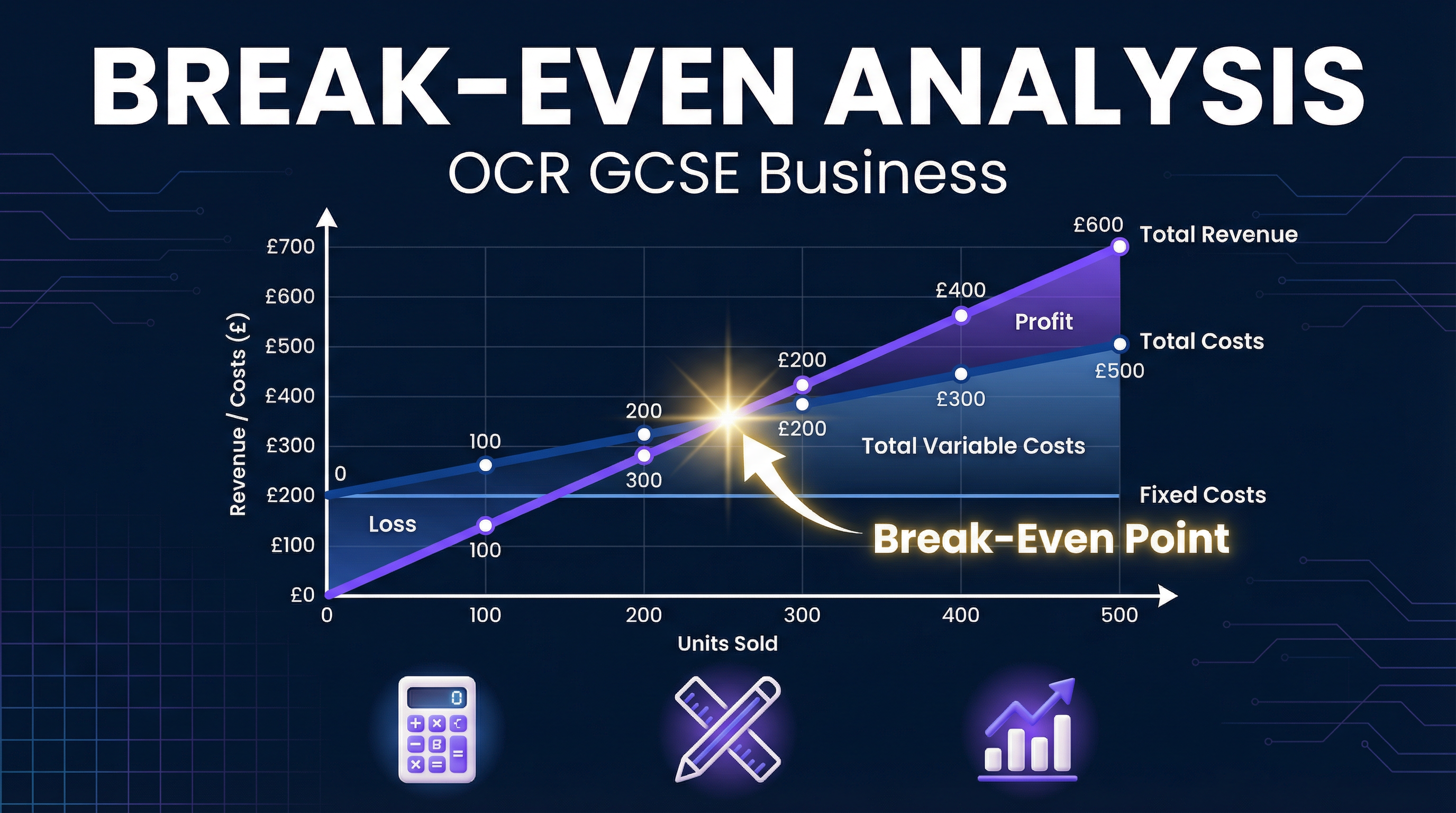
Break-Even Analysis is a fundamental concept in business management, and for OCR J204, it is a topic that requires both quantitative precision and qualitative evaluation. This guide will equip you with the skills to calculate the break-even point, construct and interpret break-even charts, and critically assess the model's limitations. Examiners expect candidates to not only perform the calculations accurately but also to apply the concepts to various business scenarios, analysing the impact of changing variables on profitability and risk. Mastering this topic is essential for demonstrating a strong grasp of financial decision-making.
Key Concepts
Fixed, Variable, and Total Costs
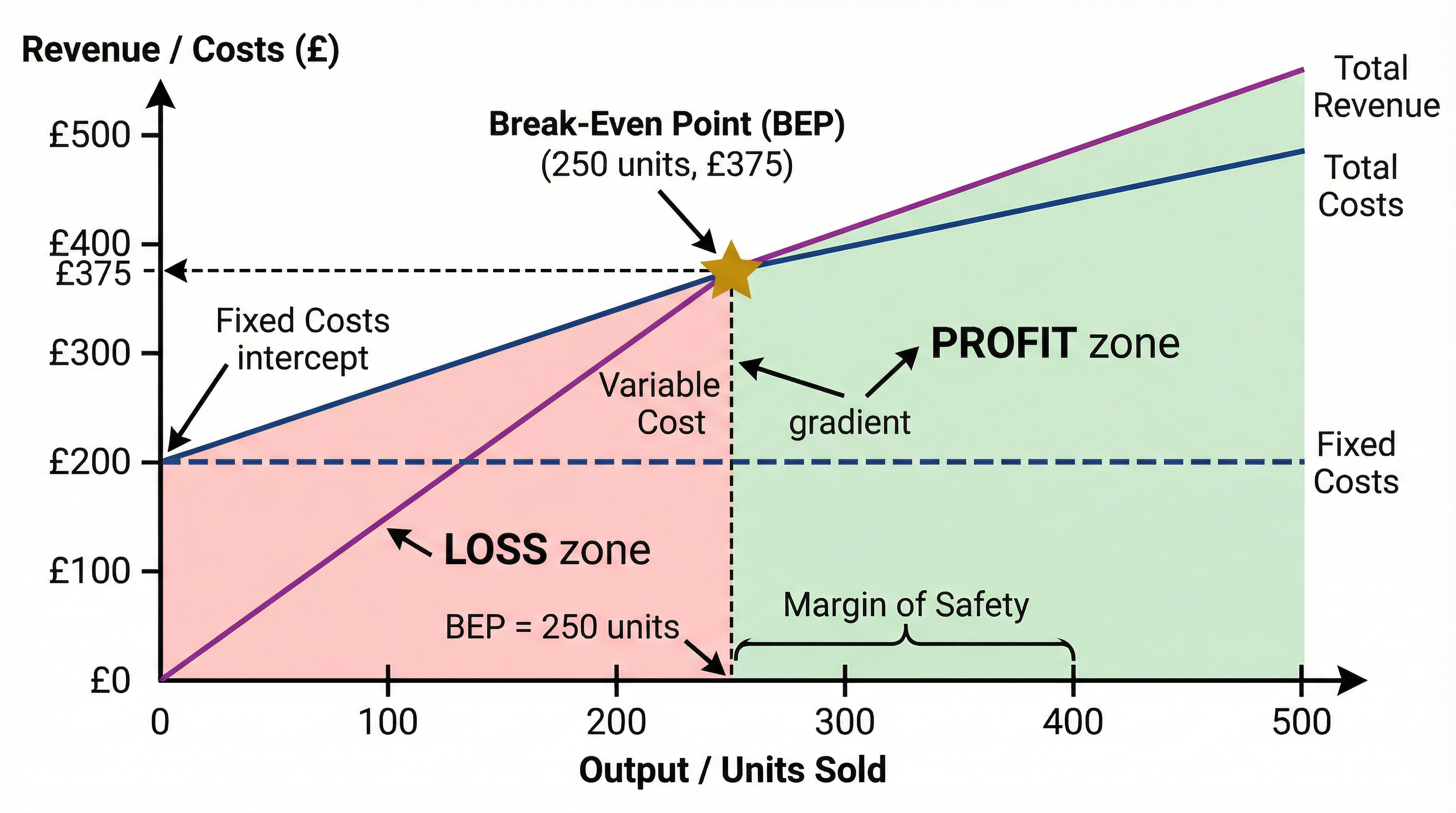
Fixed Costs (FC): These are costs that do not change with the level of output. Examples include rent, insurance, and salaries. On a break-even chart, this is a horizontal line.
Variable Costs (VC): These costs vary directly with the level of output. Examples include raw materials, packaging, and direct labour. Total Variable Costs = Variable Cost per Unit x Quantity.
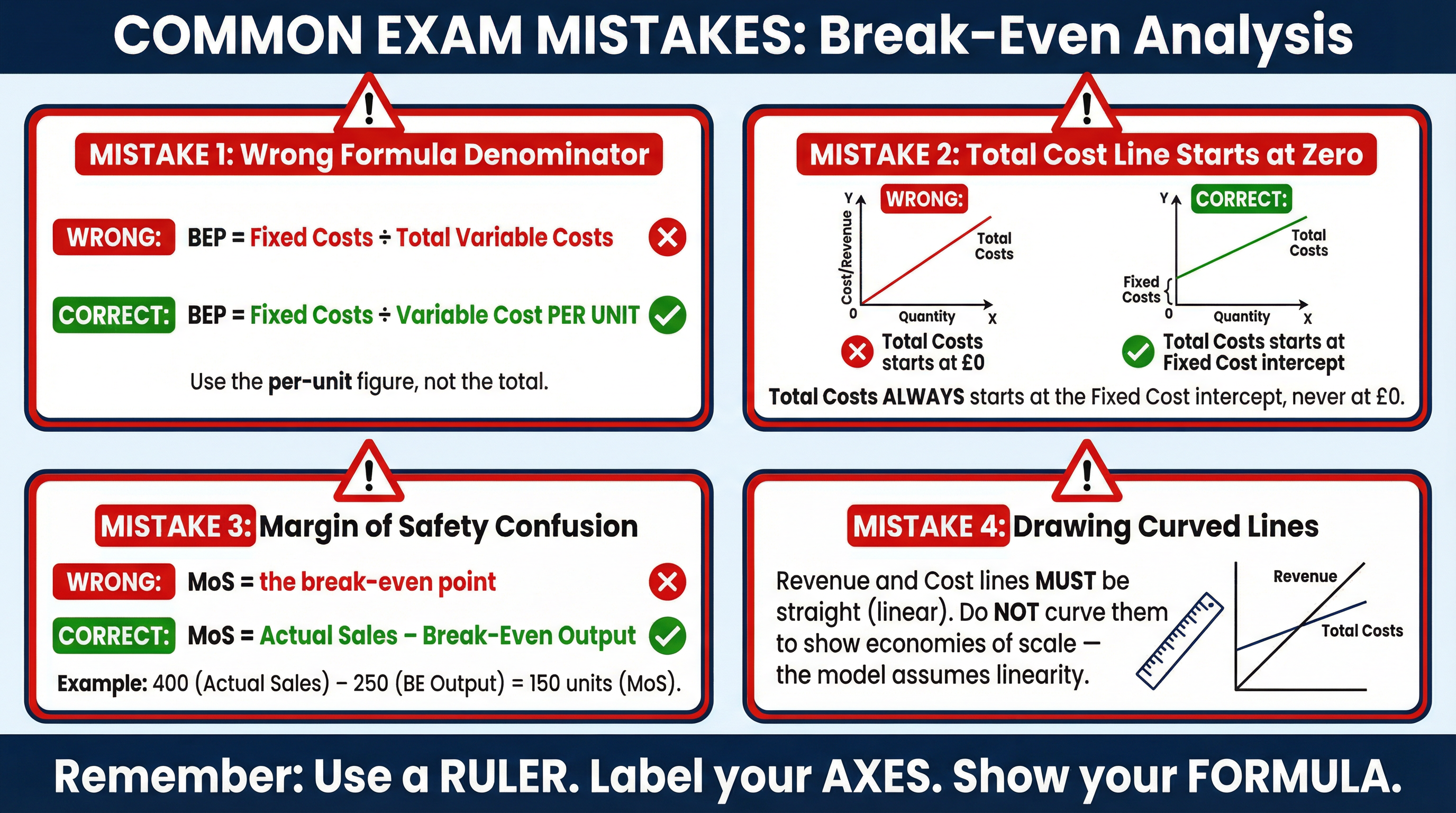
Total Costs (TC): This is the sum of fixed and variable costs. The formula is: Total Costs = Fixed Costs + Total Variable Costs. On a break-even chart, the Total Cost line starts at the Fixed Cost value on the y-axis and slopes upwards.
Revenue and Contribution
Total Revenue (TR): This is the total income from sales. The formula is: Total Revenue = Selling Price per Unit x Quantity Sold. On a break-even chart, the Total Revenue line starts from the origin (0,0) and slopes upwards.
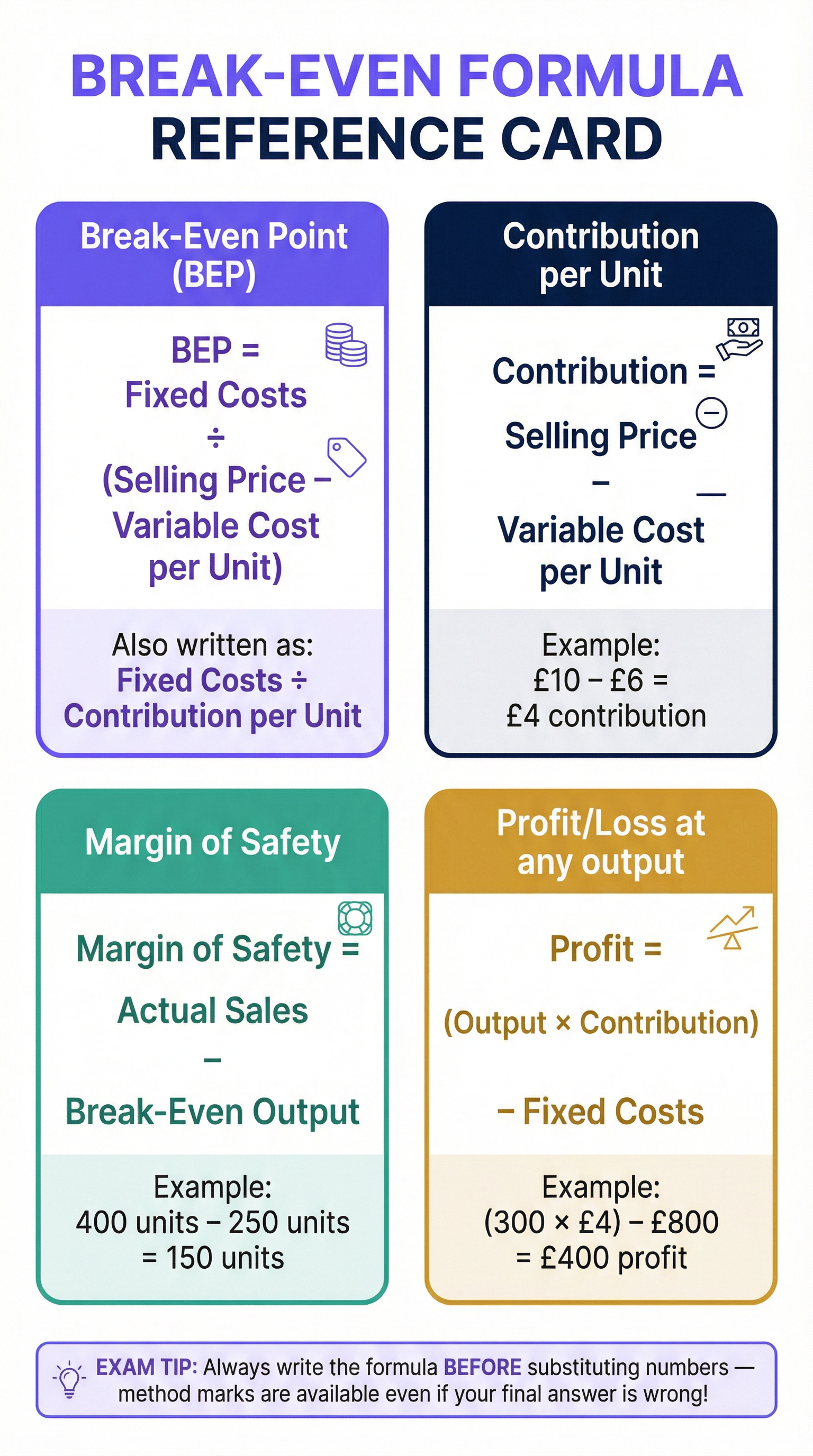
Contribution: This is the amount each unit sold contributes towards covering fixed costs and then generating a profit. The formula is: Contribution per Unit = Selling Price per Unit - Variable Cost per Unit.
The Break-Even Point (BEP)
The Break-Even Point is the level of output at which Total Revenue equals Total Costs. At this point, the business is making neither a profit nor a loss. It can be calculated using the formula:
BEP (in units) = Fixed Costs / (Selling Price per Unit - Variable Cost per Unit)
Margin of Safety
The Margin of Safety is the difference between the actual level of sales and the break-even point. It shows how much sales can fall before the business starts making a loss. A larger margin of safety indicates lower risk.
Margin of Safety = Actual Sales - Break-Even Output
Limitations of Break-Even Analysis
While a useful tool, break-even analysis has several limitations that examiners expect you to discuss in evaluation questions:
- Assumes all output is sold: The model does not account for unsold stock.
- Assumes costs and revenues are linear: It ignores economies of scale (which would curve the cost line) or price discounts for bulk orders (which would affect the revenue line).
- It is a static model: It provides a snapshot at one point in time and does not account for changes in the business environment.
- Accuracy of data: The analysis is only as good as the data used. Inaccurate cost and revenue figures will lead to a misleading break-even point.