Study Notes
Overview
Business Planning is a cornerstone of the OCR J204 GCSE Business specification. Examiners require candidates to move beyond a simple definition, viewing the Business Plan as a dynamic, strategic tool for risk mitigation, financial security, and operational direction. This guide will dissect the key components of a business plan, analyse its importance for securing finance and managing risk, and evaluate its limitations. A core focus will be on the interdependence of functional areas (Finance, Marketing, HR) and the critical importance of applying knowledge to specific case study contexts. Mastery of this topic is essential for demonstrating higher-order skills of analysis (AO3) and application (AO2), which together constitute 65% of the total marks. This guide provides the specific knowledge, exam techniques, and worked examples needed to excel.
Key Components of a Business Plan
1. Executive Summary
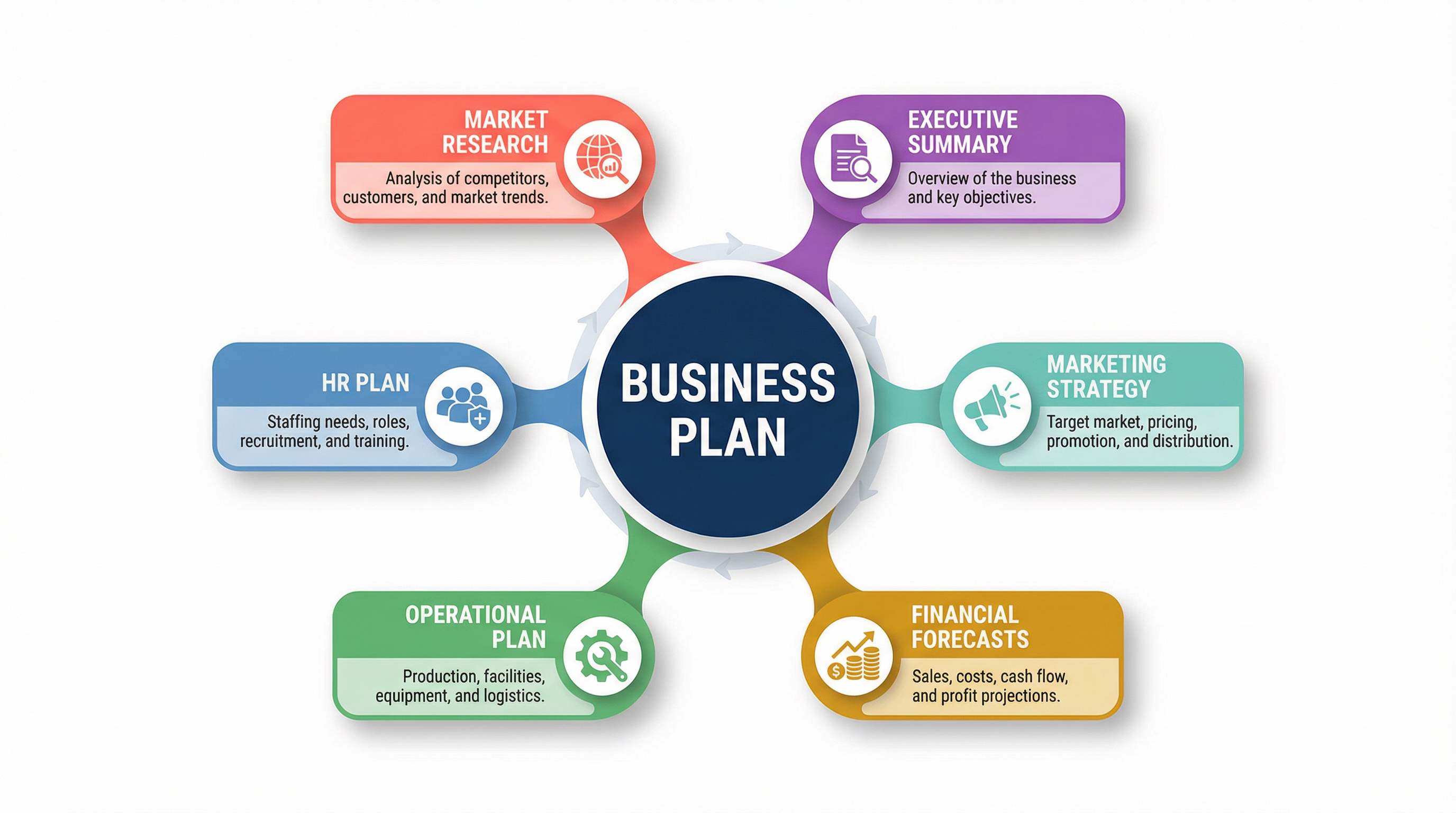
What it is: A concise overview of the entire business plan, written last but placed first. It summarises the business concept, key objectives, and financial highlights.
Why it matters: This is often the only section read by busy stakeholders like bank managers or investors. Its purpose is to grab their attention and persuade them to read the full document. For the exam, candidates should recognise its role in making a strong first impression.
Specific Knowledge: Should be no more than one or two pages. It must be compelling, clear, and professional.
2. Marketing Strategy
What it is: This section details the business's target market and the marketing mix (the 4 Ps: Product, Price, Place, Promotion) it will use to reach and attract customers.
Why it matters: It demonstrates that the business has a clear plan to generate sales. It links directly to market research, showing that marketing decisions are based on evidence, not guesswork. Marks are awarded for linking the chosen marketing mix to the specific needs of the target audience identified in the case study.
Specific Knowledge: Candidates should be able to analyse how each of the 4 Ps contributes to achieving marketing objectives.
3. Financial Forecasts
What it is: This is the numerical core of the business plan, containing key financial documents. The three most important are:
- Sales Forecast: A projection of future sales revenue.
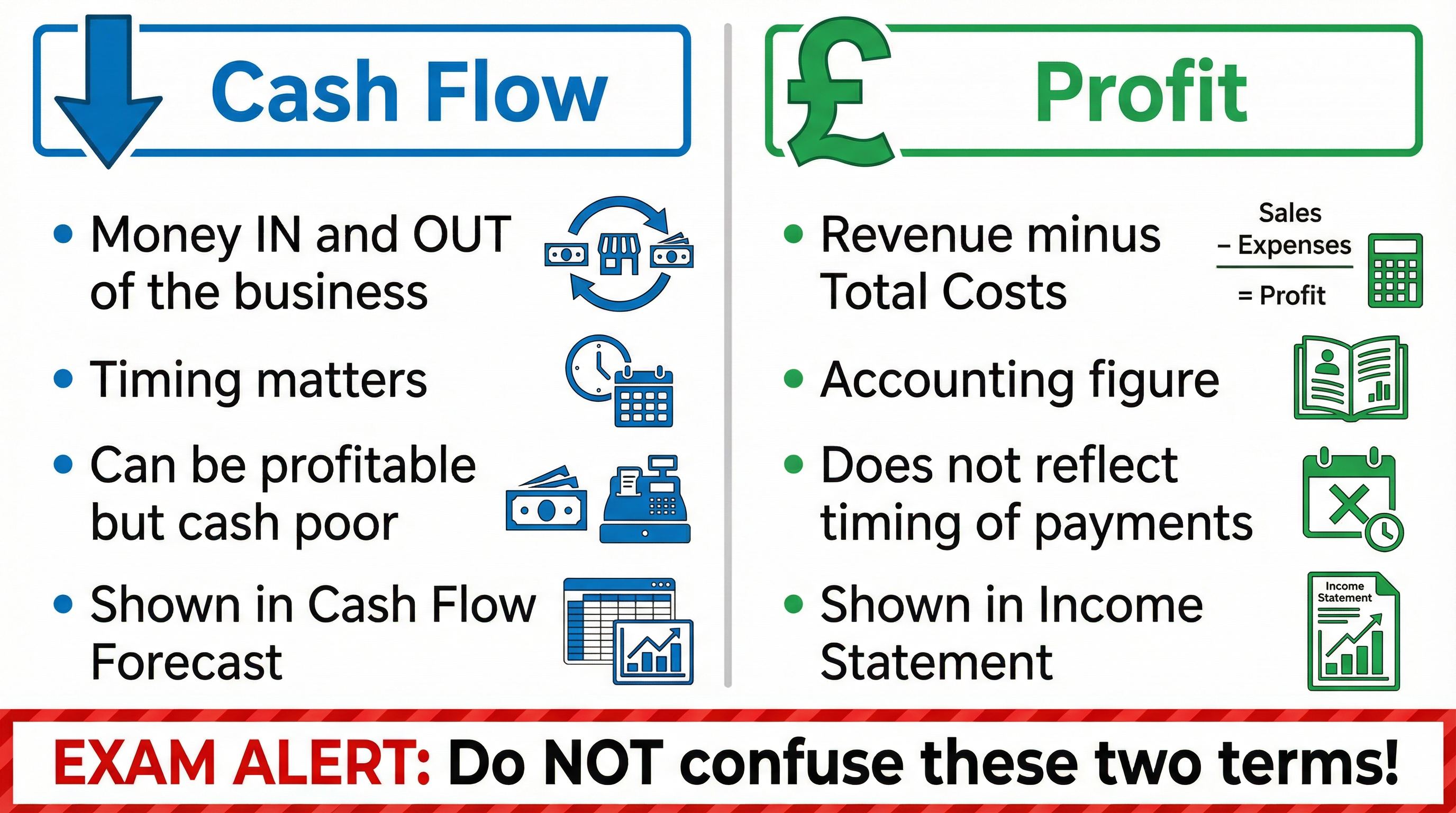
- Cash Flow Forecast: A monthly prediction of all cash inflows and outflows.
- Projected Income Statement: Shows the business's expected revenue, costs, and profit over a period of time.
Why it matters: This section demonstrates the financial viability of the business. It is scrutinised by lenders to assess the risk of lending. A key skill for candidates is to interpret these forecasts to identify potential problems, such as a future cash shortfall (a liquidity problem).
Specific Knowledge: The crucial distinction between cash and profit. A business can be profitable but fail due to a lack of cash.
4. HR Plan (Human Resources)
What it is: Outlines the business's staffing needs. This includes the number of employees, the skills and experience they require, recruitment and training plans, and organisational structure.
Why it matters: It shows that the business has thought about the people needed to deliver the plan. It has direct links to the financial forecasts, as wages are a significant business cost. Credit is given for explaining how a proper HR plan ensures the business has the right people with the right skills.
Specific Knowledge: Key HR terms like recruitment, selection, training, and organisational charts.
5. Operational Plan
What it is: Describes the day-to-day running of the business. This covers production processes, suppliers, technology used, and premises.
Why it matters: It proves the business model is practical and achievable. For a manufacturing firm, this section would detail production capacity and quality control. For a retailer, it would focus on supply chain and stock management.
Specific Knowledge: Concepts like supply chain, procurement, quality control, and capacity utilisation.
6. Market Research
What it is: The evidence base that underpins the entire plan. It includes analysis of the target market, competitors, and industry trends. It should include both primary (e.g., surveys) and secondary (e.g., industry reports) research.
Why it matters: The quality of the market research determines the reliability of the entire business plan. If the research is flawed, the sales forecasts will be inaccurate and the marketing strategy will be ineffective. High-level responses will evaluate the reliability of the research presented in a case study.
Specific Knowledge: The difference between primary and secondary research, and qualitative and quantitative data.
The Purpose and Limitations of a Business Plan
Why Plan?
- To Secure Finance: The primary reason for many start-ups. A convincing plan is essential to persuade banks, private investors, or venture capitalists to provide capital.
- To Reduce Risk: The process of planning forces an entrepreneur to think systematically about potential problems (e.g., a cash flow shortage, a new competitor) and plan how to deal with them. This reduces the chance of failure.
- To Set Objectives: A plan provides clear, measurable goals for the business and its employees to work towards. This helps to coordinate activities and motivate staff.
- To Benchmark Performance: The forecasts and targets in the plan act as a benchmark against which actual performance can be measured, allowing for corrective action.
The Limitations of Planning
- Based on Assumptions: A plan is a forecast, not a guarantee. It is based on assumptions about the future that may not prove accurate. An external shock, like a recession or a pandemic, can make a plan obsolete overnight.
- Reliability of Data: The plan is only as good as the research behind it. If market research is biased or sales forecasts are overly optimistic, the plan is fundamentally flawed.
- Lack of Flexibility: A very detailed plan can sometimes create rigidity, making it harder for a business to adapt to unforeseen opportunities or threats. The key is for the plan to be a guide, not a straitjacket.
- Does Not Guarantee Success: A great plan improves the chances of success, but it cannot guarantee it. Poor execution, unexpected market changes, or simply a bad business idea can still lead to failure.
Podcast: Business Planning Masterclass
This 10-minute podcast episode covers the core concepts of business planning, common exam mistakes, and essential exam technique to help you secure top marks."