
Study Notes
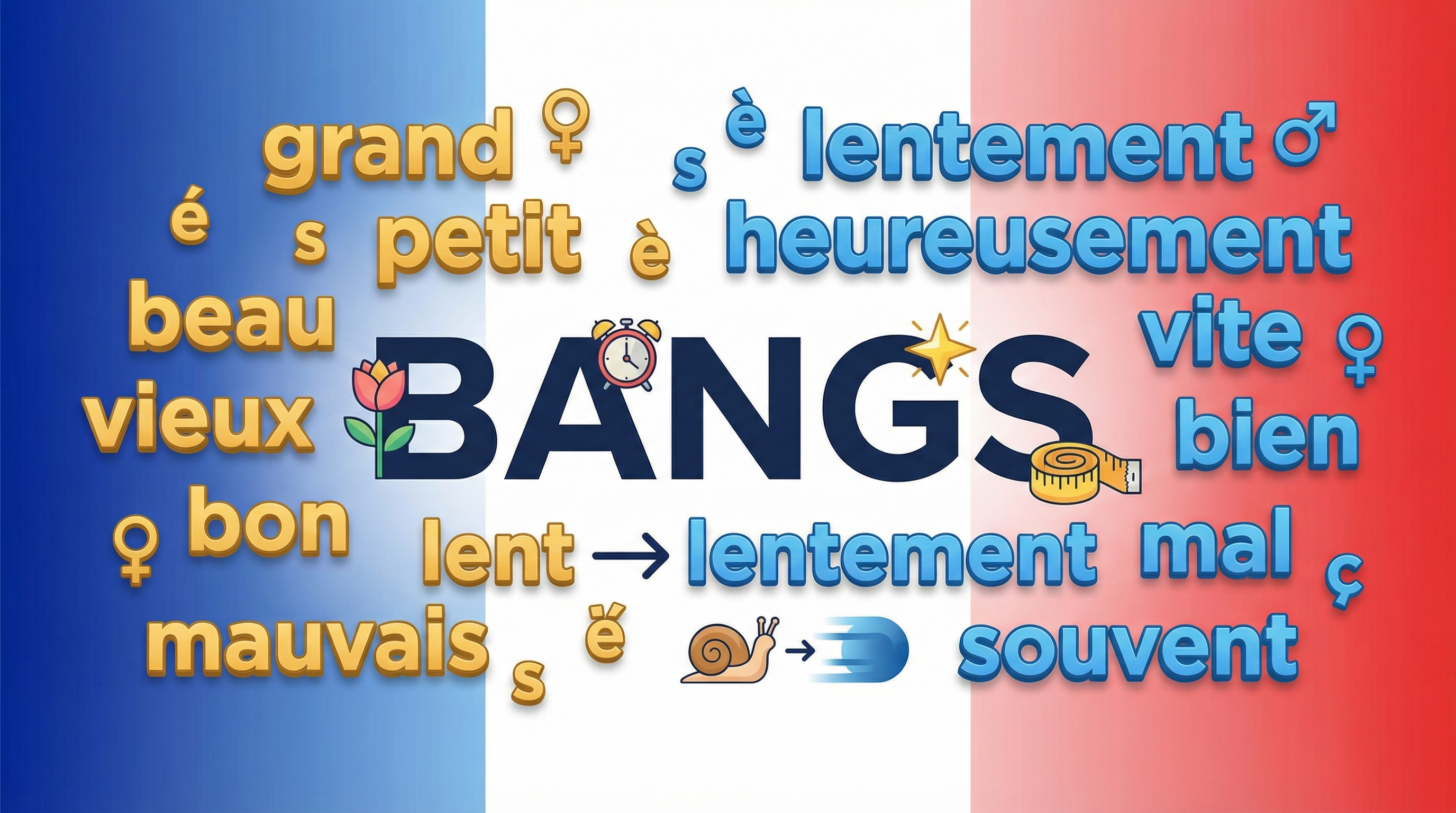
Overview
Welcome to your deep dive into French adjectives and adverbs for the AQA GCSE exam. This topic is a cornerstone of grammatical accuracy and a key differentiator between Foundation and Higher tier performance. AQA examiners award significant credit under Assessment Objective 4 (Writing) and Assessment Objective 2 (Speaking) for the correct manipulation of these structures. This guide will equip you with the rules, patterns, and exam techniques needed to demonstrate a sophisticated command of French, focusing on the three core areas: adjectival agreement (gender and number), adjectival positioning (the BANGS rule), and adverb formation (the -ment rule). By mastering these, candidates can confidently add complexity and precision to their language, securing the marks needed for the highest grades.
Key Concepts: Adjectives
1. Adjectival Agreement: The Chameleon Rule
In French, an adjective must always agree in gender (masculine/feminine) and number (singular/plural) with the noun it describes. Think of it as a chameleon changing to match its surroundings. Failure to do this is one of the most common errors seen by examiners.
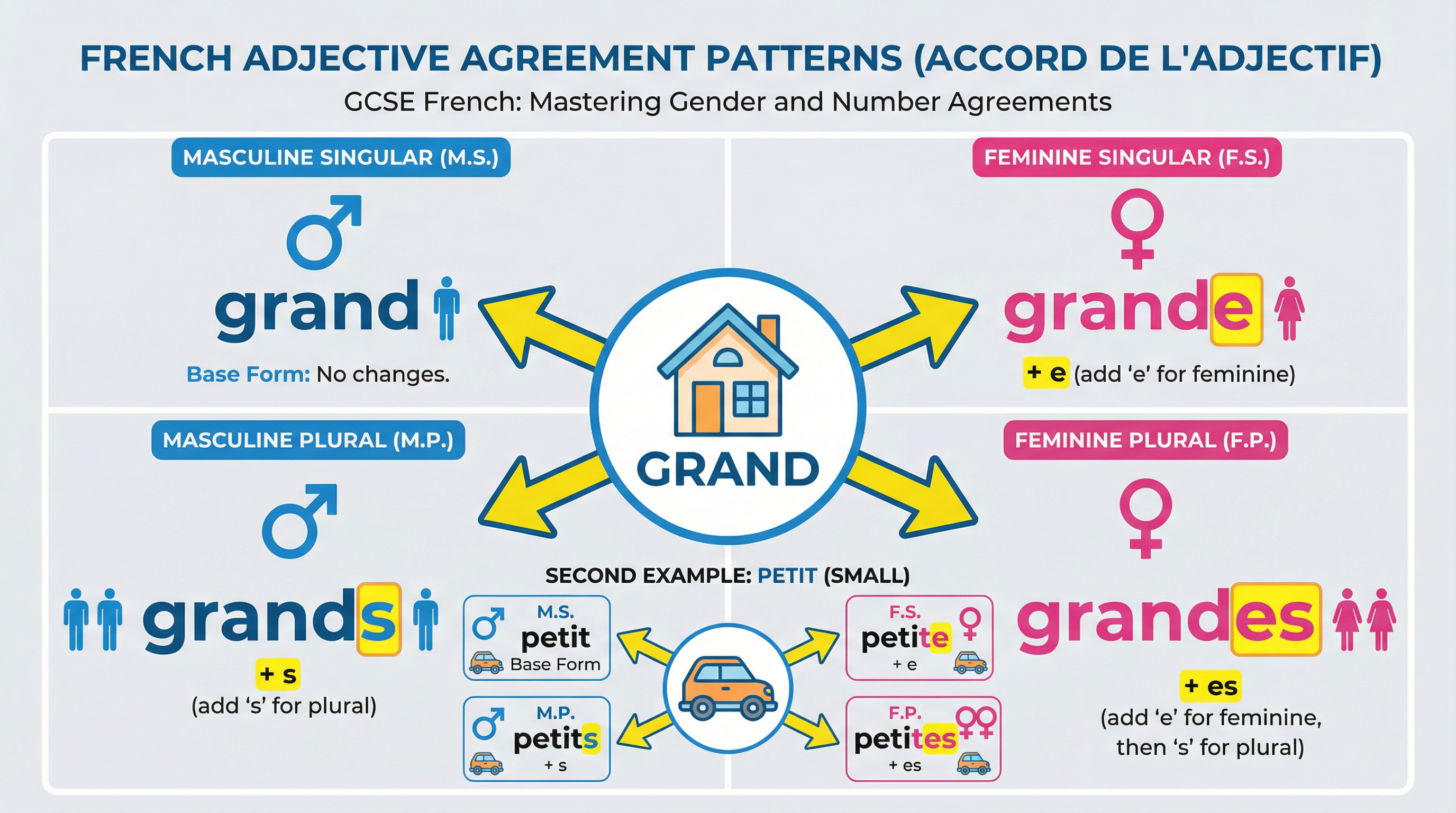
The Four Forms: Most adjectives have four forms. Let's take grand (big/tall) as a typical example:
- Masculine Singular:
grand(e.g., un garçon grand - a tall boy) - Feminine Singular:
grande(add -e) (e.g., une fille grande - a tall girl) - Masculine Plural:
grands(add -s) (e.g., des garçons grands - tall boys) - Feminine Plural:
grandes(add -es) (e.g., des filles grandes - tall girls)
2. Adjectival Positioning: After or Before?
Most adjectives in French are placed after the noun. This is the default position, especially for adjectives of colour, shape, and nationality.
- Correct: une voiture rouge (a red car)
- Incorrect: une rouge voiture
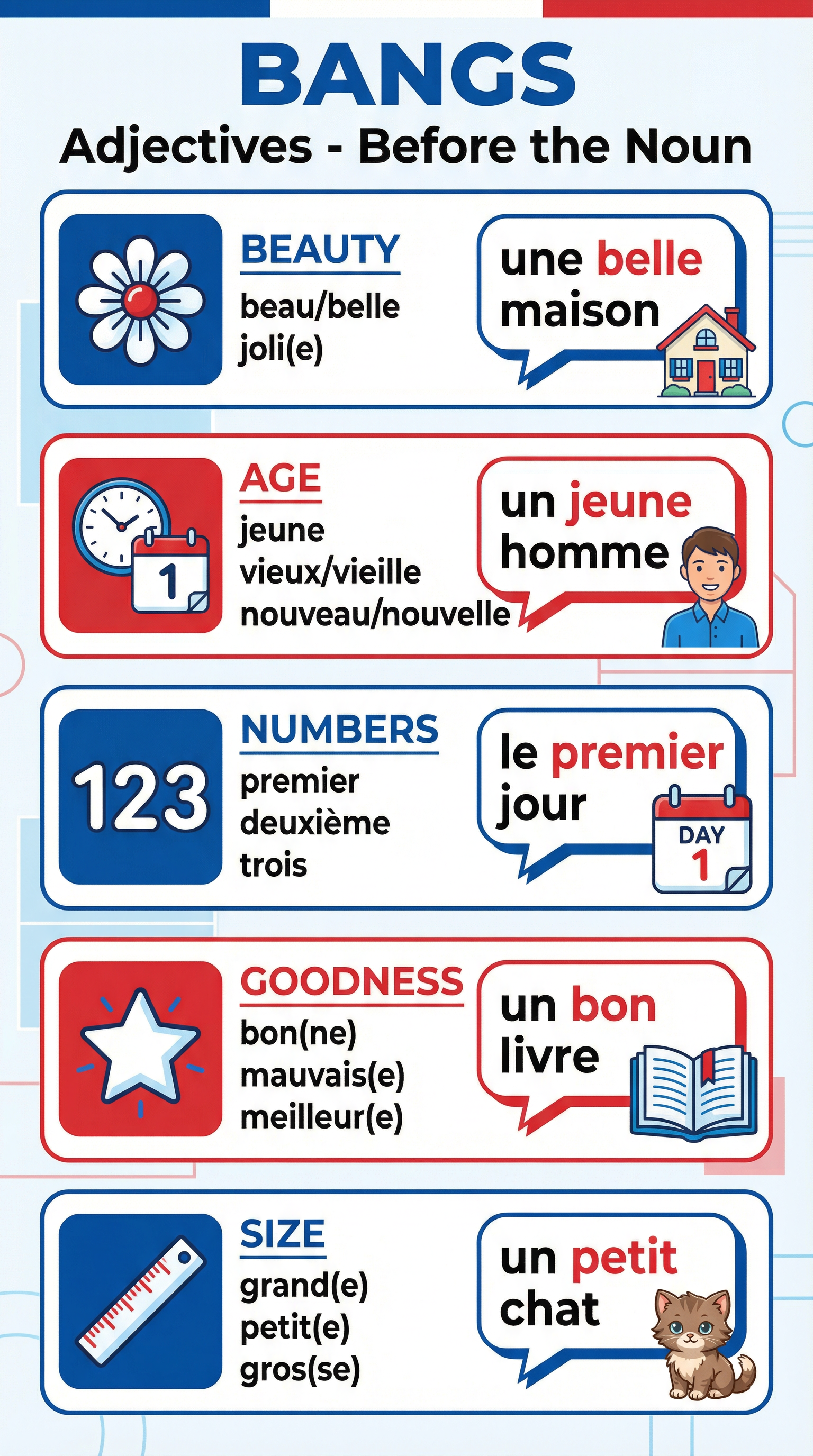
However, a small but very common group of adjectives come before the noun. These can be remembered with the acronym BANGS.
Key Concepts: Adverbs
1. Adverb Formation: The -ment Rule
Adverbs modify verbs, adjectives, or other adverbs to describe how an action is performed. In English, this is often done by adding '-ly' (e.g., slow -> slowly). In French, the equivalent is typically adding -ment.
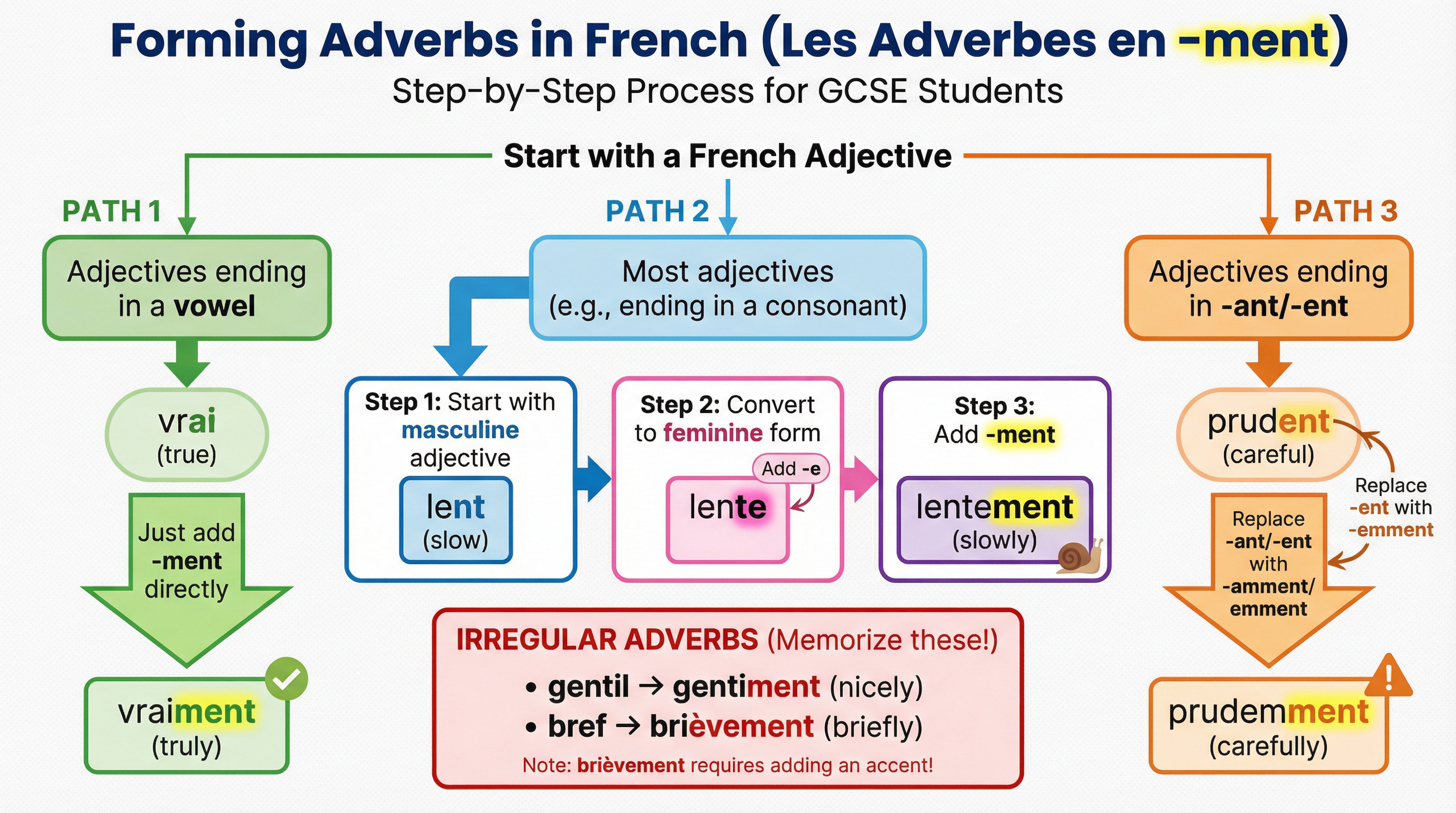
The Standard Method: The most common rule is to find the feminine singular form of the adjective and add -ment.
- Start with the masculine adjective:
lent(slow) - Convert to its feminine form:
lente - Add
-ment:lentement(slowly)
Example: Il marche lentement. (He walks slowly.)
2. Irregular Adverbs & Exceptions
As with all rules, there are exceptions that must be memorized. These are frequently tested.
- Adjectives ending in a vowel: Just add
-mentto the masculine form. (e.g., vrai -> vraiment - truly, really) - Adjectives ending in
-antor-ent: Replace the ending with-ammentor-emment. (e.g., constant -> constamment; prudent -> prudemment). Note that both endings are pronounced the same. - Key Irregulars: Some of the most important adverbs are irregular.
- bon (good) -> bien (well)
- mauvais (bad) -> mal (badly)
- gentil (kind) -> gentiment (kindly)