Study Notes
Overview
Expression is the lifeblood of music. It's how performers take the notes on a page and transform them into a compelling emotional journey for the listener. For your OCR GCSE Music course, understanding and applying expressive techniques is not just a bonus—it is a core requirement across multiple components. This guide will equip you with the knowledge and vocabulary to analyse expression in the listening exam (Component 05) and to demonstrate it with skill in your own performances (Component 01).
This topic focuses on four key pillars: Dynamics, Tempo, Articulation, and Phrasing. By manipulating these elements, a composer or performer can convey a huge range of moods and characters, from triumphant joy to quiet introspection. Examiners are looking for candidates who can identify these techniques with precision and, crucially, use the correct Italian terminology.
Key Knowledge & Theory
Core Concepts
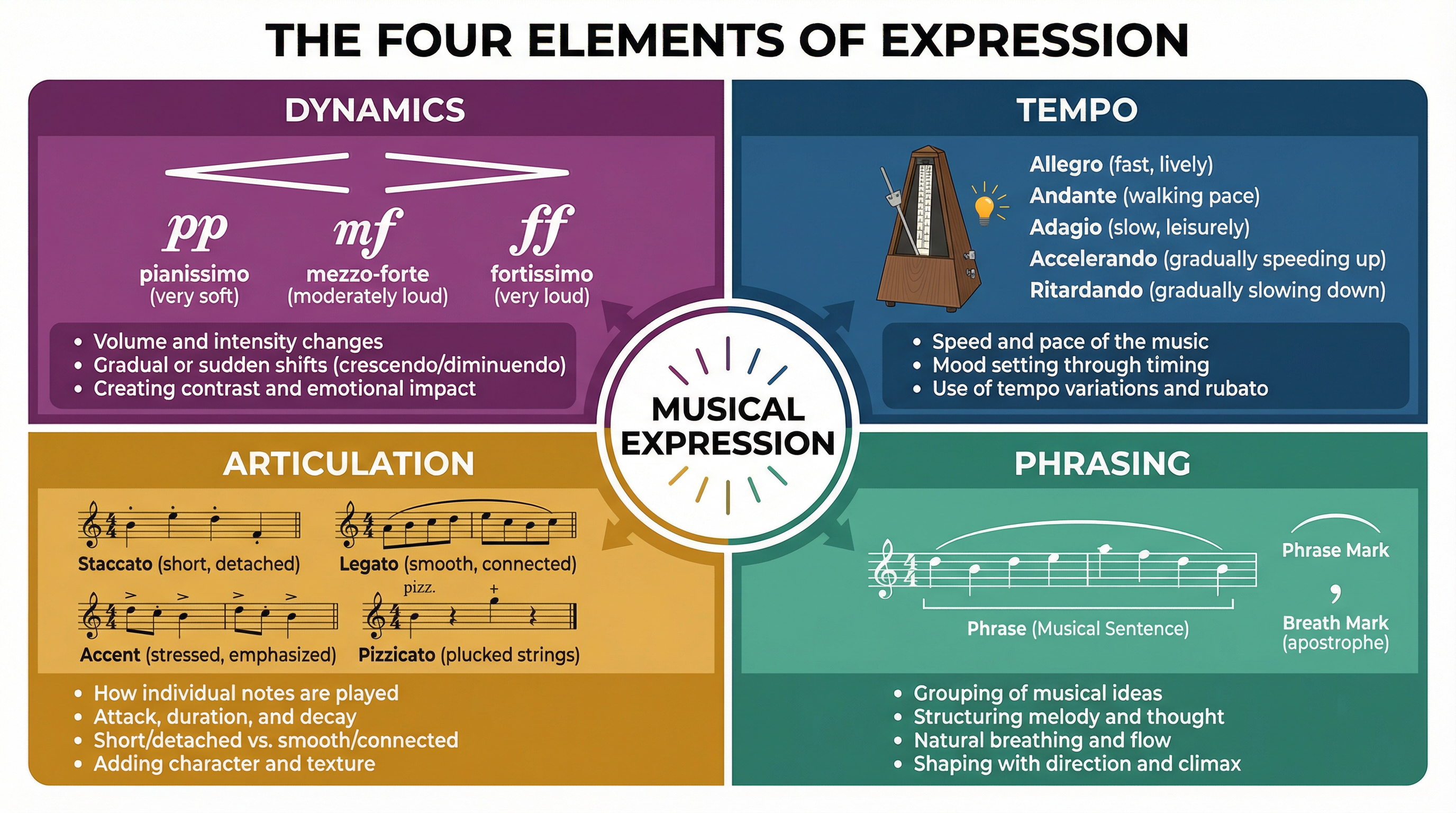
The theoretical foundation of expression rests on understanding its four main components:
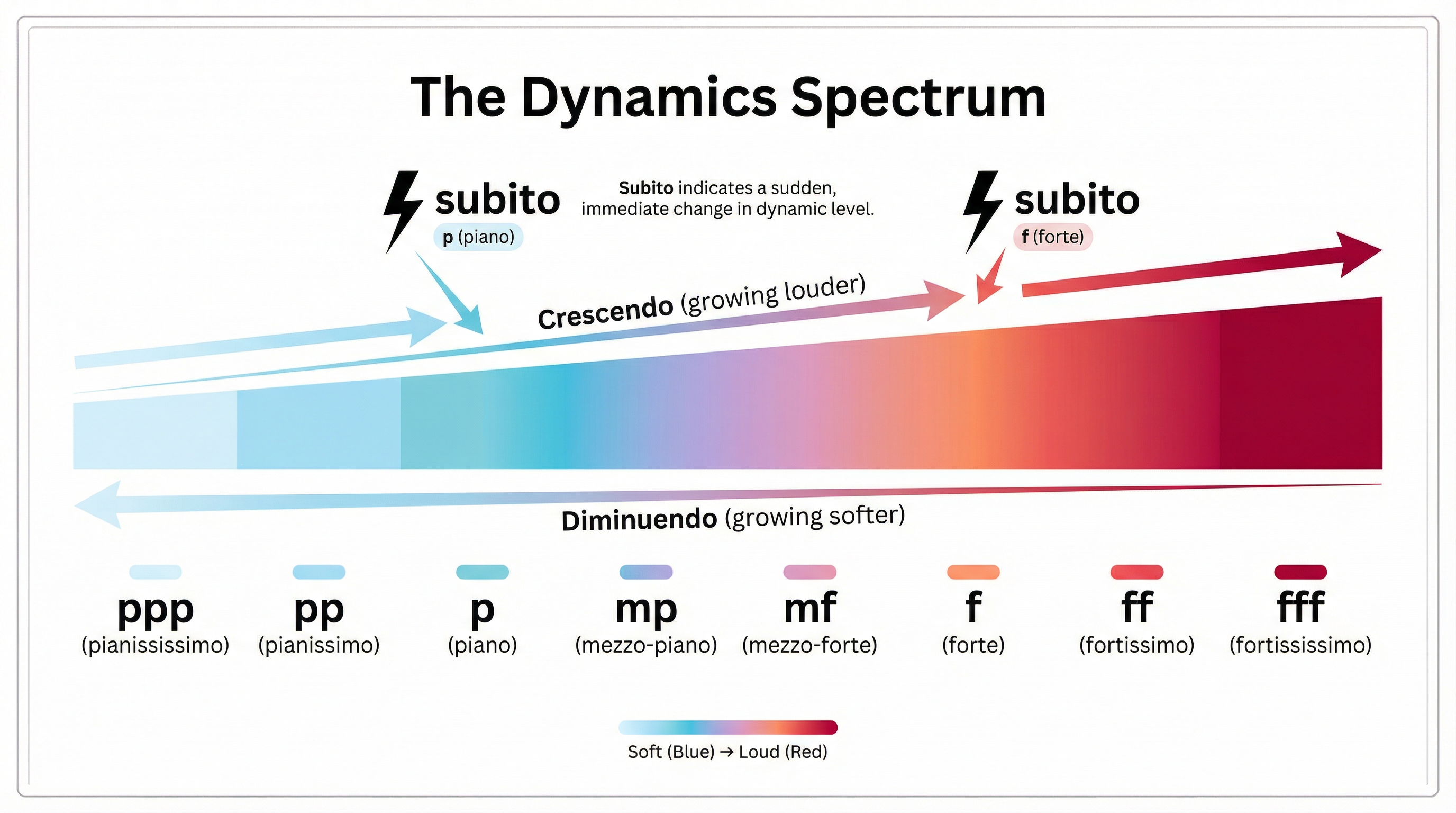
- Dynamics: The volume of the music. This ranges from almost inaudible (pianississimo) to overwhelmingly loud (fortississimo). Changes can be gradual (crescendo to get louder, diminuendo to get softer) or sudden (subito). Credit is given for identifying the precise nature of the change.
- Tempo: The speed of the music. This is indicated by terms like Adagio (slow), Andante (walking pace), and Allegro (fast). Like dynamics, tempo can change within a piece, using terms like accelerando (speeding up) and ritardando (slowing down).
- Articulation: The way individual notes are played. This includes effects like staccato (short, detached), legato (smooth, connected), accent (emphasised), and instrument-specific techniques like pizzicato (plucked strings).
- Phrasing: The shaping of musical sentences. A performer uses subtle changes in dynamics and timing to give a melody a sense of direction, building to a climax and then relaxing. It's about making the music 'breathe'.
Key Practitioners/Artists/Composers
While expression is universal, certain composers are renowned for their detailed and innovative use of expressive markings.
| Name | Period/Style | Key Works | Relevance |
|---|---|---|---|
| Ludwig van Beethoven | Classical/Romantic | Symphony No. 5, Piano Sonata No. 8 'Pathétique' | A master of dramatic dynamic contrasts and sforzando accents. He pushed the boundaries of expression to convey intense personal emotion. |
| Claude Debussy | Impressionist | Clair de Lune, Prélude à l'après-midi d'un faune | Used subtle, fluid changes in tempo (rubato) and delicate dynamics to create atmospheric and dream-like soundscapes. |
| John Williams | Contemporary Film | Star Wars, Schindler's List, Harry Potter | An expert at using expressive devices to support narrative. His scores are a masterclass in linking dynamics, tempo, and articulation to on-screen action and mood. |
Technical Vocabulary
Using specialist terminology is non-negotiable for high marks. Do not say 'gets louder'; say 'crescendo'. Do not say 'plucked'; say 'pizzicato'.
- Dynamics: pianissimo (pp), piano (p), mezzo-piano (mp), mezzo-forte (mf), forte (f), fortissimo (ff), crescendo, diminuendo/decrescendo, sforzando (sfz), subito.
- Tempo: Adagio, Andante, Moderato, Allegro, Presto, Ritardando (rit.), Accelerando (accel.), A tempo, Rubato.
- Articulation: Staccato, Legato, Accent, Tenuto, Marcato, Pizzicato, Arco.
- General: Cantabile (in a singing style), Dolce (sweetly), Espressivo (expressively).
Practical Skills
Techniques & Processes
In Performance (Integrated Portfolio):
- Analyse the Score: Before you play a note, go through your piece and highlight every expressive marking. What is the composer asking for?
- Exaggerate in Practice: To make a crescendo audible to an examiner, you need to practice it by going from a true piano to a full forte. Practice exaggerating dynamics and articulation so they become embedded in your muscle memory.
- Shape the Phrases: Identify the peak of each musical phrase. Plan how you will build towards it and fall away from it using subtle dynamic shifts and slight flexibility in tempo (rubato).
- Record and Reflect: Record yourself playing. Does the intended expression come across? Often, what feels expressive to the performer is barely audible to the listener. Adjust accordingly.
In Composition (Integrated Portfolio):
- Mark Up Your Score: As you compose, add detailed expressive markings. This communicates your intentions clearly and is a requirement for higher marks.
- Use Expression to Define Structure: Use a change in dynamics or articulation to signify the start of a new section (e.g., moving from a legato verse to a staccato chorus).
- Consider the Instrument: Write idiomatic expressive markings. A crescendo on a piano is achieved differently from a crescendo on a violin. A rapid staccato passage is easier on a flute than a tuba.
Portfolio/Coursework Guidance
Assessment Criteria
For your Integrated Portfolio (Component 01), examiners assess 'Expression and Interpretation' under AO3. They are looking for:
- Fidelity to the Score: Are you observing the composer's markings?
- Stylistic Understanding: Does your use of expression match the style of the music (e.g., subtle rubato for Romantic music, crisp articulation for Baroque)?
- Communicative Power: Does your performance convey a clear mood or character?
- Technical Control: Are your dynamic changes controlled and your articulation precise?
Building a Strong Portfolio
Your portfolio must show the development of your ideas. For a performance, this could be a logbook where you note your expressive intentions. For a composition, it's your score itself, which should be annotated with your reasoning for the expressive choices you made. Show the examiner why you chose a subito piano at that specific moment.
Exam Component
Written Exam Knowledge
The Listening and Appraising exam (Component 05) will test your aural perception of expression. You will hear extracts of music and be asked to:
- Identify specific expressive features (e.g., 'Name the articulation technique used by the strings').
- Describe the character of the music, linking it to expressive elements (e.g., 'Describe the mood, commenting on two expressive elements').
- Compare the use of expression in two different extracts.
- Analyse how expression is used in relation to a specific Area of Study, such as Film Music (AoS 3), where you must link it to the on-screen mood or action.
Practical Exam Preparation
For your performance, the preparation is practice. However, it must be mindful practice. Focus entire practice sessions just on expression. Play a single phrase ten times, each time focusing on a different aspect: dynamics, articulation, the curve of the phrase. This focused work is more effective than simply playing the piece from start to finish repeatedly.