Study Notes
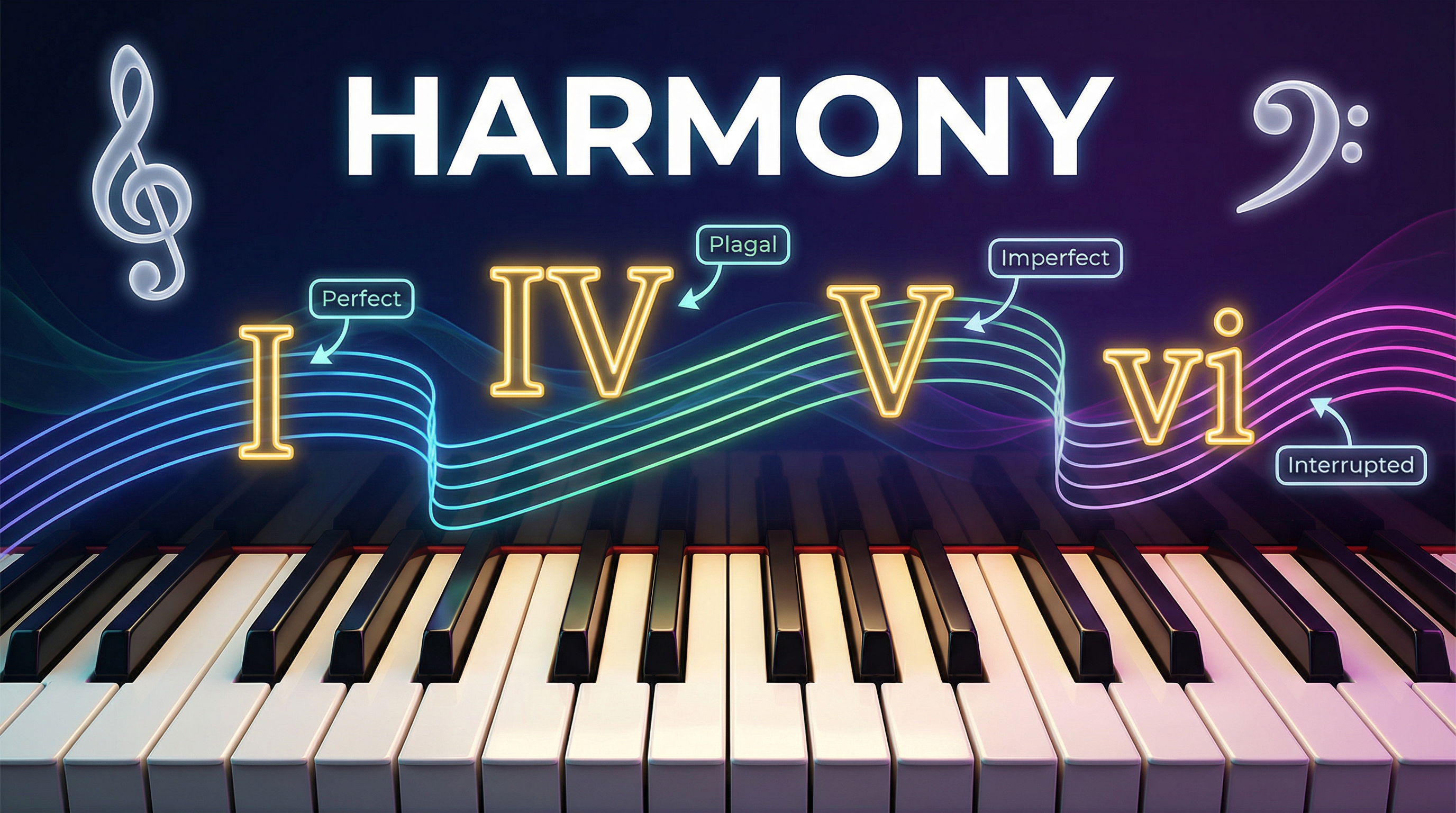
Overview
Harmony is one of the fundamental elements of music, concerning how different notes sound together to create chords and how these chords progress over time. For OCR GCSE Music, a strong understanding of harmony is crucial across all assessment objectives. It is central to the listening and appraising exam (AO3), vital for creating stylistically coherent compositions (AO2), and informs your understanding of the historical and cultural context of the set works (AO4). This guide will equip you with the theoretical knowledge and practical skills to master harmony.
Key Knowledge & Theory
Core Concepts
Tonal vs. Modal vs. Atonal Harmony
- Tonal Harmony: The system of harmony that has dominated Western music since the 17th century. It is based on a key centre (the tonic) and a set of chords that have a functional relationship to it. The most important chords are the tonic (I), subdominant (IV), and dominant (V).
- Modal Harmony: Uses the ancient church modes (e.g., Dorian, Mixolydian) as its basis, rather than the major and minor scales. This creates a different set of characteristic chord progressions and is common in folk, early, and some jazz and pop music.
- Atonal Harmony: Avoids establishing any key centre. All 12 chromatic notes are treated with equal importance, leading to music that is often dissonant and lacks traditional resolution.
Diatonic vs. Chromatic Harmony
- Diatonic Harmony: Uses only the notes that belong to the prevailing key. It sounds stable and predictable.
- Chromatic Harmony: Introduces notes from outside the key to add colour, tension, or emotional depth. Chromatic chords like diminished sevenths and Neapolitan chords are powerful expressive tools.
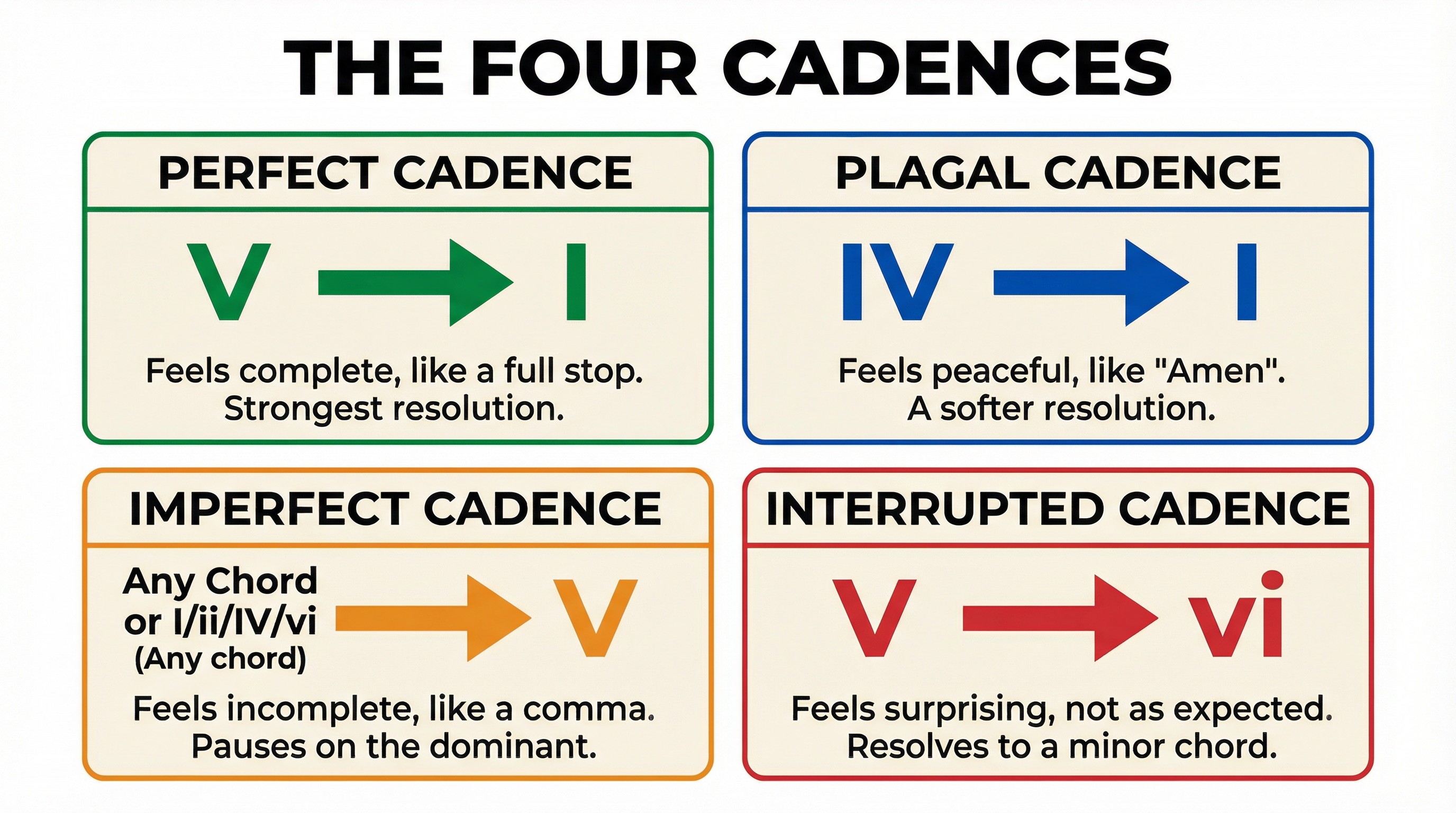
Cadences: Musical PunctuationA cadence is a two-chord progression that occurs at the end of a phrase. Correctly identifying them is a key skill for the listening exam.
Key Practitioners/Artists/Composers
| Name | Period/Style | Key Works | Relevance |
|---|---|---|---|
| J.S. Bach | Baroque | Brandenburg Concertos | Master of counterpoint and functional harmony. His use of pedal notes and perfectly controlled harmonic progressions is exemplary. |
| W.A. Mozart | Classical | Symphony No. 40 | Embodies the clarity and balance of Classical harmony, with extensive use of perfect and imperfect cadences to structure phrases. |
| Richard Wagner | Romantic | Tristan und Isolde | Pushed chromatic harmony to its limits with the famous 'Tristan chord,' delaying resolution to create immense emotional tension. |
| Arnold Schoenberg | 20th Century | Pierrot Lunaire | A key figure in the development of atonality, abandoning traditional key structures entirely. |
Technical Vocabulary
- Consonance/Dissonance: Consonant intervals sound stable and pleasing; dissonant intervals sound tense and require resolution.
- Chord Progression: A sequence of chords. Also known as a harmonic progression.
- Inversion: A chord where the root is not the lowest note. First inversion (e.g., Ib) has the 3rd in the bass; second inversion (e.g., Ic) has the 5th in the bass.
- Harmonic Rhythm: The rate at which the chords change. A slow harmonic rhythm might have one chord per bar; a fast harmonic rhythm might have several.
- Voice Leading: The art of moving individual melodic lines smoothly within a chord progression to avoid awkward leaps.
Practical Skills
Techniques & Processes
Identifying Cadences by Ear
- Listen to the end of the phrase: Cadences are all about punctuation.
- Focus on the bass line: The movement of the lowest note is your biggest clue.
- Ask key questions: Does it sound finished (Perfect/Plagal) or unfinished (Imperfect)? Does it sound surprising (Interrupted)?
- V-I (bass leaps down a 5th or up a 4th) -> Perfect
- IV-I (bass moves from subdominant to tonic) -> Plagal
- Ends on V (feels like a pause) -> Imperfect
- V-vi (sounds like a surprise minor chord) -> Interrupted
Using Harmonic Devices in Composition (AO2)
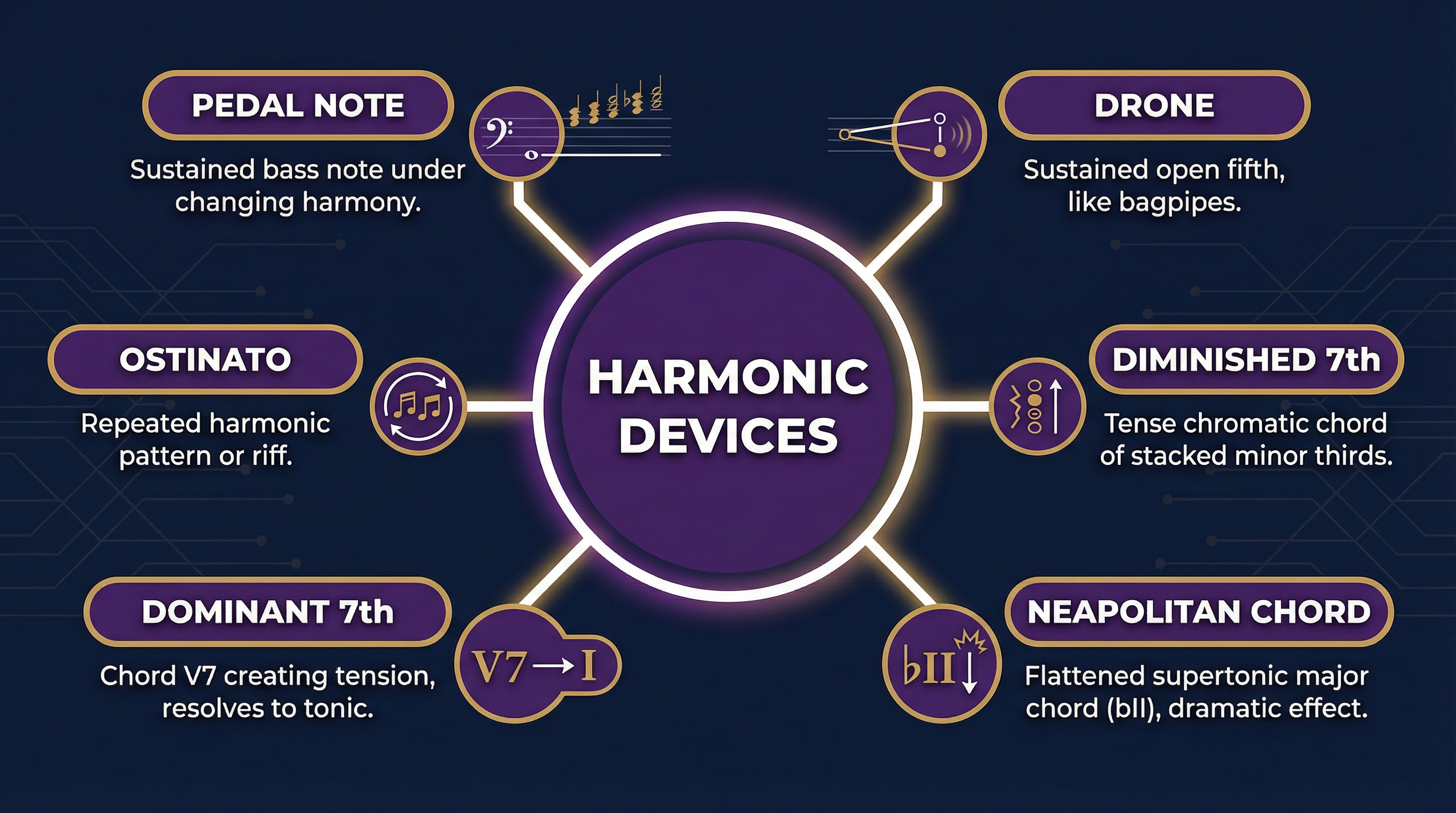
- Pedal Note: To build tension or create a sense of stability, hold a tonic or dominant note in the bass while chords change above it.
- Drone: Use a sustained open fifth in the bass to evoke a folk or medieval feel.
- Dominant 7th (V7): Use this chord before chord I to create a strong pull to the tonic. Remember to resolve the 7th downwards by step.
- Diminished 7th: For moments of high drama or tension, insert a diminished 7th chord. It's a powerful chromatic tool.
Materials & Equipment
- Notation Software (e.g., Sibelius, Musescore): Essential for composing and presenting your work professionally. Use the playback features to check your harmonic progressions.
- Piano/Keyboard: The best tool for exploring chords and voice leading. Physically playing the progressions helps internalise the sound and feel of different harmonies.
- Metronome: To ensure your harmonic rhythm is precise when performing or composing.
Portfolio/Coursework Guidance
Assessment Criteria
For your composition portfolio (AO2), examiners are looking for:
- Stylistic Coherence: Does your use of harmony match the style you are working in? A pop song shouldn't suddenly feature a Baroque plagal cadence unless for a specific, justified reason.
- Control of Harmony: Are your chord progressions functional and effective? Is voice leading smooth? Are dissonances resolved correctly?
- Creativity and Imagination: Do you move beyond basic I-IV-V progressions? Do you use harmonic devices to create interest and emotional impact?
Building a Strong Portfolio
- Plan your harmony first: Before writing a melody, sketch out a Roman numeral progression. This provides a solid foundation.
- Annotate your score: Clearly label key harmonic features in your submitted composition. Point out where you have used a pedal note, an interrupted cadence, or a chromatic chord. This is crucial for showing the examiner you understand what you've written.
- Show development: Your sketchbook or log should show you experimenting with different chord progressions. Document why you chose one progression over another. This evidences refinement.
Exam Component
Written Exam Knowledge
In the listening exam (AO3), you will be tested on your ability to aurally identify:
- Cadence types
- Harmonic devices (pedal, drone, etc.)
- Harmonic language (tonal, modal, atonal)
- Chord types (major, minor, dominant 7th, diminished 7th)
You will also be expected to comment on how harmony contributes to the mood, style, and character of the music in the extended response questions (AO4).
Practical Exam Preparation
For the composition brief (part of AO2), you will be given a stimulus and must create a short composition under timed conditions. A solid grasp of functional harmony is the quickest way to create a convincing piece. Pre-prepared progressions (e.g., I-V-vi-IV, the 'pop' progression) can be a lifesaver if you are short on time."