Study Notes
Overview
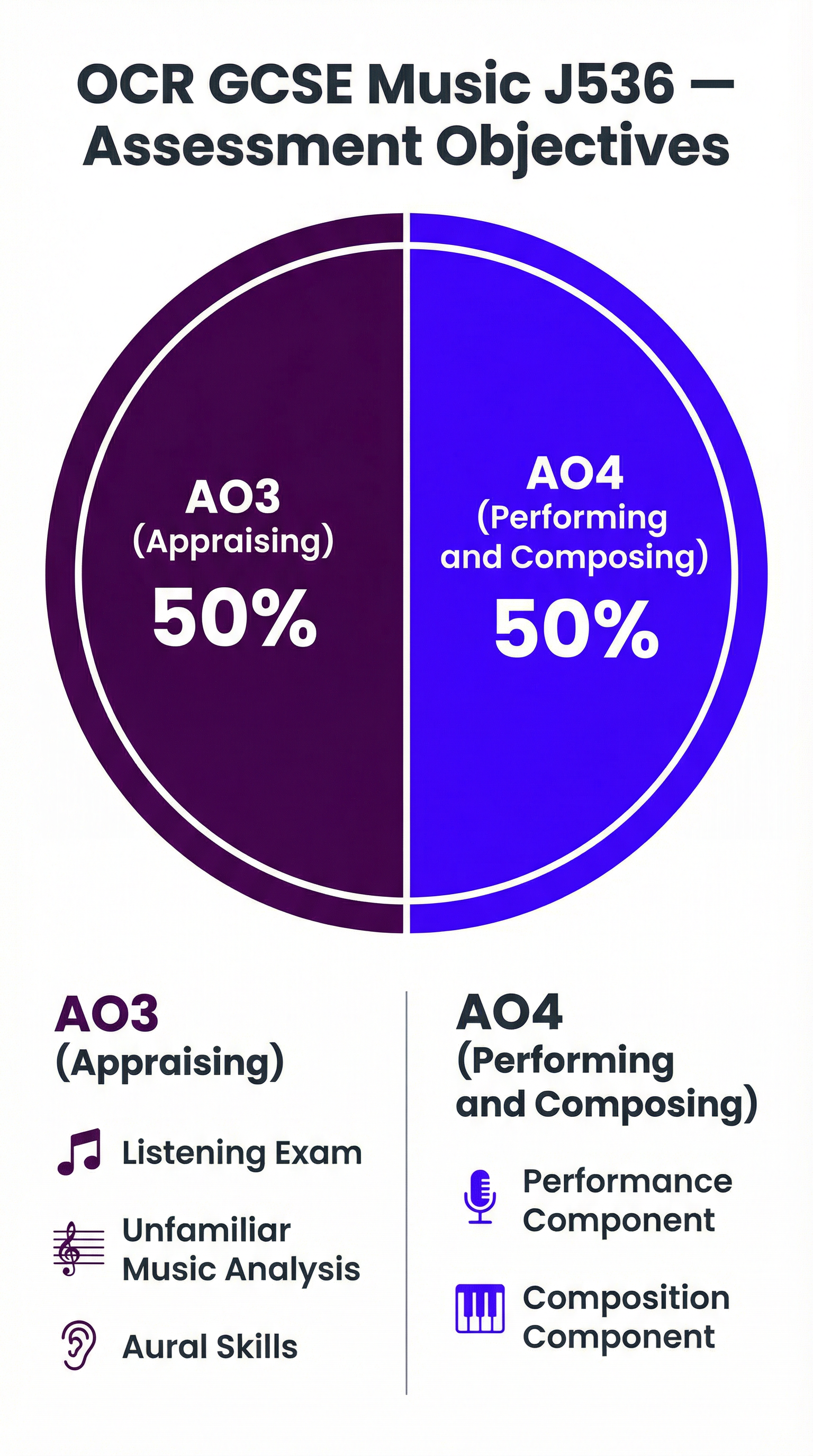
The OCR GCSE Music course is designed to develop a candidate's ability to listen to, analyse, and evaluate music. Unlike exam boards that rely on set works, OCR assesses appraising skills through unfamiliar music drawn from four distinct Areas of Study. This approach requires a deep understanding of musical conventions, styles, and elements, rather than rote memorisation. Success in the listening exam (Component 03) is entirely dependent on a candidate's ability to apply theoretical knowledge in real-time to music they have never heard before. This component accounts for 40% of the total GCSE marks.
Key Knowledge & Theory
Core Concepts
Candidates must be fluent in the language of music analysis. The core concepts are best understood through the DR P SMITH framework, which provides a systematic method for deconstructing any piece of music.
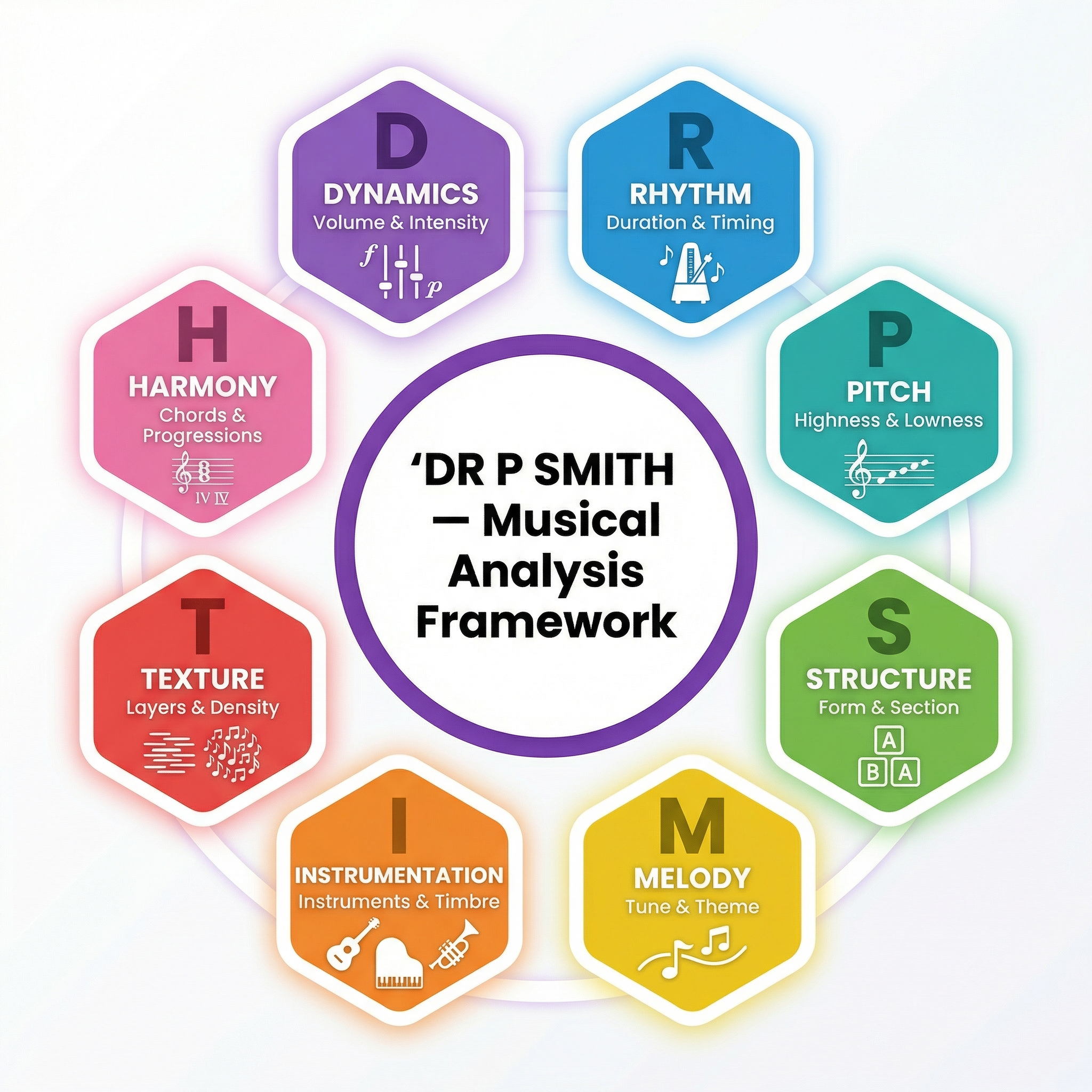
- Dynamics: The volume of the music (e.g., forte, piano) and how it changes (crescendo, diminuendo, terraced dynamics).
- Rhythm: The patterns of long and short sounds, including tempo (speed), metre (time signature), and specific rhythmic devices like syncopation, polyrhythm, and ostinato.
- Pitch: The highness or lowness of the notes. This includes melody (the tune) and harmony (the chords). Key aspects are whether a melody is conjunct (stepwise) or disjunct (leapy), and whether the harmony is consonant (stable) or dissonant (clashing).
- Structure: The overall plan or layout of the music (e.g., verse-chorus, binary, ternary, rondo, sonata form, ritornello).
- Melody: The main tune. Candidates should be able to describe its contour and character.
- Instrumentation: The specific instruments and voices used (timbre). Identifying instruments is often the primary clue to the Area of Study and historical period.
- Texture: The layers of sound and how they interact. Key textures are monophonic (a single melodic line), homophonic (melody with accompaniment), and polyphonic (multiple independent melodic lines).
- Harmony: The way chords are constructed and progress. This includes tonality (the key, e.g., major, minor, atonal) and harmonic devices like cadences.
The Four Areas of Study
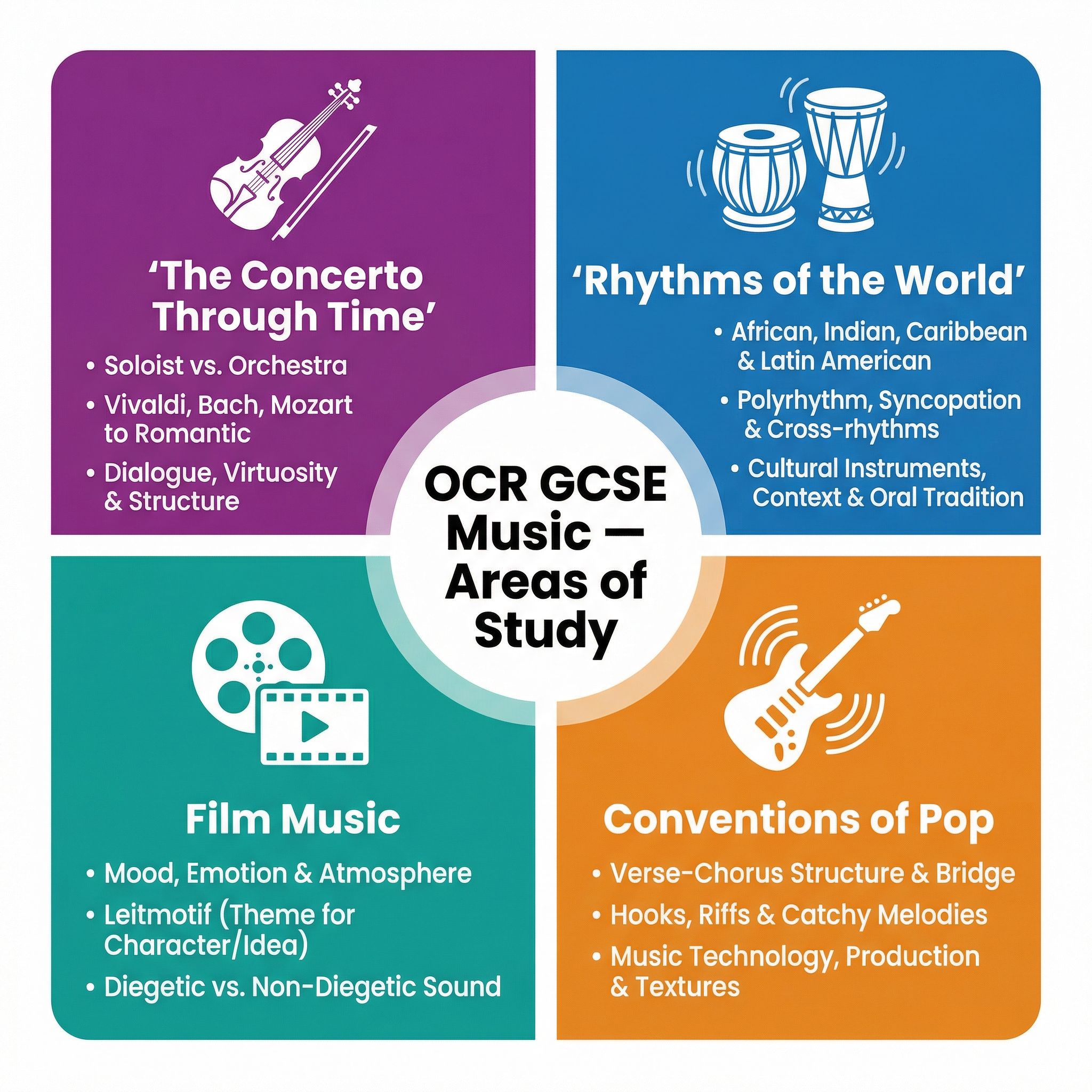
All unfamiliar listening extracts will be drawn from one of these four areas. Credit is given for linking aural evidence to the correct context.
| Area of Study | Key Features | Common Composers/Styles |
|---|---|---|
| The Concerto Through Time | Soloist vs. Orchestra (dialogue, contrast), Virtuosity, Cadenza, Ritornello (Baroque), Sonata Form (Classical) | Vivaldi, Bach, Mozart, Beethoven, Mendelssohn |
| Rhythms of the World | Polyrhythm, Syncopation, Call & Response, Oral Tradition, Specific cultural instruments (e.g., Tabla, Sitar, Djembe, Steel Pans) | Indian Classical, African Drumming, Calypso, Samba, Bhangra |
| Film Music | Leitmotif, Diegetic vs. Non-Diegetic sound, Underscore, Stingers, Mood creation through harmony and instrumentation | John Williams, Hans Zimmer, Bernard Herrmann |
| Conventions of Pop | Verse-Chorus Structure, Middle 8/Bridge, Hooks, Riffs, Backbeat, Studio Production (Reverb, Distortion) | Rock 'n' Roll, Motown, Punk, Soul, EDM |
Technical Vocabulary
Using precise Italian and subject-specific terms is essential for gaining full marks. Candidates should avoid vague descriptions like 'fast' or 'sad' and instead use analytical language.
- Tempo: Allegro (fast), Andante (walking pace), Adagio (slow), Accelerando (getting faster), Rallentando (getting slower).
- Dynamics: Forte (loud), Piano (quiet), Crescendo (getting louder), Diminuendo (getting quieter), Sforzando (sudden accent).
- Articulation: Staccato (short, detached), Legato (smooth, connected).
- Texture: Monophonic, Homophonic, Polyphonic.
- Harmony: Consonant, Dissonant, Diatonic, Chromatic, Pedal/Drone.
Practical Skills & The Exam Component
While this guide focuses on the listening exam, these analytical skills are synoptically linked to the practical components (Performance and Composition, AO4), which make up the other 60% of the marks.
Written Exam Knowledge (Component 03)
- The Exam: A 1 hour 30 minute written paper with questions based on listening to extracts of unfamiliar music.
- Question Types: Range from single-mark identification (e.g., 'Name the instrument playing the melody') to extended comparative responses (e.g., 'Compare and contrast the use of rhythm and instrumentation in Extract A and Extract B').
- Skeleton Scores: The exam may include 'skeleton scores' showing a melodic or rhythmic outline. Candidates must follow this notation while listening to identify features or errors.
Linking Appraising to Practical Work
- Performance (Component 01/02): Your understanding of style and genre from the Areas of Study should inform your performance choices. For example, a Baroque concerto performance requires an understanding of terraced dynamics and ornamentation.
- Composition (Component 04/05): Your compositions must be informed by the conventions of a chosen Area of Study. You will be marked on your ability to effectively use the stylistic elements you have studied in the appraising course.
Portfolio/Coursework Guidance
For the composition portfolio, examiners look for clear evidence of stylistic understanding. Your annotation and compositional log must use the same analytical vocabulary from the DR P SMITH framework to explain your creative decisions. For example, instead of writing 'I made this bit exciting', you should write 'To build tension towards the chorus, I introduced a driving semiquaver rhythm in the bass and used a crescendo across the string section.'