Study Notes
Overview
Welcome to Area of Study 3: Music for Stage and Screen. This topic explores the functional and expressive role of music in four key contexts: Film, Television, Video Games, and Musical Theatre. Unlike music created for its own sake, the music here is designed to work with visuals and narrative. Your primary task is to analyse and evaluate how composers manipulate the core elements of music to create atmosphere, establish character, and drive the story forward. A significant portion of marks (65% for AO4) are awarded for your ability to make critical judgements, so moving beyond simple description is essential.
This guide will equip you with the theoretical knowledge, analytical frameworks, and practical exam techniques needed to excel. We will cover key compositional devices like the leitmotif, the function of underscoring, and the importance of instrumentation in defining genre and mood.
Key Knowledge & Theory
Core Concepts
The foundation of this topic rests on understanding how the 'Elements of Music' are used functionally. You must be able to identify not just what is happening in the music, but why the composer has made that choice. The most effective way to structure your analysis is by using the DR SMITH framework.
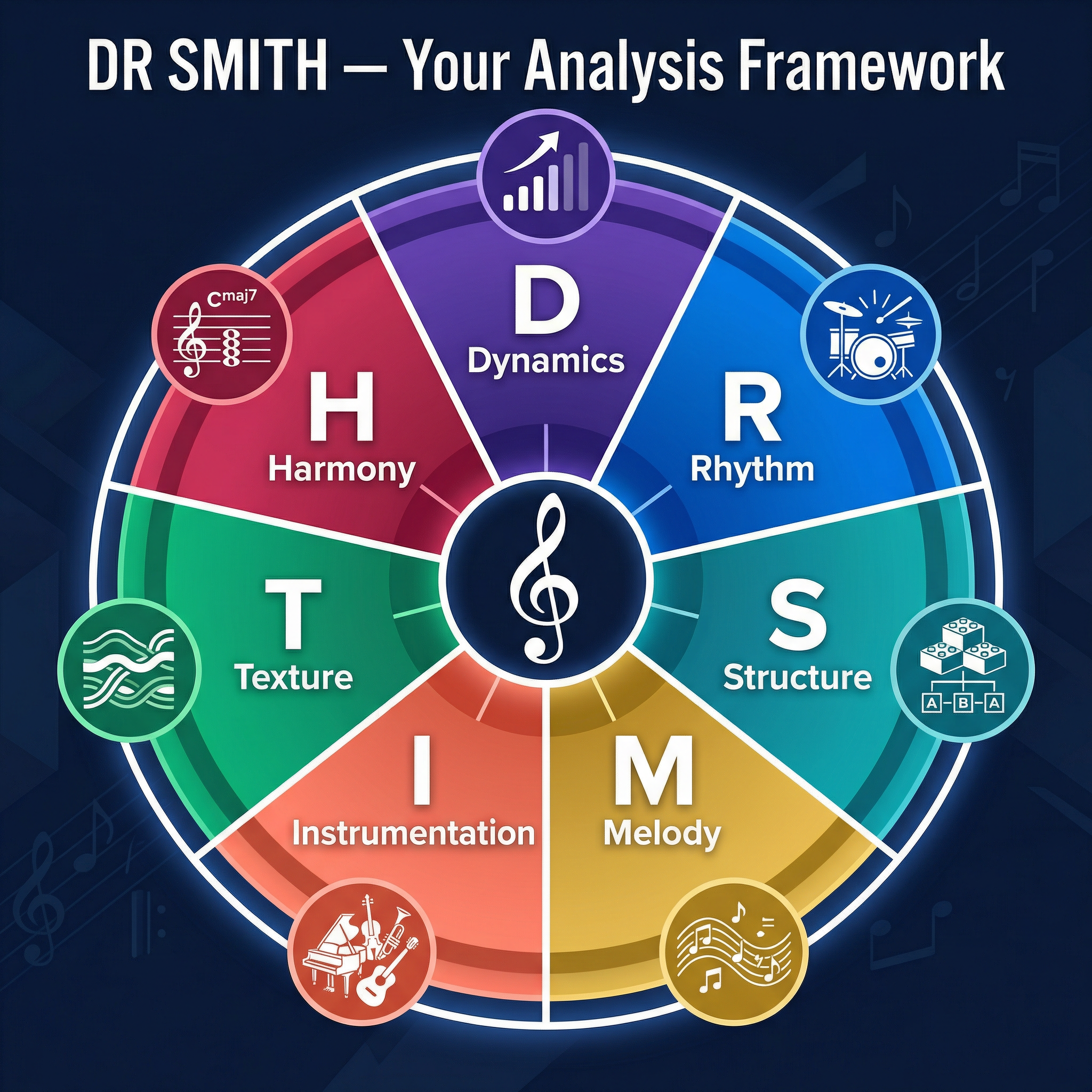
- Dynamics: The volume of the music. Sudden changes (subito fortissimo) can signify shock, while a long crescendo can build tension. In underscoring, dynamics are kept low to avoid obscuring dialogue.
- Rhythm: The patterns of notes. A driving, repetitive rhythm (ostinato) can create excitement in an action sequence, while a slow, sustained rhythm can create a sense of peace or unease.
- Structure: The overall plan of the music. Film cues are often 'through-composed' to follow the on-screen action, whereas songs in musicals often follow a conventional verse-chorus structure.
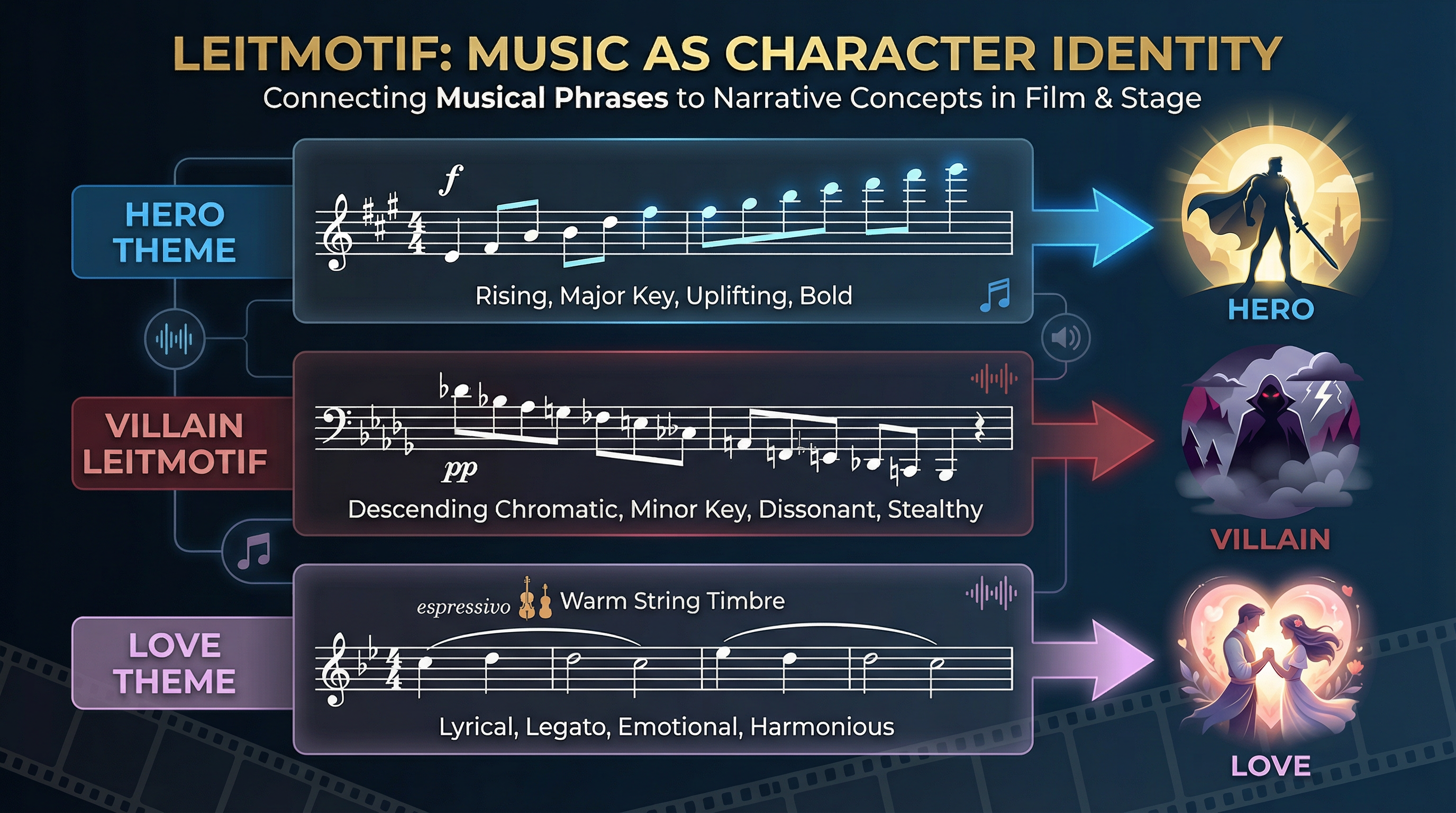
- Melody: The tune. This is where the concept of leitmotif is critical. A leitmotif is a recurring musical idea associated with a person, place, or idea. Its transformation can mirror a character's development.
- Instrumentation (Timbre/Sonority): The instruments used. A composer's choice of instruments is crucial for setting the scene. For example, synthesised sounds are common in video game scores, while a full symphony orchestra is traditional for epic films.
- Texture: The layers of sound. A thick texture with many instruments can create a powerful, overwhelming effect. A thin texture, perhaps a solo instrument, can create a feeling of intimacy or isolation.
- Harmony & Tonality: The chords and key. A major key is often used for heroic or happy moments, while a minor key can signify sadness or danger. Dissonant harmony (clashing notes) is a key tool for creating tension.
Key Practitioners/Artists/Composers
| Name | Period/Style | Key Works | Relevance |
|---|---|---|---|
| John Williams | Late 20th/21st Century Film | Star Wars, Jaws, Harry Potter | Master of the modern orchestral film score and the use of powerful, memorable leitmotifs. His work defines the 'blockbuster' sound. |
| Hans Zimmer | Late 20th/21st Century Film | Inception, The Dark Knight, Gladiator | Known for fusing electronic sounds with orchestral forces. His use of rhythmic ostinati and powerful, block-like chord progressions is highly influential. |
| Stephen Sondheim | 20th Century Musical Theatre | Into the Woods, Sweeney Todd | A master of complex harmony and lyrical intricacy in musical theatre. His work demonstrates how music can reveal deep psychological character traits. |
| Koji Kondo | 20th/21st Century Video Games | Super Mario Bros., The Legend of Zelda | A pioneer of video game music, creating some of the most recognisable themes in history. His work shows how music can be both memorable and interactive. |
Technical Vocabulary
- Leitmotif: A recurring musical theme associated with a character, place, or idea.
- Underscoring: Music played quietly underneath dialogue or action.
- Ostinato: A persistently repeated rhythmic or melodic pattern.
- Thematic Transformation: The process of modifying a theme or leitmotif to reflect a change in the narrative.
- Diegetic Music: Music that is part of the story world, which the characters can hear (e.g., a band playing at a party).
- Non-diegetic Music: Music that exists outside the story world, for the audience's benefit only (e.g., the film score).
- Mickey-Mousing: A film technique that syncs the accompanying music with the actions on screen.
- Synthesiser: An electronic instrument capable of producing a wide variety of sounds.
- Sampling: The act of taking a portion, or sample, of one sound recording and reusing it as an instrument or a sound recording in a different song or piece.
Practical Skills
Techniques & Processes
The key practical skill in this area of study is Analysis. You must learn to listen actively and deconstruct what you hear.
- First Listen: Get a general feel for the mood and context. Is it fast or slow? Loud or quiet? What genre does it suggest?
- Second Listen (with DR SMITH): Go through the framework systematically. Take notes on each element. For 'I' (Instrumentation), list every instrument you can identify. For 'H' (Harmony), decide if it's major, minor, or atonal. For 'T' (Texture), describe how the parts fit together.
- Third Listen (Connecting Music to Narrative): Now, connect your musical observations to a dramatic purpose. Why did the composer use a crescendo here? What effect does the minor key have? This is where you earn AO4 marks. For example, instead of saying 'The music gets faster', say 'The composer introduces an accelerando to heighten the tension during the chase scene.'
Exam Component
Written Exam Knowledge
The listening exam will present you with unseen extracts of music from the four contexts. Questions will require you to:
- Identify specific musical features (e.g., 'Name the string instrument playing the melody').
- Describe the character of the music using technical vocabulary.
- Explain how the music creates a specific mood or supports a narrative.
- Compare and contrast two extracts, identifying similarities and differences in their use of musical elements. This is a high-mark question and requires a structured approach.
Practical Exam Preparation
While this is a listening-based topic, the skills are transferable to the composition brief. If you are asked to compose a piece of music for a film clip or a specific scene, you will be expected to apply these concepts. You would need to consider:
- Mood: What is the emotional tone of the scene?
- Pacing: Does the music need to build tension or provide a steady pulse?
- Instrumentation: What instruments will best convey the desired atmosphere?
- Leitmotif: Could you create a short, memorable theme for a character?