Study Notes
Overview
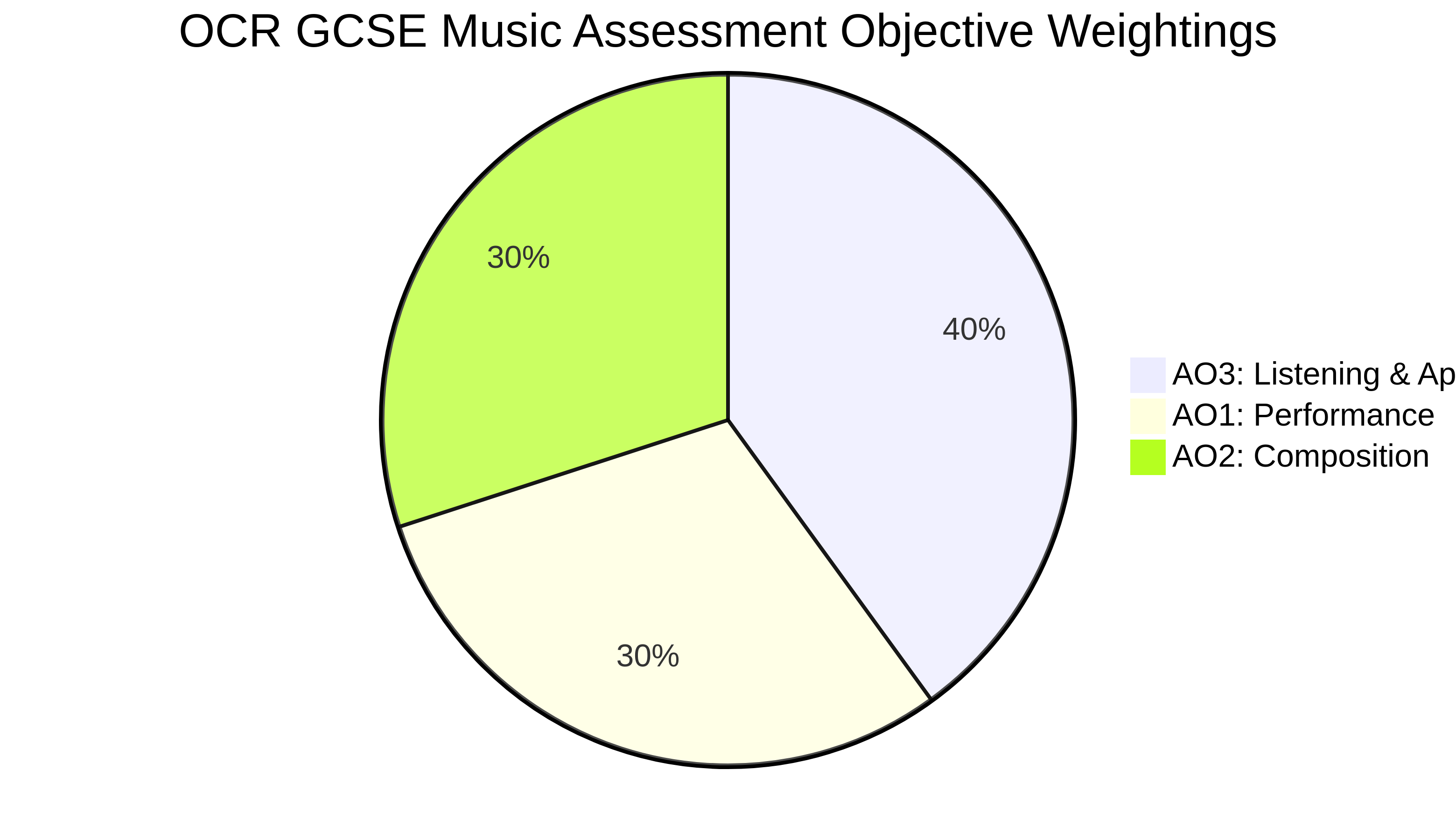
Rhythm is one of the fundamental building blocks of music, and for OCR GCSE Music, it is a core component of the 'Language of Music' (4.2). A strong understanding of rhythm is essential for success across all four Areas of Study (AoS) and is tested in every part of the exam: the listening paper (AO3), your composition portfolio (AO2), and your performance (AO1). Examiners are looking for candidates who can move beyond simple descriptions like 'fast' or 'slow' (which refer to tempo) and use precise, technical vocabulary to analyse how composers manipulate duration, metre, and rhythmic patterns to create specific effects. This guide will equip you with the knowledge and skills to do just that.
Key Knowledge & Theory
Core Concepts
To achieve high marks, candidates must demonstrate a thorough understanding of the following core rhythmic concepts.
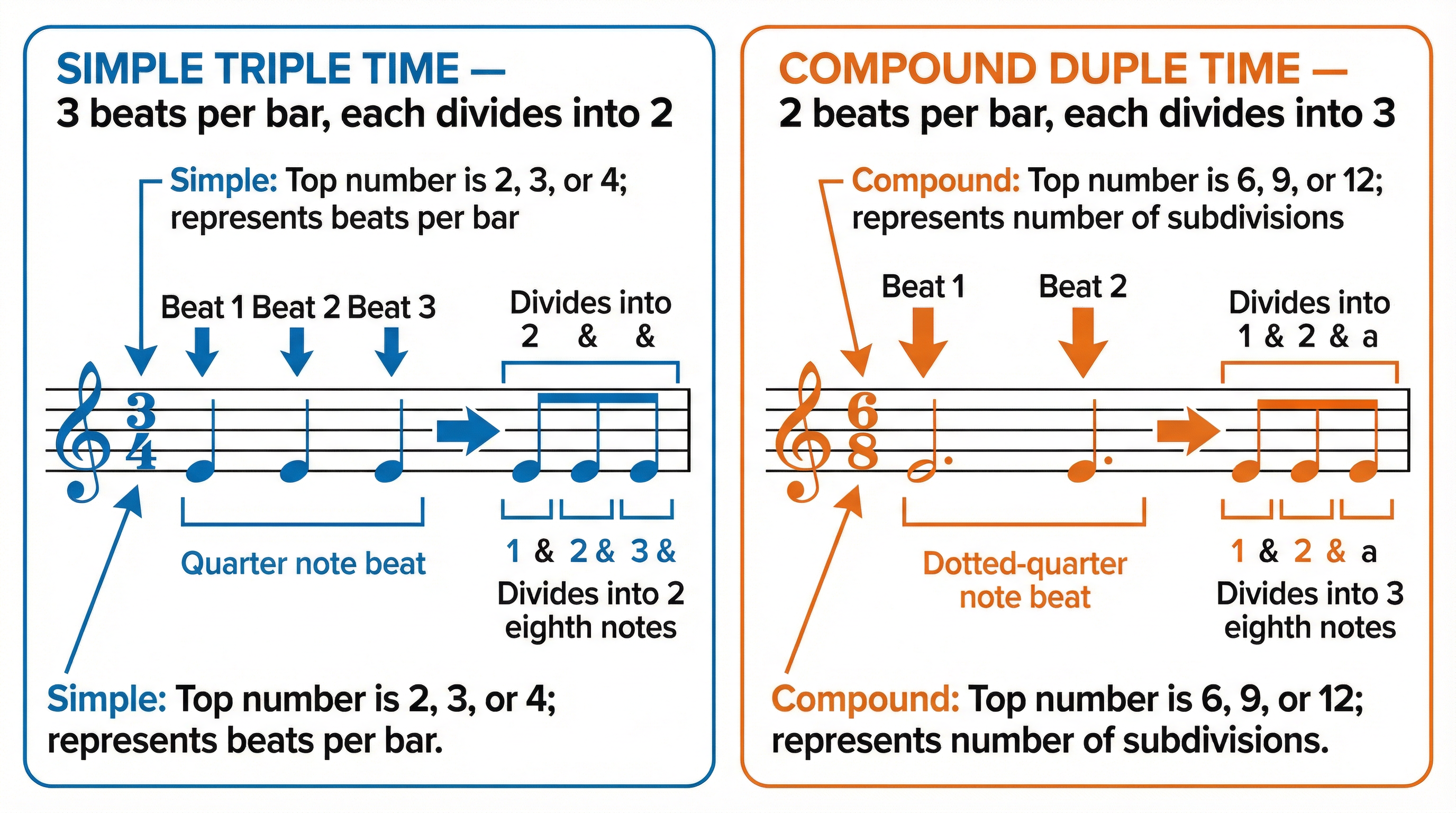
1. Metre and Time SignaturesMetre refers to the organisation of beats into regular groups. The time signature at the start of a piece indicates this organisation. It is crucial to distinguish between simple and compound time.
- Simple Time: Each beat divides into two equal sub-divisions. The top number of the time signature is typically 2, 3, or 4. Examples include 2/4 (Simple Duple), 3/4 (Simple Triple), and 4/4 (Simple Quadruple).
- Compound Time: Each beat is a dotted note that divides into three equal sub-divisions. The top number is typically 6, 9, or 12. Examples include 6/8 (Compound Duple), 9/8 (Compound Triple), and 12/8 (Compound Quadruple).
- Irregular Metres: Also known as asymmetrical metres, these feature an unequal number of beats per bar, such as 5/4 or 7/8. They create a feeling of imbalance and are common in 20th-century classical music and some Eastern European folk traditions.
2. Rhythmic DevicesUsing the correct terminology for rhythmic devices is a key way to gain credit. Avoid colloquialisms like 'off-beat' and instead use precise terms.
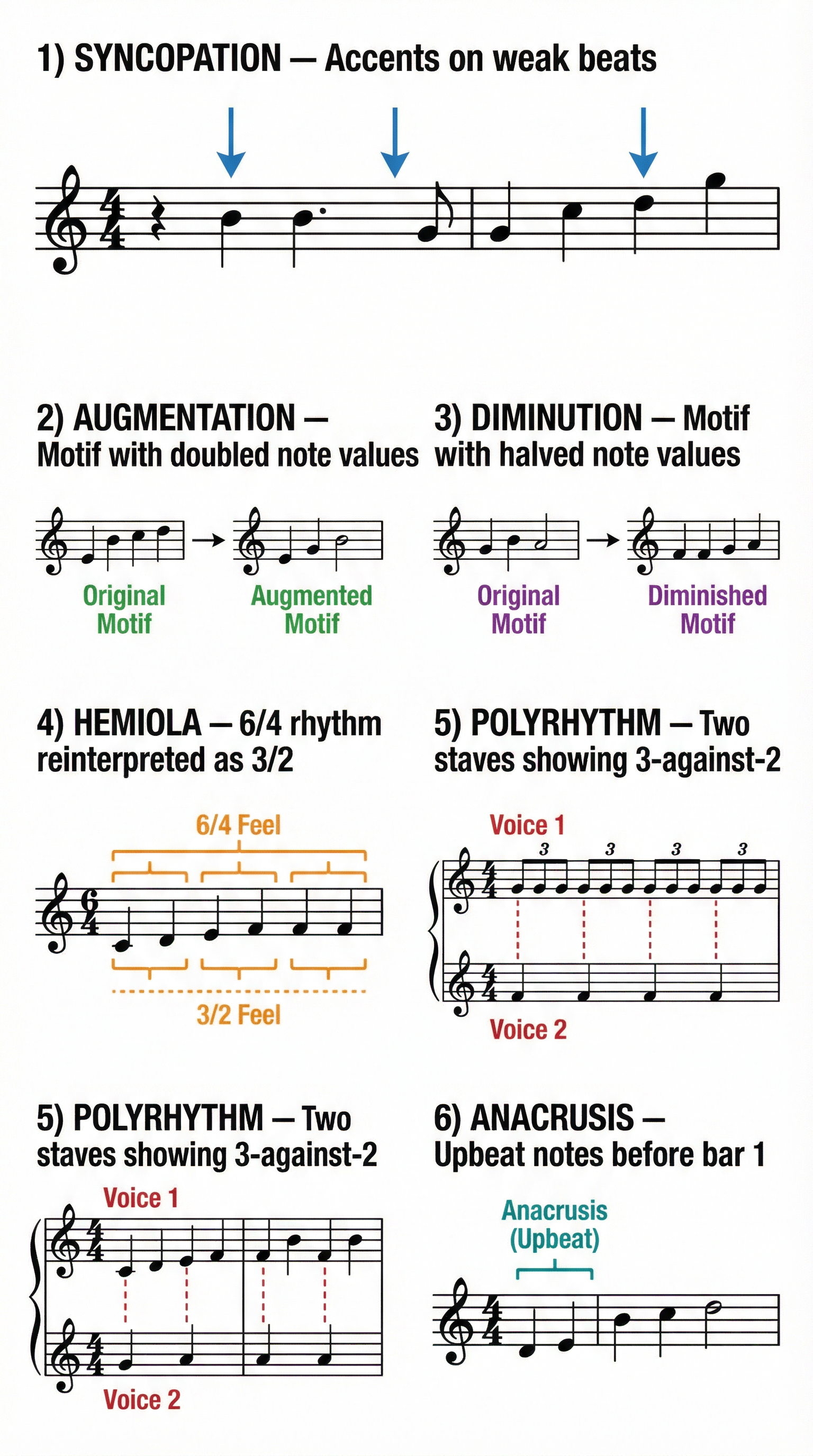
- Syncopation: The displacement of the regular accent by stressing a weak beat or an off-beat. Essential in jazz, reggae, and pop music.
- Anacrusis: An upbeat, where one or more notes precede the first strong beat of a phrase.
- Augmentation & Diminution: The process of developing a motif by doubling (augmentation) or halving (diminution) its note values.
- Hemiola: A rhythmic device where the established metre is temporarily disrupted, creating a feeling of a different time signature. The most common example is two bars of 3/4 feeling like one bar of 3/2.
- Polyrhythm & Cross-Rhythm: The simultaneous use of two or more conflicting rhythms. Polyrhythm refers to the layering of different rhythms (e.g., 3 against 2), while cross-rhythm specifically implies a conflict with the main metre.
- Ostinato: A short, persistently repeated rhythmic or melodic pattern. A famous rhythmic example is the 'Son Clave' in Latin American music.
Key Practitioners/Artists/Composers
Understanding how composers use rhythm is vital for AoS 4 (Film Music) and comparative essays.
| Name | Period/Style | Key Works | Relevance |
|---|---|---|---|
| Steve Reich | 20th Century/Minimalism | Clapping Music, Music for 18 Musicians | A master of polyrhythm, phasing, and rhythmic ostinati. His work is a perfect example of how complex rhythmic processes can form the basis of an entire piece. |
| Igor Stravinsky | 20th Century/Primitivism | The Rite of Spring | Famous for his revolutionary use of rhythm, including aggressive syncopation, rapidly changing time signatures, and powerful, driving ostinati. |
| Dave Brubeck | 20th Century/Cool Jazz | Take Five, Blue Rondo à la Turk | A pioneer in the use of irregular time signatures in jazz. Take Five (in 5/4) and Blue Rondo (in 9/8) are essential listening. |
| John Williams | 20th/21st Century/Film Music | Star Wars, Jaws | Williams is an expert at using rhythm to build tension and excitement. The driving ostinato in Jaws and the powerful march rhythms in Star Wars are iconic examples. |
Technical Vocabulary
Using this vocabulary correctly in your written answers and annotations will significantly improve your marks.
- Pulse/Beat: The underlying steady pulse of the music.
- Tempo: The speed of the music (e.g., fast, slow, allegro, adagio).
- Duration: The length of a note (e.g., crotchet, quaver).
- Note Grouping/Beaming: How shorter notes are connected to show the beat groupings in a bar.
- Backbeat: In pop and rock, the emphasis on beats 2 and 4 of a 4/4 bar.
- Shuffle/Swing: A rhythmic feel common in jazz and blues where pairs of quavers are played with a long-short feel.
- Dotted Rhythm: A pair of notes where the first is lengthened by half its value and the second is shortened accordingly, creating a strong-weak pattern.
Practical Skills
Techniques & Processes
1. Rhythmic DictationThis is a core skill for the listening exam. Follow this process:
- Listen Once: Identify the time signature and feel the pulse. Is it simple or compound?
- Listen Again: Tap the main pulse and try to vocalise the rhythm of the first bar.
- Notate: Write down the rhythm of the first bar, paying close attention to note values.
- Check Beaming: Ensure your quavers and semiquavers are beamed correctly according to the time signature. In 4/4, do not beam across the middle of the bar. In 6/8, beam in two groups of three.
- Repeat: Continue this process for the rest of the extract, bar by bar.
2. Compositional DevelopmentFor your AO2 composition, you must show you can develop your ideas. Use rhythmic devices to do this:
- Start with a Motif: Create a simple, memorable rhythmic idea.
- Apply Augmentation: Rewrite the motif with doubled note values to create a slower, more majestic version.
- Apply Diminution: Halve the note values to create a faster, more energetic version.
- Introduce Syncopation: Shift some of the notes onto off-beats to add rhythmic interest.
- Create an Ostinato: Repeat your motif in a bass line or accompanying part to create a driving foundation.
Materials & Equipment
- Metronome: An essential tool for developing a strong internal sense of pulse and for practising at different tempi.
- Notation Software (e.g., Sibelius, Musescore): Invaluable for composition. The software automatically handles beaming and note grouping, helping you learn the conventions.
- DAW (Digital Audio Workstation): For recording and layering rhythmic ideas, especially for exploring polyrhythms and creating music for AoS 2 (Popular Music) and AoS 4 (Film Music).
Portfolio/Coursework Guidance
Assessment Criteria
For your AO2 Composition portfolio, examiners are looking for:
- Coherence: Your rhythmic ideas should make sense and not sound random.
- Development: You must show that you can take a simple idea and develop it using techniques like augmentation, diminution, and inversion.
- Stylistic Understanding: Your use of rhythm should be appropriate for the genre you are writing in. A samba piece needs syncopated polyrhythms; a minimalist piece might use ostinati and phasing.
- Annotation: You must annotate your score, identifying the rhythmic devices you have used. For example, label a section as 'syncopated motif' or 'rhythmic augmentation in the bass'.
Building a Strong Portfolio
- Keep a Rhythmic Sketchbook: Jot down interesting rhythmic patterns you hear.
- Record Everything: Use your phone or a DAW to record yourself clapping or playing rhythmic ideas. You can layer these to experiment with polyrhythms.
- Annotate As You Go: Don't leave annotation to the end. Label your devices and explain your compositional choices as you make them. This demonstrates intentionality.
Exam Component
Written Exam Knowledge
In the listening exam (AO3), you will be tested on:
- Aural Identification: Identifying time signatures (simple/compound/irregular), rhythmic devices (syncopation, hemiola etc.), and specific world music rhythms (e.g., Son Clave).
- Rhythmic Dictation: Notating a short melody, with marks awarded for correct pitch and rhythm. Rhythmic accuracy and correct beaming are crucial.
- Comparative Questions (AO4): Comparing the use of rhythm in two different pieces of music, linking it to mood, style, and context.
Practical Exam Preparation
While there is no 'practical exam' for composition, the externally set brief functions in a similar way. To prepare:
- Analyse Past Briefs: Look at how previous briefs have asked for specific moods or styles. Think about what rhythmic choices would be appropriate for each.
- Timed Composition Exercises: Give yourself 30 minutes to create a short piece based on a rhythmic idea. This builds your creative speed and confidence.