Study Notes
Overview
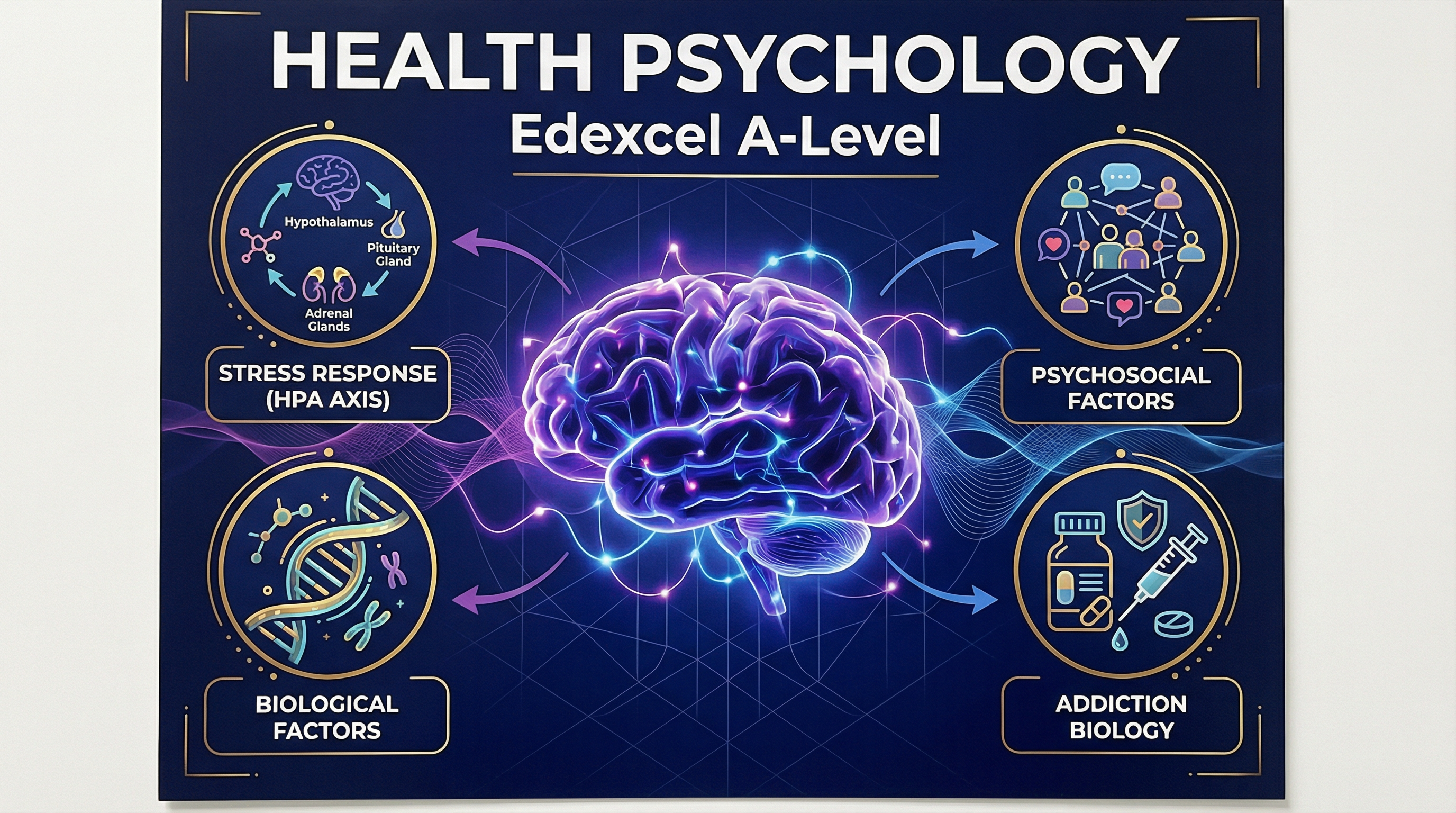
Health Psychology is a critical component of the Edexcel A-Level specification, focusing on the intricate relationship between the mind and body. This topic demands a scientific understanding of how psychological factors can influence physical health, with a specific focus on the physiological stress response and the mechanisms of addiction. Examiners expect candidates to move beyond simple descriptions, requiring detailed knowledge of biological pathways (like the SAM and HPA systems), the ability to apply these theories to novel scenarios (AO2), and to critically evaluate them using key Issues and Debates (AO3). This guide will provide the structured knowledge and exam technique necessary to master this topic, from the specific hormonal cascades in the stress response to the relative strengths of different models of addiction.
The Physiology of Stress
The Sympathomedullary (SAM) Pathway: The Fast Response
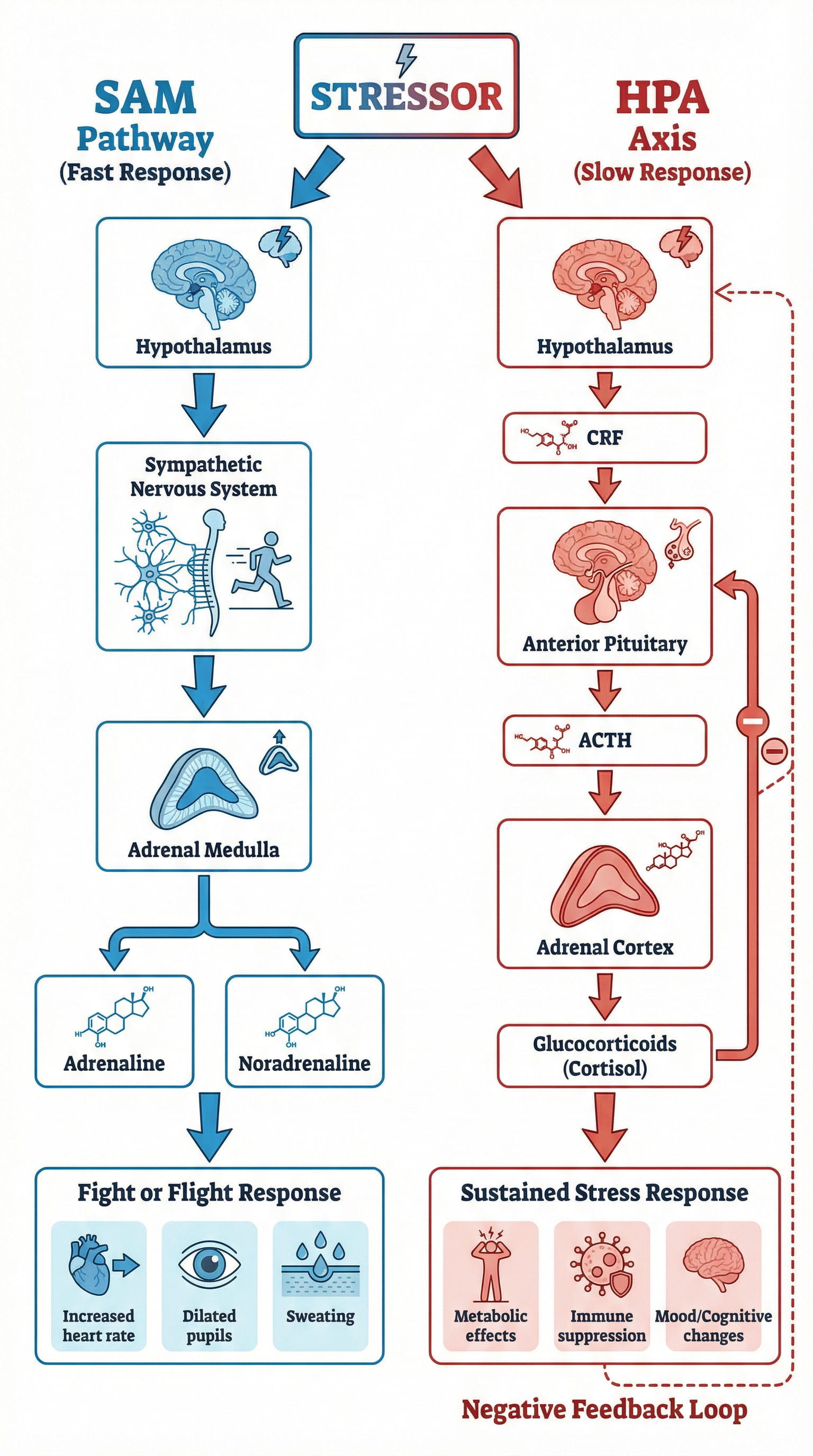
What happens: When an acute stressor is perceived, the hypothalamus activates the sympathetic branch of the Autonomic Nervous System (ANS). This stimulates the adrenal medulla, the inner part of the adrenal glands. The adrenal medulla then secretes the catecholamines adrenaline and noradrenaline into the bloodstream.
Why it matters: This is the body's immediate 'fight or flight' response. Adrenaline and noradrenaline cause a cascade of physiological changes: increased heart rate and blood pressure, diversion of blood to muscles, release of blood glucose for energy, and pupil dilation. For the exam, candidates must be able to identify these symptoms in a scenario and link them directly to the action of the SAM pathway. Credit is given for using precise terminology.
Specific Knowledge: Hypothalamus → Sympathetic Nervous System → Adrenal Medulla → Adrenaline/Noradrenaline.
The Hypothalamic-Pituitary-Adrenal (HPA) Axis: The Slow Response
What happens: In response to chronic or ongoing stressors, the hypothalamus releases Corticotropin-Releasing Factor (CRF). CRF is detected by the anterior pituitary gland, which then releases Adrenocorticotropic Hormone (ACTH). ACTH travels through the bloodstream to the adrenal cortex, the outer layer of the adrenal glands, stimulating it to release glucocorticoids, primarily cortisol.
Why it matters: Cortisol has a range of effects designed to manage long-term stress, such as maintaining a steady supply of blood glucose. However, a key function that examiners look for is its immunosuppressive effect. Prolonged HPA activation and high cortisol levels can weaken the immune system, making an individual more susceptible to illness. This is a crucial link between stress and physical health that can be used in evaluation.
Specific Knowledge: Hypothalamus → CRF → Anterior Pituitary → ACTH → Adrenal Cortex → Cortisol.
Selye's General Adaptation Syndrome (GAS)
Key Individual: Hans Selye (1936, 1956)
Role: A pioneering endocrinologist who was one of the first to describe a consistent biological response to any stressor.
Key Actions: Selye exposed rats to various noxious stimuli (e.g., cold, injury, excessive exercise) and observed a three-stage physiological response.
Impact: His General Adaptation Syndrome (GAS) model provided a foundational framework for understanding the link between chronic stress and disease.
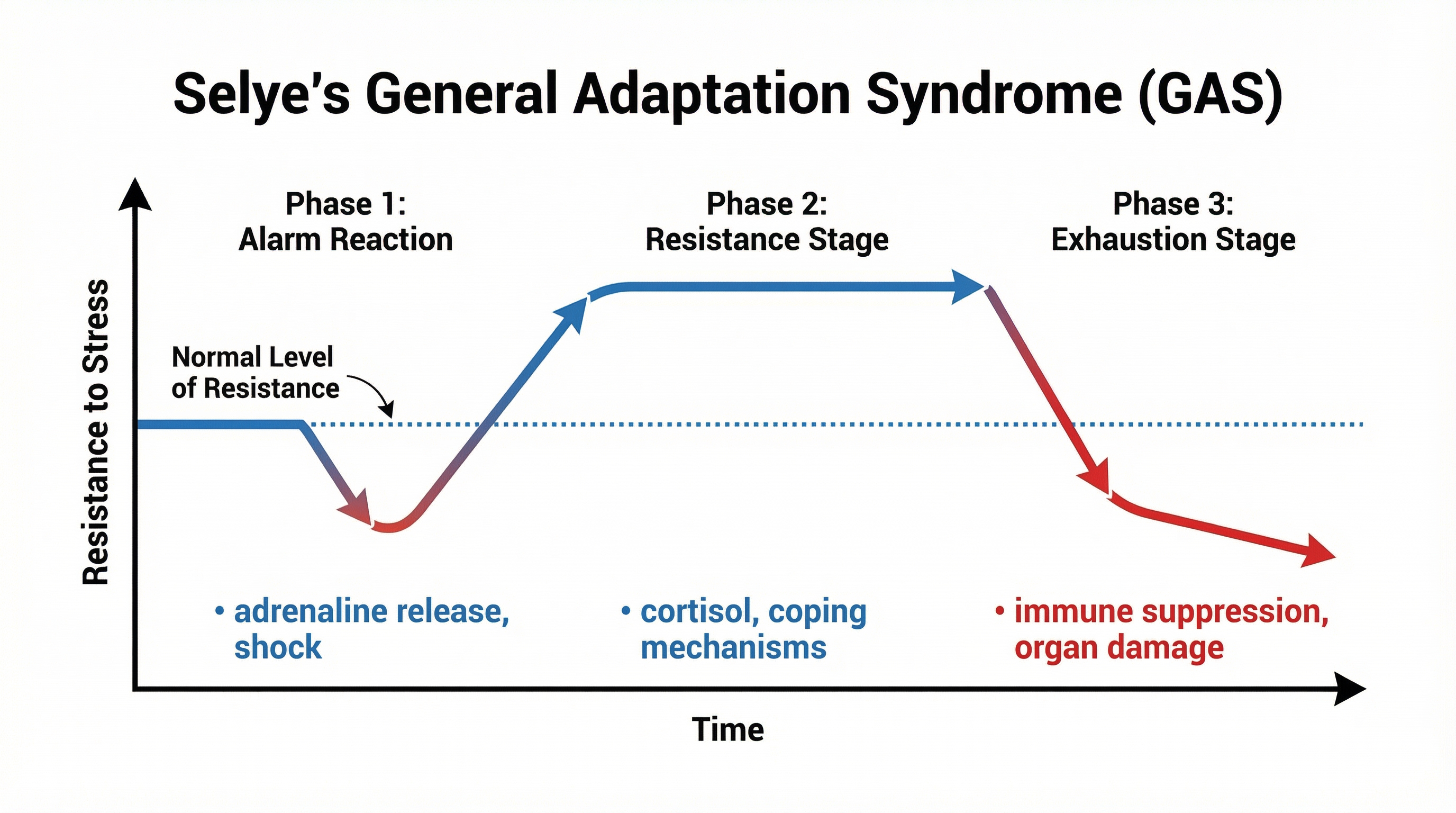
The Three Stages of GAS:
- Alarm Reaction: The initial shock phase where resistance is lowered, followed by the activation of the SAM pathway to mobilise the body for fight or flight.
- Resistance Stage: The body adapts to the ongoing stressor. The HPA axis is activated, and cortisol levels remain high to maintain arousal and provide energy. Outwardly, the individual may appear to be coping, but physiological resources are being consumed at an accelerated rate.
- Exhaustion Stage: If the stressor persists, the body's adaptive resources are depleted. The immune system becomes severely compromised, and the individual experiences fatigue, depression, and is at high risk of developing stress-related illnesses like cardiovascular disease or infections. This is the stage where the physiological damage occurs.
Explanations for Addiction
Biological Explanation: Neurochemistry and Genetics
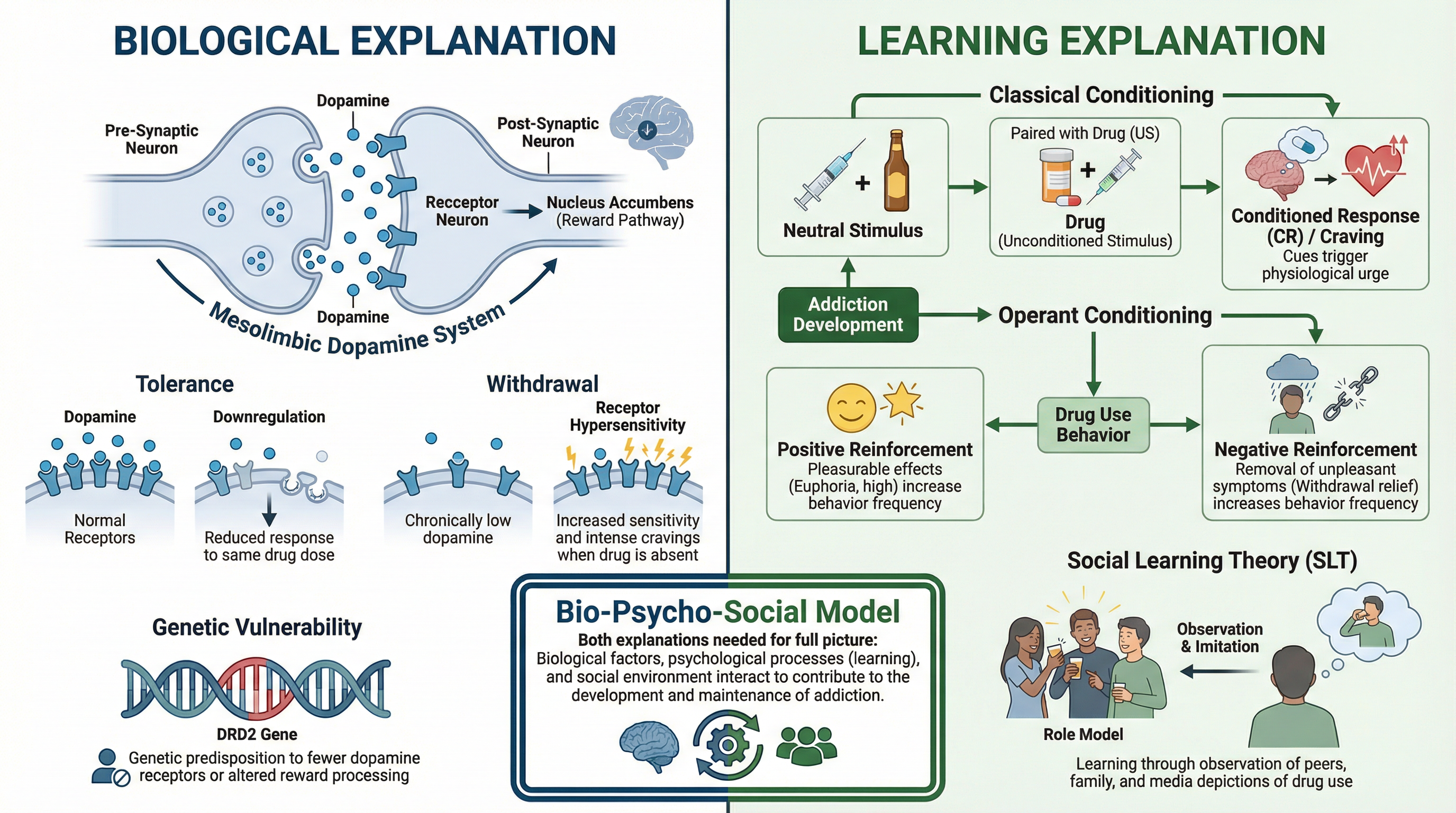
What happens: The biological model focuses on the role of dopamine and the brain's reward system. Addictive substances or behaviours trigger a surge of dopamine in the mesolimbic pathway (specifically the nucleus accumbens), creating intense feelings of pleasure (euphoria). The brain tries to maintain homeostasis by downregulating dopamine receptors, leading to tolerance (needing more of the drug for the same effect). When the drug is absent, the brain's naturally low level of dopamine stimulation results in withdrawal symptoms (e.g., anxiety, tremors, dysphoria).
Why it matters: This model provides a powerful explanation for the compulsive nature of addiction and the difficulty of quitting. It is supported by evidence from brain imaging studies and animal research. For AO3, candidates can evaluate this model as being reductionist, as it reduces the complex human experience of addiction to the level of neurotransmitters, potentially ignoring psychological and social factors.
Specific Knowledge: Mesolimbic pathway, nucleus accumbens, dopamine, downregulation, tolerance, withdrawal, DRD2 gene (genetic vulnerability).
Learning Explanation: Conditioning and Social Learning
What happens: The learning approach views addiction as a set of learned behaviours.
- Classical Conditioning: A neutral stimulus (e.g., a pub, a syringe) becomes associated with the unconditioned stimulus (the drug) and its effect (the unconditioned response). Over time, the neutral stimulus becomes a conditioned stimulus that can trigger a conditioned response of craving.
- Operant Conditioning: Behaviour is shaped by its consequences. Positive reinforcement occurs when the drug provides a pleasurable feeling, making the behaviour more likely to be repeated. Negative reinforcement (a commonly misunderstood concept) occurs when taking the drug removes unpleasant withdrawal symptoms, which also makes the behaviour more likely to be repeated.
- Social Learning Theory (SLT): Proposed by Bandura, this suggests individuals (especially adolescents) learn addictive behaviours by observing and imitating role models (e.g., parents, peers, media figures) and seeing them being vicariously reinforced.
Why it matters: This model explains the role of environmental triggers in relapse and the influence of social context on the initiation of addiction. It has led to effective treatments like aversion therapy and token economies. For AO3, it can be criticised for being deterministic and underestimating the role of cognition and biological predisposition.
Key Study: Brady (1958) 'Executive Monkeys'
Aim: To investigate whether the stress of having control and responsibility could lead to stress-related illness (ulcers).
Procedure: Monkeys were paired and placed in restraining chairs. Both monkeys received brief electric shocks to their feet every 20 seconds. One monkey, the 'executive', could press a lever to postpone the shock for both monkeys. The other 'yoked' monkey had no control. The experiment ran for 6-hour sessions.
Findings: The executive monkeys developed severe gastric ulceration and eventually died, while the yoked control monkeys remained healthy.
Conclusion: Brady concluded that the psychological stress of being 'in charge' was more damaging than the physical stressor of the shocks themselves.
Evaluation: This is a crucial study for AO3. Strengths: It was a highly controlled laboratory experiment, establishing a clear cause-and-effect relationship. Weaknesses: The sample was tiny and consisted of non-human animals, raising major issues of generalisability to humans, who have more complex cognitive appraisal of stress. There were also confounding variables: the monkeys were not randomly assigned; the more 'emotional' or reactive monkeys were assigned to the executive role, which may have been a predisposing factor for the ulcers. The study also has significant ethical issues regarding the suffering of the animals."