Study Notes
Overview
The problem of evil and suffering is a central challenge to theistic belief and a core component of the Edexcel GCSE Religious Studies course. Examiners expect candidates to demonstrate a precise understanding of the philosophical problem, known as the Inconsistent Triad, and to be able to clearly distinguish between moral and natural evil. This guide will equip you with the knowledge to explain the key theological responses, or theodicies — specifically the Free Will Defence and the Soul-Making Theodicy. A high-level response requires not just describing these ideas, but critically evaluating their strengths and weaknesses, integrating specific Sources of Wisdom and Authority (SOWA), and applying this knowledge to structured exam answers. Marks are awarded for demonstrating this analytical and evaluative skillset, moving beyond simple description to a sustained appraisal of complex arguments.
Key Concepts & Developments
The Inconsistent Triad
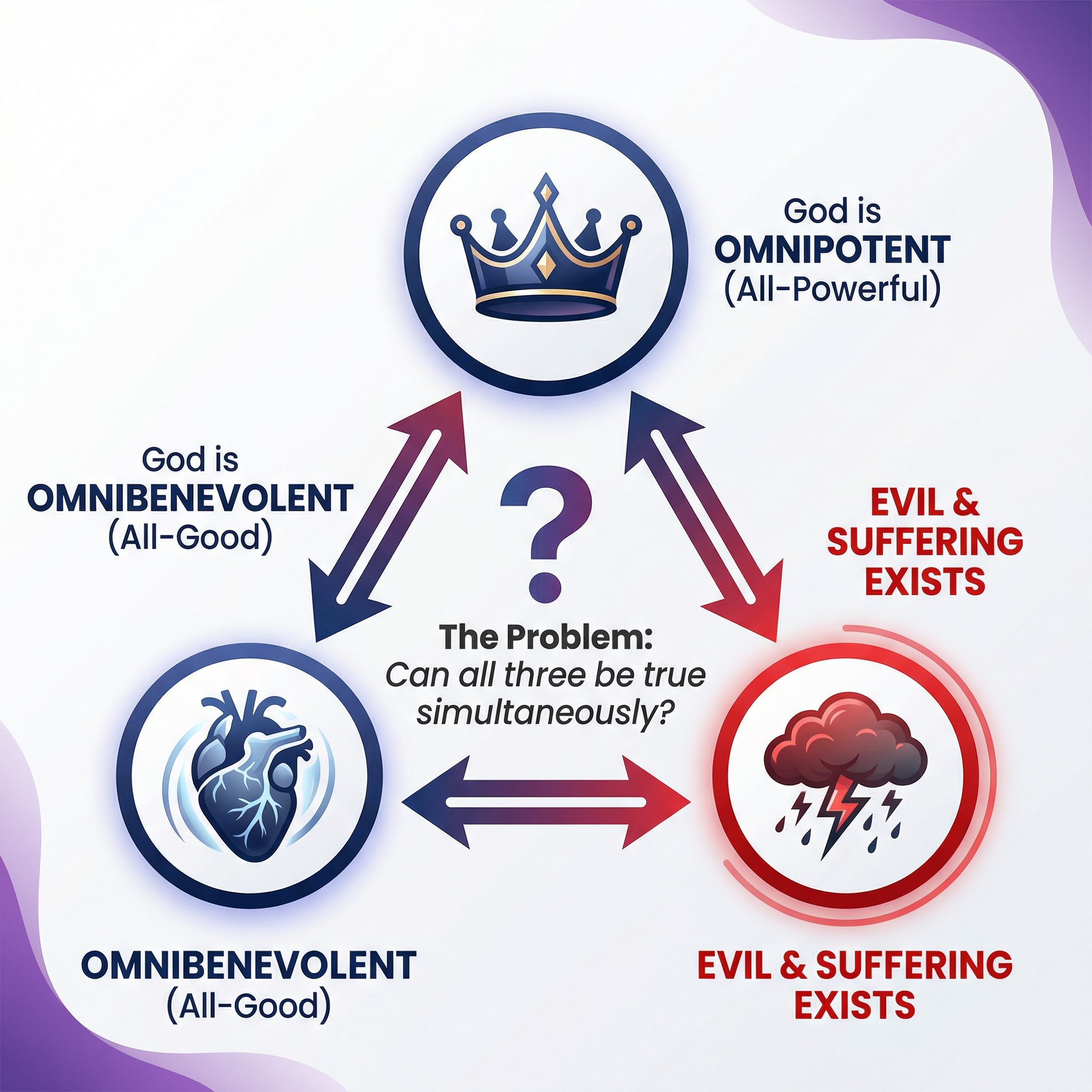
What it is: The philosophical puzzle, famously articulated by philosophers like Epicurus and later J.L. Mackie, that highlights a logical contradiction between three core beliefs about God in classical theism.
The Triad:
- God is Omnipotent (All-Powerful)
- God is Omnibenevolent (All-Good and All-Loving)
- Evil and Suffering Exist
Why it matters: The core of the problem is that if God is all-powerful, He could prevent evil. If He is all-good, He would want to prevent evil. Yet, evil exists. This apparent contradiction leads to the conclusion that either God does not exist, or He does not possess all these qualities. This is the fundamental argument candidates must understand and address.
Specific Knowledge: J.L. Mackie, David Hume, Epicurus.
Moral vs. Natural Evil
What it is: A critical distinction required in all exam answers.
- Moral Evil: Suffering that results from the free choices of human beings. Examples include murder, theft, war, and genocide (e.g., the Holocaust). The key concept is human agency.
- Natural Evil: Suffering that results from the workings of the natural world, independent of human action. Examples include earthquakes, tsunamis, disease (e.g., cancer), and famine caused by drought.
Why it matters: Examiners award marks for precise use of these terms and for using distinct examples. Conflating the two is a common mistake that limits marks. Theodicies often explain moral evil more effectively than natural evil, which is a key point for evaluation.
Key Individuals & Theodicies
St. Augustine of Hippo
Role: Early Christian theologian who formulated the classic Free Will Defence.
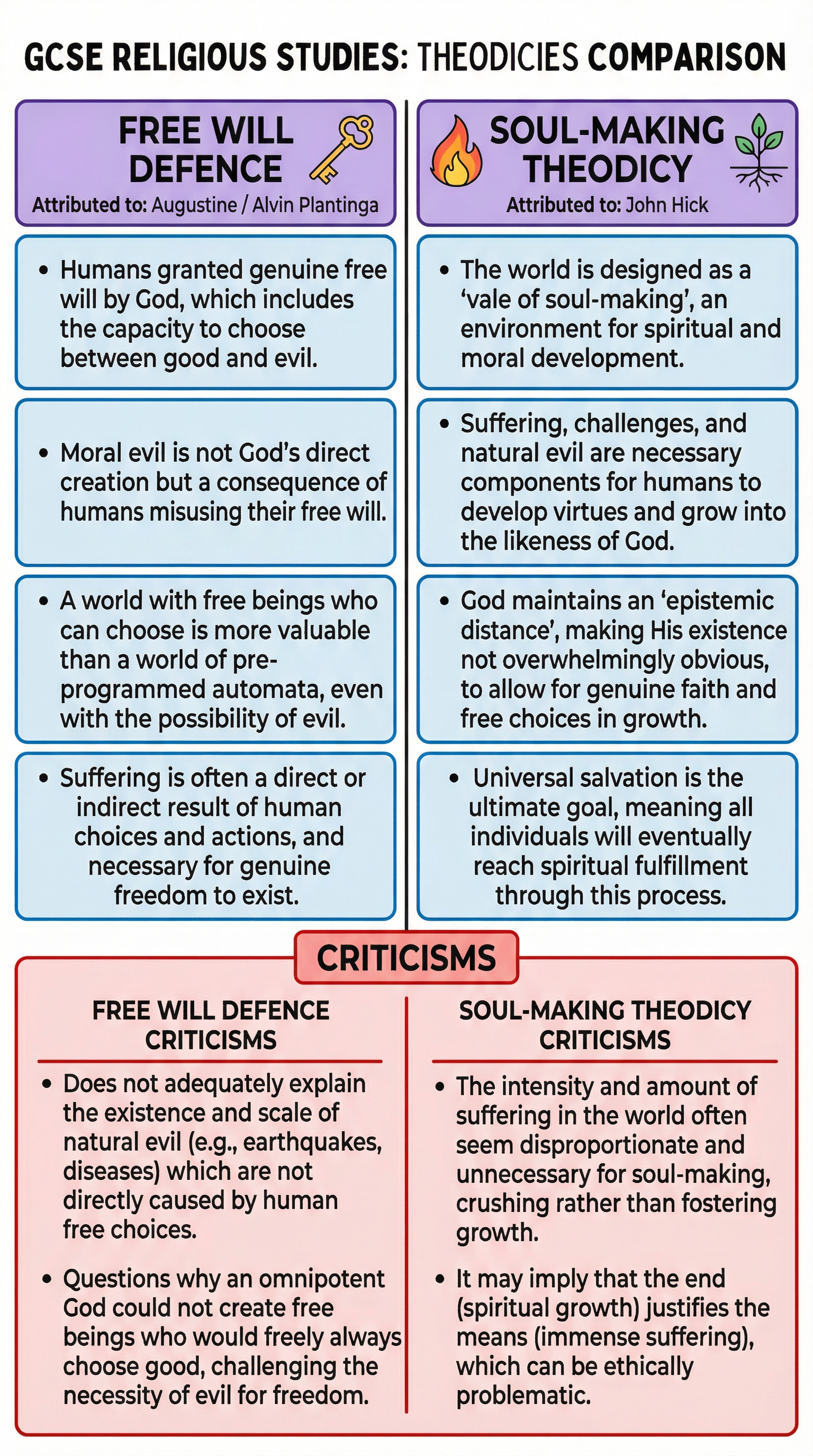
Key Actions: Argued that God created a perfect world, declaring it "very good" (Genesis 1:31). Evil is not a substance created by God, but a "privation of good" (privatio boni), just as darkness is an absence of light. Moral evil entered the world through the Fall (Genesis 3), when Adam and Eve misused their free will to disobey God. This original sin disrupted the perfect natural order, also leading to natural evil.
Impact: His theodicy became the foundation of traditional Christian attempts to resolve the problem of evil. It places the blame for evil squarely on humanity, preserving God's goodness.
John Hick
Role: 20th-century philosopher who developed the Soul-Making Theodicy.
Key Actions: Drawing on the ideas of the early church father Irenaeus, Hick argued that God did not create humans as perfect beings. Instead, He created them in His "image" with the potential to grow into His "likeness". The world is a "vale of soul-making", an environment designed for spiritual and moral development. Suffering and challenges are necessary tools for this growth, allowing humans to develop virtues like courage, compassion, and perseverance.
Impact: Hick's theodicy offers a purpose for suffering, framing it as a necessary part of a greater good. It is often seen as a more modern and scientifically compatible response, but is criticised for potentially justifying immense suffering.
Second-Order Concepts
Causation
- Cause of Moral Evil: According to the Free Will Defence, the direct cause is human misuse of God-given free will. The theological cause is the original sin of Adam and Eve.
- Cause of Suffering (Soul-Making): God allows suffering as an instrumental good, a necessary condition for humans to develop virtues and grow spiritually.
Consequence
- Consequence of the Fall: The introduction of sin, death, and suffering into the world. The disruption of the relationship between God and humanity, and the corruption of the natural order.
- Consequence of Soul-Making: The ultimate goal is universal salvation, where all individuals eventually achieve spiritual perfection and enter into a relationship with God.
Significance
- Significance of the Problem of Evil: It is arguably the greatest intellectual obstacle to belief in the God of classical theism. A candidate's ability to grapple with it demonstrates high-level theological and philosophical understanding.
- Significance of Theodicies: They represent sophisticated attempts to defend the rationality of religious belief in the face of evidence to the contrary. Evaluating their success is a key AO2 skill.