Study Notes
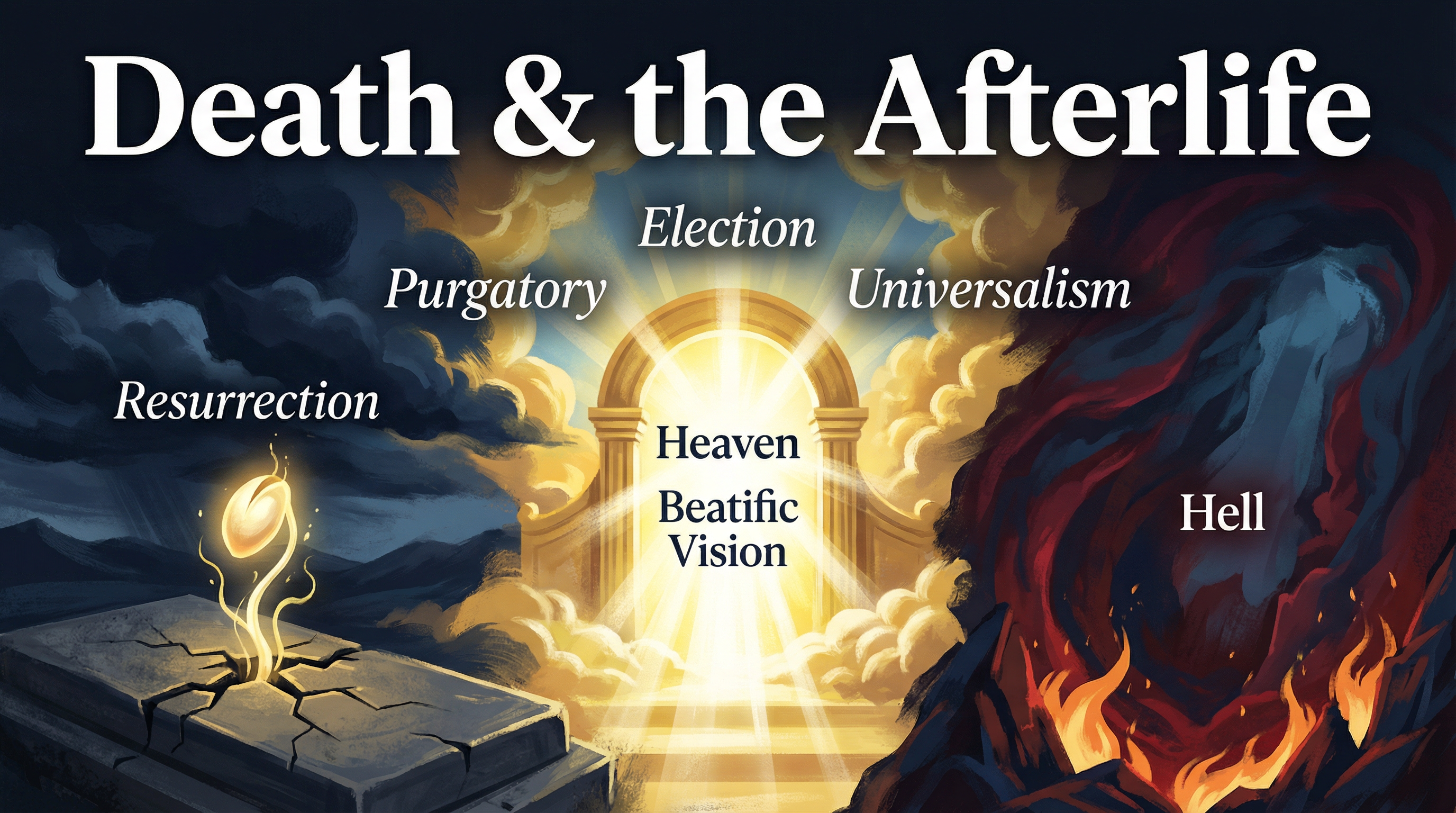
Overview
This topic explores Christian eschatology—the theology of 'last things'. For OCR H573, candidates must move beyond simple descriptions of Heaven and Hell to a rigorous analysis of their coherence with divine attributes like omnibenevolence and justice. The specification demands a critical evaluation of physical versus spiritual resurrection, the profound implications of Limited and Unlimited Election (Augustine/Calvin vs. Barth), and the philosophical viability of Universalism (Hick). Examiners expect a scholarly dialogue between thinkers, supported by precise biblical evidence (1 Corinthians 15, Matthew 25) and key theological texts. Success in this area hinges on your ability to handle complex abstract ideas and construct a sustained, critical argument (AO2), which accounts for 60% of the marks.
Key Concepts & Developments
Resurrection: Physical vs. Spiritual Body
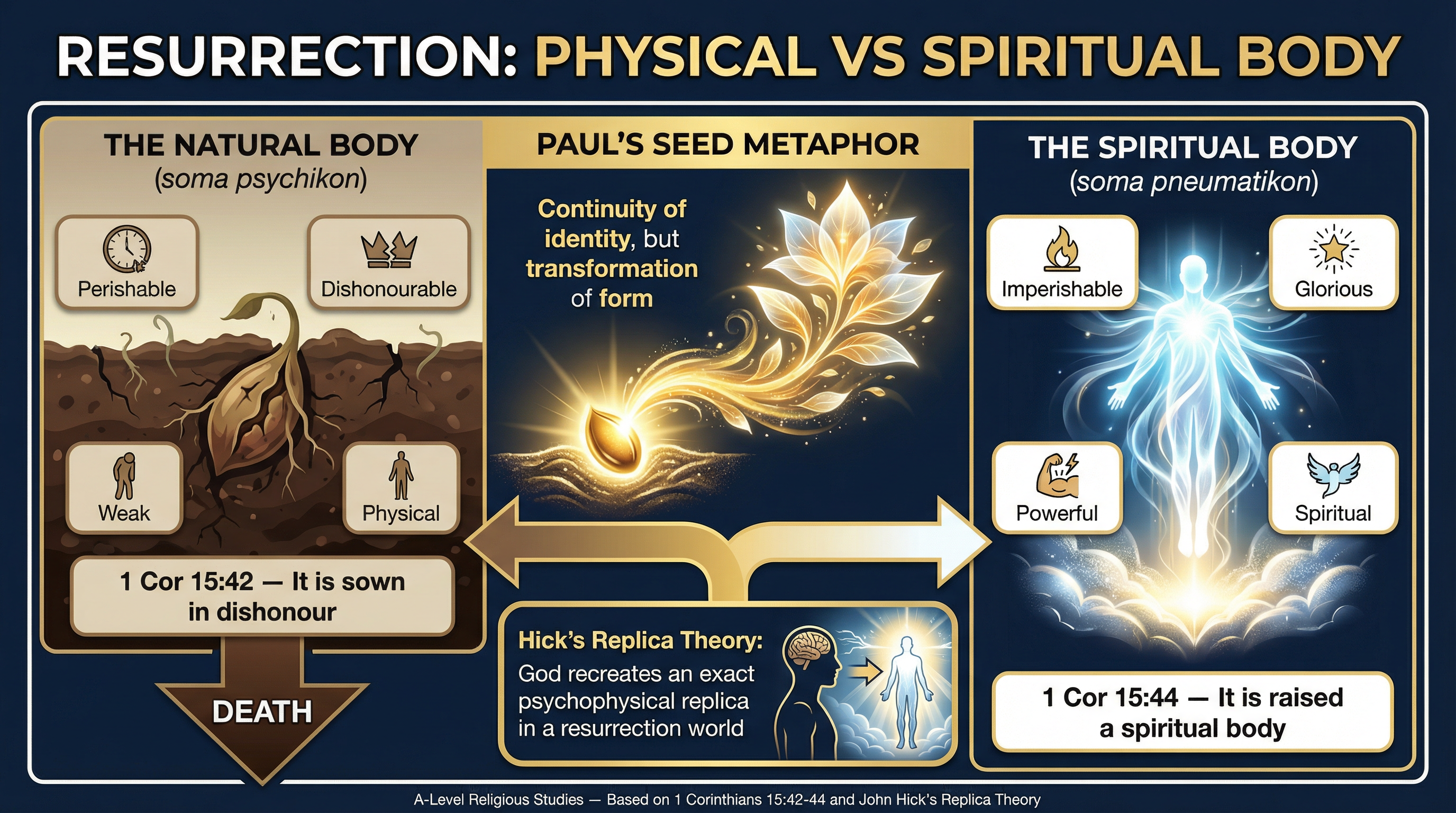
What happened: Early Christian thought, particularly through St. Paul, established a belief in the resurrection of the body, distinguishing it from the Greek concept of the immortal soul. Paul's metaphor of the seed in 1 Corinthians 15:42-44 is pivotal: the earthly body (soma psychikon) is like a seed that 'dies' to be raised as a transformed, glorious spiritual body (soma pneumatikon). This maintains personal continuity but implies radical transformation.
Why it matters: This distinction is fundamental. Candidates who confuse 'resurrection' with 'immortality of the soul' will lose marks. It forms the basis for modern debates, such as John Hick's 'Replica Theory', which attempts a philosophically credible account of resurrection in a scientific age. You must be able to critique both traditional dualism and modern reinterpretations.
Specific Knowledge: 1 Corinthians 15:42-44, soma psychikon, soma pneumatikon, John Hick's Replica Theory, the problem of personal identity (the 'replica problem').
The Doctrine of Election
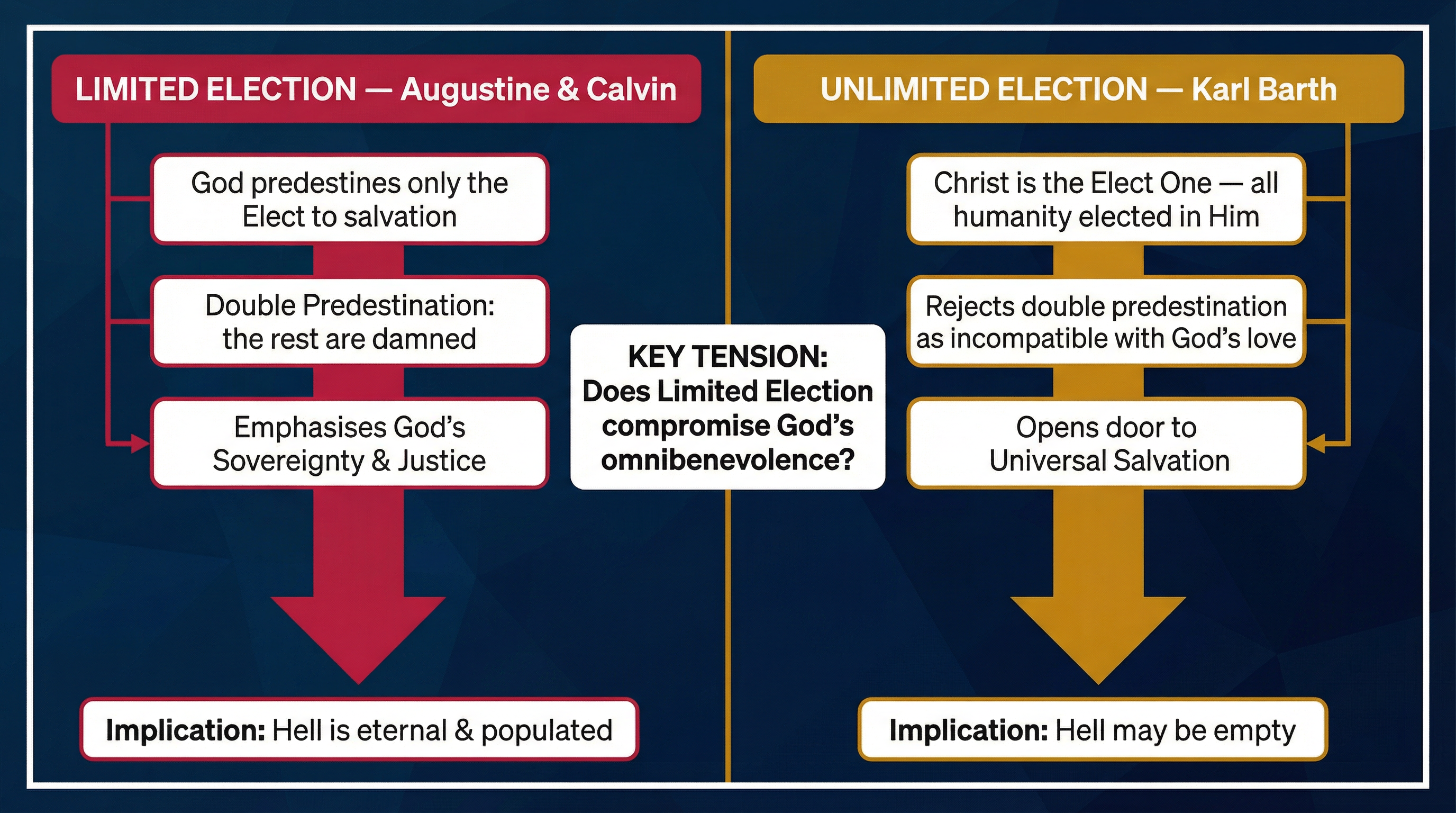
What happened: The debate over who is saved (soteriology) led to the development of the doctrine of election. Augustine, reacting against Pelagius, argued for predestination: due to original sin, humanity is incapable of choosing God without divine grace. God elects some for salvation.
Why it matters: This doctrine forces a critical examination of God's nature. John Calvin's formulation of 'Limited Election' and 'Double Predestination' (God actively choosing some for salvation and some for damnation) raises profound questions about God's omnibenevolence. Karl Barth's 20th-century reformulation of 'Unlimited Election'—where Christ is the sole elected and rejected one, thereby electing all humanity in himself—provides a powerful counter-argument. This is a key area for AO2 evaluation.
Specific Knowledge: Augustine, John Calvin (Institutes of the Christian Religion), Karl Barth (Church Dogmatics), Limited vs. Unlimited Election, Double Predestination, the problem of evil and divine love.
Judgment, Heaven, Hell & Purgatory
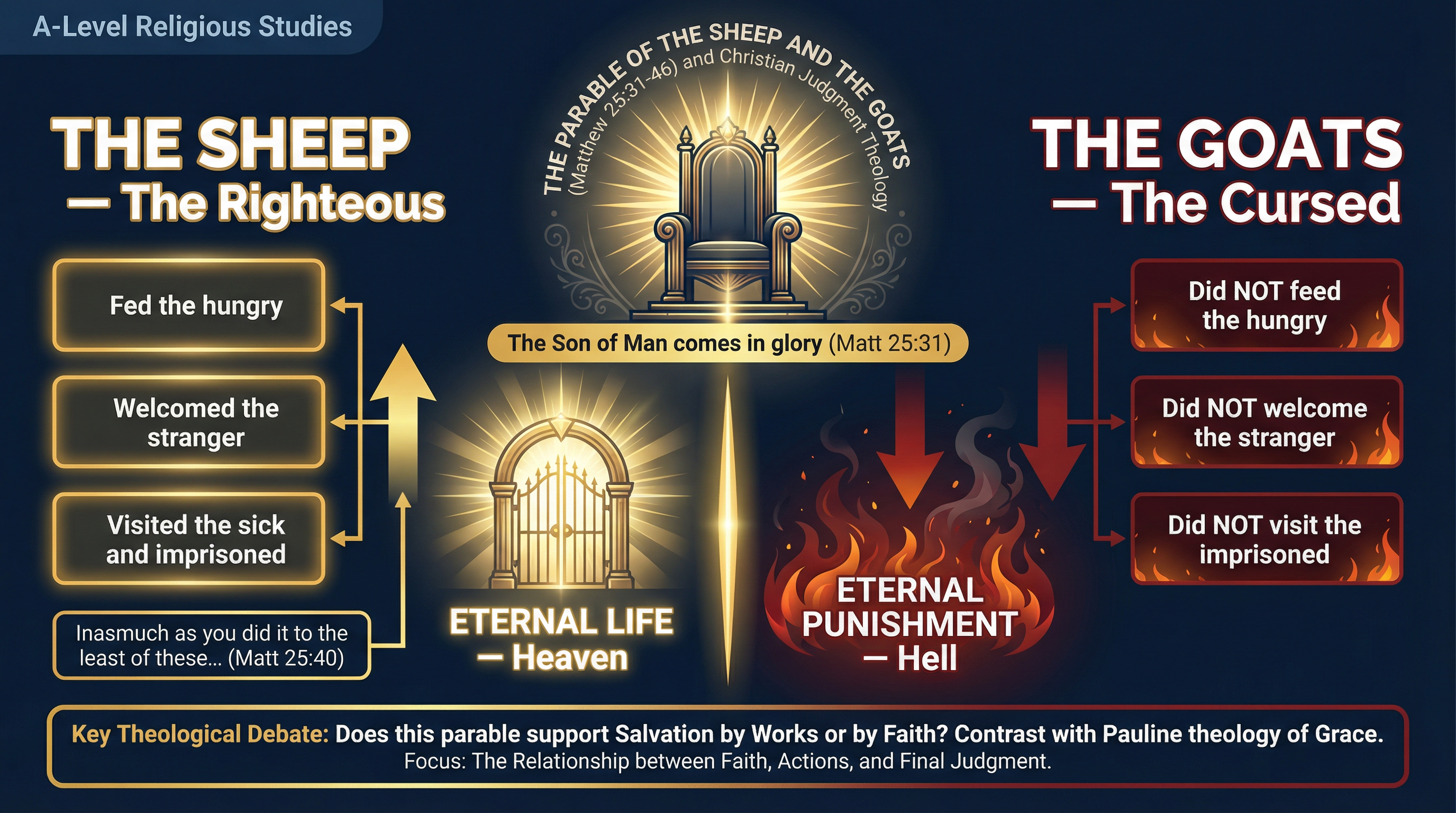
What happened: Beliefs about the final destiny of souls were systematised. The Parable of the Sheep and the Goats (Matthew 25) provides a scriptural basis for a final judgment based on actions. Heaven was defined, particularly in Catholic tradition, as the Beatific Vision. Hell was understood as eternal separation from God. Purgatory emerged as a Catholic doctrine of post-mortem purification for the elect.
Why it matters: The concepts of eternal Hell and Purgatory are major points of contention. The existence of an eternal Hell is difficult to reconcile with an omnibenevolent God, leading to the development of Universalism (the belief all will be saved), most notably argued by John Hick. Purgatory is often misunderstood; candidates must present it accurately as a process of purification for the saved, not a 'second chance'. Pope Benedict XVI's modern interpretation of Purgatory as a transformative 'fire' of encounter with Christ is a key development for high-level responses.
Specific Knowledge: Matthew 25:31-46, Beatific Vision, eternal punishment, Universalism, John Hick, Purgatory, Pope Benedict XVI (Spe Salvi).
Key Individuals
St. Augustine of Hippo
Role: Bishop and Doctor of the Church (4th-5th Century)
Key Actions: Formulated the doctrine of Original Sin and Predestination in his writings against Pelagianism. Argued that humanity is a massa peccati (mass of sin) unable to save itself.
Impact: His work laid the foundation for Western Christian thought on grace, sin, and salvation, directly influencing the Protestant Reformers, especially John Calvin.
John Calvin
Role: Protestant Reformer (16th Century)
Key Actions: Systematised Protestant theology in his Institutes of the Christian Religion. Developed the doctrine of Limited Election into 'Double Predestination', arguing for God's absolute sovereignty in salvation and damnation.
Impact: His theology defines the 'Reformed' tradition and presents one of the starkest, most challenging views on divine sovereignty, providing a critical focal point for exam questions on God's justice and love.
Karl Barth
Role: Swiss Reformed Theologian (20th Century)
Key Actions: Radically reinterpreted the doctrine of election in his Church Dogmatics. He argued that Jesus Christ is the electing God and the elected man, meaning all humanity is elected to salvation in him.
Impact: Barth's Christocentric approach offers a powerful alternative to Calvinism, resolving the tension between God's love and eternal damnation. He is essential for any high-level discussion of election and universalism.
John Hick
Role: Philosopher of Religion (20th-21st Century)
Key Actions: Championed a modern form of Universalism, arguing that an infinitely loving God would not permit eternal Hell. Developed the 'Replica Theory' as a modern, philosophically coherent account of resurrection.
Impact: Hick is the go-to scholar for critiquing traditional views on Hell and resurrection. His work forces candidates to engage with the philosophical problems of eschatology. Examiners expect you to be able to both explain and critique his views.
Second-Order Concepts
Causation
The development of Christian eschatology was caused by a need to reconcile Greek philosophical ideas (immortal soul) with Hebrew beliefs (psychosomatic unity), to defend the faith against heresies (like Pelagianism), and to make sense of the problem of evil and suffering in relation to God's attributes.
Consequence
The consequences of these doctrines are profound. The doctrine of Limited Election, for instance, can lead to a sense of assurance for believers but also profound anxiety and a view of God as potentially tyrannical. Universalism has the consequence of providing ultimate hope but potentially undermining moral responsibility and divine justice.
Change & Continuity
There is continuity in the core belief in an afterlife and divine judgment. However, the understanding of these concepts has changed dramatically. The shift from a physicalistic view of Hell as a place of fire to a more psychological view as 'separation from God' is a major change. Similarly, Pope Benedict XVI's reinterpretation of Purgatory marks a significant development from earlier, more punitive models.
Significance
This topic is significant because it addresses ultimate questions of human existence, justice, and the nature of God. The debates over election and Hell are not abstract puzzles; they have real-world implications for how Christians view God, themselves, and others. For the exam, its significance lies in its capacity to test your AO2 skills to their limit.
Source Skills
When approaching biblical texts like 1 Corinthians 15 or Matthew 25, treat them as theological sources. Your analysis should focus on:
- Content: What is the explicit teaching of the passage? (e.g., Matthew 25 links judgment to acts of mercy).
- Provenance/Authorial Intent: Why was this written? Paul is writing to the Corinthian church to correct their misunderstandings about resurrection. The author of Matthew is writing to a Jewish-Christian community to emphasise the ethical demands of discipleship.
- Theological Interpretation: How has this passage been interpreted in the Christian tradition? (e.g., Augustine's interpretation of passages on election). How does it support or challenge a particular doctrine?
- Limitations: A single passage does not represent the entirety of biblical thought. For example, the focus on 'works' in Matthew 25 must be held in tension with the focus on 'faith' in Paul's letters. A good answer will acknowledge this complexity.