Study Notes
Overview
This study guide covers the Sources of Wisdom and Authority for OCR GCSE Religious Studies (J625). For candidates, this topic is foundational. It explores where religious rules, beliefs, and guidance originate from, focusing on the dynamic relationship between sacred texts, religious leaders, tradition, and individual conscience. Examiners expect candidates to move beyond simple descriptions and analyse the hierarchy and interplay of these sources, especially the internal diversity within Christianity, Islam, and Judaism. A high-level response will not only detail these sources but evaluate their relevance and application in the 21st century, which is essential for achieving high marks in AO2.
Key Concepts: The Hierarchy of Authority
Understanding how different sources are prioritised is key. While the ultimate source is always God, the way that divine will is accessed and interpreted varies significantly.
Sacred Texts as a Primary Source
What it is: For all three Abrahamic faiths, a sacred text is the foundational source of authority. This is considered to be the direct or inspired word of God.
Why it matters: Examiners award marks for knowing the specific text and understanding its role. For example, the Qur'an in Islam is seen as the literal, incorruptible word of God, giving it supreme authority. The Bible in Christianity and the Torah in Judaism have a more complex status, with different denominations viewing them as either literal or inspired texts.
Specific Knowledge:
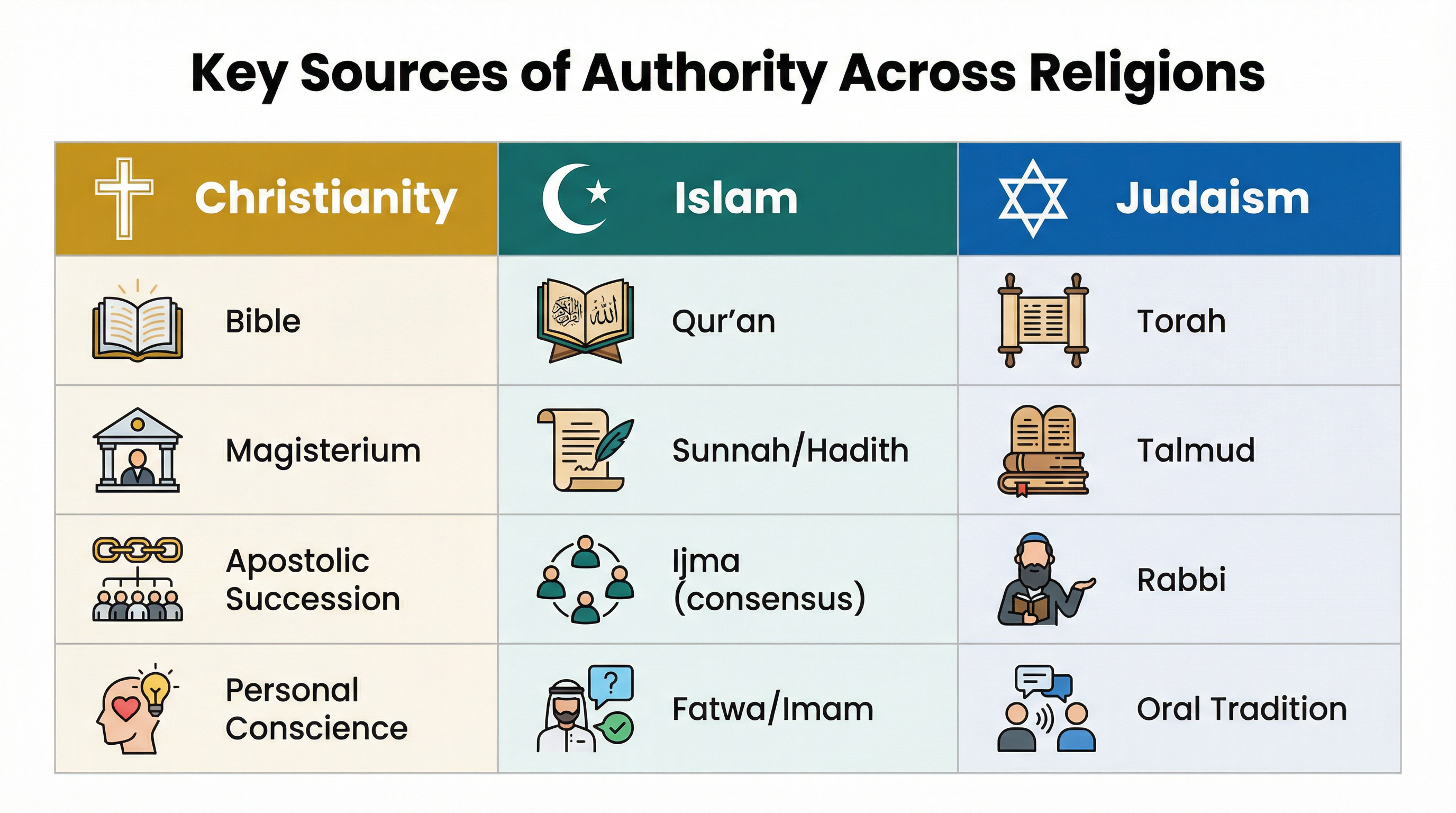
- Christianity: The Bible (Old and New Testaments). Key quote: "All Scripture is God-breathed and is useful for teaching, rebuking, correcting and training in righteousness" (2 Timothy 3:16).
- Islam: The Qur'an. Believed to be revealed to the Prophet Muhammad from 610 CE.
- Judaism: The Torah (the first five books of the Hebrew Bible, or Tanakh).
Religious Leaders & Tradition
What it is: The authority given to specific individuals or the historical teachings of the faith to interpret sacred texts and guide the community.
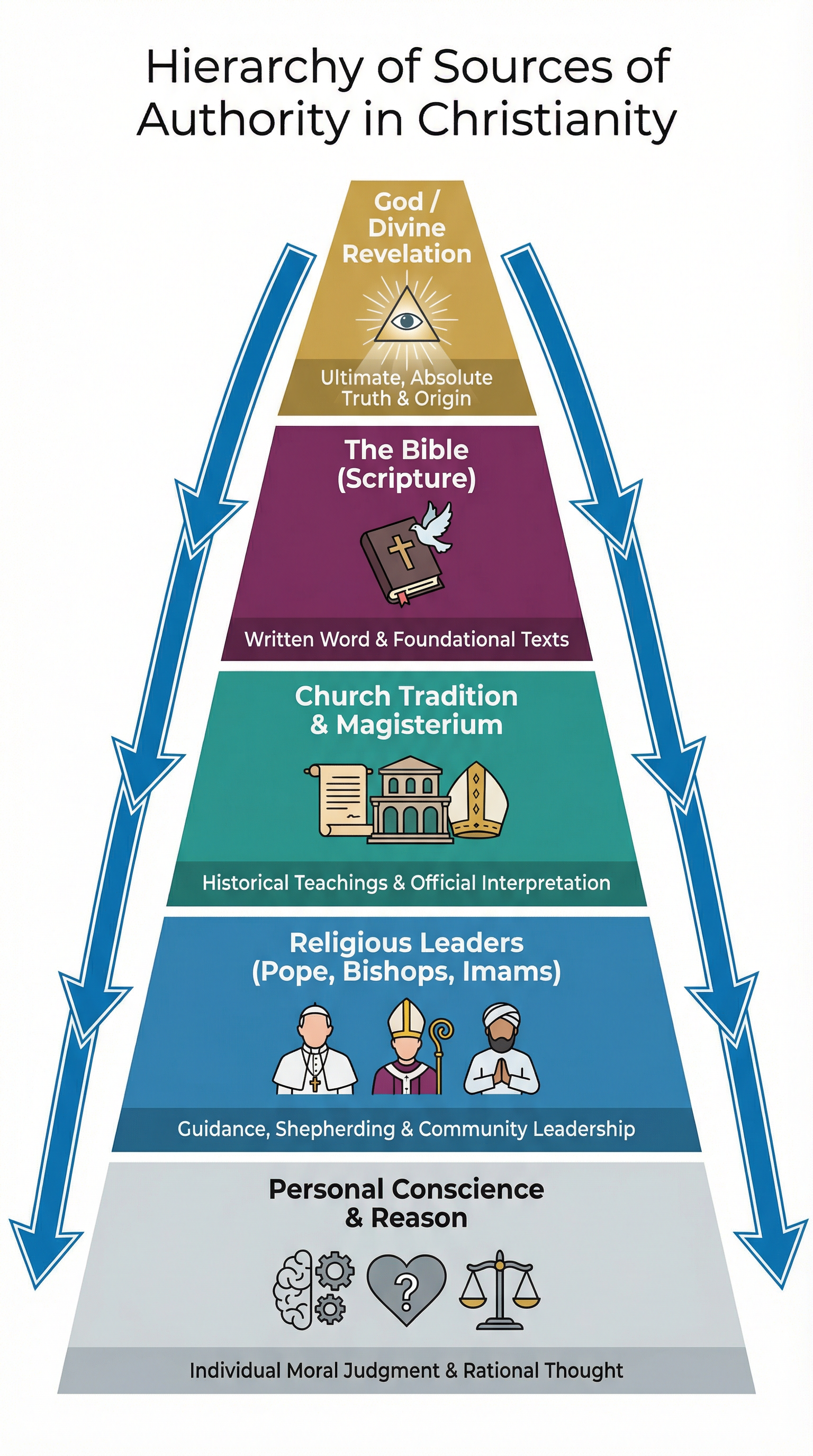
Why it matters: This is a major area of difference between denominations. High-level responses must explain why these leaders have authority. For example, Catholic authority rests on Apostolic Succession.
Specific Knowledge:
- Catholicism: The Magisterium (the Pope and Bishops). Their authority is believed to come directly from Jesus's apostles.
- Protestantism: A focus on 'Sola Scriptura' (Scripture Alone) means tradition has less authority than the Bible.
- Sunni Islam: The Sunnah (the example of the Prophet Muhammad) and Hadith (his sayings) are the next most important sources after the Qur'an. Ijma (scholarly consensus) is also key.
- Shia Islam: The authority of the Imam (a descendant of the Prophet) is paramount.
- Judaism: The Talmud (oral law and rabbinic commentary) is a vital source for interpreting the Torah. Rabbis are respected teachers.
Second-Order Concepts
Change & Continuity
Change: The Protestant Reformation in the 16th Century was a seismic shift, challenging the authority of the Catholic Magisterium and promoting Sola Scriptura. In modern times, Reform Judaism has re-evaluated the binding nature of the Torah.
Continuity: The Catholic Church maintains the principle of Apostolic Succession, a direct line of authority from St. Peter. Orthodox Judaism continues to see the Torah as the unchanging, literal word of God.
Significance
The debate over sources of authority is not just theoretical; it has profound real-world consequences. It shapes how believers vote, what they teach their children, and how they approach ethical dilemmas like abortion, euthanasia, or war. For the exam, showing you understand these practical implications is a route to the highest marks.