Study Notes
Overview
Welcome to your deep-dive into Crime and Punishment for WJEC GCSE Religious Studies (Unit 1, Theme 2: Issues of Good and Evil). This topic is a cornerstone of the ethics paper, demanding that candidates not only understand key concepts but also apply and evaluate diverse religious and non-religious viewpoints. Examiners are looking for a clear distinction between crime (an act against the law) and sin (an act against religious principles), a precise understanding of the four aims of punishment, and the ability to construct a balanced argument on contentious issues like capital punishment. This guide will provide the specific knowledge, source analysis skills, and exam techniques required to secure top marks. We will explore the tension between justice and mercy, the purpose of punishment in society, and how faith traditions from Christianity, Judaism, and Islam, alongside non-religious perspectives like Humanism, approach these profound questions.
Key Concepts & Debates
The Aims of Punishment
Understanding the four aims of punishment is non-negotiable for this topic. Marks are consistently awarded for precise definitions and the ability to apply these concepts to different scenarios. Candidates must be able to explain how different types of punishment (e.g., prison, community service) might fulfill one or more of these aims.
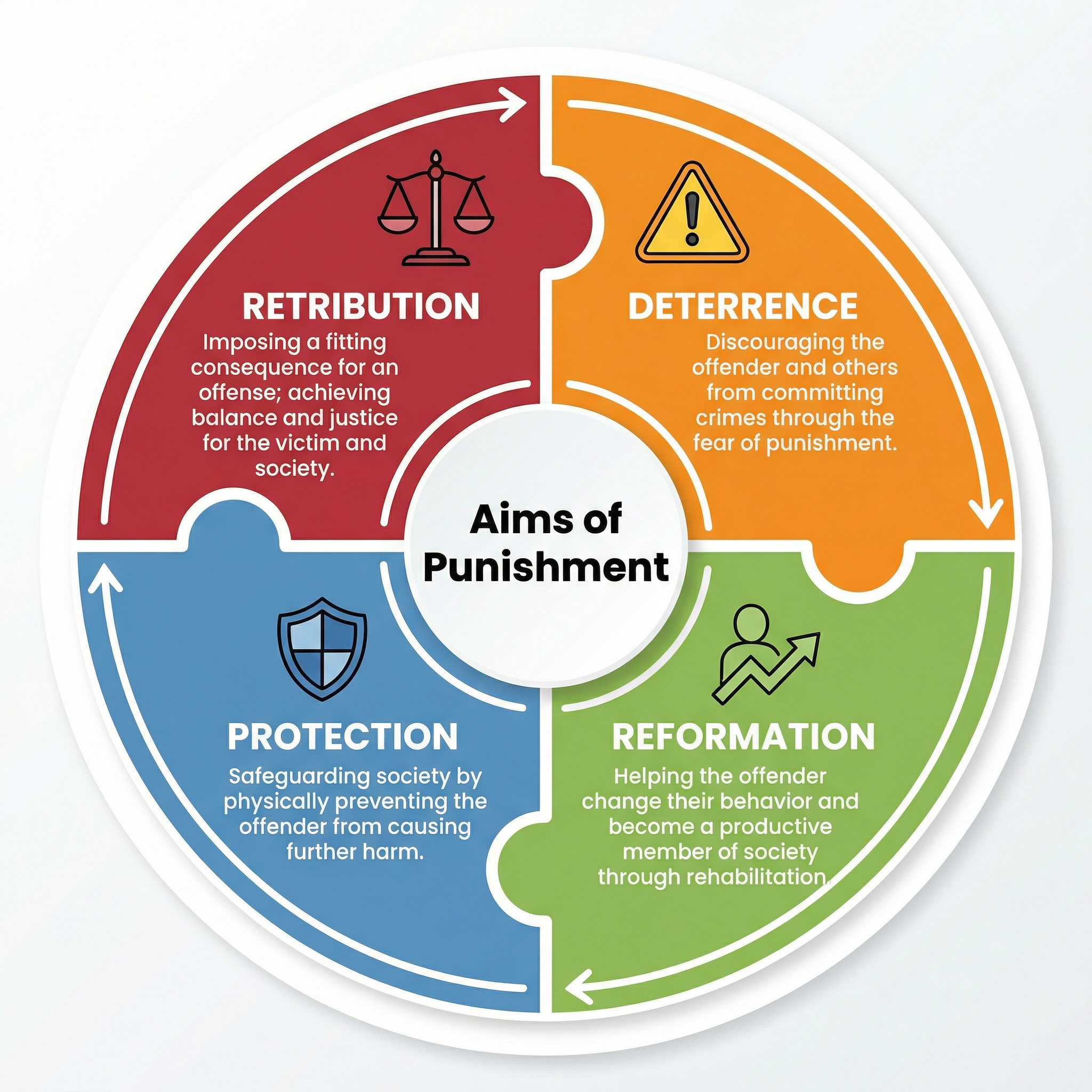
- Retribution: The idea that punishment should be proportional to the crime committed. It is about achieving justice for the victim and society, not personal revenge. The classic expression is Lex Talionis, the law of retaliation, found in sources like Exodus 21:24: "an eye for an eye, a tooth for a tooth".
- Deterrence: Using punishment to discourage the offender and others from committing crimes. This can be individual (stopping the specific offender from re-offending) or general (sending a message to society).
- Reformation: The aim of changing an offender for the better, helping them to become a law-abiding member of society. This is strongly supported by many religious believers who emphasise forgiveness and second chances, such as in the Christian Parable of the Prodigal Son.
- Protection: Removing the offender from society to keep the public safe from harm. This is the primary justification for imprisonment.
Religious Perspectives on Justice
Religious traditions provide foundational ethical frameworks for understanding justice. While there are significant overlaps, there are also important distinctions in emphasis and application. Examiners credit responses that can draw on specific teachings and sources of wisdom.
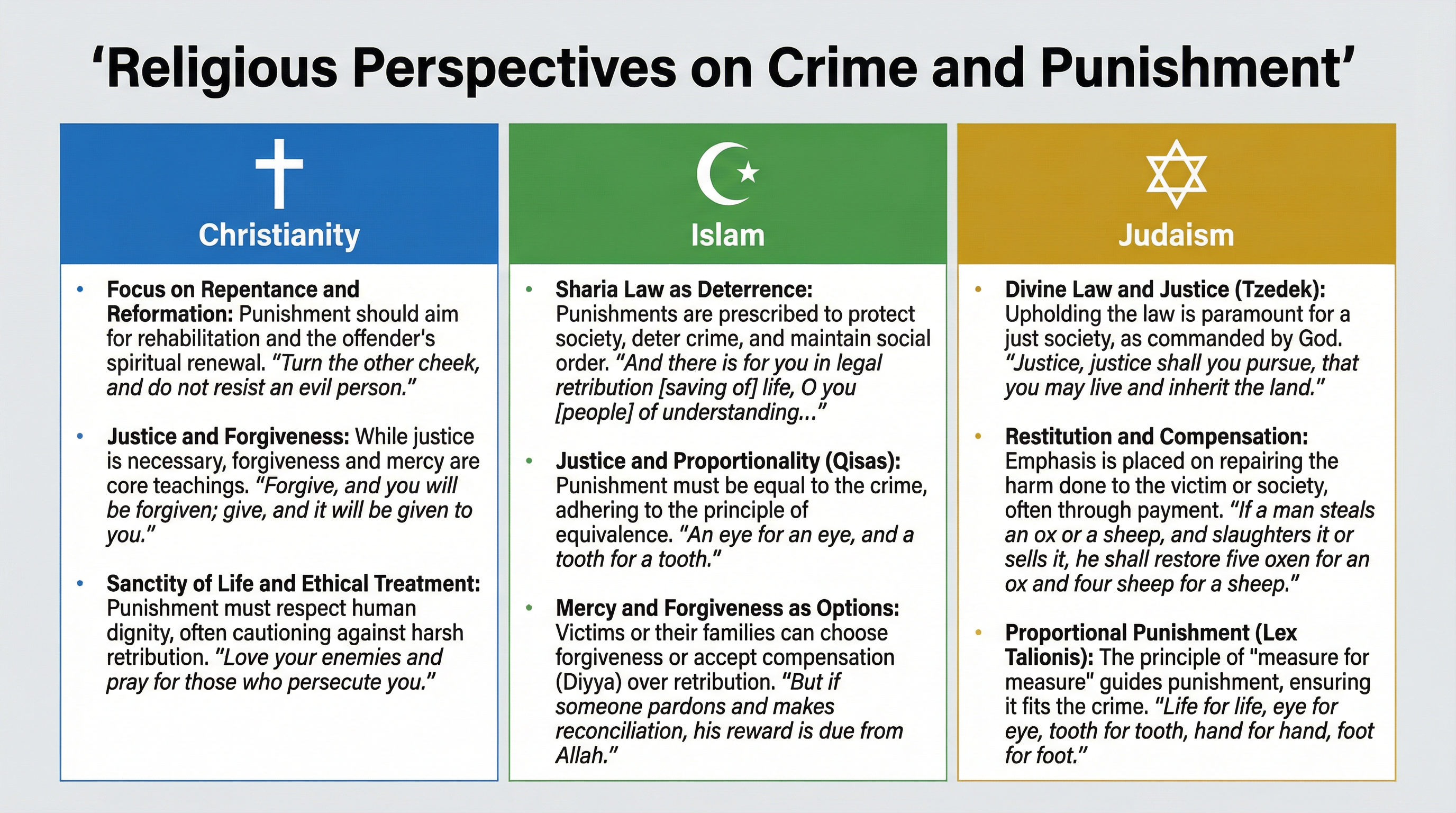
- Christianity: Core teachings revolve around forgiveness, repentance, and the sanctity of life. While justice is important, mercy is often elevated. Jesus' teaching to "turn the other cheek" (Matthew 5:39) and to forgive "seventy-seven times" (Matthew 18:22) are pivotal. However, some Christians support harsher penalties, citing Old Testament laws.
- Islam: Sharia law outlines a detailed legal framework where justice, deterrence, and social order are paramount. Punishments (Hudud) are prescribed for certain crimes to act as a strong deterrent. Yet, the Qur'an also places immense value on mercy and forgiveness, allowing victims' families to pardon offenders or accept compensation (Diyya).
- Judaism: The concept of Tzedek (justice) is central. The Torah prescribes punishments, including the famous "eye for an eye" principle, which is interpreted as requiring financial compensation equivalent to the injury. Justice must be pursued, but always with the aim of creating a righteous society.
The Death Penalty (Capital Punishment)
This is a major ethical debate and a frequent subject of the 15-mark (d) question. Candidates must be able to articulate and evaluate arguments from multiple religious and non-religious viewpoints.
- Arguments FOR: Often based on retribution (the ultimate price for the ultimate crime), deterrence (the ultimate deterrent), and specific religious texts (e.g., Genesis 9:6, "Whoever sheds human blood, by humans shall their blood be shed").
- Arguments AGAINST: Based on the sanctity of life, the possibility of error (executing an innocent person), the potential for reformation, and the argument that it is a cruel and unusual punishment. Many cite Jesus' teachings on forgiveness. Humanists argue it is a violation of fundamental human rights and that there is no conclusive evidence it is a more effective deterrent than life imprisonment.