Study Notes
Overview
This guide explores the foundational beliefs of Islam as required by the WJEC GCSE specification. A deep understanding of these concepts is essential, as they form the basis of all Islamic practice and are frequently tested. Examiners expect candidates to demonstrate precise knowledge of the Six Articles of Faith in Sunni Islam and the Five Roots of 'Usul ad-Din in Shi'a Islam. Marks are awarded for the ability to explain these beliefs, analyze their impact on a Muslim's life, and evaluate them using sources of wisdom and authority, particularly the Qur'an. This topic carries a significant weighting, with AO1 (knowledge) and AO2 (evaluation) being equally important. Mastering this content involves not just memorizing terms, but understanding the theological concepts behind them and the diversity of belief within the global Muslim community.
Key Beliefs: Sunni and Shi'a Islam
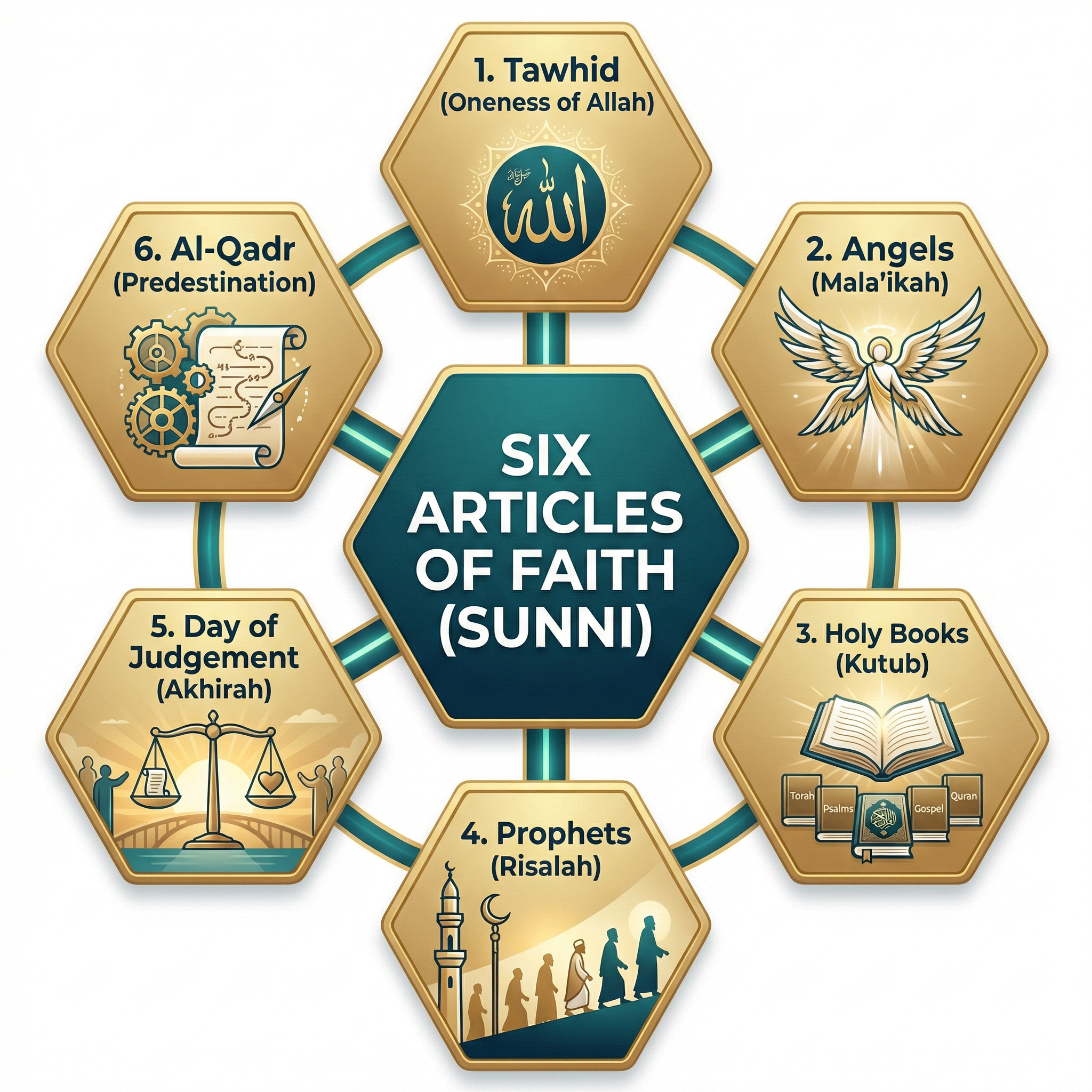
The Six Articles of Faith (Sunni Islam)
What it is: The foundational framework of belief for Sunni Muslims.
Why it matters: These six points summarize the core tenets that a Sunni Muslim must accept to be considered a believer. They provide a structure for understanding God, the unseen world, divine guidance, and the ultimate destiny of humanity. In the exam, candidates must be able to list and explain each article.
Specific Knowledge: Tawhid, Mala'ikah, Kutub, Risalah, Akhirah, Al-Qadr.
The Five Roots of 'Usul ad-Din (Shi'a Islam)
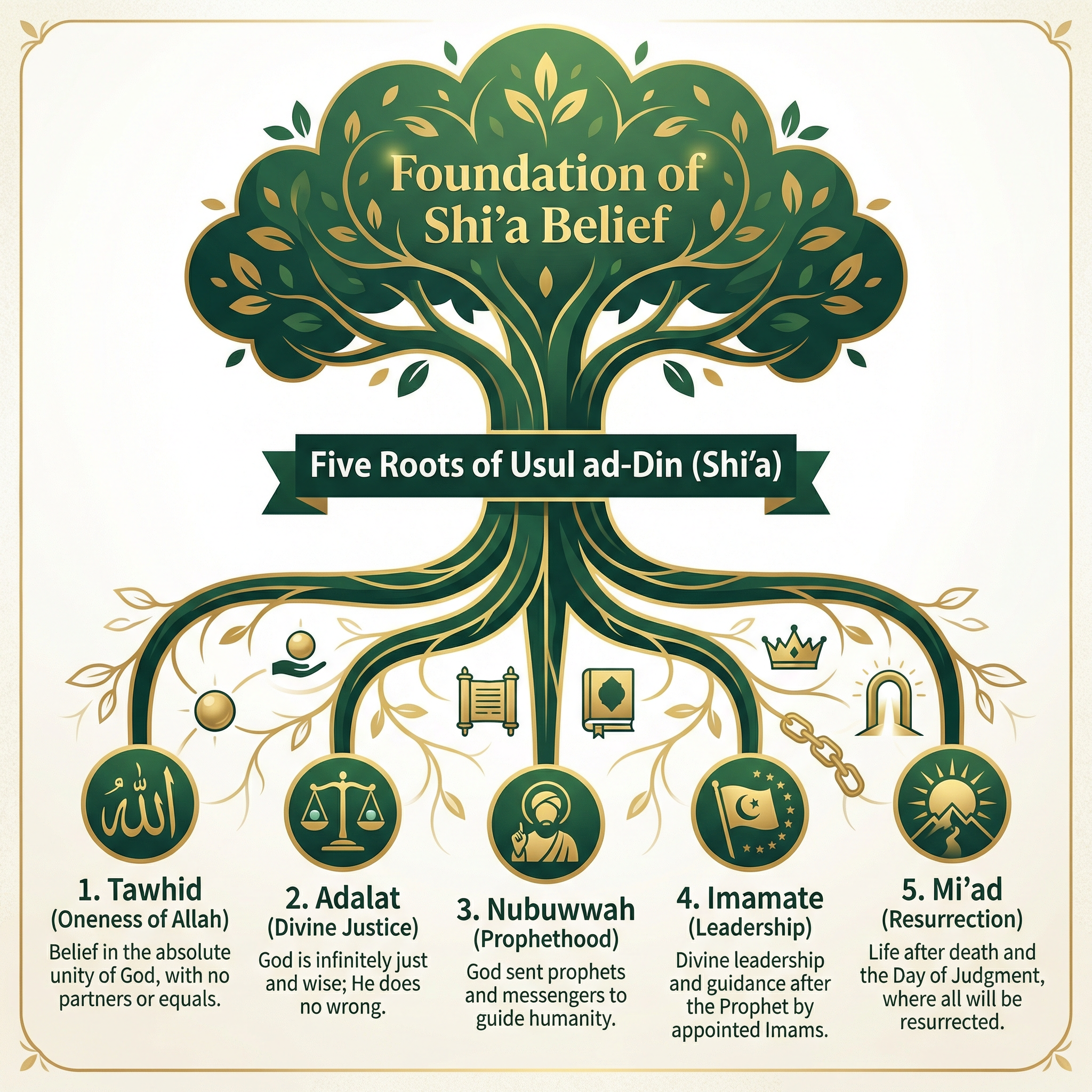
What it is: The foundational framework of belief for Shi'a Muslims.
Why it matters: While sharing common ground with Sunni beliefs (like Tawhid), the Five Roots introduce distinctively Shi'a concepts, namely Adalat (Divine Justice) and the Imamate (Leadership). Contrasting these with the Sunni articles is a high-level skill that examiners credit.
Specific Knowledge: Tawhid, Adalat, Nubuwwah, Imamate, Mi'ad.
Core Theological Concepts
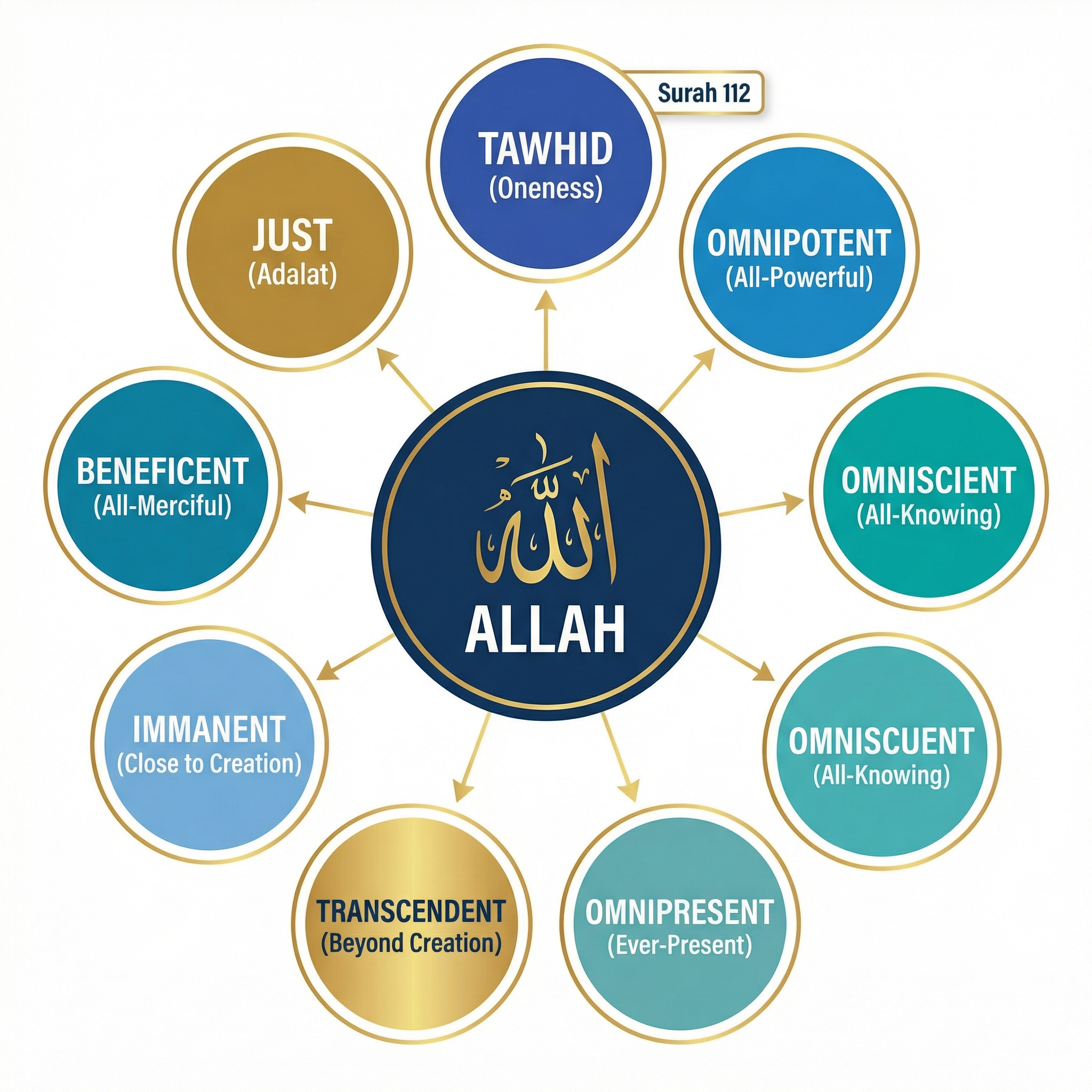
Tawhid (The Oneness of Allah)
What it is: The absolute, indivisible oneness of God. This is the most important belief in Islam.
Why it matters: Tawhid defines Islam as a strictly monotheistic religion. It means Allah has no partners, no children, and no equal. The opposite of Tawhid is Shirk, the sin of idolatry, which is considered the most unforgivable sin. Candidates must be able to explain the implications of Tawhid for worship and life.
Specific Knowledge: Quote Surah 112 (Al-Ikhlas): "Say, ‘He is Allah, the One. Allah, the Absolute. He begets not, nor was He begotten. And there is none comparable to Him.’"
Risalah and Nubuwwah (Prophethood)
What it is: The belief that Allah has sent messengers and prophets to guide humanity.
Why it matters: Prophets are the link between God and humans. They deliver God's message and show people how to live. Understanding the role of key prophets, especially Adam, Ibrahim, Musa, Isa, and the final prophet, Muhammad, is crucial.
Impact: The belief in Prophet Muhammad as the 'Seal of the Prophets' establishes the Qur'an as the final and complete revelation.
Akhirah and Mi'ad (The Afterlife)
What it is: The belief in a life after death, including the Day of Judgement, heaven (Jannah), and hell (Jahannam).
Why it matters: This belief provides a moral framework for a Muslim's life. The knowledge that they will be held accountable for their deeds by Allah is a powerful motivation for righteous living.
Impact: Influences daily actions, from prayer and charity to ethical conduct, as Muslims strive to earn a place in Jannah.