Study Notes
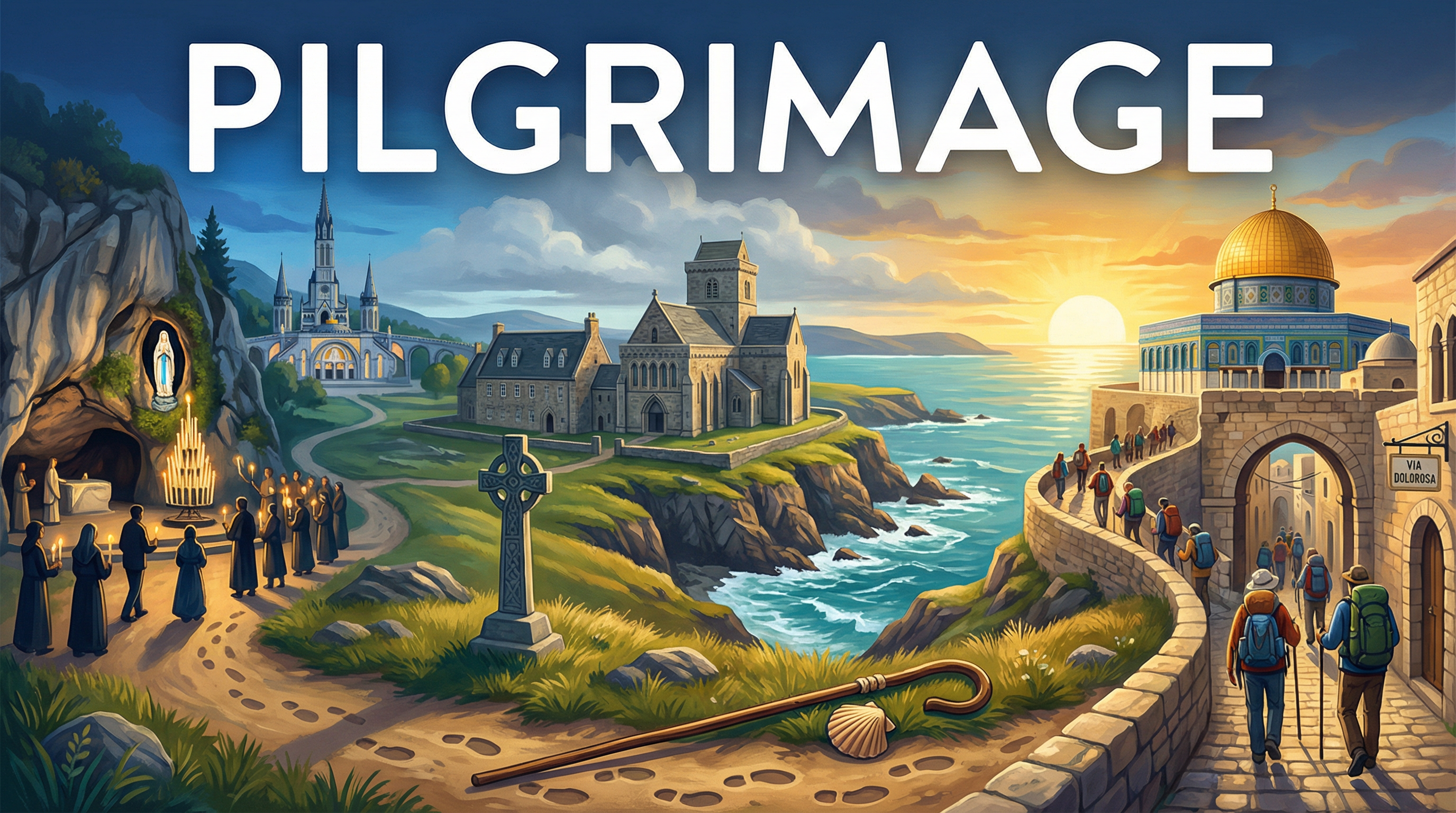
Overview
Pilgrimage, a spiritual journey to a place of religious significance, is a core component of the WJEC GCSE Religious Studies specification. Examiners expect candidates to demonstrate detailed knowledge of specific Christian pilgrimage sites (AO1) and to critically evaluate the necessity and meaning of pilgrimage from different Christian perspectives (AO2). This guide provides a comprehensive breakdown of the three key sites—Lourdes, Iona, and Jerusalem—and explores the theological arguments surrounding them. A successful candidate will move beyond simple descriptions, using precise terminology and citing Sources of Wisdom to construct well-supported arguments. This topic offers a rich opportunity to analyse how faith is expressed through action, place, and community, and to understand the diversity of belief within Christianity.
Key Pilgrimage Sites
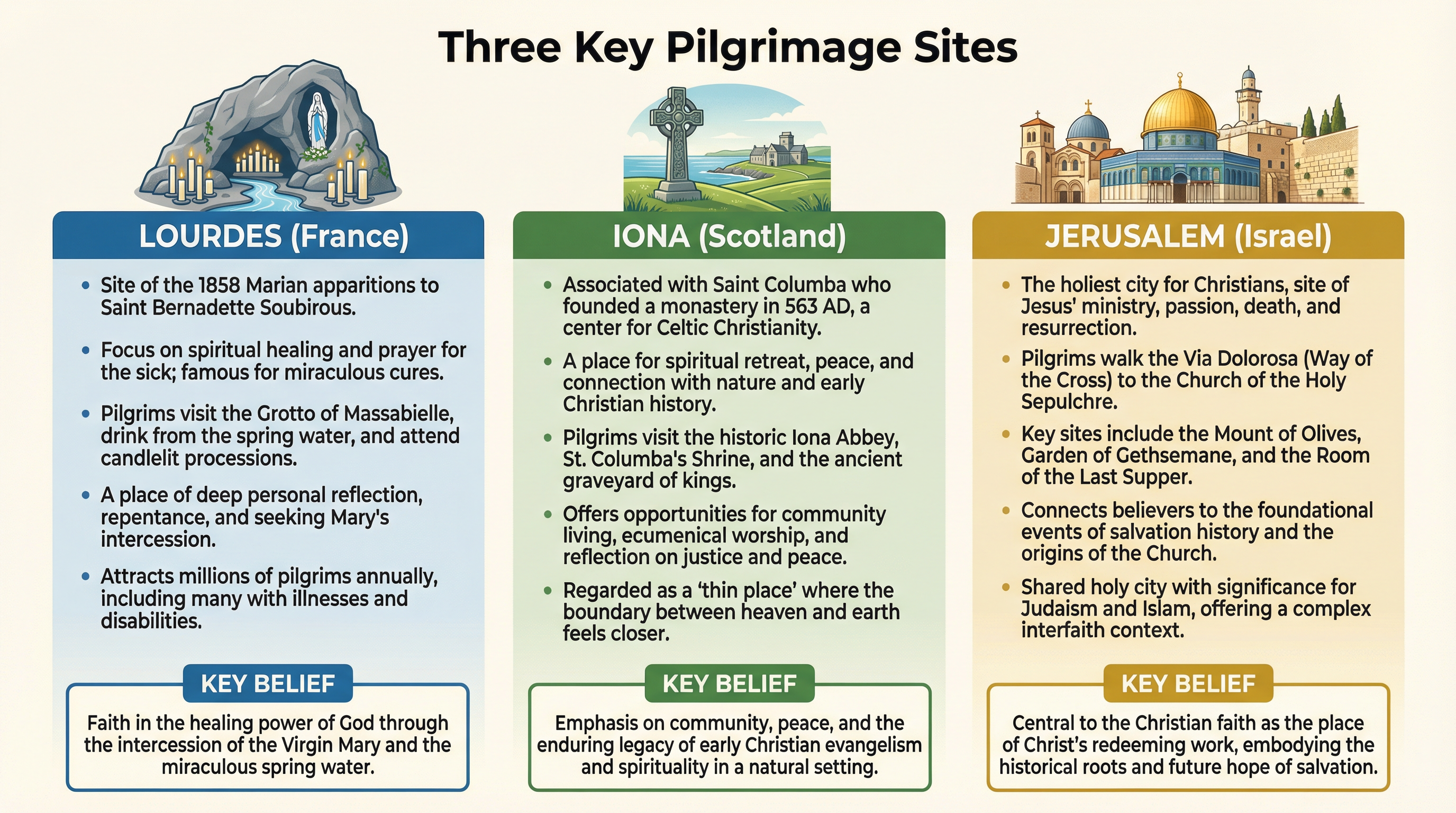
Lourdes, France
What happened: In 1858, a 14-year-old girl named Bernadette Soubirous reported eighteen apparitions of the Virgin Mary in the Grotto of Massabielle. During one apparition, a spring of water emerged.
Why it matters: Lourdes is now one of the world's most prominent Marian shrines, attracting millions of pilgrims annually. Its primary focus is on healing, both spiritual and physical. The Catholic Church has officially recognized 69 miraculous cures associated with the site.
Specific Knowledge: Candidates must know about the Grotto, the candlelit processions, bathing in the pools, and the role of the water. The key belief is in God's power working through the intercession of Mary.
Iona, Scotland
What happened: In 563 AD, St. Columba, an Irish monk, founded a monastery on this small island, establishing it as a major centre for Celtic Christianity and mission to Scotland and Northern England.
Why it matters: Iona represents a different form of pilgrimage, focused on community, peace, and connection with nature. It is known as a 'thin place,' where the gap between heaven and earth feels small. It is particularly significant for Protestant pilgrims.
Specific Knowledge: Know about St. Columba, the Iona Community (founded in 1938 by George MacLeod), the restored Abbey, and the focus on ecumenical worship, peace, and social justice.
Jerusalem, Israel
What happened: Jerusalem is the site of Jesus's final week, including his crucifixion, death, and resurrection. It is the foundational location of Christianity.
Why it matters: For Christians, pilgrimage to Jerusalem is an act of connecting with the historical roots of their faith. It makes the Gospel narratives tangible.
Specific Knowledge: Candidates must be able to describe the Via Dolorosa (the Way of the Cross), the Church of the Holy Sepulchre, the Garden of Gethsemane, and the Mount of Olives. The biblical precedent is Luke 2:41, where Jesus's family travels to Jerusalem for Passover.
Second-Order Concepts
The Debate on Necessity
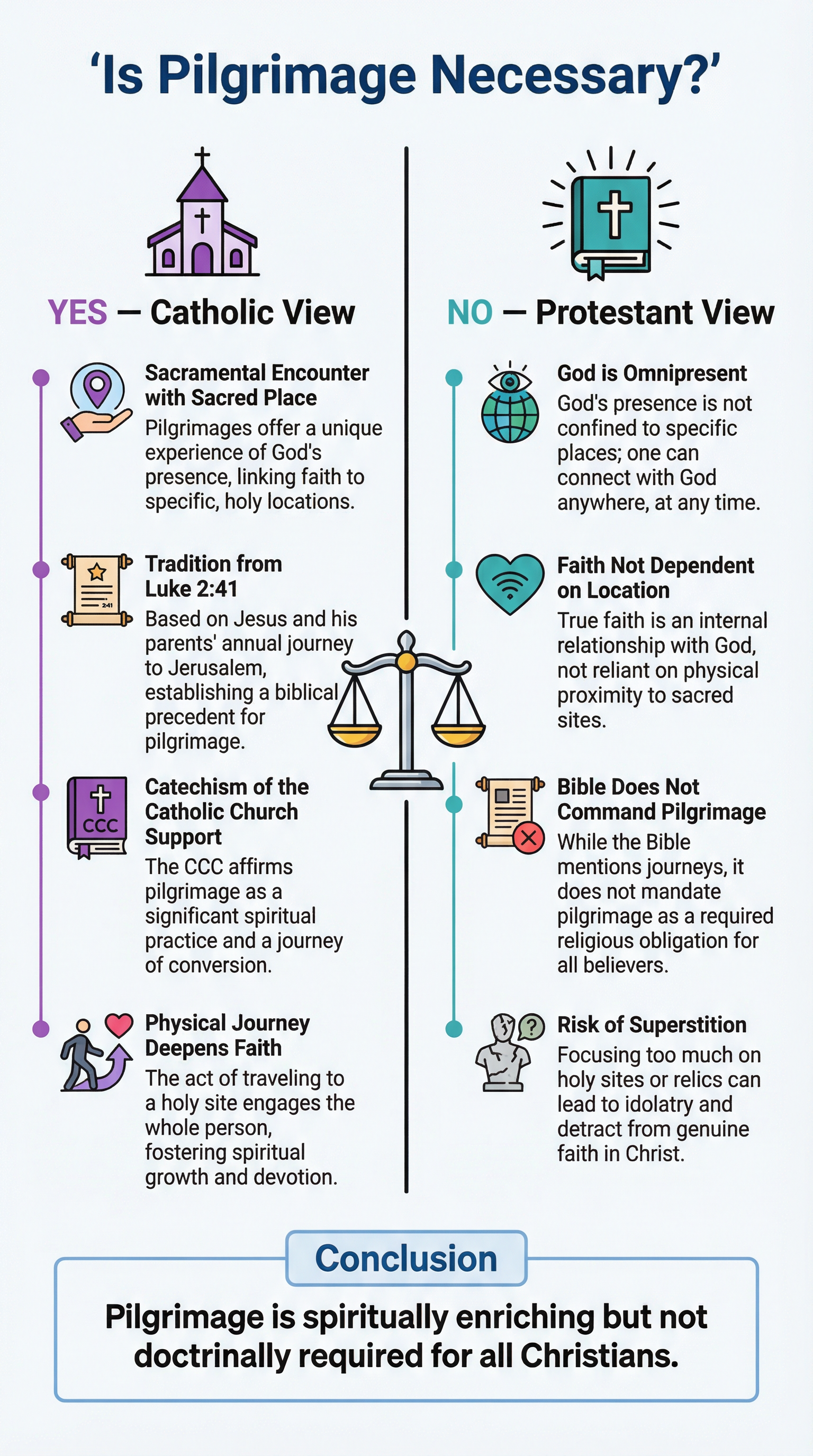
This is the core of AO2 for this topic. Is pilgrimage required for a Christian?
Catholic View (Yes, it is valuable): The Catechism of the Catholic Church encourages pilgrimage. It is seen as a journey of conversion and a way to encounter God in a special, sacramental way. Physical actions and places can be channels of divine grace. The tradition is rooted in scripture (Luke 2:41).
Protestant View (No, it is not essential): Most Protestant traditions emphasize God's omnipresence—He can be worshipped anywhere. There is a concern that focusing on specific sites can lead to superstition or idolatry, a view strongly articulated by Reformers like John Calvin. Faith is an internal matter of the heart, not dependent on physical location.
Significance
Pilgrimage is significant as it demonstrates 'faith in action'. It shows how belief motivates believers to undertake demanding physical and spiritual journeys. It also highlights the diversity within Christianity, contrasting Catholic sacramental views with Protestant emphasis on scripture and internal faith."