Study Notes
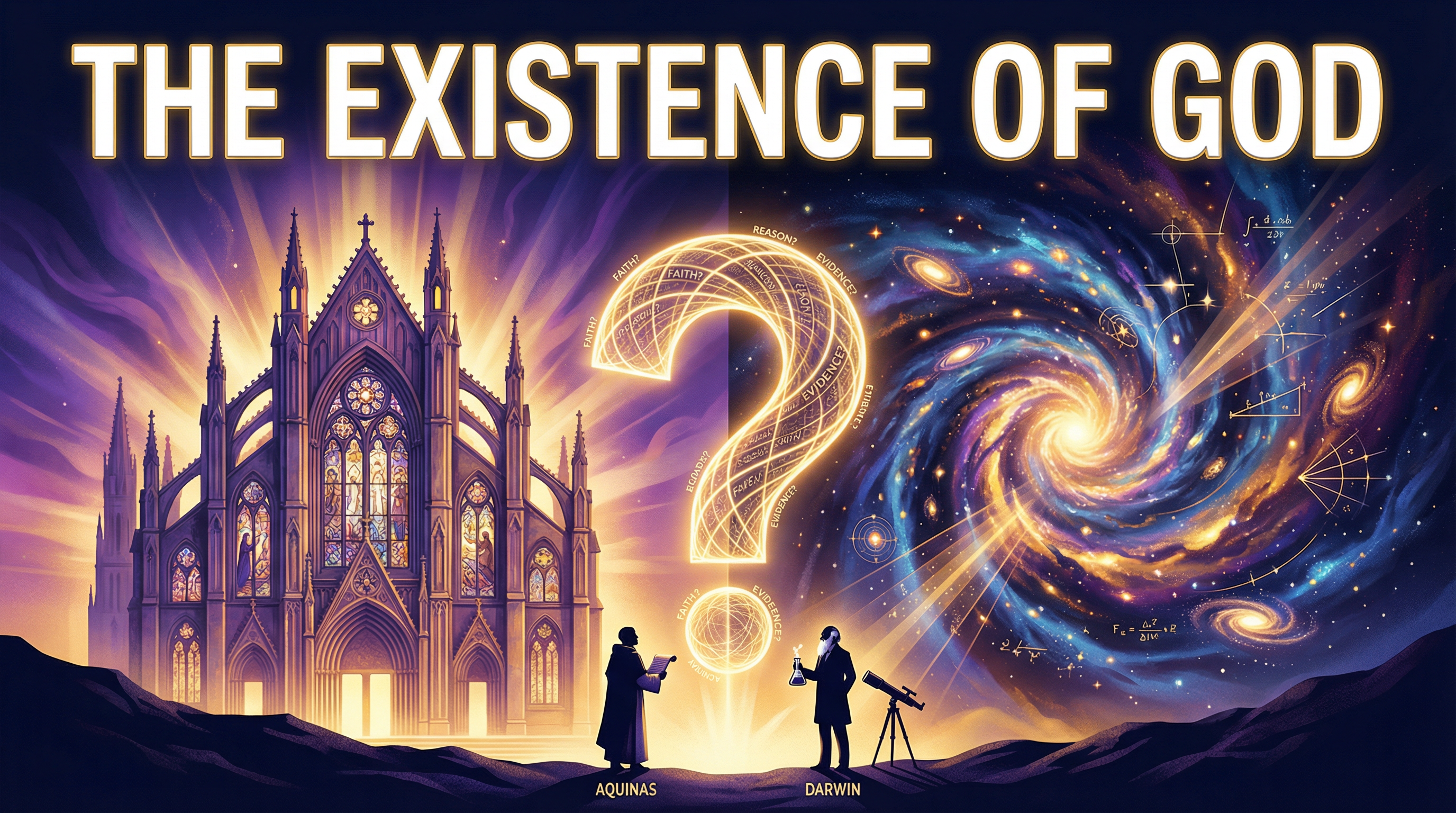
Overview
This unit explores the fundamental philosophical questions surrounding the existence of God, a cornerstone of WJEC Unit 1. Examiners expect candidates to move beyond simple descriptions of arguments to a sophisticated evaluation of their strengths and weaknesses. This involves analysing the classical Teleological and Cosmological arguments, contrasting them with scientific theories like the Big Bang and Evolution, and grappling with the significant challenge posed by the Problem of Evil. A key skill is the ability to use Sources of Wisdom and Authority, such as the Bible, and to understand how different Christian and Jewish perspectives might interpret these complex ideas. High-level responses will demonstrate nuance, for instance, by discussing how faith and science can be seen as compatible, rather than mutually exclusive. This guide will equip you with the specific knowledge, analytical frameworks, and exam techniques needed to achieve the highest marks.
Key Arguments & Concepts
The Teleological Argument (The Design Argument)
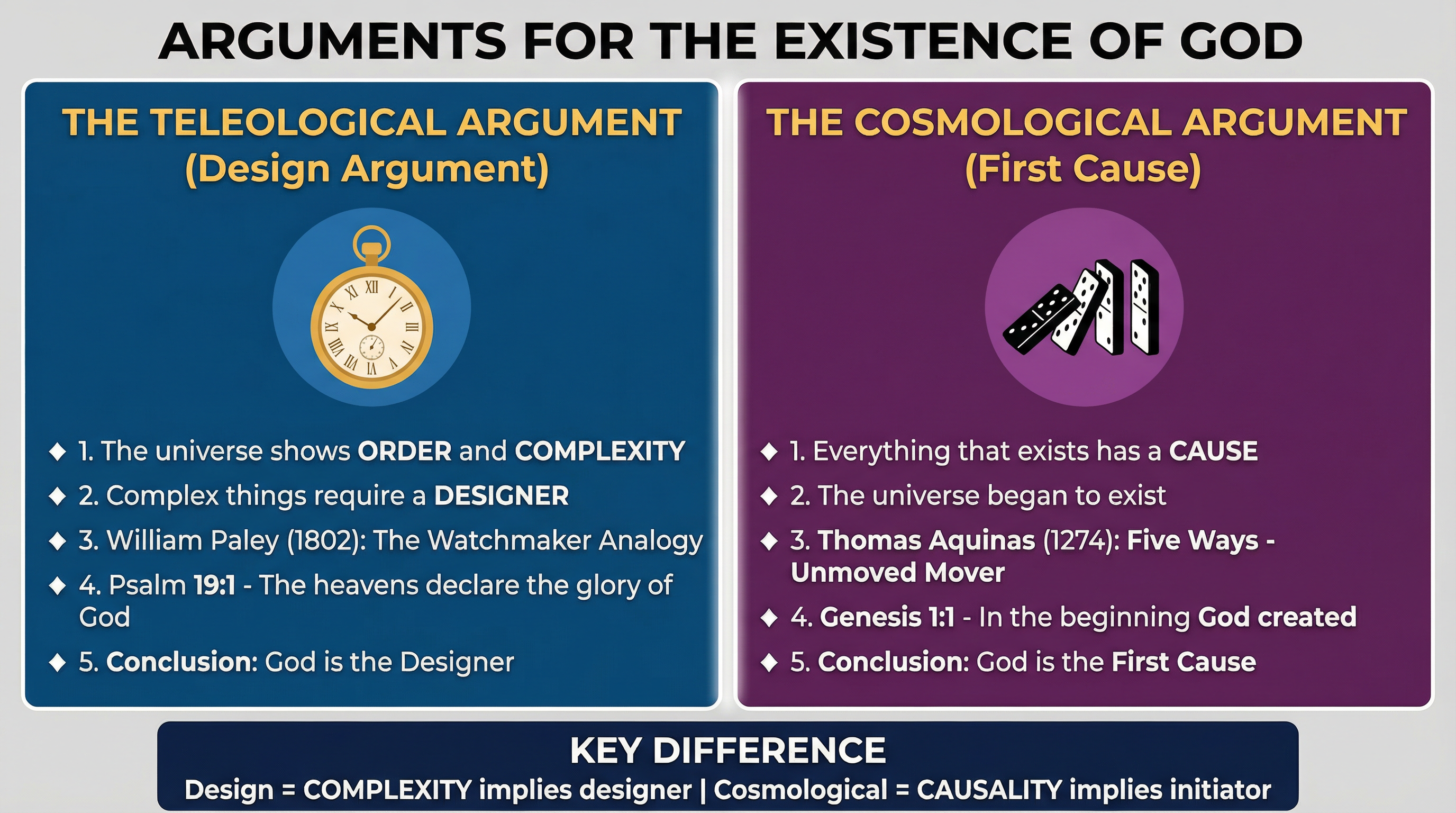
What it is: This argument claims that the universe displays such intricate order, purpose, and complexity that it must have been designed by an intelligent creator. The intricacy of a human eye or the regular orbits of planets are not seen as products of random chance.
Why it matters: This is a classic argument that examiners love to see discussed. It is an a posteriori argument, meaning it is based on empirical evidence and observation of the world.
Specific Knowledge: William Paley (1802) and his Watchmaker Analogy are essential. If you found a watch, you would infer a watchmaker. Similarly, the complexity of the universe implies a Divine Watchmaker. Also, Psalm 19:1: "The heavens declare the glory of God; the skies proclaim the work of his hands."
The Cosmological Argument (The First Cause Argument)
What it is: This argument posits that everything that exists must have a cause. This chain of cause-and-effect cannot go back infinitely; there must have been a first, uncaused cause that started everything. This First Cause is identified as God.
Why it matters: Like the Teleological argument, this is a foundational concept for this topic. It provides a logical framework for God as the initiator of the universe.
Specific Knowledge: St. Thomas Aquinas (c. 1225-1274) and his Five Ways. The first three ways (the Unmoved Mover, the First Cause, the Argument from Contingency) are all versions of the Cosmological Argument. Genesis 1:1: "In the beginning God created the heavens and the earth."
The Problem of Evil
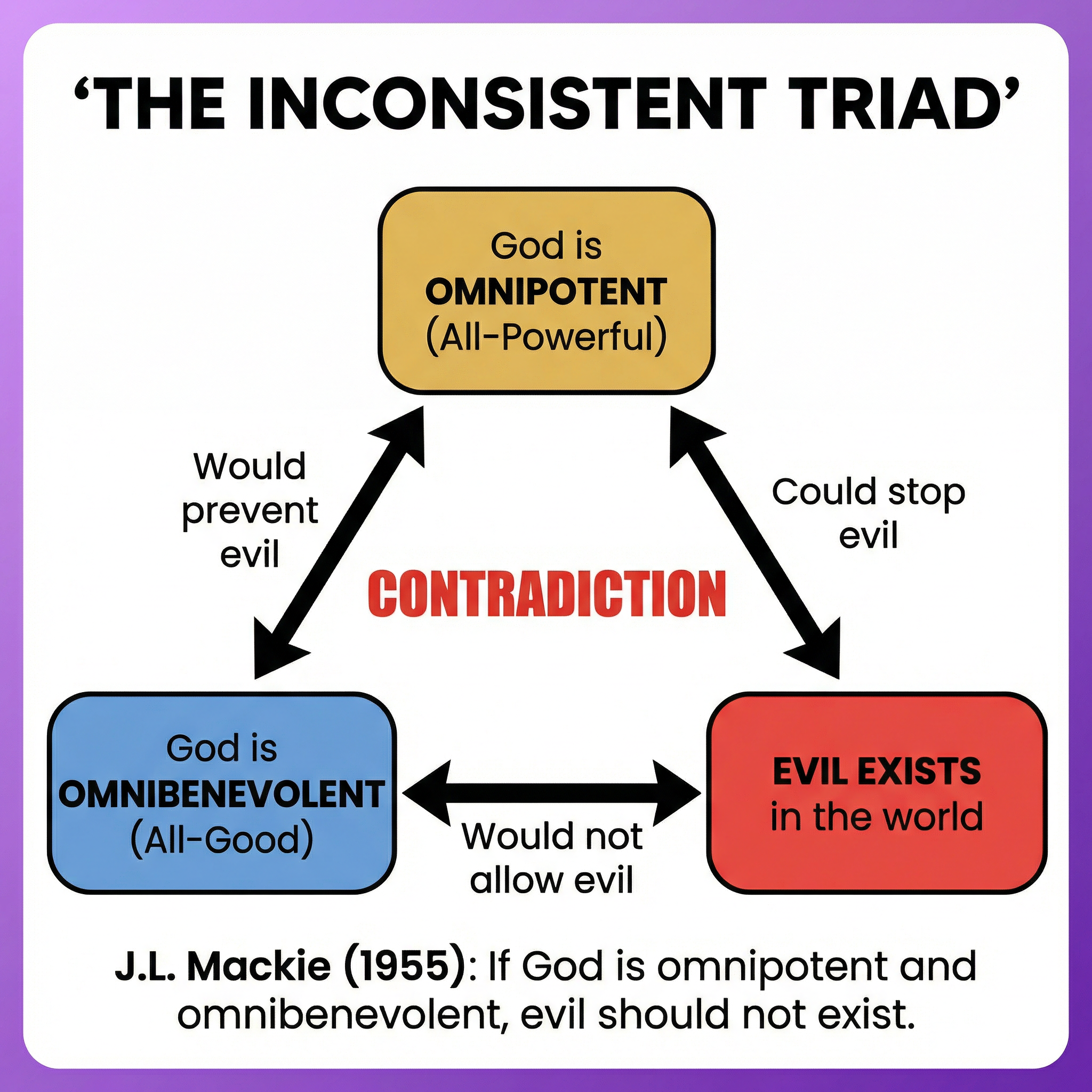
What it is: This is the primary argument against the existence of a classical theistic God. It questions how an all-powerful (omnipotent) and all-good (omnibenevolent) God can coexist with the evil and suffering present in the world.
Why it matters: This is the most common and powerful counter-argument. Your ability to explain and evaluate it is crucial for achieving high marks in 15-mark questions.
Specific Knowledge: The Inconsistent Triad, as formulated by philosopher J.L. Mackie. The three points are: God is Omnipotent, God is Omnibenevolent, and Evil Exists. Mackie argues these three statements cannot logically co-exist. You must also distinguish between Moral Evil (suffering caused by humans, e.g., war, murder) and Natural Evil (suffering caused by the natural world, e.g., earthquakes, disease).
Scientific Explanations
What it is: Scientific theories like the Big Bang Theory and the Theory of Evolution by Natural Selection offer alternative explanations for the origins of the universe and life, which do not require a divine creator.
Why it matters: Candidates are expected to evaluate the relationship between science and religion. A common mistake is to present them as being in total conflict. High-level responses will explore the idea of compatibility.
Specific Knowledge: The Big Bang Theory states the universe began from a hot, dense point around 13.8 billion years ago. Evolution explains the development of life through processes like natural selection and genetic mutation. A key concept is Theistic Evolution, the view that God used these scientific processes as the mechanism for creation.
Key Individuals
William Paley
Role: Christian philosopher and author of the Watchmaker analogy.
Key Actions: In his book Natural Theology (1802), he articulated the most famous version of the Teleological Argument.
Impact: His analogy remains the most accessible and widely-cited example of the Design Argument, making it essential knowledge for this topic.
St. Thomas Aquinas
Role: Influential medieval philosopher and theologian.
Key Actions: Formulated the 'Five Ways,' which are five logical arguments for the existence of God. The first three form the basis of the Cosmological Argument.
Impact: Aquinas provided the philosophical bedrock for many Christian arguments for God's existence. His work is a cornerstone of Catholic theology and a key source of wisdom for exam answers.
J.L. Mackie
Role: 20th-century Australian philosopher.
Key Actions: Developed the 'Inconsistent Triad' to logically formulate the Problem of Evil.
Impact: Mackie provided a clear, logical framework for the Problem of Evil, which is now a standard part of the philosophical debate and a required element for GCSE evaluation.