Study Notes
Overview
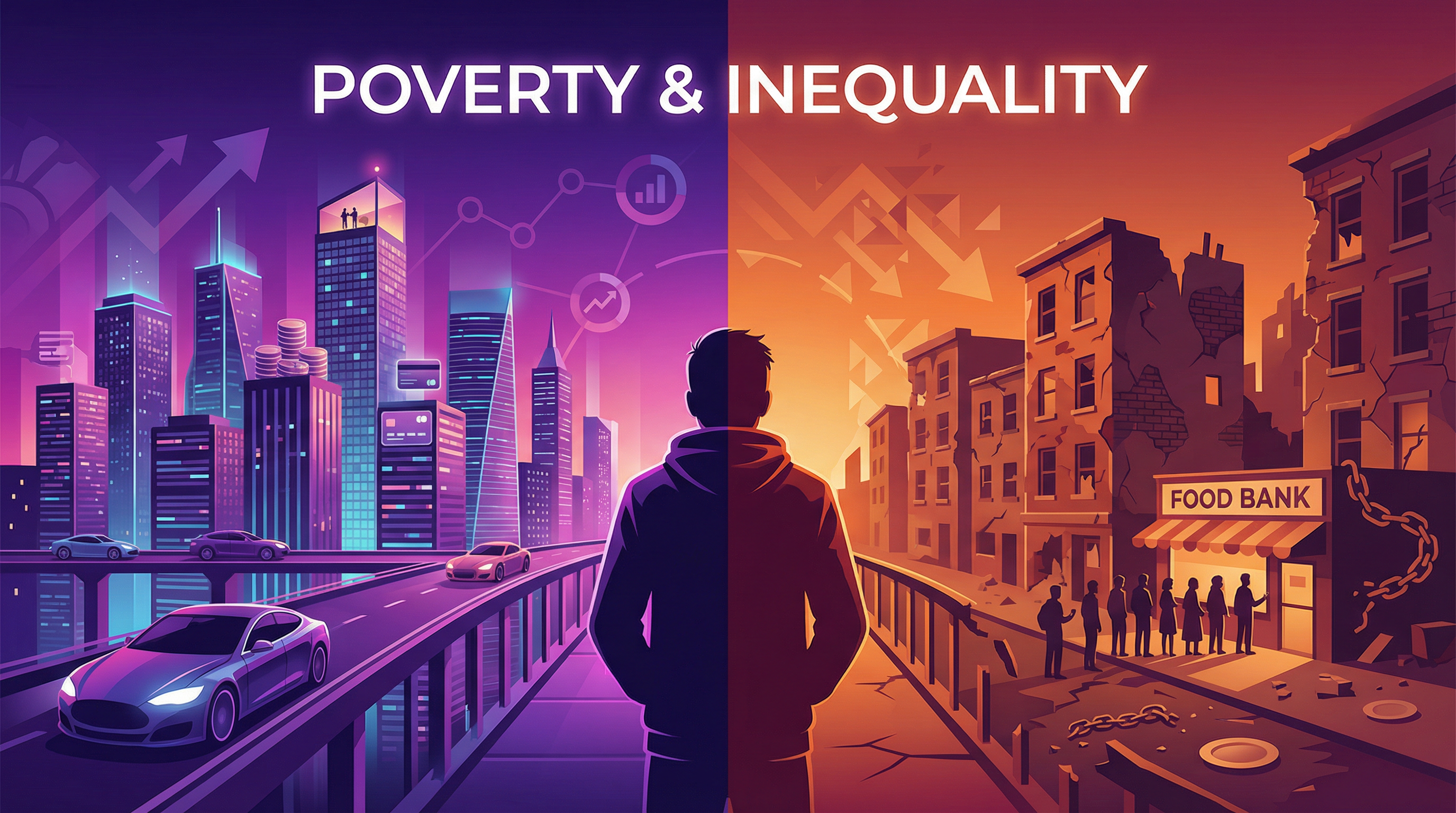
Poverty is a cornerstone of the WJEC GCSE Sociology specification, offering a lens through which to understand social stratification, inequality, and the structure of British society. Examiners expect candidates to move beyond common-sense understandings to a nuanced, theory-driven analysis. This guide will equip you with the essential knowledge to deconstruct this topic, focusing on the crucial distinction between absolute and relative poverty, the distribution of poverty across different social groups, and the central debate between cultural and structural explanations. Mastery of this topic is not just about describing hardship; it is about applying sociological concepts and theories to explain why poverty persists. High-level responses will demonstrate a confident use of terminology, an ability to evaluate competing perspectives, and a skill for applying knowledge to specific exam questions, particularly the higher-mark essay questions. This guide will break down these components, providing a clear pathway to securing maximum credit.
Defining and Measuring Poverty
Absolute vs. Relative Poverty
What is it?: The most fundamental distinction you must make. Absolute poverty is a lack of the basic necessities required for physical survival, such as food, clean water, and shelter. It is measured against a fixed standard, often an income level like the World Bank's '$1.90 a day'. In contrast, relative poverty is defined in relation to the prevailing living standards of a particular society. It is about social exclusion – being unable to afford the goods and activities that are considered normal by the majority.
Why it matters: For the WJEC exam, while you must know the definition of absolute poverty, your focus should be on relative poverty as it is far more relevant to the contemporary UK. Credit is consistently given for candidates who can clearly explain this difference.
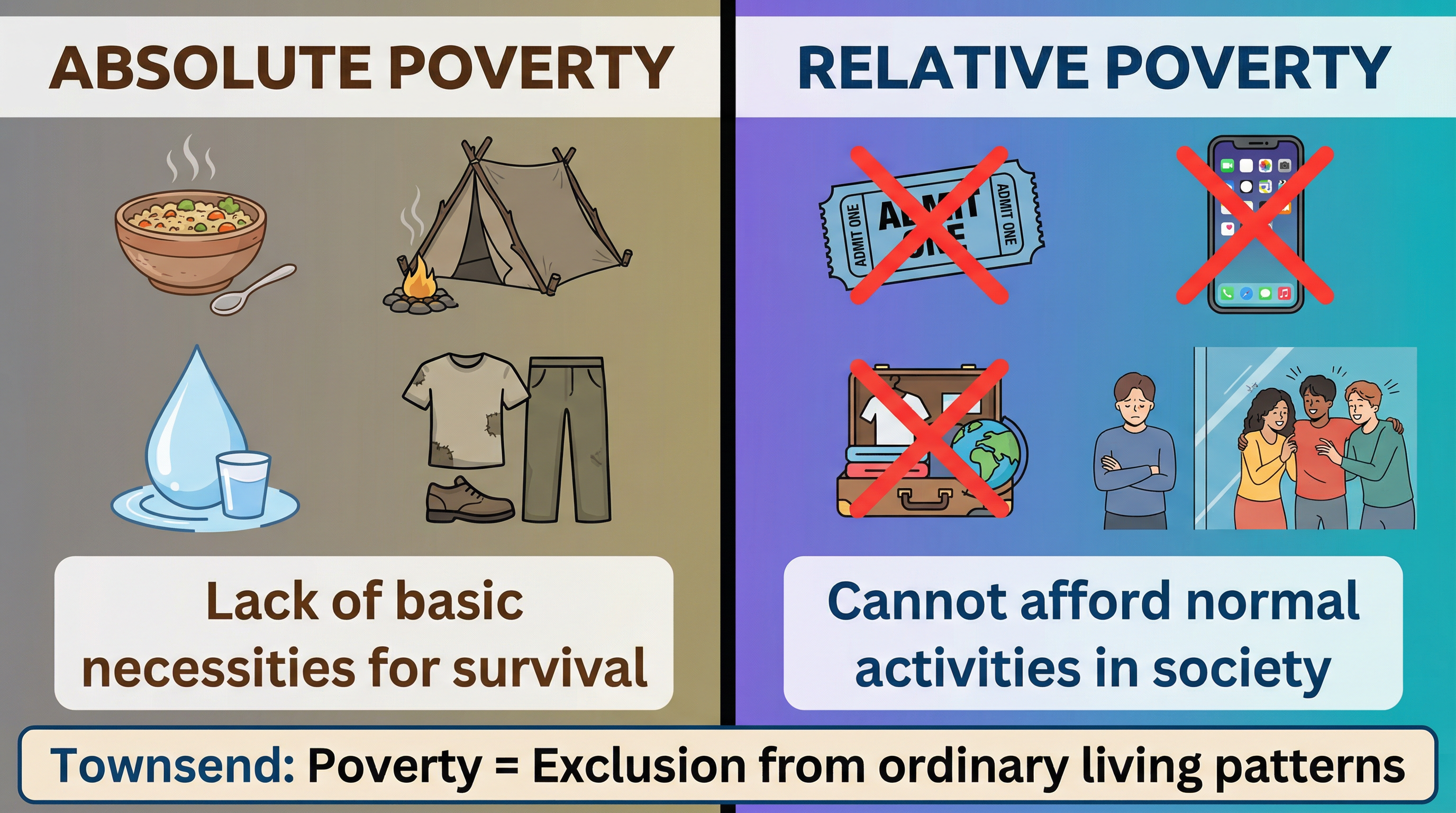
Specific Knowledge: The key thinker for relative poverty is Peter Townsend (1979). He defined poverty as being unable to participate in the 'ordinary living patterns, customs and activities' of society. Townsend developed a deprivation index based on a list of items and activities (e.g., having a roast dinner, going on holiday). Those who could not afford a certain number of these items were considered to be in poverty. This is a crucial study to name-drop in your exam answers.
Other Measures of Poverty
- Subjective Poverty: This refers to whether or not people feel they are poor. It is a self-defined measure.
- Social Exclusion: A broader concept than just low income, referring to the process of being shut out from the social, economic, political, and cultural life of society.
The Distribution of Poverty
Examiners expect you to know that poverty is not randomly distributed. Certain social groups are far more likely to experience it than others. You must be able to identify these groups and explain the reasons why.
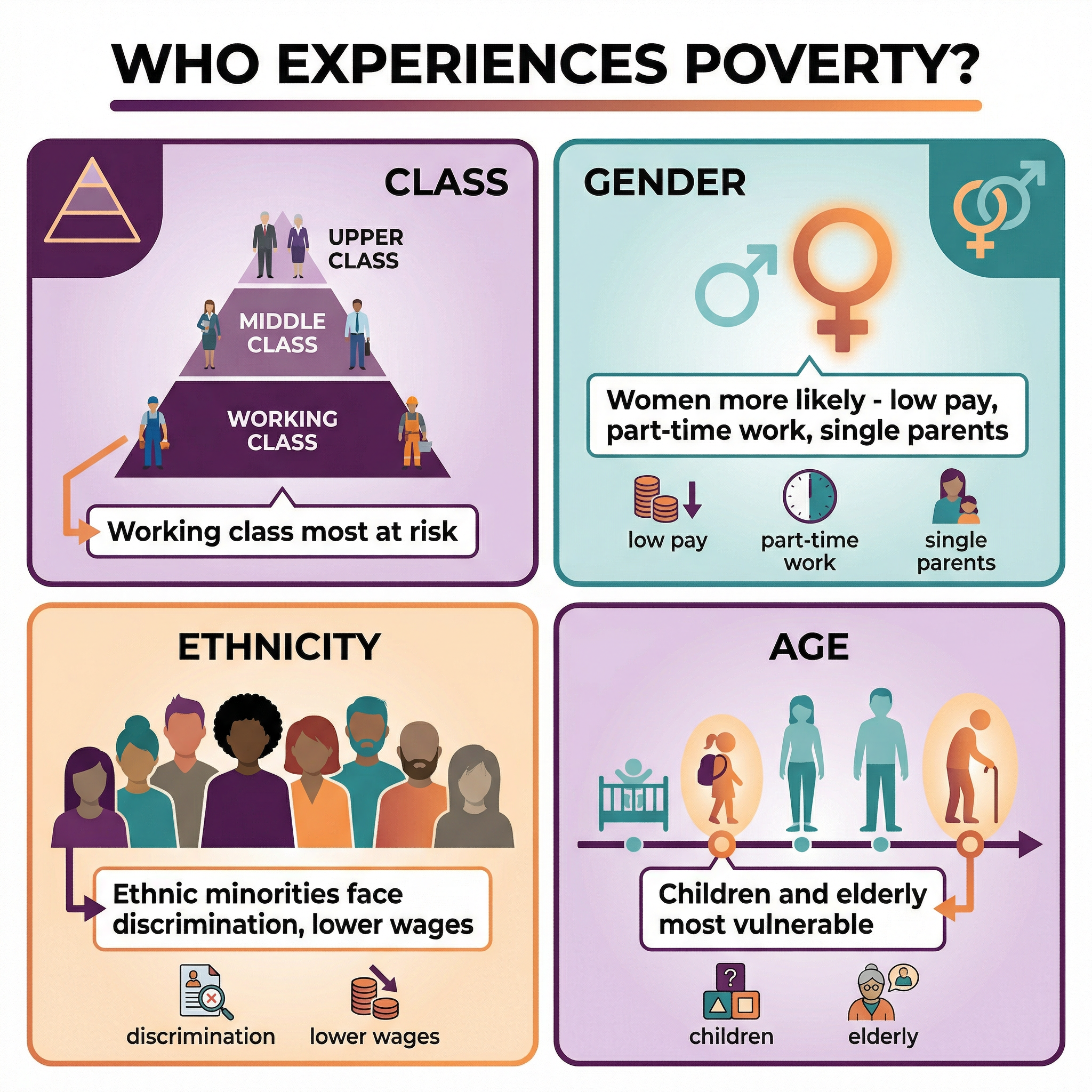
- Social Class: The working class has a significantly higher risk of poverty than the middle or upper classes. This is linked to lower wages, higher rates of unemployment, and more insecure job roles (e.g., zero-hours contracts).
- Gender: Women are more likely to experience poverty than men. This is often explained by the gender pay gap, women being concentrated in low-paid, part-time work (the 'five C's': cleaning, catering, caring, cashiering, and clerical work), and the financial burdens associated with being the primary caregiver for children, especially in lone-parent households.
- Ethnicity: Ethnic minority groups in the UK have a higher risk of poverty. Sociologists point to factors such as racial discrimination in the labour market, language barriers, and, for some groups, a higher likelihood of living in large families.
- Age: Children and pensioners are the two age groups most vulnerable to poverty. Child poverty is directly linked to the income of their parents, while pensioner poverty is often a result of inadequate state pensions and a reliance on state benefits.
Explanations for Poverty
This is the core of the debate and where you can earn significant AO3 (evaluation) marks. You must be able to explain and critique both cultural and structural explanations.
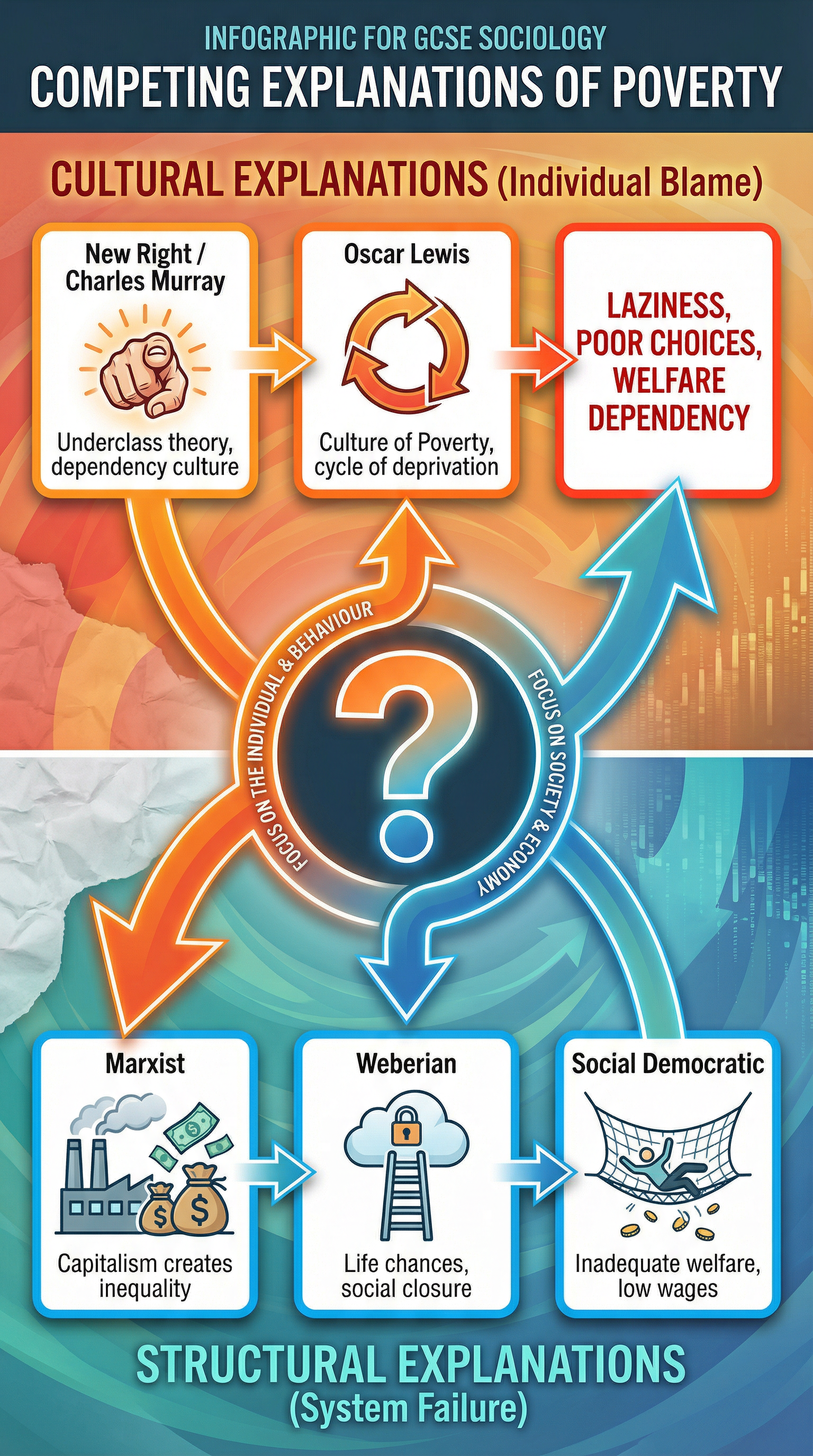
Cultural Explanations (The 'Individual Blame' Approach)
These theories locate the cause of poverty within the individuals or groups who experience it, focusing on their norms, values, and lifestyles.
- The Culture of Poverty (Oscar Lewis, 1966): Lewis, an anthropologist, argued that a specific 'culture of poverty' exists among the long-term poor. This subculture is characterised by values such as fatalism (a belief that you cannot change your situation), immediate gratification (seeking pleasure now rather than planning for the future), and a present-time orientation. He argued these values are passed down through generations, creating a self-perpetuating cycle of deprivation.
- The Underclass (Charles Murray, 1989): The New Right thinker Charles Murray brought this idea to the UK, arguing that an 'underclass' exists below the main class structure. He claimed this group is characterised by high rates of lone parenthood, crime, and an unwillingness to work. Murray argued that the welfare state is to blame, as it creates a dependency culture where people have no incentive to be self-reliant.
Structural Explanations (The 'System Blame' Approach)
These theories reject the idea of individual blame and instead locate the cause of poverty within the economic and social structure of society.
- Marxist Theory: Marxists see poverty as an inevitable consequence of a capitalist system. The ruling class (bourgeoisie) exploit the working class (proletariat) by paying them the lowest possible wages to maximise their own profits. The existence of a 'reserve army of labour' (the unemployed) keeps wages low and workers compliant. For Marxists, poverty can only be eradicated by replacing capitalism with communism.
- Weberian Theory: Max Weber's ideas can be used to explain poverty through the concepts of life chances and social closure. Your position in the market (class), your social standing (status), and your political influence (party) all affect your life chances. Those in privileged positions use social closure to protect their advantages (e.g., through expensive school fees or professional entry exams), limiting the opportunities for those at the bottom.
- Social Democratic Theory: This perspective offers a middle ground. It accepts the existence of capitalism but argues that its negative effects, like poverty, can be reduced through government intervention. Social democrats advocate for a strong welfare state, progressive taxation, a higher minimum wage, and investment in public services like education and health to create greater equality of opportunity. They would argue that poverty in the UK is a result of the failure of successive governments to adequately address inequality.