Study Notes
Overview
This topic requires a critical understanding of food provenance, focusing on the environmental impact of food production and processing. Candidates must analyse 'food miles', carbon footprints, and the benefits of buying locally produced, seasonal food versus global imports. Examiners expect you to make explicit links between these concepts and wider issues like climate change, resource depletion, and food security. A strong answer will move beyond simple definitions to offer a nuanced analysis, demonstrating an ability to weigh the pros and cons of different food systems. For example, while imported food increases food miles, producing the same food out of season in the UK using heated greenhouses can have an even larger carbon footprint. Mastery of this topic is demonstrated by the ability to use specific, named examples and to structure arguments logically, particularly in extended response questions where AO4 (analysis and evaluation) is heavily weighted.
Key Concepts & Debates
Food Miles vs. Carbon Footprint
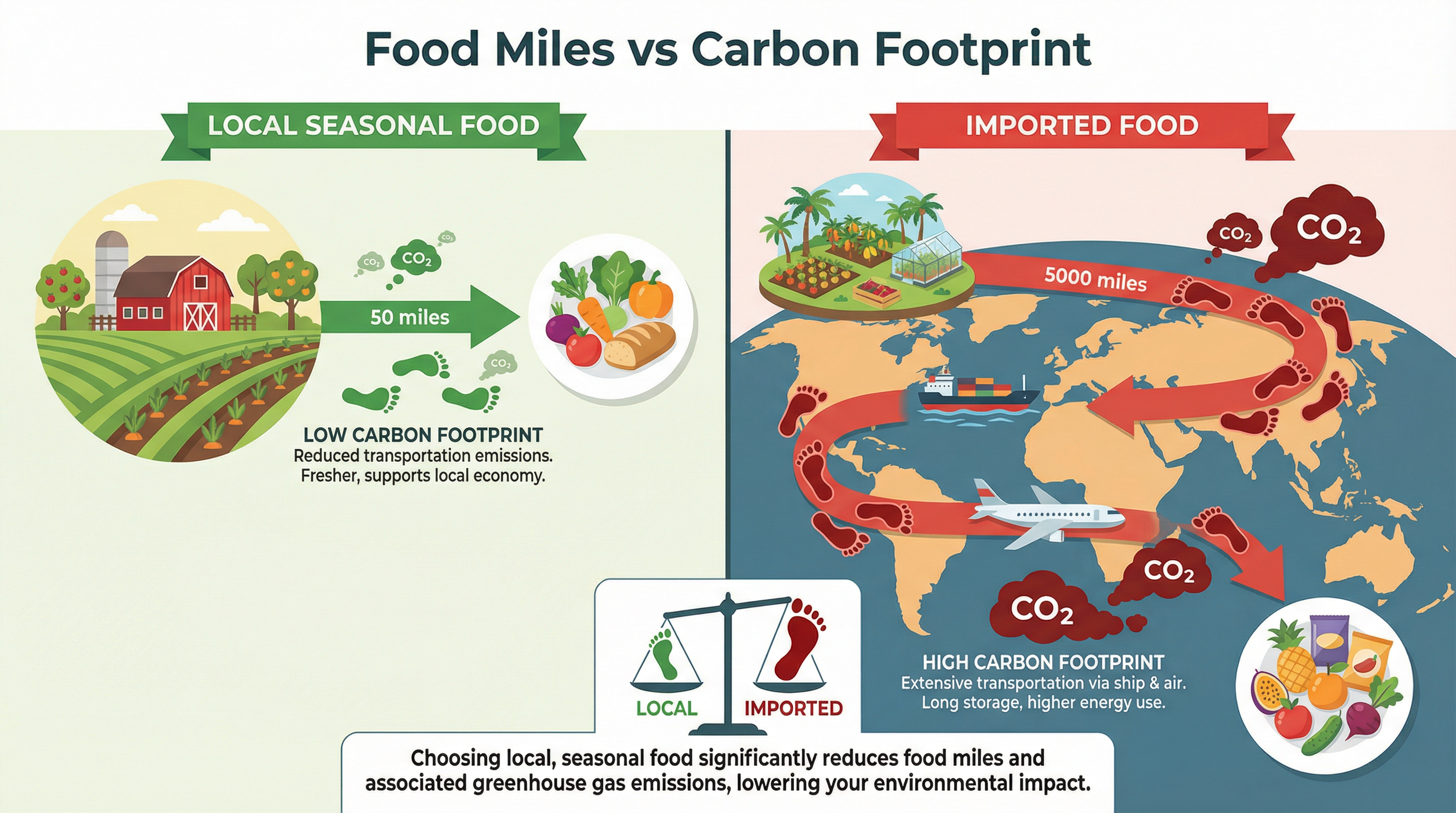
What is it?: 'Food miles' refers to the distance food is transported from the point of production to the consumer. 'Carbon footprint' is a broader measure, calculating the total greenhouse gas emissions generated throughout the entire lifecycle of a food product—from farm to fork. This includes cultivation, processing, packaging, transport, and waste.
Why it matters: Examiners award credit for distinguishing between these two concepts. A common mistake is to assume high food miles always equate to a high carbon footprint. Candidates who can explain the nuance—for instance, by comparing energy-intensive UK hothouses to naturally grown Spanish produce—will access higher mark bands.
Specific Knowledge: Candidates should be able to chain their reasoning: Transport (lorries, ships, planes) → Burns Fossil Fuels → Releases CO2 → Contributes to the Greenhouse Effect → Leads to Global Warming.
Seasonality
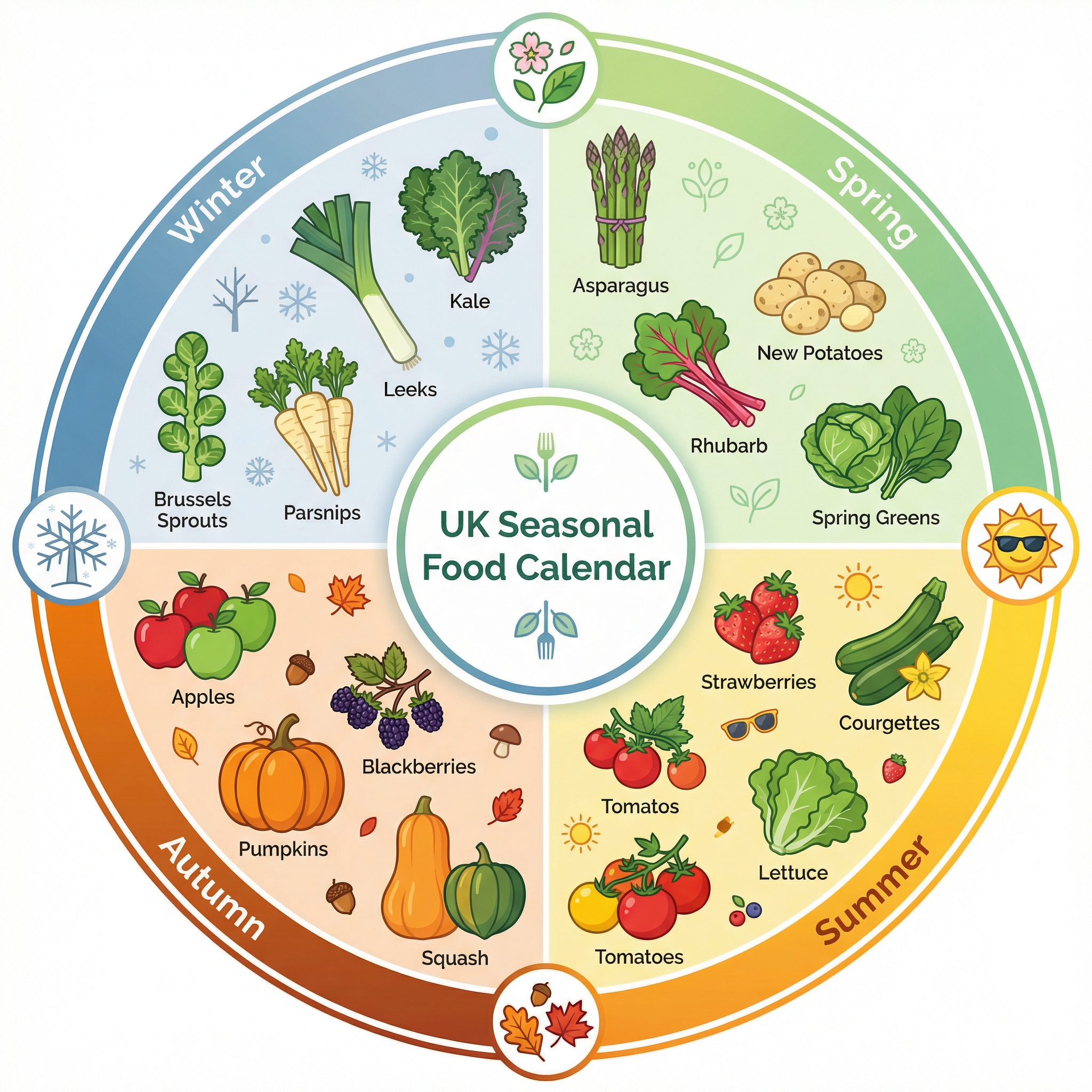
What is it?: Seasonality refers to the time of year when a particular food is at its natural peak for harvesting in a specific climate. For the UK, this means strawberries in summer, apples in autumn, and root vegetables in winter.
Why it matters: Buying seasonal, local produce typically reduces the environmental impact. It avoids the high energy consumption of heated greenhouses (for out-of-season local produce) and the emissions from long-distance transport (for imported produce). It also often means fresher, more nutritious food.
Specific Knowledge: Be ready to provide named examples of seasonal UK produce for each of the four seasons to support your arguments.
Sustainability Schemes
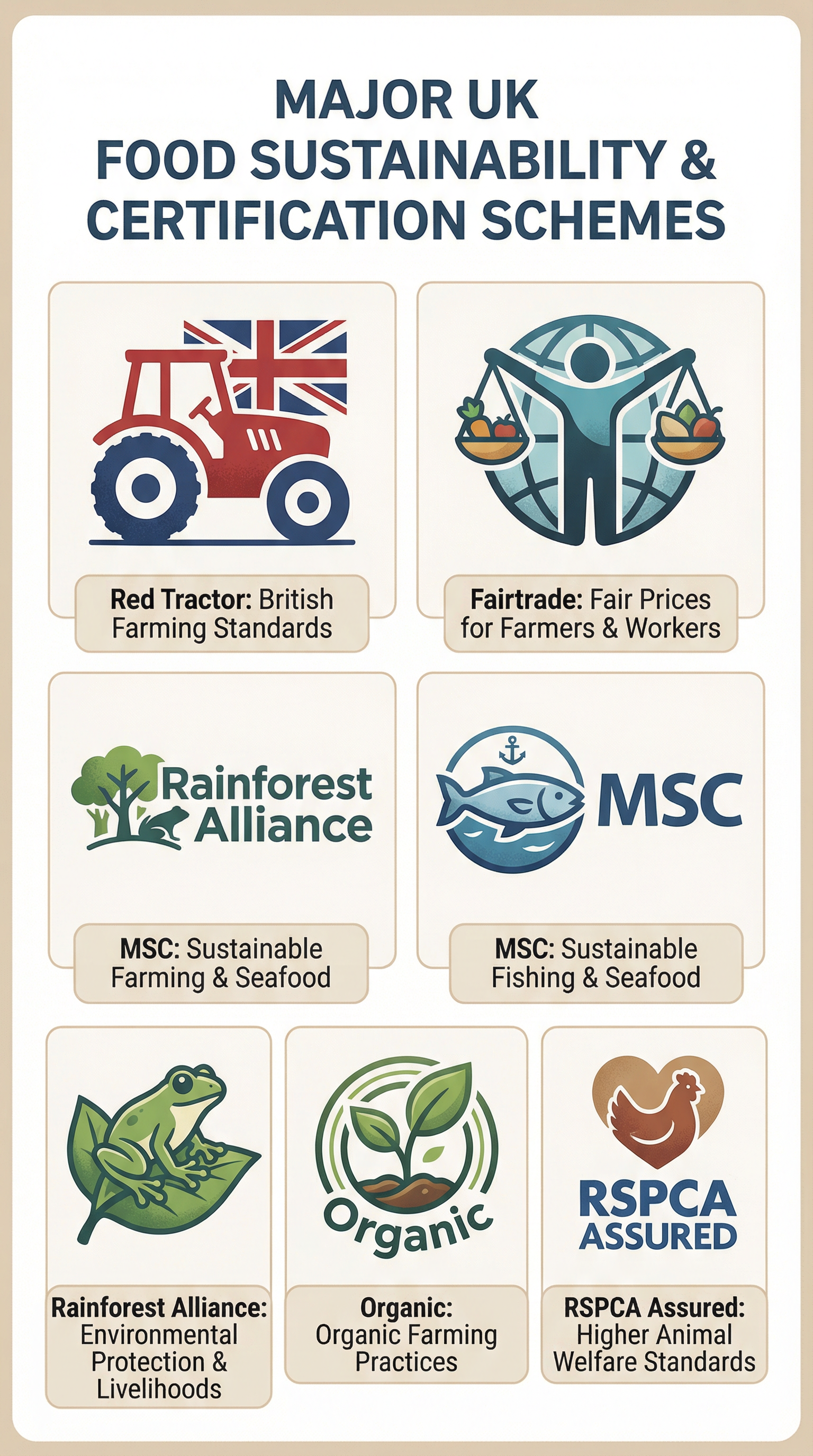
What are they?: These are certification schemes that help consumers identify food produced to specific ethical, environmental, or welfare standards.
Why they matter: Identifying these schemes is basic; explaining their specific focus is where marks are won. Candidates must know the difference between schemes focused on environmental protection (e.g., MSC) and those focused on socio-economic fairness (e.g., Fairtrade).
Specific Knowledge: Know the logos and primary goals of Red Tractor, Fairtrade, MSC (Marine Stewardship Council), and an organic certification body (like the Soil Association).
Second-Order Concepts
Causation
- Increased consumer demand for year-round variety: Supermarkets cater to consumer expectations for foods like strawberries in December, driving the need for imports or energy-intensive production.
- Globalisation of trade: International supply chains have made it cheaper to import many foods than to grow them locally.
- Fossil fuel-based transport systems: The entire global food system is reliant on cheap oil and petrol for transport, directly causing CO2 emissions.
Consequence
- Environmental: Increased greenhouse gas emissions, contribution to climate change, depletion of natural resources, and loss of biodiversity.
- Economic: Supports economies in developing countries (a potential positive to use in 'discuss' questions) but can also create dependency and undercut local UK farmers.
- Social: Disconnect between consumers and the origin of their food. Ethical concerns regarding working conditions in some parts of the global supply chain.
Change & Continuity
- Change: A growing public and political awareness of sustainability issues is leading to more demand for local, seasonal food and clearer labelling.
- Continuity: The supermarket model, based on centralised distribution and global sourcing, remains the dominant force in the UK food system.
Significance
Understanding food miles and sustainability is significant because it is a major real-world issue that directly connects food preparation and nutrition to global citizenship. It allows candidates to demonstrate analytical skills by evaluating complex, multi-faceted problems with no easy answers, which is a core requirement for achieving high grades at GCSE.