Study Notes
Overview
This topic requires candidates to understand and analyse the relationship between seasonal food, food provenance, and sustainability. Examiners expect a clear understanding of why eating seasonal produce is beneficial, focusing on three core areas: cost, quality, and environmental impact. Marks are awarded for providing specific examples of UK seasonal produce and for using key terminology correctly. A strong response will not only list seasonal items but will also explain the economic and environmental science behind the principles of seasonality. This includes analysing the impact of 'food miles' and carbon footprint, as well as the superior 'organoleptic qualities' of produce that is harvested at its natural peak. Candidates must also be aware of the distinction between 'local' and 'seasonal' and the role of preservation in extending food availability.
Key Concepts & Developments
The Four Seasons: A UK Produce Guide
What it is: A framework for identifying which foods are naturally harvested in the UK at different times of the year.
Why it matters: For AO1, candidates must provide specific examples. Using a seasonal calendar demonstrates precise knowledge. Marks are awarded for correctly identifying produce for each season.
Specific Knowledge:
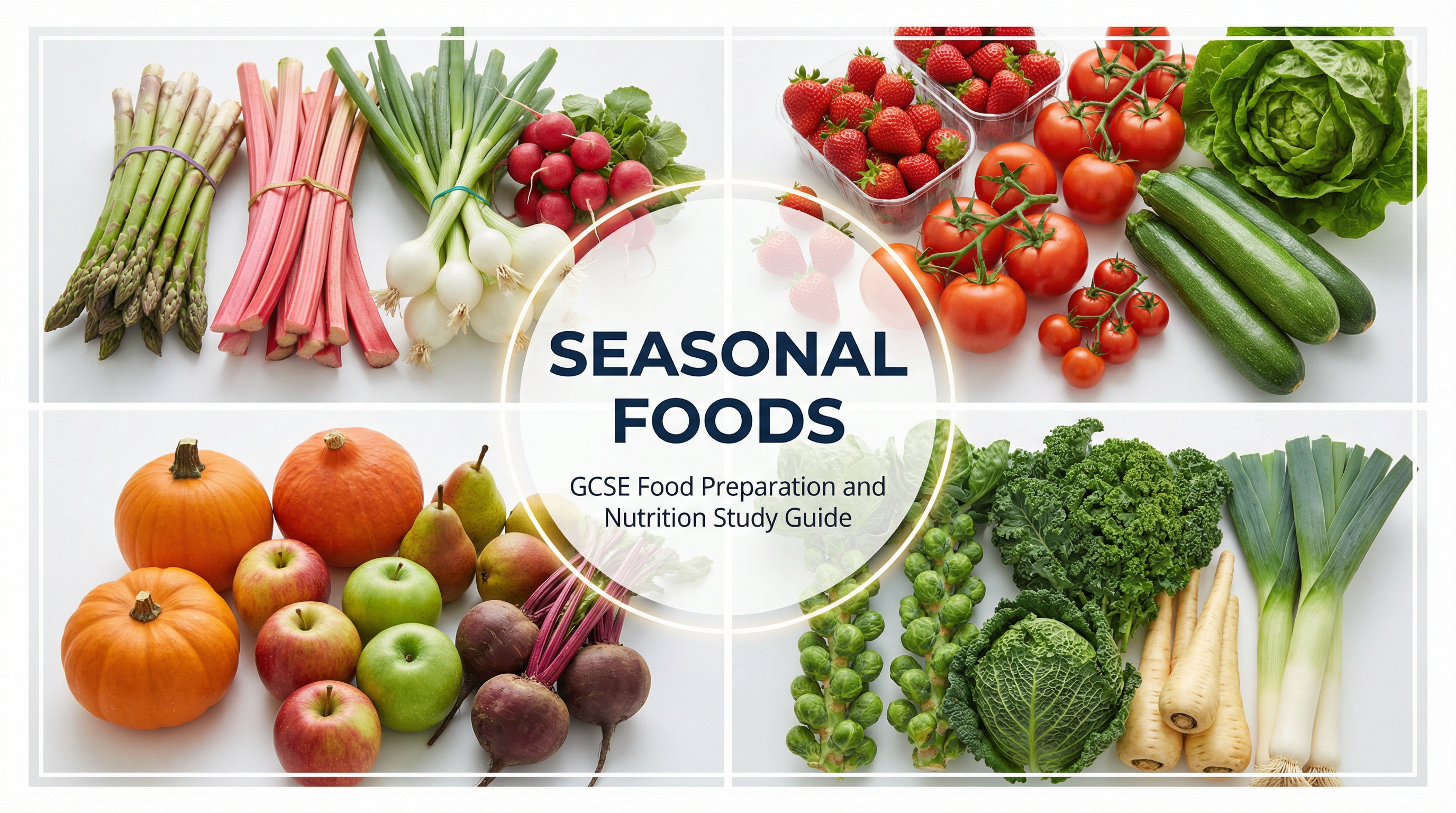
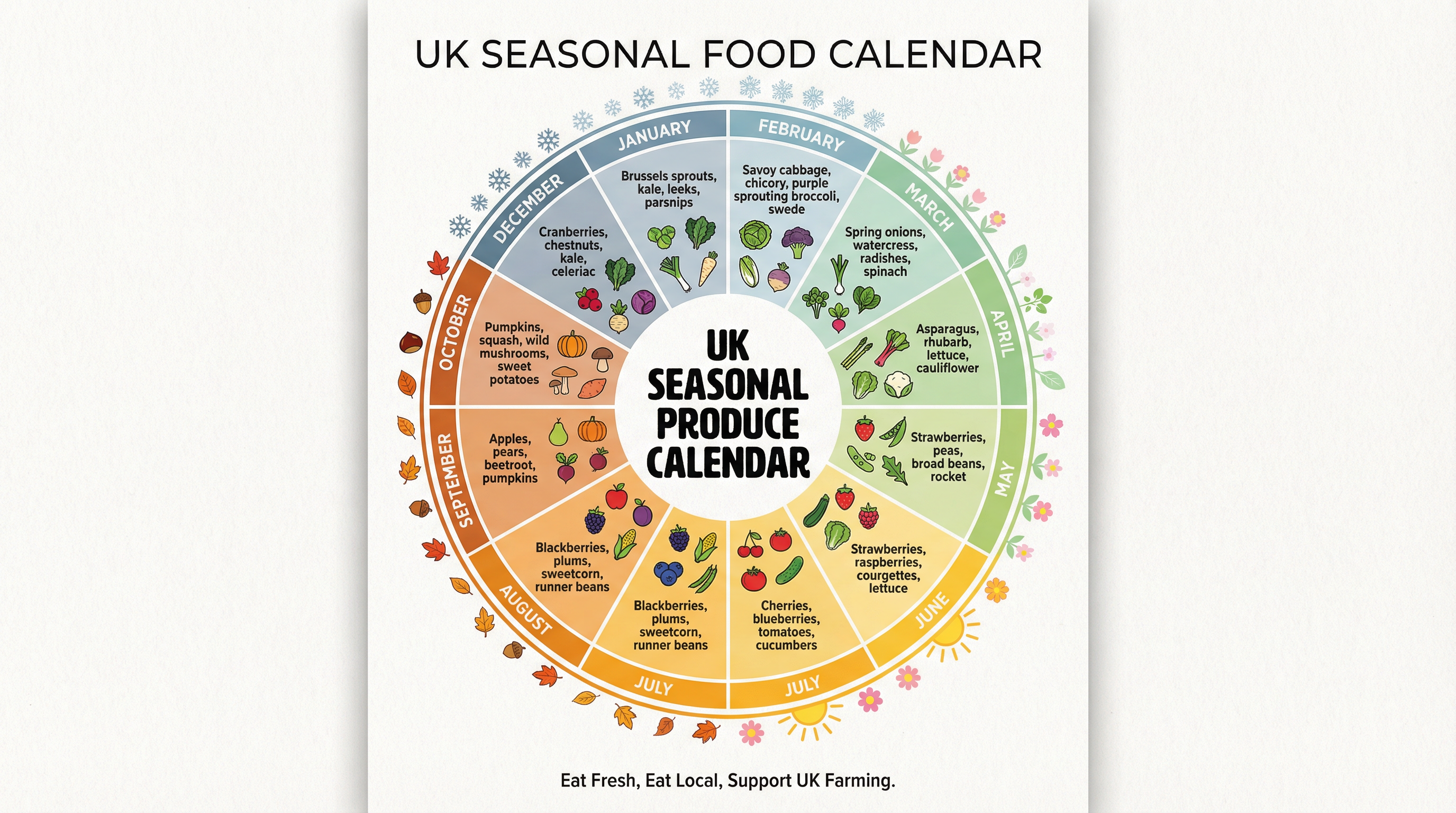
- Spring (March-May): Asparagus, Rhubarb, Spring Onions, Radishes, New Potatoes.
- Summer (June-August): Strawberries, Raspberries, Tomatoes, Courgettes, Lettuce, Peas.
- Autumn (September-November): Apples, Pears, Pumpkins, Squash, Beetroot, Onions.
- Winter (December-February): Brussels Sprouts, Kale, Leeks, Parsnips, Cabbage.
Cost: The Principle of Glut
What it is: When a fruit or vegetable is in its peak season, there is an abundance or 'glut' of it available on the market.
Why it matters: This is a key economic principle that candidates should explain. High supply leads to lower prices for the consumer. This is a practical benefit that can be mentioned in menu planning (AO2) to show cost-awareness.
Specific Knowledge: A glut of strawberries in June and July makes them significantly cheaper than in December.
Quality: Organoleptic Superiority
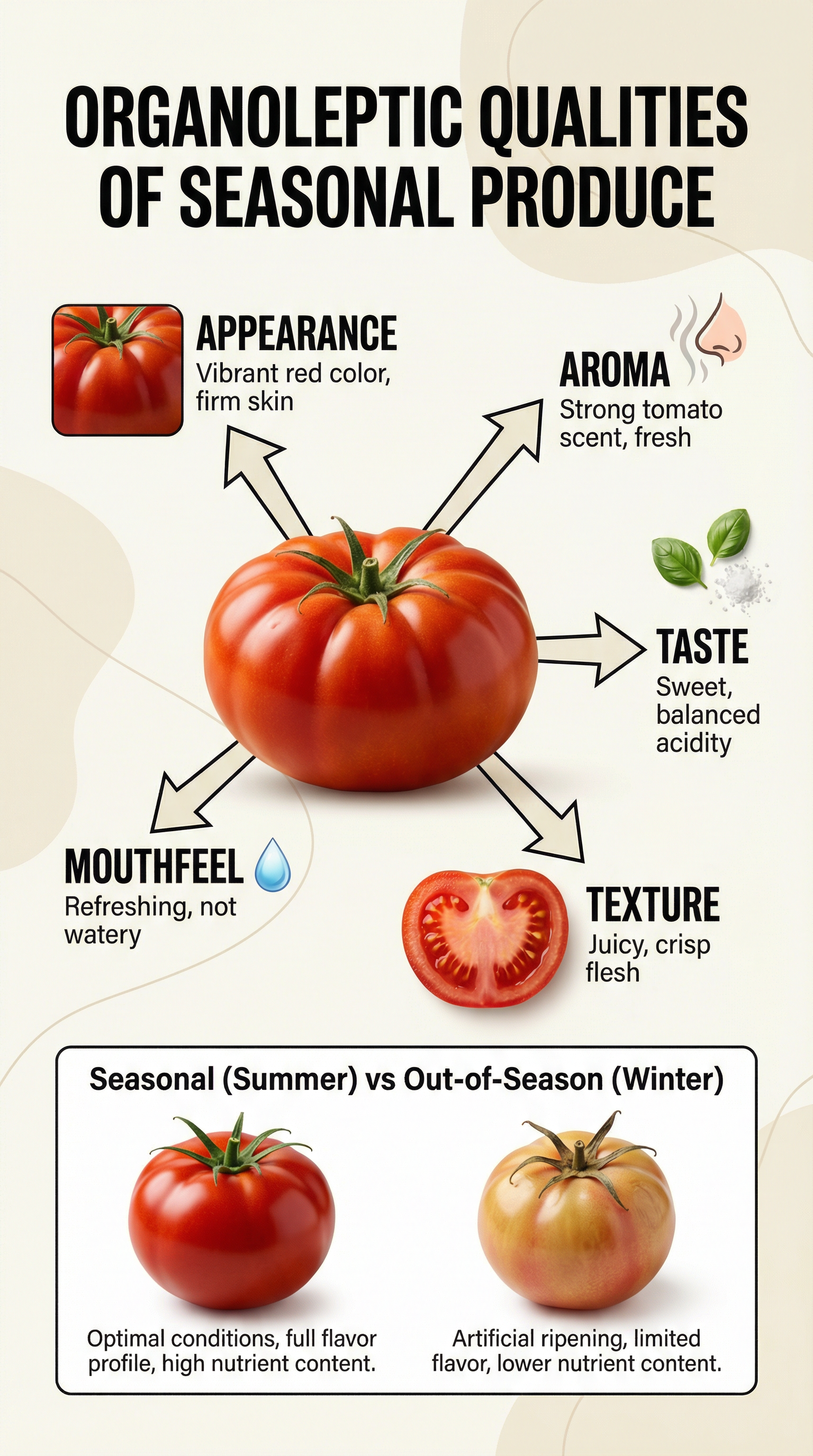
What it is: The sensory properties of food: taste, texture, aroma, and appearance. Seasonal food, ripened naturally and harvested at its peak, has superior organoleptic qualities.
Why it matters: Using the term 'organoleptic qualities' instead of just 'tastes better' allows access to higher mark bands. Candidates should explain why it's better, linking it to natural ripening processes which develop more sugars and aromatic compounds.
Specific Knowledge: A naturally ripened Isle of Wight tomato in August will have a higher sugar content (measured in Brix) and a more intense flavour profile compared to an artificially ripened imported tomato in January.
Environment: Food Miles & Carbon Footprint
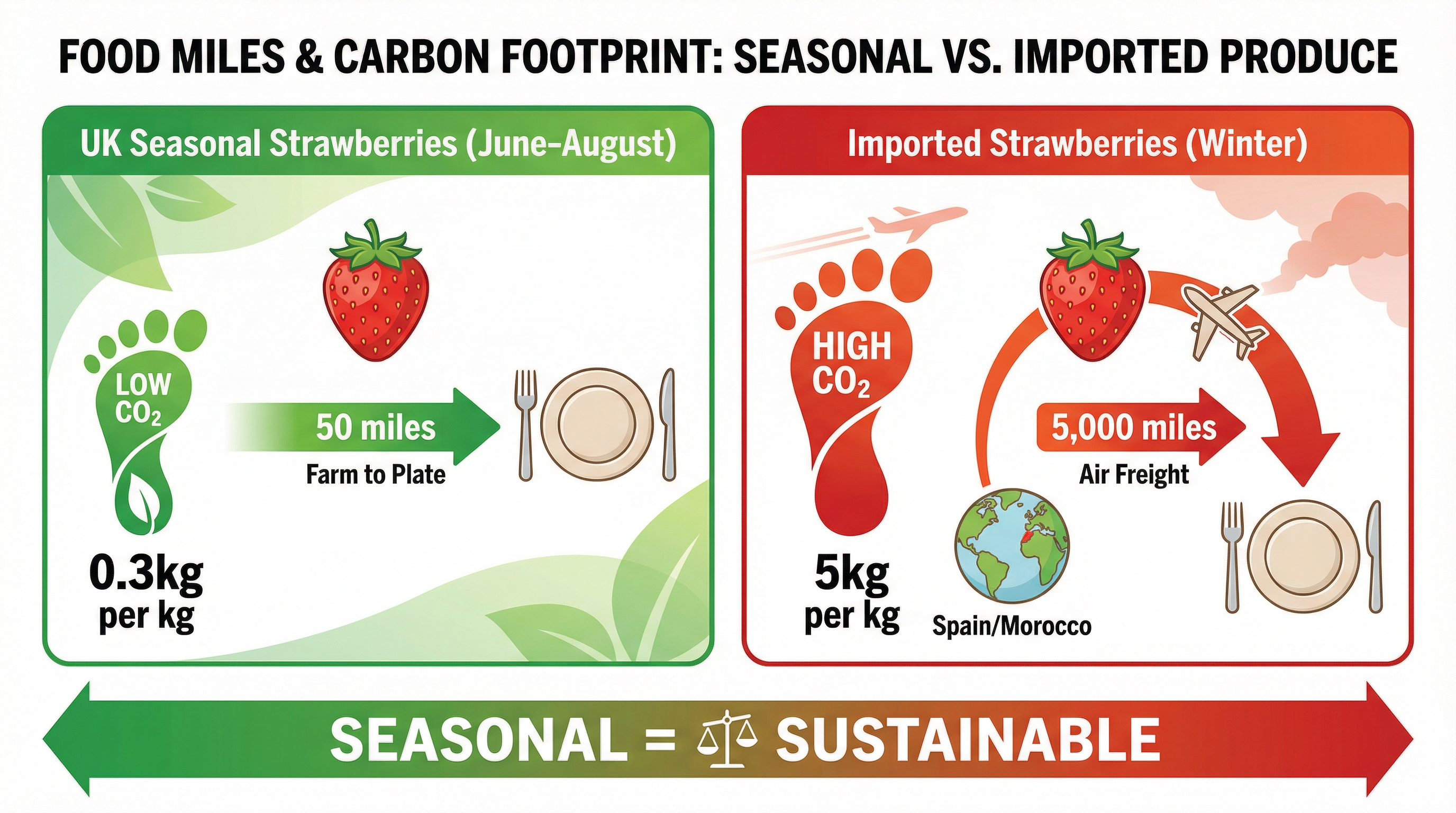
What it is: Food miles are the distance food is transported from the point of production to the consumer. Carbon footprint is the total amount of greenhouse gases produced to grow, harvest, process, and transport food.
Why it matters: This is a major component of the 'Sustainability' section of the specification. Linking seasonal eating to reduced food miles and a lower carbon footprint is a guaranteed way to earn marks. Air-freighted food has a particularly high carbon footprint.
Specific Knowledge: UK asparagus in April has very low food miles. Peruvian asparagus flown to the UK in November has travelled over 6,000 miles, generating significant CO2 emissions.
Second-Order Concepts
Causation
- Short-term cause of price drops: A sudden glut of a crop (e.g., a bumper harvest of apples in Autumn) floods the market, causing prices to fall.
- Long-term cause of environmental damage: Consistent consumer demand for non-seasonal produce (e.g., strawberries in winter) drives the expansion of energy-intensive farming methods and long-distance transportation networks.
Consequence
- Immediate consequence of eating seasonally: Consumers get better-tasting, more nutritious, and cheaper produce.
- Long-term consequence of a seasonal food system: Reduced national carbon footprint, support for local farmers and rural economies, and a more sustainable food supply chain.
Change & Continuity
- Change: Increased globalisation and technology have made it possible to buy almost any food year-round, a significant change from previous generations.
- Continuity: Despite technological advances, the natural growing seasons of UK produce remain the same. The fundamental principles of what grows when have not changed.
Significance
Understanding seasonality is significant because it empowers consumers and caterers to make more ethical, economical, and environmentally sound food choices. For the exam, it is a significant topic that links multiple areas of the specification: Food Provenance, Sustainability, and Menu Planning.