Study Notes
Overview
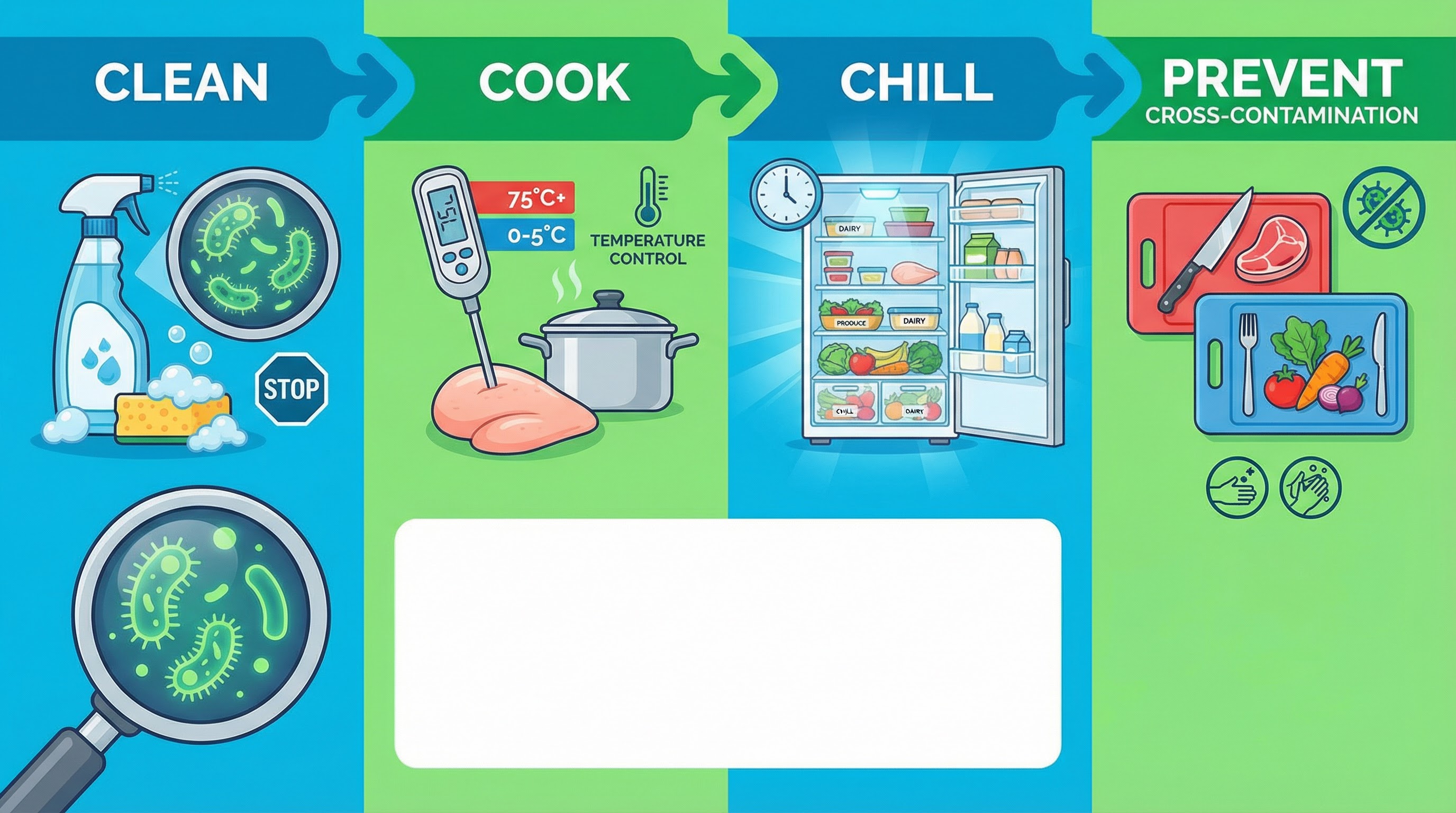
This study guide provides a comprehensive, exam-focused breakdown of safe food handling practices, tailored specifically for the OCR GCSE Food Preparation and Nutrition specification. Candidates are expected to demonstrate a scientific understanding of food safety, moving beyond common sense to apply precise microbiological principles. This includes a detailed knowledge of bacterial growth (binary fission), the critical temperature danger zone (5°C–63°C), and the correct application of the 4Cs: Cleaning, Cooking, Chilling, and Cross-contamination. Examiners award significant credit for the ability to link specific pathogens like Salmonella and Campylobacter to their high-risk food sources and to justify safety procedures with scientific reasoning. This guide will equip you with the specific terminology, data, and analytical skills required to confidently tackle everything from short-answer questions to extended-response scenarios, ensuring you can explain not just what to do, but why it works.
Key Principles of Food Safety
Bacterial Growth: The Science of Binary Fission
What happens: Bacteria are single-celled microorganisms that reproduce asexually through a process called binary fission. In ideal conditions, a single bacterium divides into two identical daughter cells. This process can occur as frequently as every 20 minutes.
Why it matters: This exponential growth is the fundamental reason why food safety is so critical. One stray bacterium on a piece of chicken left at room temperature can multiply to millions within a few hours, reaching a level sufficient to cause severe illness. Examiners expect candidates to understand this process to explain the importance of temperature control and time management.
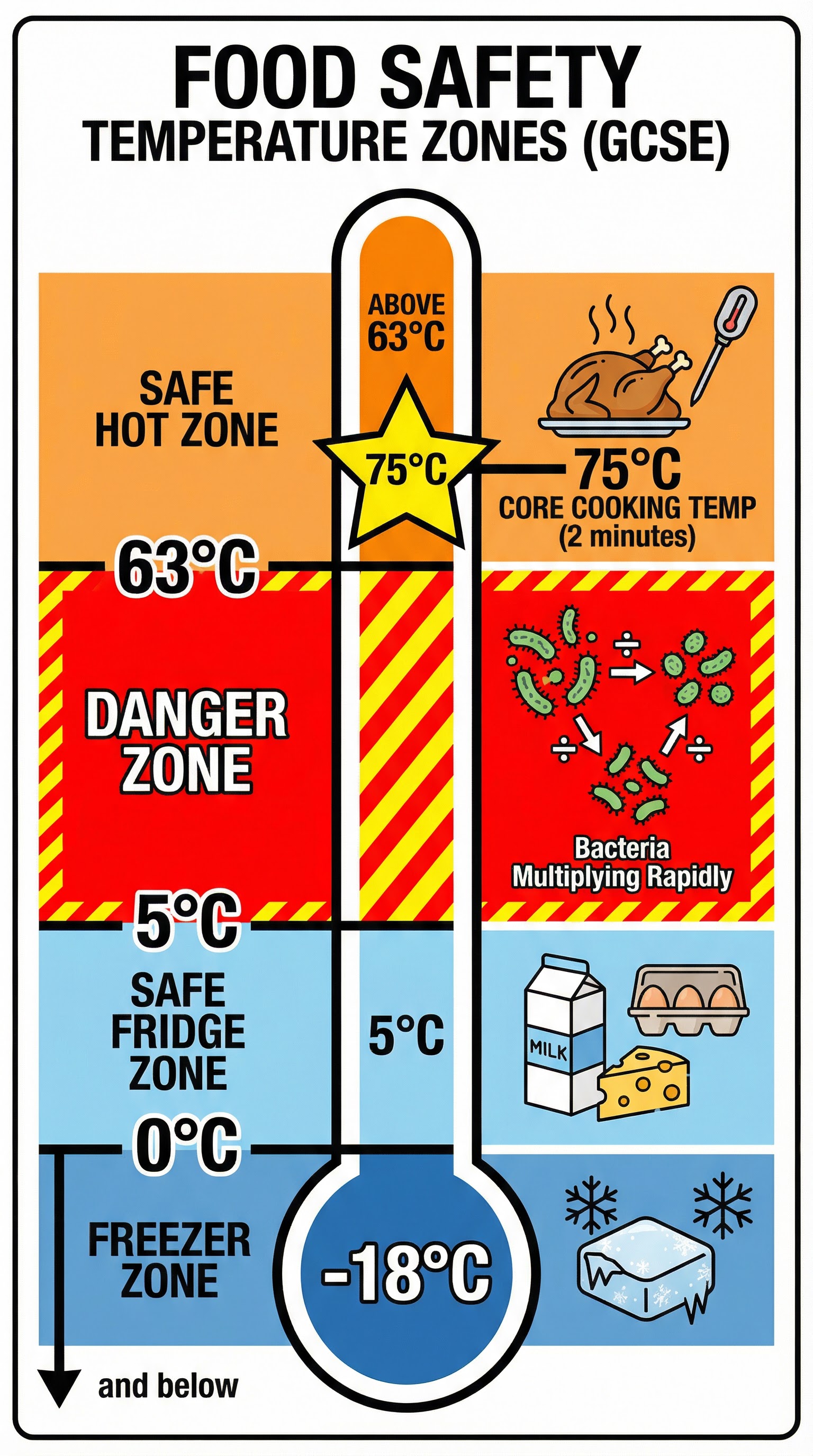
Specific Knowledge: Candidates must know that the ideal conditions for bacterial multiplication are Warmth, Moisture, Food, and Time. The pH of the food also plays a role. The temperature range for this rapid growth, known as the Danger Zone, is 5°C to 63°C.

The 4Cs of Food Safety
The 4Cs provide a robust framework for controlling the conditions that bacteria need to thrive. Applying this framework correctly in scenario questions is essential for achieving high marks.
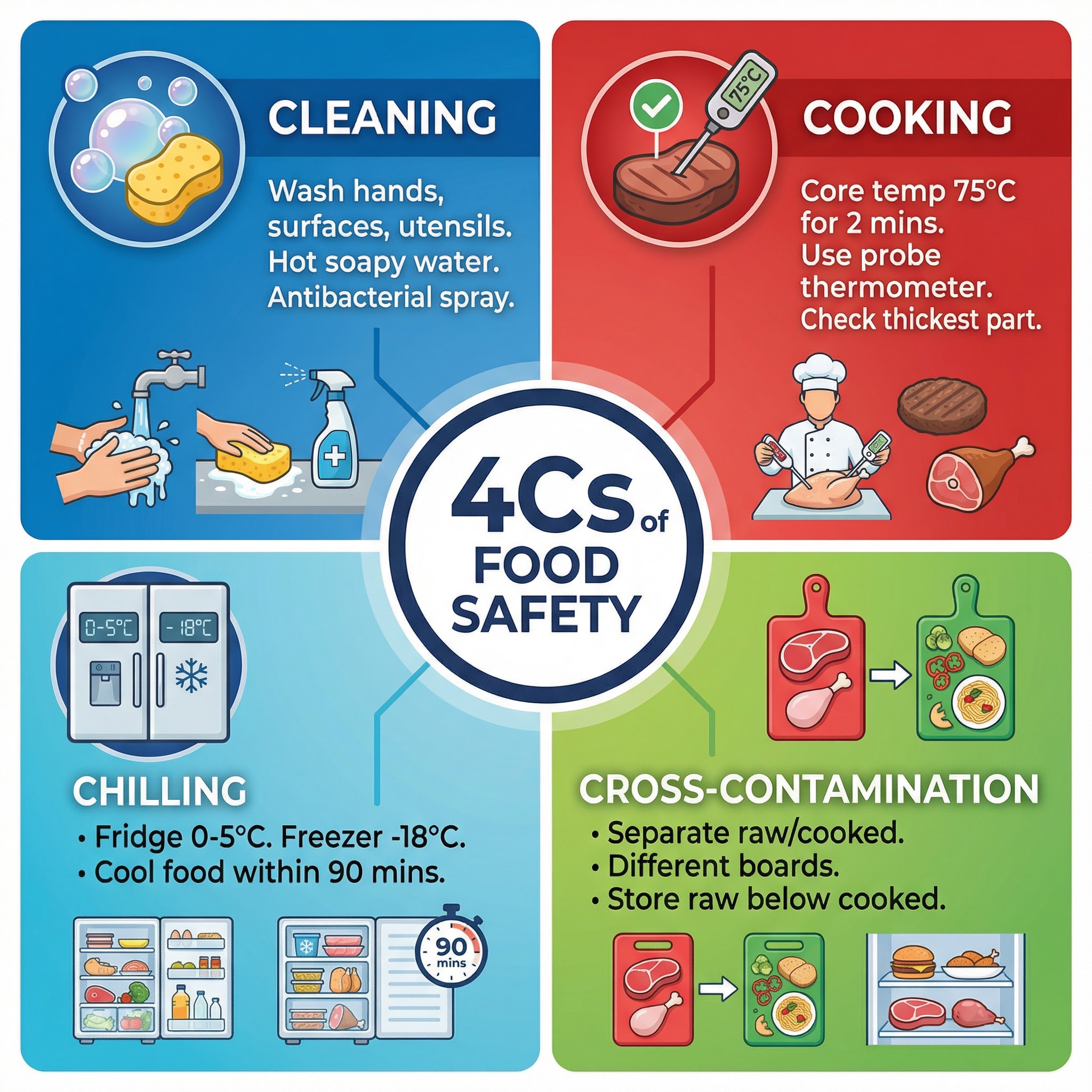
1. Cleaning: This involves removing bacteria from hands, surfaces, and equipment. Key practices include washing hands with hot, soapy water for at least 20 seconds; using antibacterial sprays on work surfaces; and using separate, clean cloths for different tasks to prevent bacterial transfer.
2. Cooking: High temperatures are used to kill pathogenic bacteria. Candidates must cite the critical core temperature of 75°C for 2 minutes for high-risk foods. A probe thermometer is essential to verify this, and it must be inserted into the thickest part of the food.
3. Chilling: Low temperatures slow down or stop bacterial multiplication. A refrigerator must be set between 0°C and 5°C. A freezer must be at -18°C, which makes bacteria dormant but does not kill them. Hot food must be cooled and placed in the fridge within 90 minutes.
4. Cross-contamination: This is the transfer of bacteria from a contaminated source (usually raw food) to a ready-to-eat food. It can be direct (e.g., raw meat touching a salad) or indirect (e.g., using the same knife for raw chicken and then cooked ham). Using colour-coded chopping boards and storing raw meat on the bottom shelf of the fridge are key control measures.
Temperature Control: The Critical Numbers
Examiners award marks for precision. Vague terms like 'hot' or 'cold' are not sufficient. You must memorise and apply these specific temperatures.
Key Pathogens
Candidates must be able to link specific bacteria to their sources, symptoms, and control measures.
| Pathogen | Common Sources | Onset Time | Key Symptoms | Control Measures |
|---|---|---|---|---|
| Campylobacter | Raw/undercooked poultry, unpasteurised milk, contaminated water | 2-5 days | Diarrhoea, abdominal pain, fever | Cook poultry to 75°C, avoid cross-contamination, use safe water |
| Salmonella | Raw poultry, eggs, meat | 12-36 hours | Vomiting, diarrhoea, fever, abdominal cramps | Cook eggs and poultry thoroughly, good hygiene |
| E. coli O157 | Undercooked minced beef, contaminated water, unwashed vegetables | 1-3 days | Severe bloody diarrhoea, abdominal cramps, kidney failure | Cook minced meat thoroughly (no pink), wash vegetables |
| Listeria | Soft cheeses, pâté, pre-packed sandwiches, chilled ready-to-eat foods | Up to 70 days | Flu-like symptoms, can cause miscarriage in pregnant women | Adhere to 'Use-by' dates, maintain fridge temp of 0-5°C |
| Staphylococcus aureus | Carried on human skin, hair, and in the nose; transferred by poor hygiene | 1-6 hours | Vomiting, nausea, abdominal cramps | High standards of personal hygiene, cover cuts, do not cough/sneeze over food |