
Study Notes
Overview
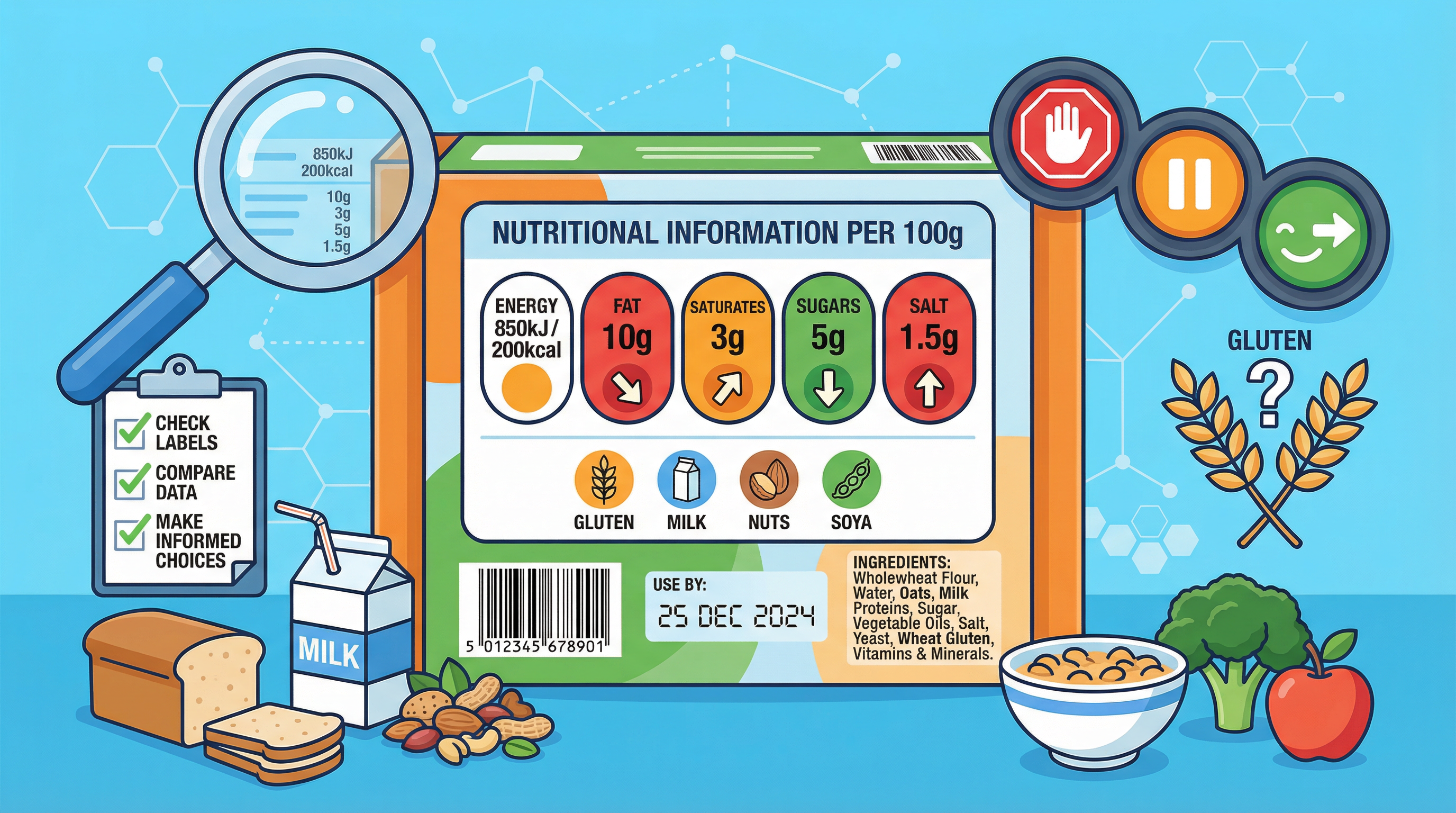
This guide focuses on interpreting food labelling information as required by the WJEC GCSE specification, underpinned by Regulation (EU) No 1169/2011 on Food Information for Consumers. A strong understanding of this topic is essential for candidates to analyse and evaluate food products, a skill frequently tested in the exam. Examiners expect candidates to move beyond simple identification of label elements and apply this information to make justified decisions about dietary suitability, health implications, and food safety. This involves a detailed analysis of nutritional data, including the traffic light system and Reference Intakes (RIs), the correct interpretation of date marks, and the identification of allergens. Marks are awarded for precision, such as using "per 100g" data for comparisons and explicitly linking nutritional content to health conditions like Coronary Heart Disease (CHD) or Type 2 Diabetes.
Key Concepts for Food Labelling
Mandatory Information
What it is: A set of legally required details that must appear on the packaging of all pre-packed foods.
Why it matters: This ensures consumers have consistent and clear information to make safe and informed choices. For the exam, candidates must be able to identify these components and may be asked to spot omissions on a sample label.
Specific Knowledge: The mandatory information includes:
- Name of the food
- List of ingredients (in descending order of weight)
- Allergen information
- Quantitative Ingredient Declaration (QUID) for certain ingredients
- Net quantity
- Date mark ("Use by" or "Best before")
- Storage conditions and/or conditions of use
- Name and address of the food business operator
- Country of origin or place of provenance
- Instructions for use
- Nutrition declaration
Nutritional Information & Traffic Light Labelling
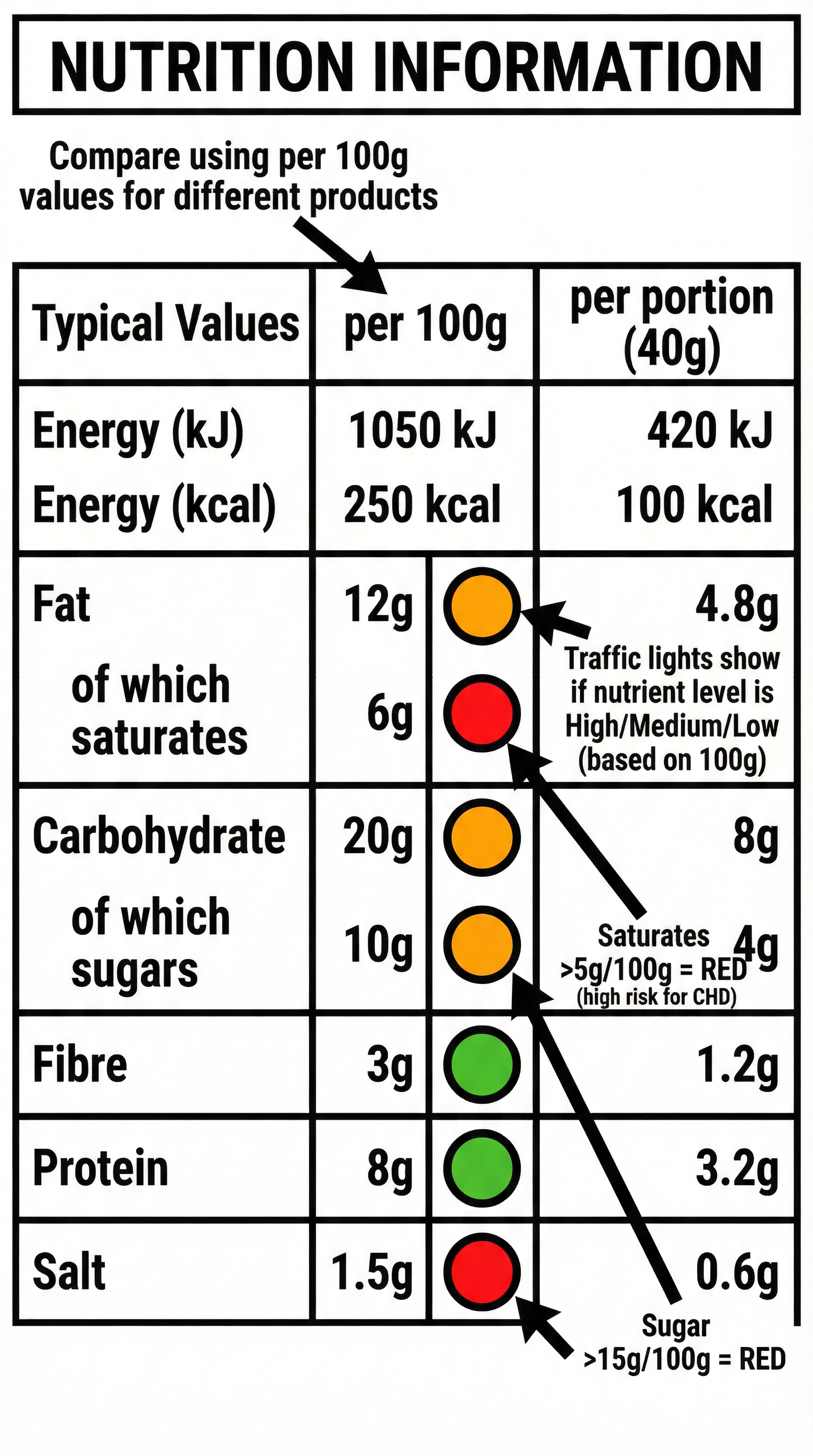
What it is: The nutritional declaration provides details on the energy and nutrient content of the food. The front-of-pack traffic light system provides an at-a-glance guide to the levels of fat, saturates, sugars, and salt.
Why it matters: This is the primary tool for assessing a product's healthiness and suitability for different dietary needs. Examiners award high marks for candidates who can correctly interpret this data and use it to justify their answers with specific figures.
Specific Knowledge:
- Comparison: Always use the "per 100g" column to compare products, as portion sizes can be misleading.
- Traffic Light Thresholds (per 100g):
- Fat: High (Red) >17.5g; Medium (Amber) 3.1g-17.5g; Low (Green) ≤3.0g
- Saturates: High (Red) >5g; Medium (Amber) 1.6g-5g; Low (Green) ≤1.5g
- Sugars: High (Red) >22.5g; Medium (Amber) 5.1g-22.5g; Low (Green) ≤5.0g
- Salt: High (Red) >1.5g; Medium (Amber) 0.31g-1.5g; Low (Green) ≤0.3g
- Health Links: Candidates must link high saturated fat to increased blood cholesterol and CHD risk. High sugar intake should be linked to obesity and Type 2 Diabetes.
Allergen Labelling
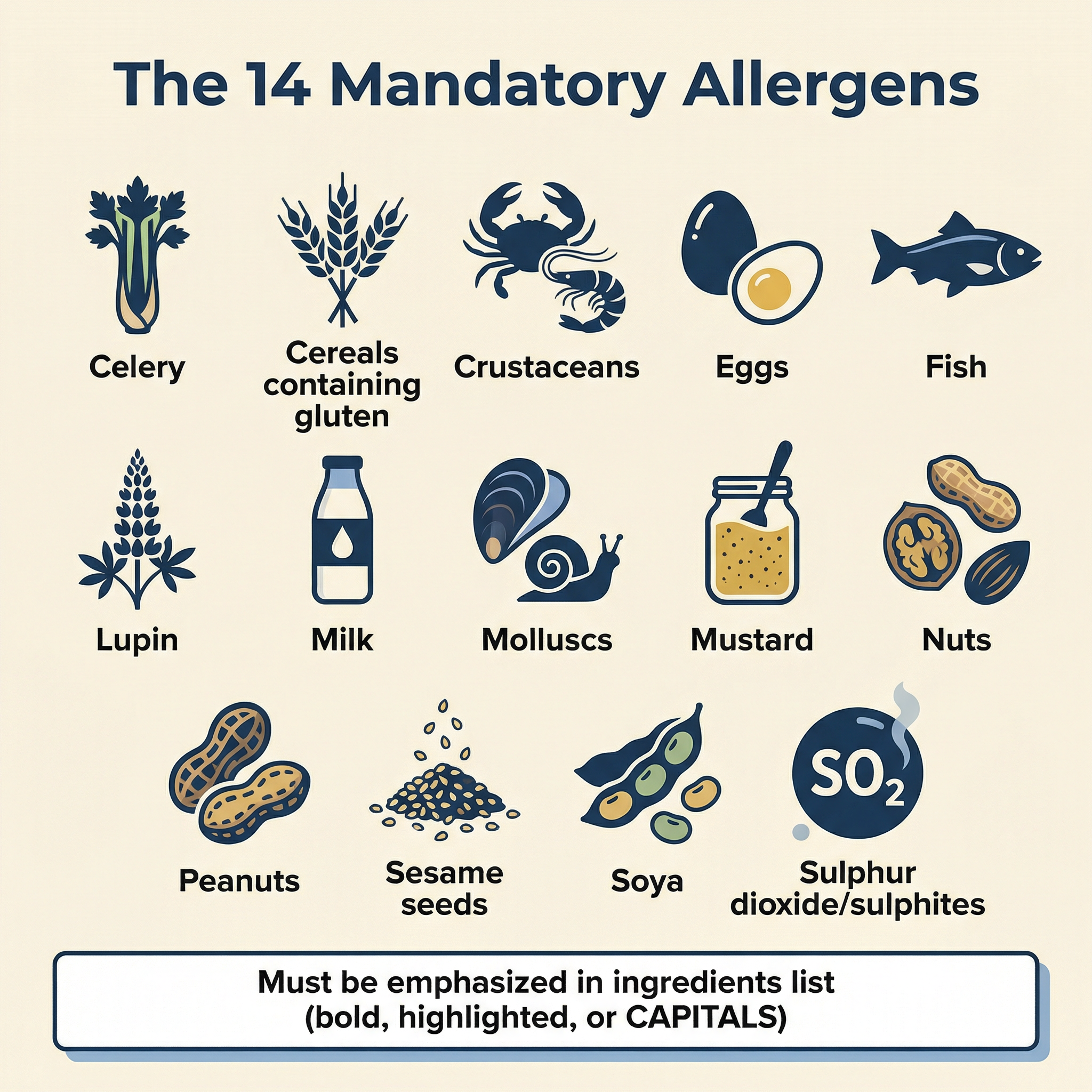
What it is: The 14 major allergens must be legally declared and emphasised in the ingredients list.
Why it matters: This is a critical food safety issue. Marks are awarded for precise identification of allergens and the method of emphasis (e.g., bolding, italics, underlining).
Specific Knowledge: Candidates should be able to name several of the 14 allergens: Celery, Cereals containing gluten, Crustaceans, Eggs, Fish, Lupin, Milk, Molluscs, Mustard, Nuts, Peanuts, Sesame seeds, Soya, Sulphur dioxide/sulphites.
Date Marking
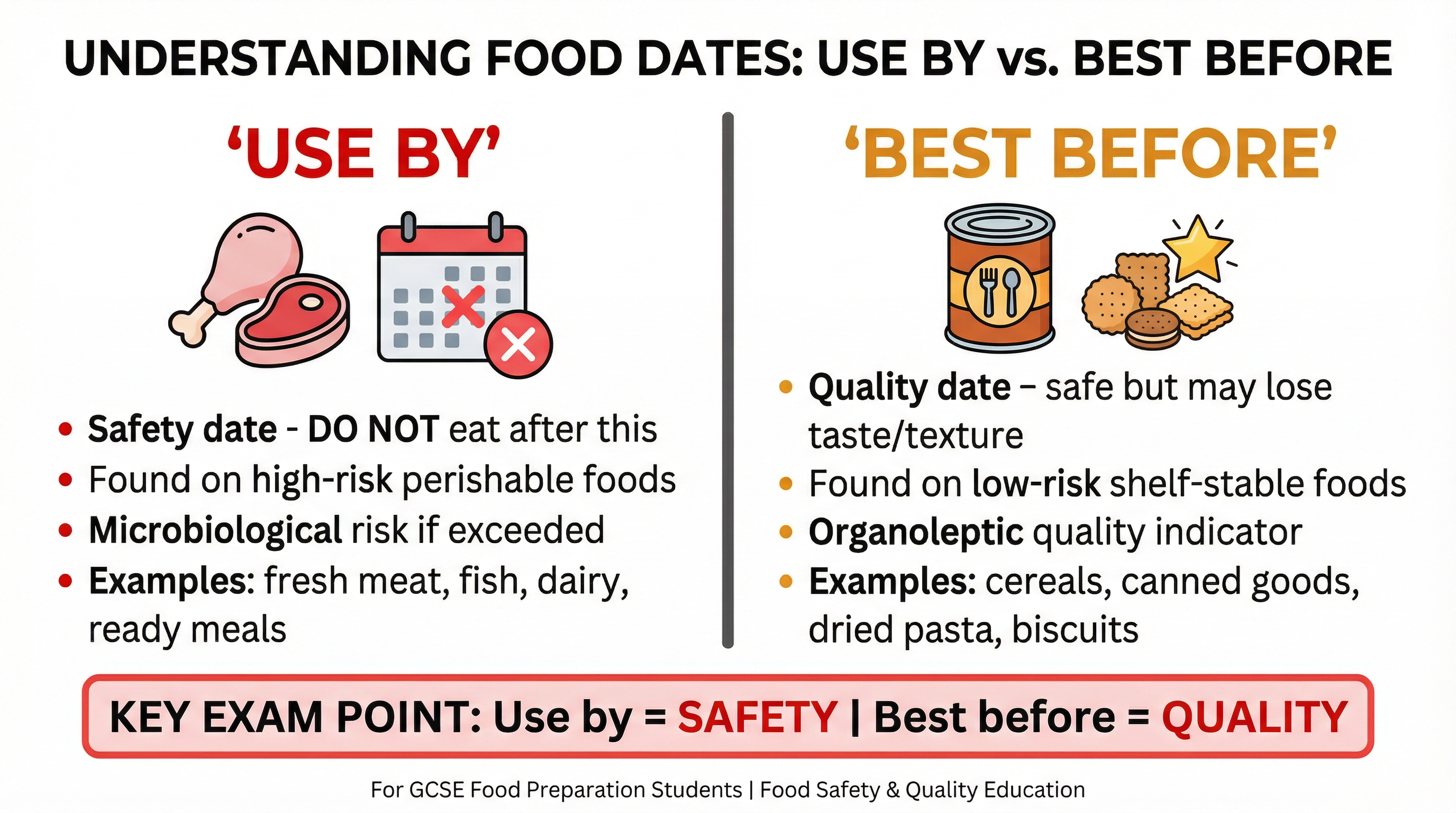
What it is: The system used to indicate how long a food will remain at its best quality and/or safe to eat.
Why it matters: Confusing these dates is a common mistake. Correctly identifying the date mark is fundamental to assessing food safety.
Specific Knowledge:
- Use by: A safety mark for high-risk, perishable foods (e.g., milk, meat). It is illegal to sell food past its use-by date, and it should not be eaten due to microbiological risk.
- Best before: A quality mark for lower-risk, shelf-stable foods (e.g., biscuits, canned soup). The food is safe to eat after this date, but its organoleptic properties (taste, texture) may have deteriorated.