Study Notes
Overview
Geothermal power is a key topic in the OCR GCSE Physics specification, assessed within the Global Challenges (Gateway) or Sustainable Energy (21st Century) modules. It represents a reliable, renewable energy source that harnesses the Earth's natural heat. For your exam, a deep understanding is required of the energy transfer chain, from the radioactive decay in deep rocks that provides the heat, all the way to the generation of electricity. Examiners will expect candidates to be able to evaluate the viability of geothermal power, contrasting its high reliability with its significant geographical limitations. Typical exam questions range from short-answer "state" and "describe" questions about the process, to longer 6-mark "evaluate" questions that require you to weigh up the pros and cons against other energy sources like wind, solar, or fossil fuels.
Key Concepts
Concept 1: The Heat Source - Radioactive Decay
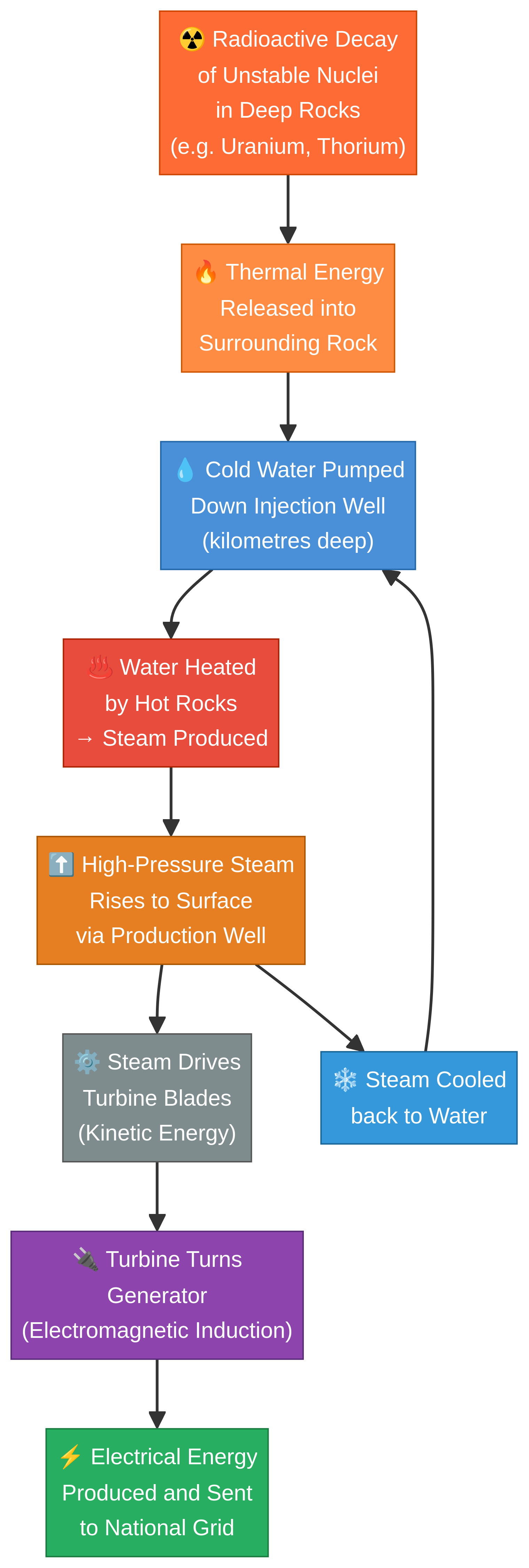
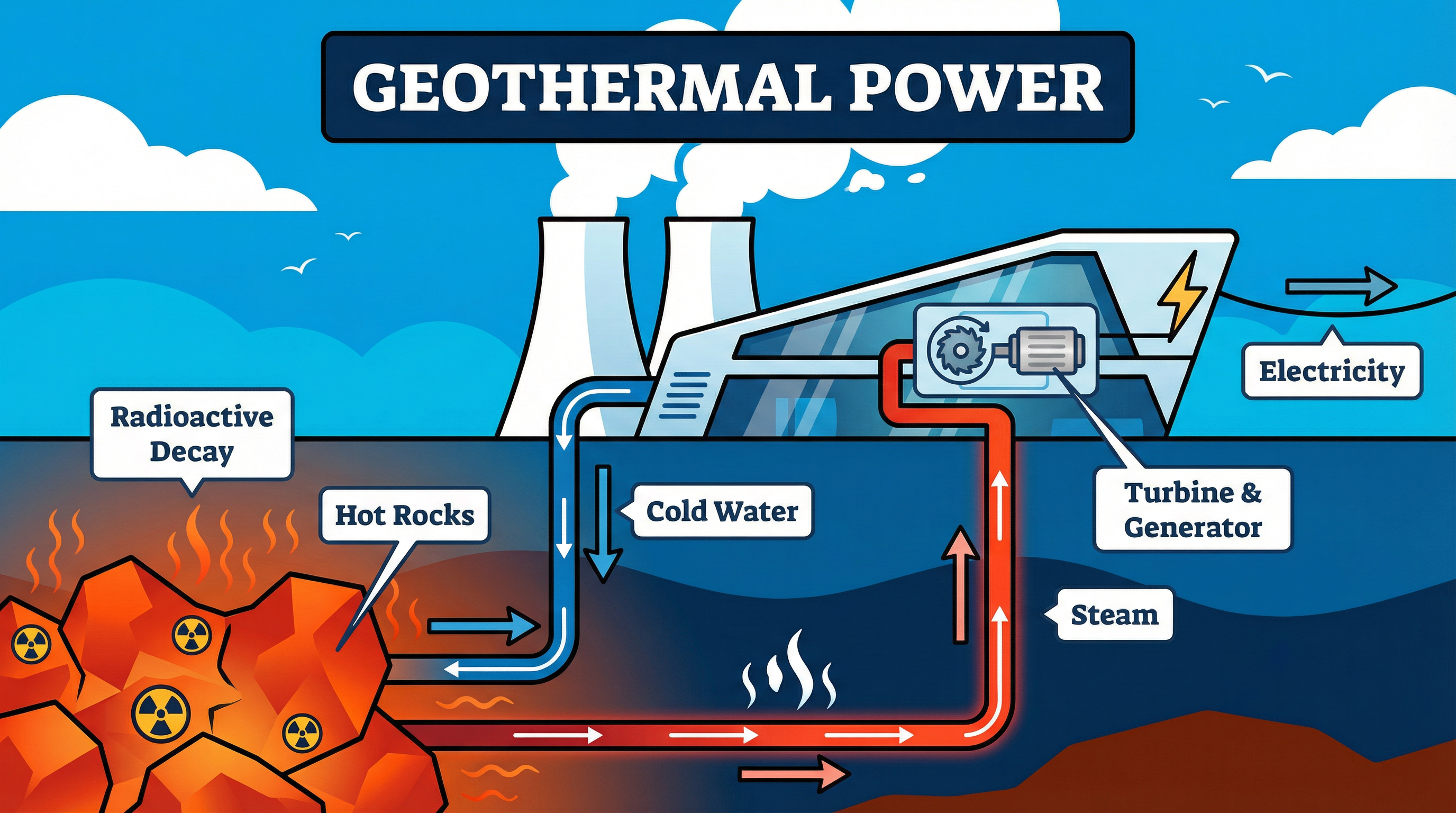
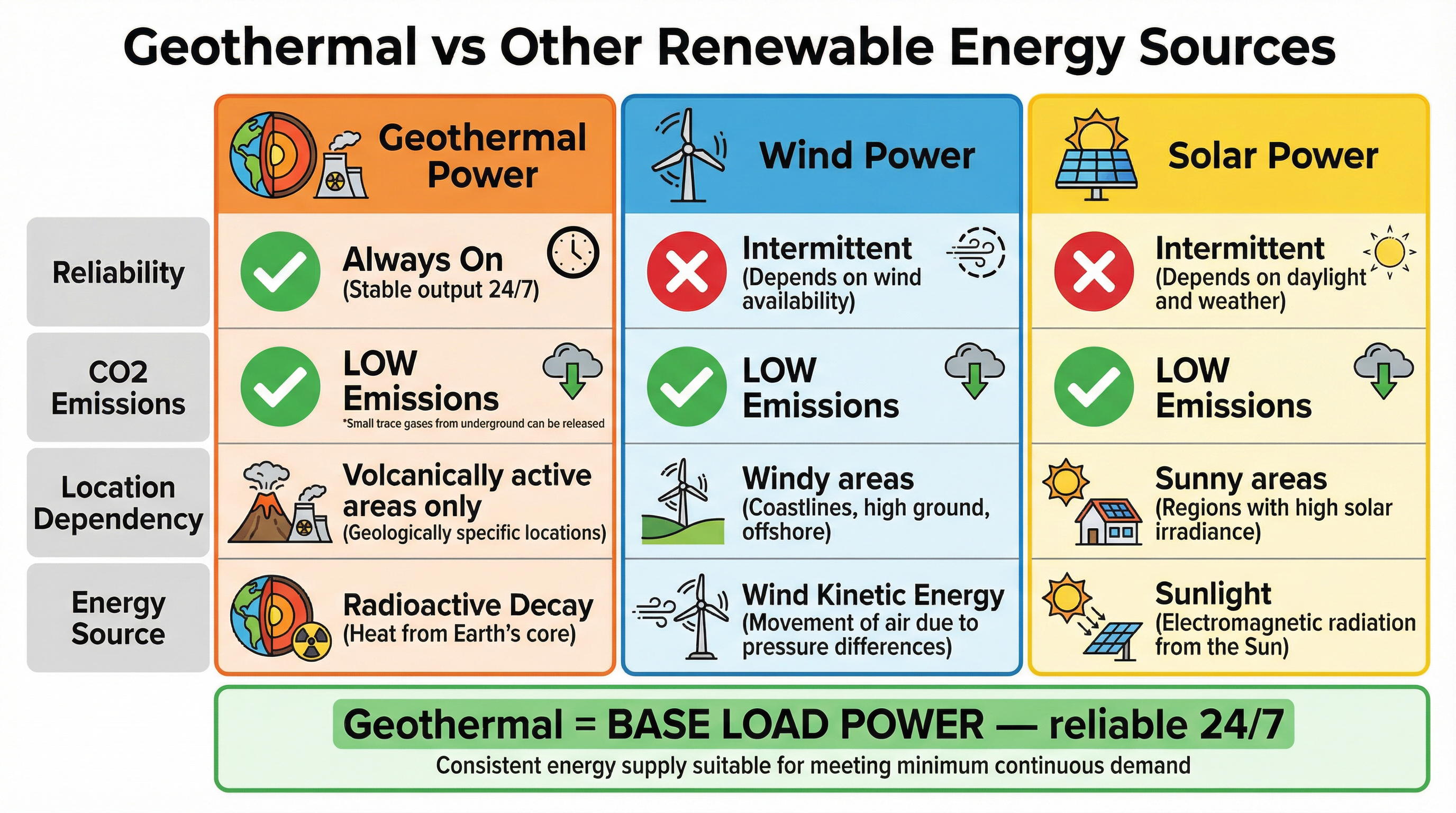
The fundamental concept that many candidates misunderstand is the origin of the heat. The thermal energy used in geothermal power stations does not come from magma or the Earth's molten core directly. Instead, the primary heat source is the radioactive decay of unstable isotopes found naturally in rocks deep within the Earth's crust. Elements like Uranium, Thorium, and Potassium-40 have very long half-lives and as their nuclei decay, they release enormous amounts of thermal energy. This heat is trapped by the surrounding rock, raising its temperature to several hundred degrees Celsius. For a Higher Tier paper, stating "radioactive decay" is essential to gain the mark for identifying the energy source.
Concept 2: The Energy Transfer Process
Generating electricity from this heat involves a clear, multi-step process. Marks are awarded for describing this sequence accurately.
- Pumping Water: Cold water is pumped down an "injection well" for several kilometres to reach the hot rock formations.
- Heating and Steam Production: The intense heat from the rocks transfers to the water, causing it to boil and turn into high-pressure steam.
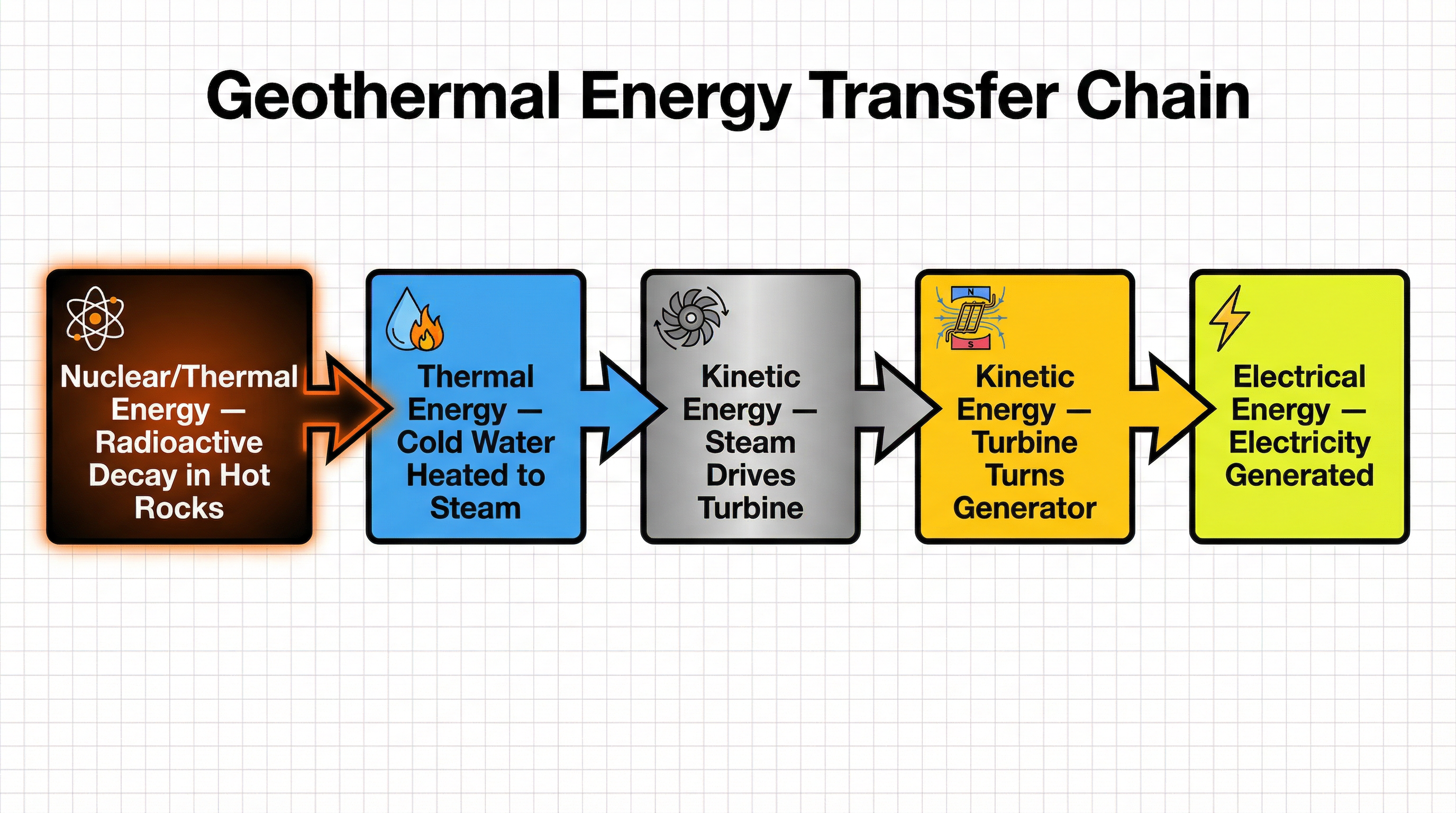
- Driving a Turbine: The steam is channelled up to the surface through a "production well" and directed at the blades of a turbine, causing it to spin at high speed. The thermal energy of the steam is converted into kinetic energy in the turbine.
- Generating Electricity: The spinning turbine is connected to a generator. The generator uses the principle of electromagnetic induction to convert the kinetic energy into electrical energy.
- Cooling and Recycling: After passing through the turbine, the steam is sent to a cooling tower where it condenses back into water. This water is then pumped back down the injection well to be reheated, creating a continuous, closed-loop system.
Concept 3: Base Load vs. Intermittent Power
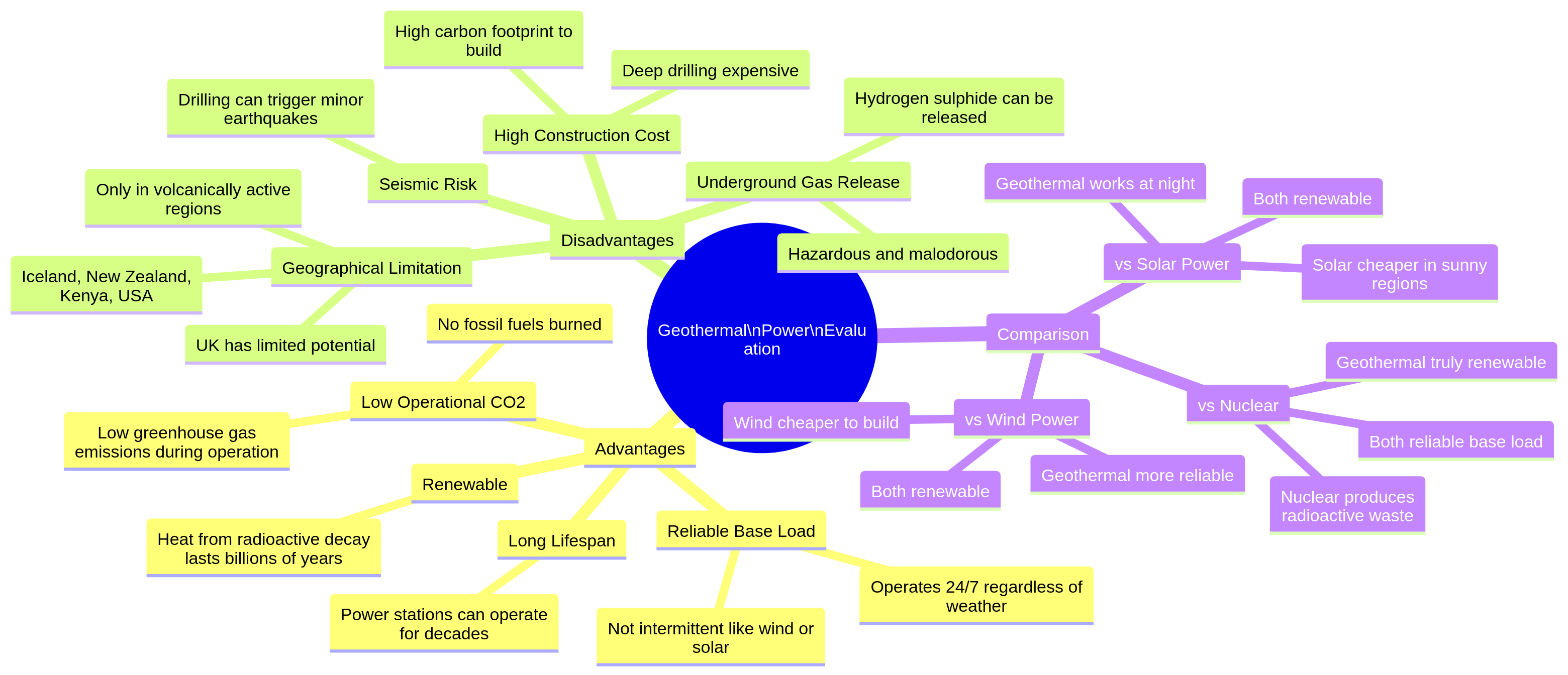
This is a crucial concept for evaluation questions. Geothermal power is a reliable energy source. Because the Earth's internal heat is constant, a geothermal power station can operate 24 hours a day, 7 days a week. This makes it a source of base load power - the minimum level of electricity supply required to meet demand at any given time. This is its single biggest advantage over other major renewables like wind and solar, which are intermittent - they only work when the wind is blowing or the sun is shining. Examiners frequently reward candidates who can clearly contrast the reliability of geothermal with the intermittency of other sources.
Mathematical/Scientific Relationships
While complex calculations are rare for this specific topic at GCSE, you must be confident with the principles of energy efficiency.
- Efficiency Equation: You might be asked to calculate the efficiency of a geothermal power station if given the input and output energy values.
- Efficiency = (Useful Energy Output / Total Energy Input) x 100%
- This formula must be memorised.
- Example: If the thermal energy input from the hot rocks is 500 MJ and the useful electrical energy output is 75 MJ, the efficiency is (75 / 500) x 100% = 15%. Geothermal power stations typically have lower efficiencies (10-20%) compared to fossil fuel plants, but have no fuel costs.
Practical Applications
Geothermal energy is not just for large-scale power generation. Ground Source Heat Pumps (GSHPs) use the same principle on a much smaller scale for domestic heating. They extract heat from just a few metres below the ground to warm water for radiators and taps. It is critical that candidates do not confuse industrial geothermal power stations with domestic GSHPs in an exam. A power station generates electricity using deep, high-temperature heat, whereas a GSHP provides heating using shallow, low-temperature heat.