Study Notes
Overview
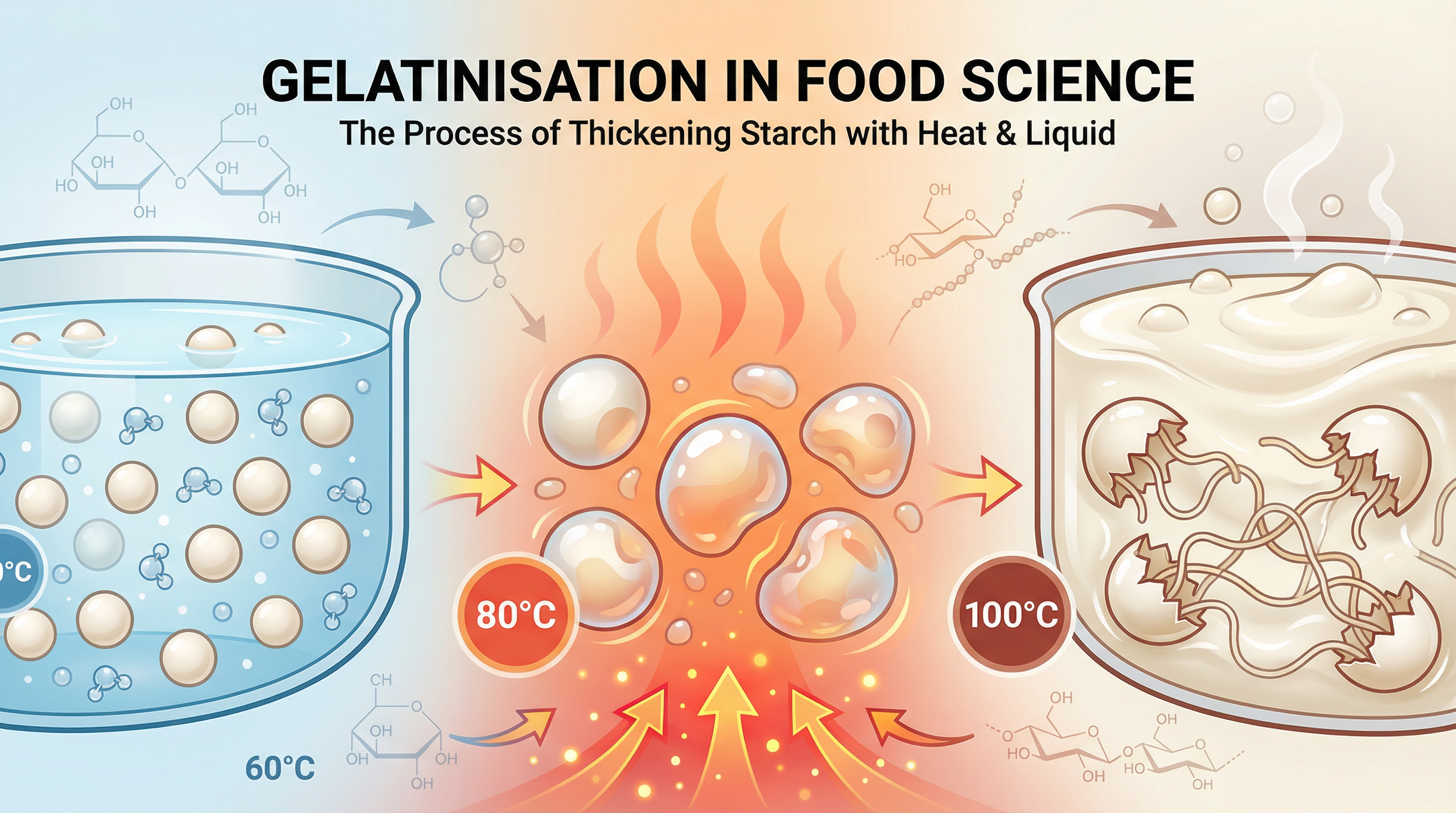
Gelatinisation is a fundamental process in food science and a key topic in the AQA GCSE specification. It is the scientific process that explains how starchy foods thicken when cooked with liquid. For candidates, a thorough understanding of this process is essential for explaining the functional properties of carbohydrates and for achieving high marks in both written and practical exams. Examiners expect candidates to move beyond simple descriptions of cooking and demonstrate a clear grasp of the scientific principles involved. This includes detailing the behaviour of starch granules at specific temperatures (60°C, 80°C, and 100°C), using precise terminology like 'viscosity' and 'amylose', and applying this knowledge to practical cooking methods such as sauce making. This guide will provide you with the detailed knowledge and exam technique required to confidently answer any question on gelatinisation.
The Science of Gelatinisation: A Step-by-Step Process
Examiners award significant credit for a clear, chronological description of the gelatinisation process. Use the following temperature milestones to structure your answers.
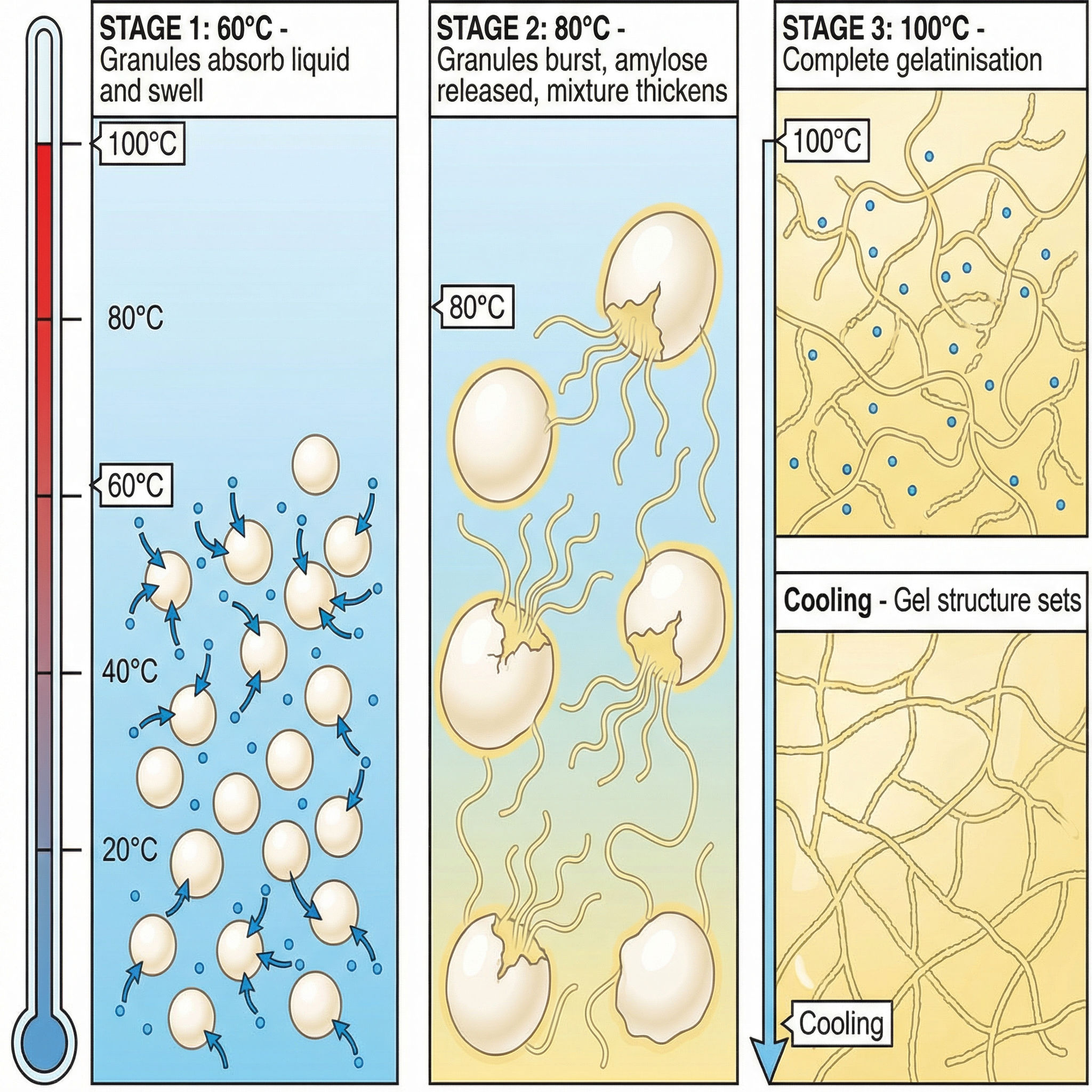
Stage 1: Absorption & Swelling (60°C)
What happens: When a starch and liquid are heated, the starch granules begin to absorb the liquid. At approximately 60°C, this process accelerates significantly. The granules start to swell, increasing in size as they take on more liquid. At this stage, the mixture has not yet thickened, but the process has begun.
Why it matters: This is the initial and necessary first step. Without the absorption of liquid, the granules cannot soften and rupture in the later stages. It is the preparation phase for the main thickening event.
Specific Knowledge: Candidates must identify the three essential components for gelatinisation: starch, liquid, and heat. They should also be able to state that swelling begins at 60°C.
Stage 2: Bursting & Thickening (80°C)
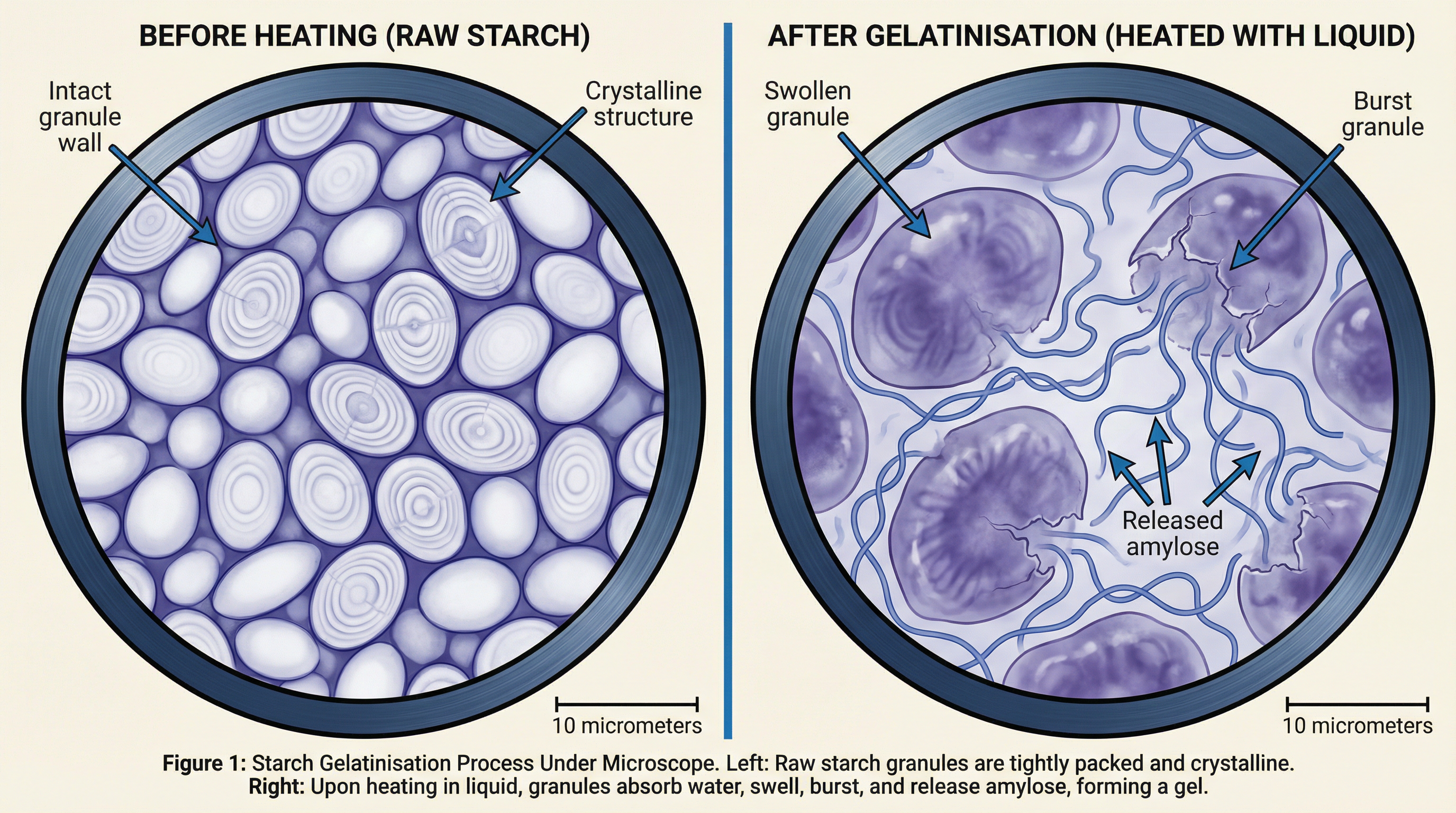
What happens: As the temperature reaches 80°C, the swollen starch granules can no longer hold their shape and they burst open. This releases long-chain starch molecules, primarily amylose, into the surrounding liquid. These amylose molecules unravel and form a network that traps water molecules.
Why it matters: This is the critical thickening stage. The release and dispersion of amylose molecules dramatically increases the viscosity (the scientific term for the thickness or resistance to flow) of the liquid. This is what transforms a thin liquid into a thick sauce.
Specific Knowledge: Marks are awarded for explaining that granules burst at 80°C, releasing amylose, which is directly responsible for thickening the liquid.
Stage 3: Completion & Gel Formation (100°C and Cooling)
What happens: At 100°C (boiling point), the gelatinisation process is complete. The starch granules are fully ruptured, and the maximum amount of amylose has been released, resulting in the mixture reaching its maximum thickness. However, the final gel structure is only formed upon cooling. As the mixture cools, the amylose network becomes more organised and rigid, trapping the liquid and setting into a firm gel.
Why it matters: This explains why a sauce or custard appears thick when hot but becomes much firmer and sets as it cools. It is the difference between a hot, viscous liquid and a solid, sliceable gel (like a cooled custard tart).
Specific Knowledge: Credit is given for stating that the process is complete at 100°C and that the gel structure forms upon cooling.
Practical Application: Sauce-Making Methods
Understanding gelatinisation is essential for successful sauce making. Examiners will expect you to apply your scientific knowledge to practical cooking scenarios.
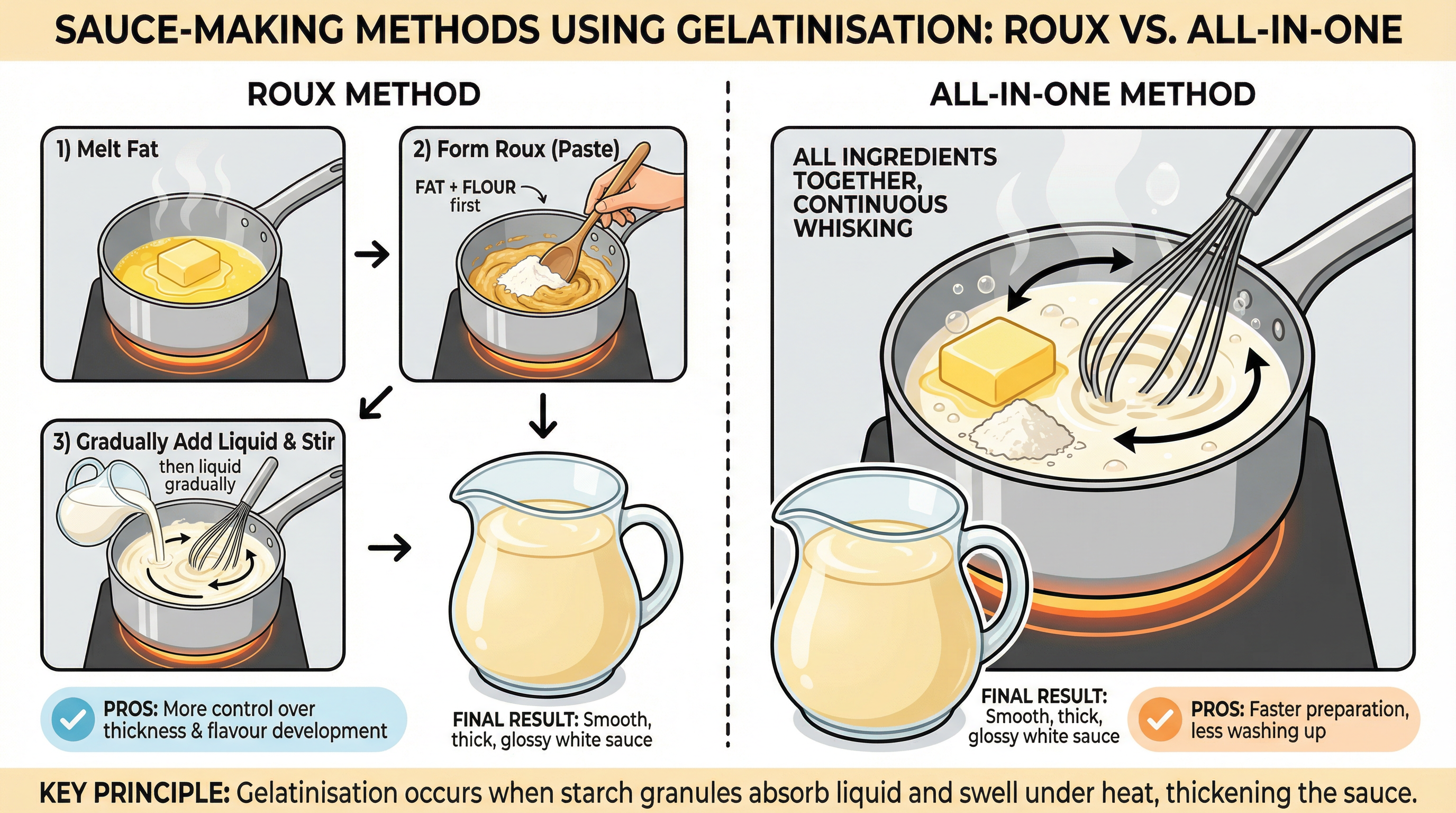
Roux Method vs. All-in-One Method
Roux Method:
- Melt Fat: Butter or another fat is melted.
- Form Roux: Flour (starch) is added and cooked in the fat for 1-2 minutes. This removes the raw flour taste and coats the starch granules in fat, which helps prevent lumps.
- Gradually Add Liquid: Milk or stock is added slowly while stirring continuously. This allows the starch granules to disperse evenly before they gelatinise.
All-in-One Method:
- Combine Ingredients: Flour, fat, and liquid are all placed in the pan at the same time.
- Heat and Whisk: The mixture is heated while being whisked constantly. The continuous agitation is vital to separate the starch granules and prevent them from forming lumps as they swell and thicken.
Why Agitation Matters: In both methods, stirring or whisking (agitation) is crucial. It ensures even heat distribution, prevents the sauce from catching on the bottom of the pan, and, most importantly, separates the starch granules so they can swell and thicken individually, resulting in a smooth, lump-free sauce.