Study Notes
Overview
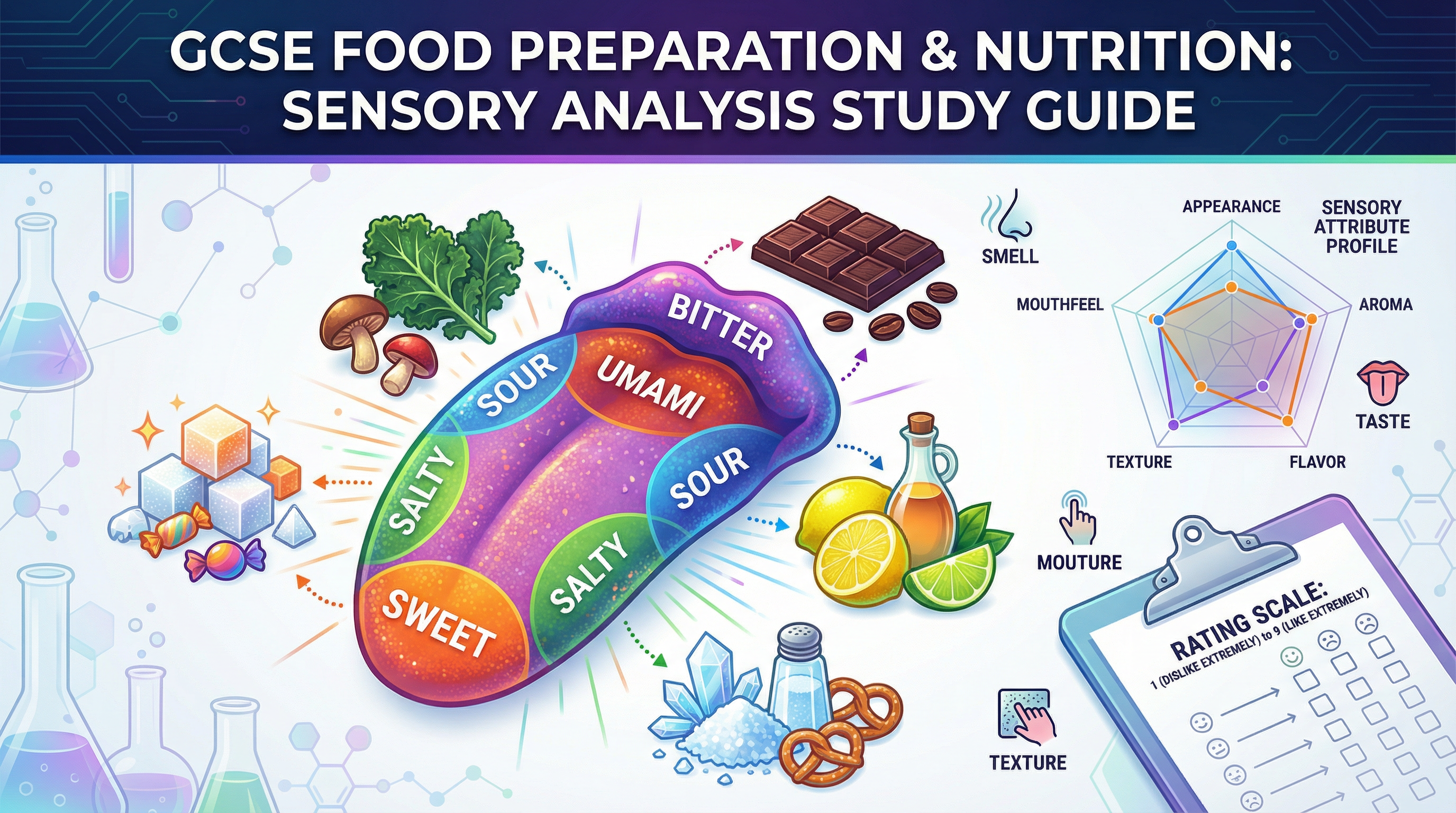
Sensory analysis is the scientific method used to evoke, measure, analyse, and interpret human responses to food products as perceived through the senses of sight, smell, touch, taste, and hearing. For WJEC GCSE candidates, this isn't just about saying whether a food is 'nice'; it's about applying rigorous, objective testing methodologies to evaluate food quality. Examiners expect candidates to demonstrate a firm grasp of the physiological basis of taste and flavour, the four primary testing methods (Triangle, Ranking, Rating, Profiling), and the critical importance of fair testing conditions. Mastery of this topic is essential for justifying ingredient modifications in practical work (NEA 2) and for answering structured questions in the written exam. Credit is given for using precise, technical language and for analysing data to draw valid conclusions.
Key Concepts & Methods
The Five Basic Tastes
The foundation of sensory analysis is understanding the five basic tastes detected by specific receptors on the tongue. It is a common mistake to confuse taste with flavour. Taste is simple, while flavour is a complex combination of taste and aroma.
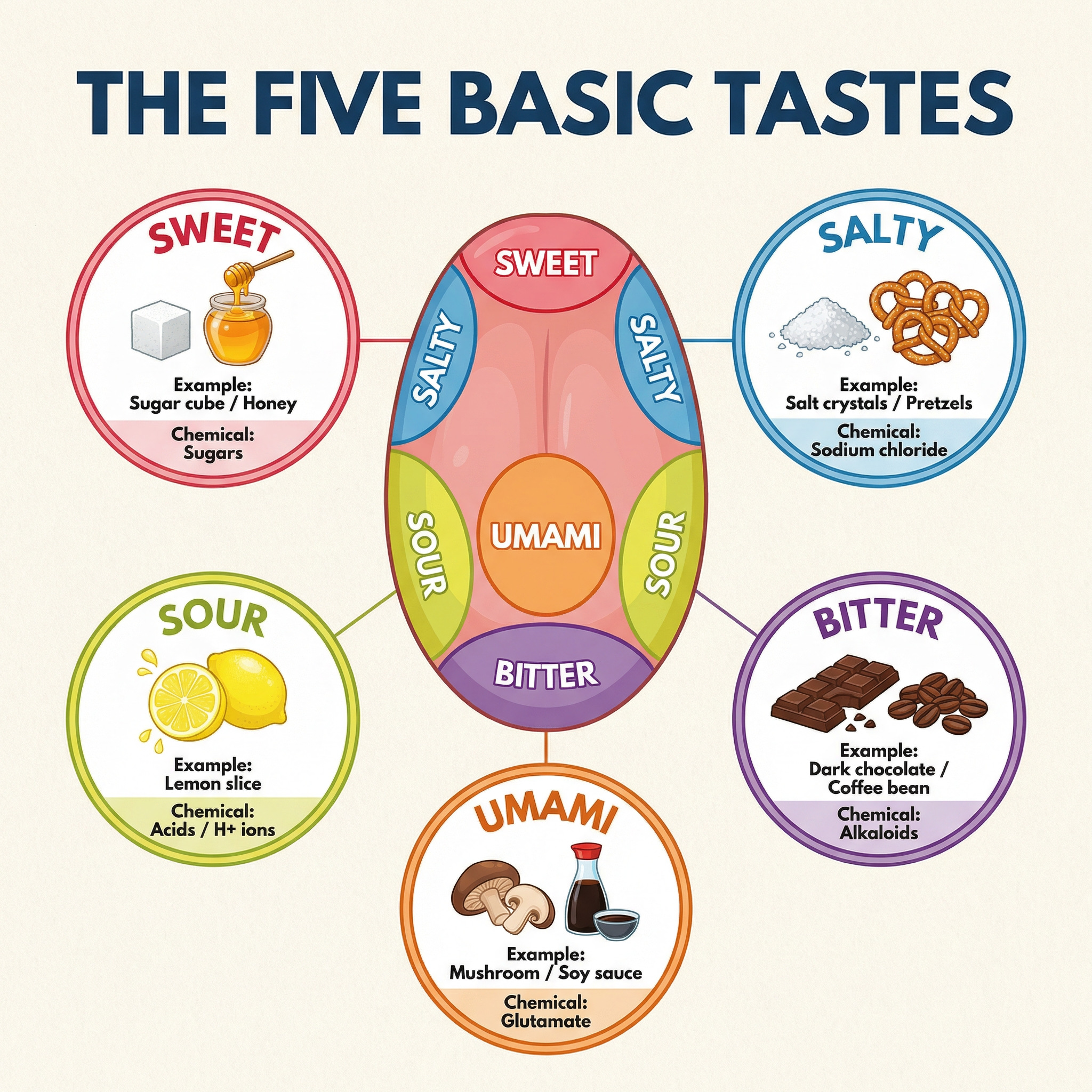
- Sweet: Usually indicates the presence of sugars, providing energy.
- Sour: Detects acidity (H+ ions), which can be a warning against unripe or spoiled food.
- Salty: Identifies the presence of sodium chloride, essential for bodily functions.
- Bitter: Often associated with alkaloids, acting as a natural warning system for potential toxins.
- Umami: A savoury taste triggered by glutamates, often found in protein-rich foods like meat and cheese.
Sensory Testing Methods
Choosing the correct testing method for a specific objective is a key skill. Examiners will award marks for justifying the selection of a particular test.
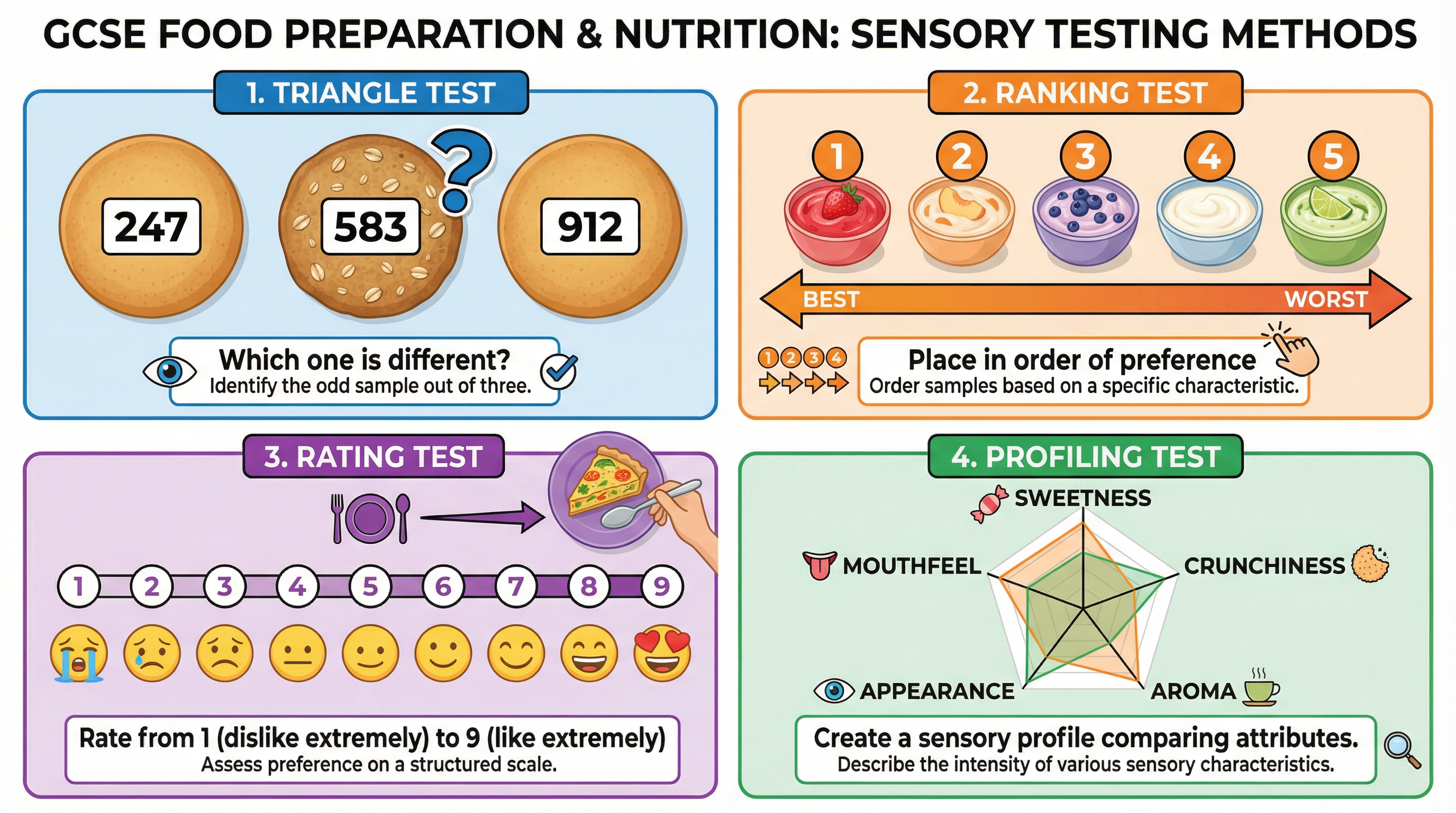
- Triangle Test (Discrimination): Used to determine if a sensory difference exists between two products. Testers are given three coded samples, where two are identical and one is different, and must identify the odd one out. This is highly effective for checking the impact of recipe changes, such as a reduction in sugar or salt.
- Ranking Test (Discrimination): Testers are asked to place several coded samples in order based on a specific characteristic, such as sweetness, crunchiness, or colour intensity. It's useful for comparing multiple samples but doesn't reveal the degree of difference between them.
- Rating Test (Preference): This test measures the degree of liking for a product. The most common method is the Hedonic Scale, typically a 9-point scale ranging from 'Dislike Extremely' to 'Like Extremely'. It is a preference test, not a difference test, and is used to gauge consumer acceptance.
- Profiling Test (Descriptive): The most detailed method, used to create a comprehensive sensory profile of a product. A panel of trained testers rates the intensity of various sensory attributes (e.g., aroma, flavour, texture, appearance). The results are often plotted on a star diagram (or radar plot), providing a visual comparison between products.
Fair Testing Conditions
To ensure results are objective and reliable (a key term), sensory tests must be conducted under controlled conditions. Failure to describe these conditions in an exam answer will limit the marks awarded.
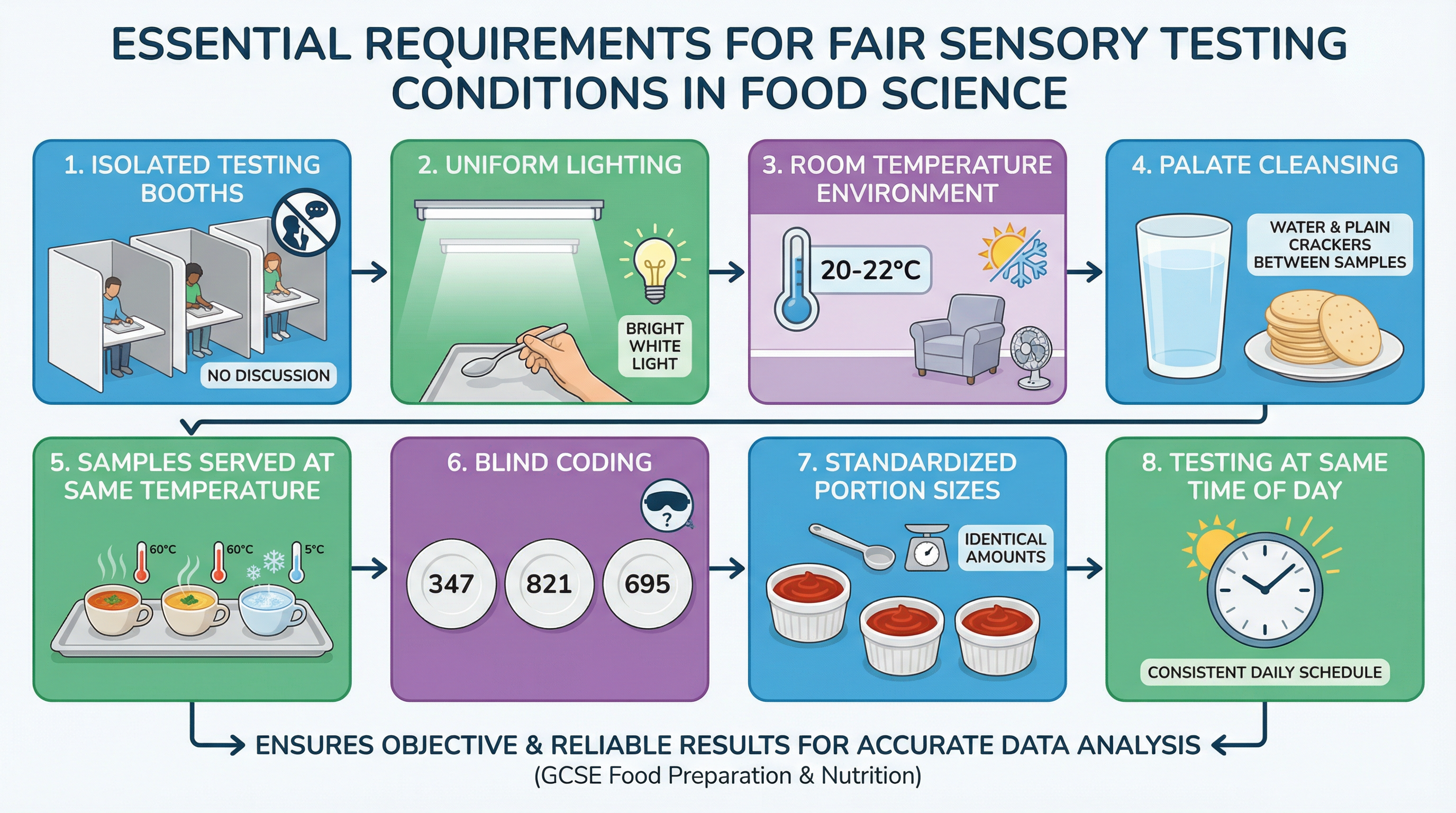
Key requirements include:
- Blind Coding: Samples are labelled with random three-digit codes to prevent bias.
- Isolated Booths: Testers should be separated to avoid influencing each other.
- Uniform Lighting: Consistent lighting ensures the appearance of products is judged fairly.
- Palate Cleansers: Water and plain crackers are used to cleanse the palate between samples.
- Standardised Samples: Samples must be the same size, served at the same temperature, and from the same batch.