Study Notes
Overview
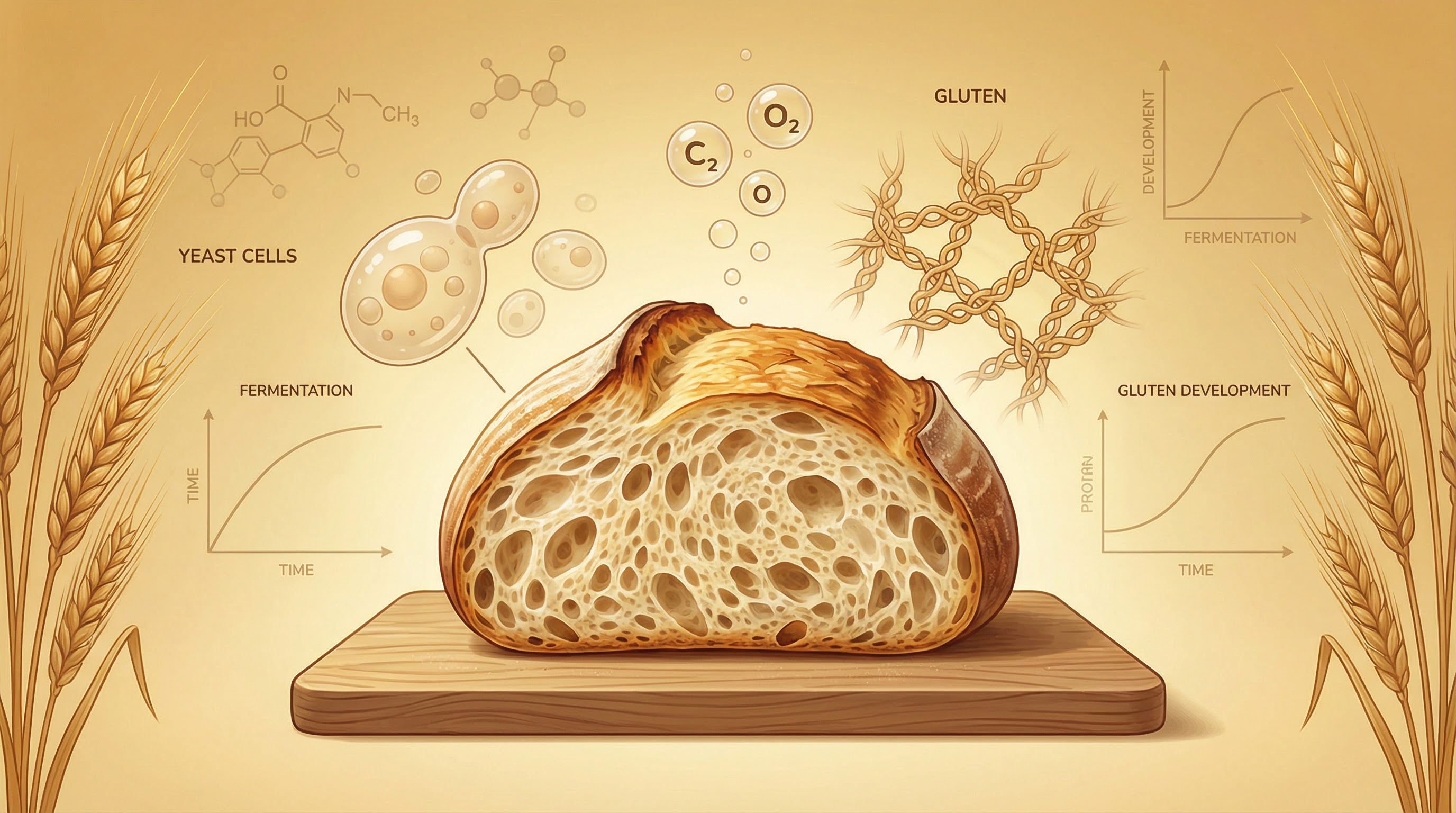
This study guide focuses on the scientific principles of bread making, a core topic in the OCR J309 GCSE Food Preparation and Nutrition specification. Examiners expect candidates to demonstrate a deep understanding of the functional properties of each ingredient and the chemical changes that occur during the process. Moving beyond a simple recipe, this guide will equip you with the precise terminology and scientific knowledge required to explain how flour, yeast, water, and salt are transformed into a well-risen loaf. We will cover gluten network formation, anaerobic fermentation by yeast, and the critical heat transfer processes during baking, such as dextrinisation and coagulation. By mastering these concepts, you will be prepared to tackle high-mark questions and articulate your answers like a food scientist.
The Science of Bread: Key Stages & Processes
1. Ingredient Functions: The Building Blocks
What happens: The primary ingredients are combined. Each has a specific scientific role.
Why it matters: Marks are awarded for identifying the function of each ingredient, not just listing them.
Specific Knowledge:
- Strong Bread Flour: High protein content (12-14%). The key proteins are gliadin and glutenin.
- Yeast (Saccharomyces cerevisiae): A single-celled fungus; a biological raising agent.
- Water: Hydrates the flour proteins and provides the medium for yeast to ferment.
- Salt: Controls yeast activity and strengthens the gluten network.
2. Gluten Formation: Creating the Structure
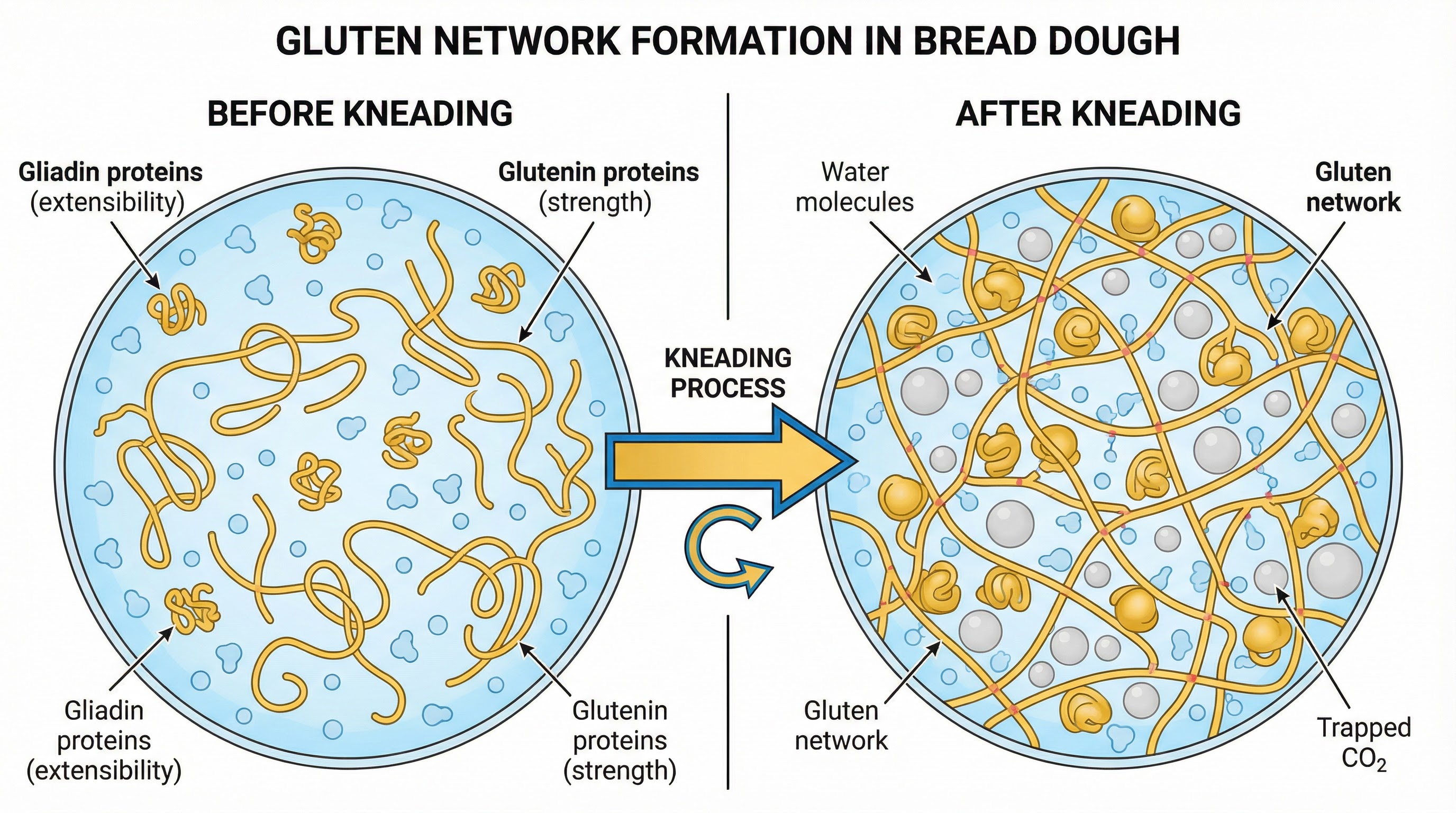
What happens: Kneading the dough develops the gluten network. Water allows the gliadin and glutenin proteins to bond and form long, elastic strands of gluten.
Why it matters: This network traps the CO2 produced by yeast, which is essential for the bread to rise. A weak network results in a dense, flat loaf.
Specific Knowledge:
- Gliadin: Provides extensibility (the ability to stretch).
- Glutenin: Provides elasticity and strength (the ability to spring back).
- Kneading: A mechanical process that stretches and aligns the protein strands into a strong, cohesive mesh.
3. Fermentation: The Power of Yeast
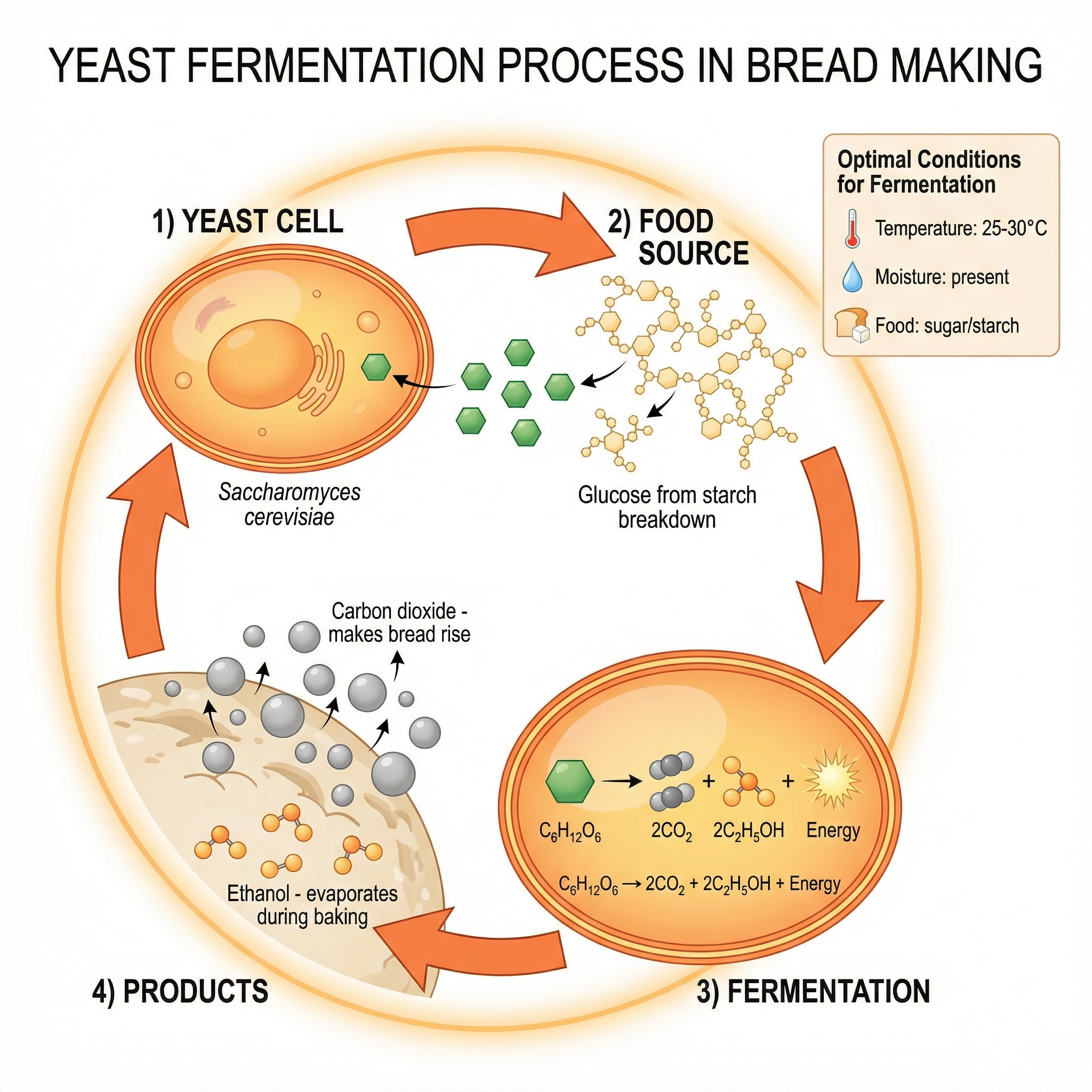
What happens: Yeast feeds on the sugars and starches in the flour in a process called anaerobic fermentation.
Why it matters: This is the primary source of leavening in bread. Candidates must explain this process to get top marks.
Specific Knowledge:
- Chemical Equation: Glucose → Carbon Dioxide (CO2) + Ethanol + Energy
- Optimal Conditions: Yeast requires warmth (25-30°C), moisture, and food (starch/sugar).
- Consequences: The CO2 gas gets trapped in the gluten network, causing the dough to rise (prove). The ethanol evaporates during baking.
4. Baking: The Final Transformation
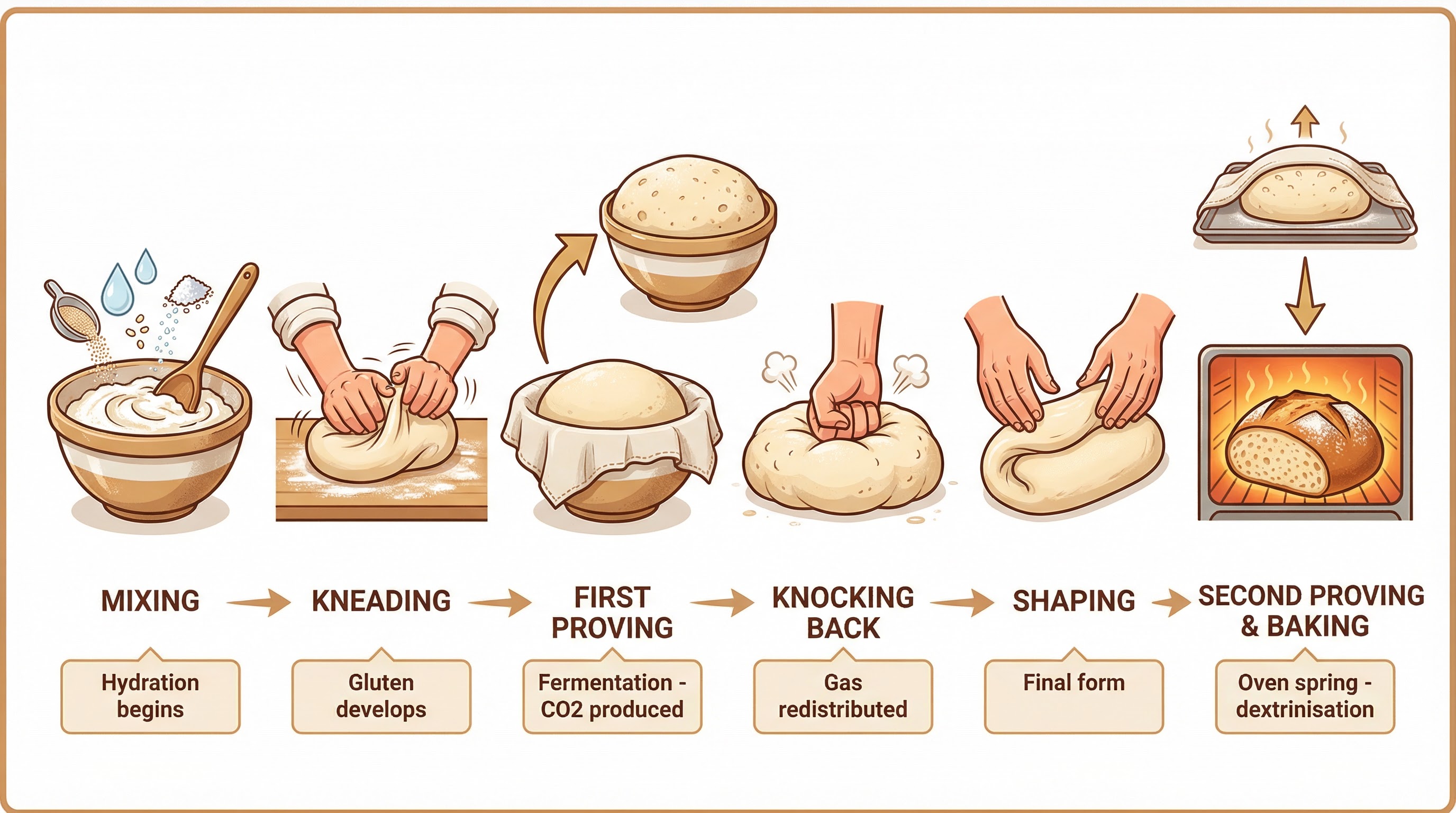
What happens: The dough is subjected to intense dry heat in the oven, causing a series of chemical and physical changes.
Why it matters: This stage sets the final structure, texture, and flavour of the bread.
Specific Knowledge:
- Oven Spring: The rapid expansion of trapped CO2 gas in the first few minutes of baking.
- Coagulation: The gluten proteins set and become firm at around 74°C, creating the final structure.
- Dextrinisation: The browning of the crust, caused by dry heat acting on starch molecules.
- Yeast is killed: Fermentation stops at around 60°C.
Second-Order Concepts
Causation
- Primary Cause: The fermentation of yeast produces CO2 gas.
- Secondary Cause: The development of a strong gluten network traps this gas.
- Tertiary Cause: The application of heat causes gas expansion (oven spring) and sets the structure (coagulation).
Consequence
- Immediate: Dough rises, doubles in volume.
- Long-term: A light, airy crumb structure is formed, the crust becomes golden brown, and the bread develops its characteristic flavour.
Change & Continuity
- Change: Raw ingredients are chemically and physically transformed into a new product. The proteins are denatured and coagulated, starches are gelatinised and dextrinised.
- Continuity: The basic principles of yeast fermentation have been used for thousands of years.
Significance
- Understanding these scientific principles allows for control and manipulation of the final product, which is the basis of food product development and food science."