Study Notes
Overview
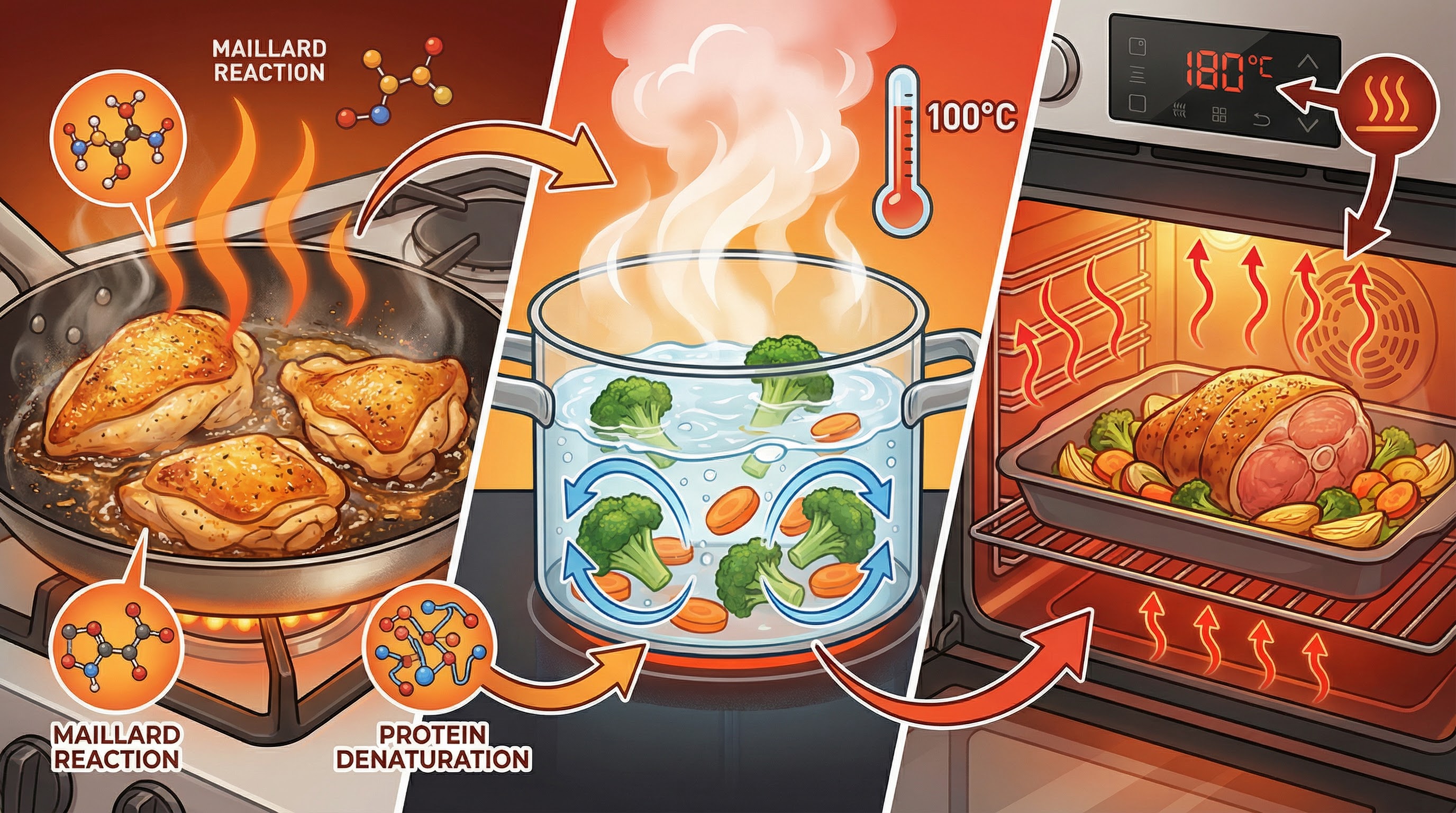
This topic explores the scientific principles underpinning how we cook food. Examiners expect candidates to demonstrate a clear understanding of the three methods of heat transfer—conduction, convection, and radiation—and how these methods influence the chemical and nutritional properties of ingredients. You will need to explain functional changes like protein denaturation, starch gelatinisation, and the Maillard reaction with scientific precision. Furthermore, a critical evaluation of how different cooking techniques affect vitamin retention and overall palatability is essential for achieving higher marks. This is not just about following a recipe; it is about understanding the fundamental science of what happens when heat is applied to food.
Key Cooking Principles
Heat Transfer Mechanisms
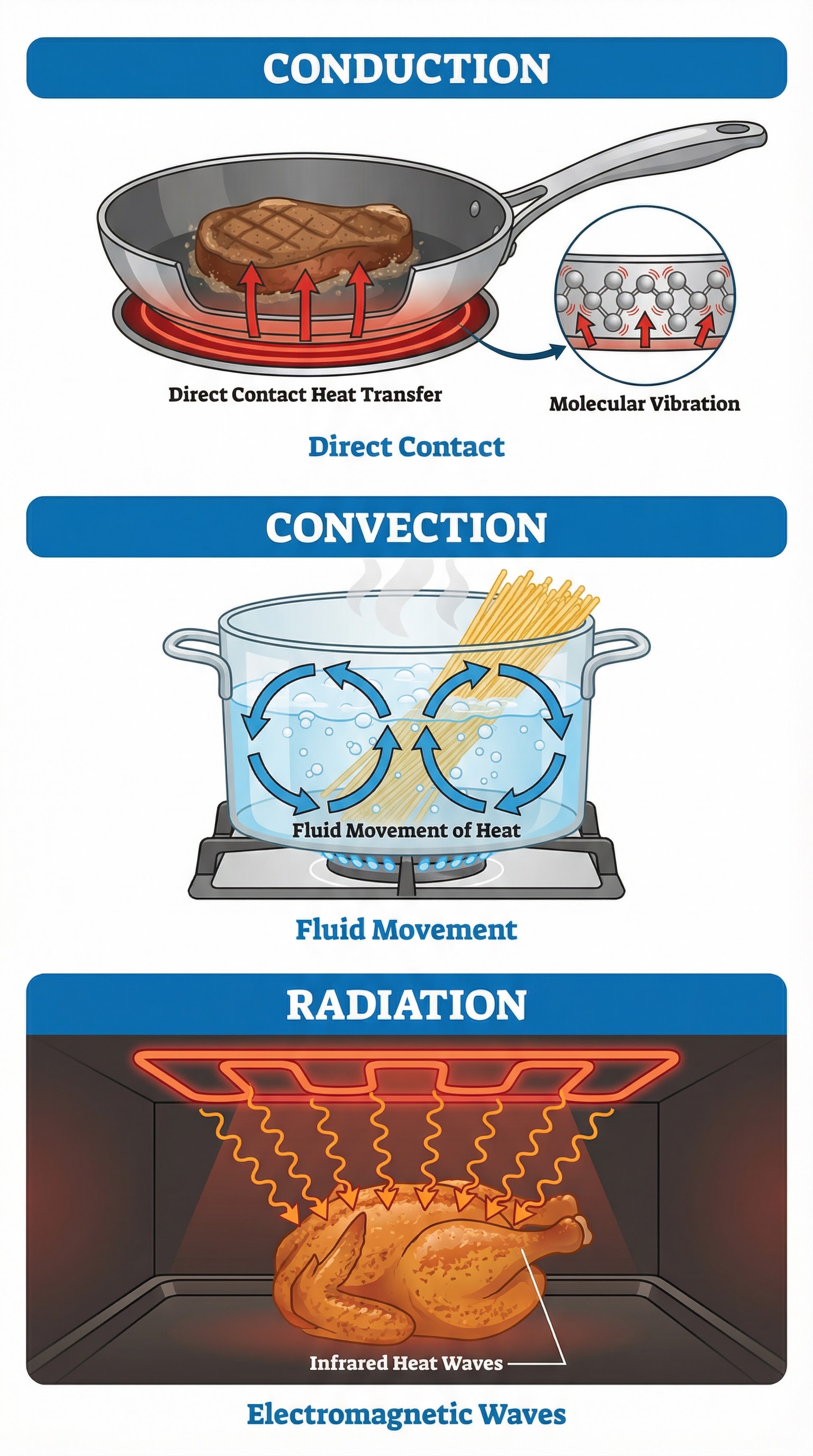
What it is: The way thermal energy moves from a heat source to the food. Understanding the distinction between the three types is fundamental.
Why it matters: Examiners frequently ask candidates to identify and explain the primary mode of heat transfer in a given cooking scenario (e.g., grilling, boiling). Marks are awarded for using precise scientific language and correctly linking the mechanism to the method.
Specific Knowledge: You must be able to define and give examples for Conduction, Convection, and Radiation.
Chemical Changes in Food
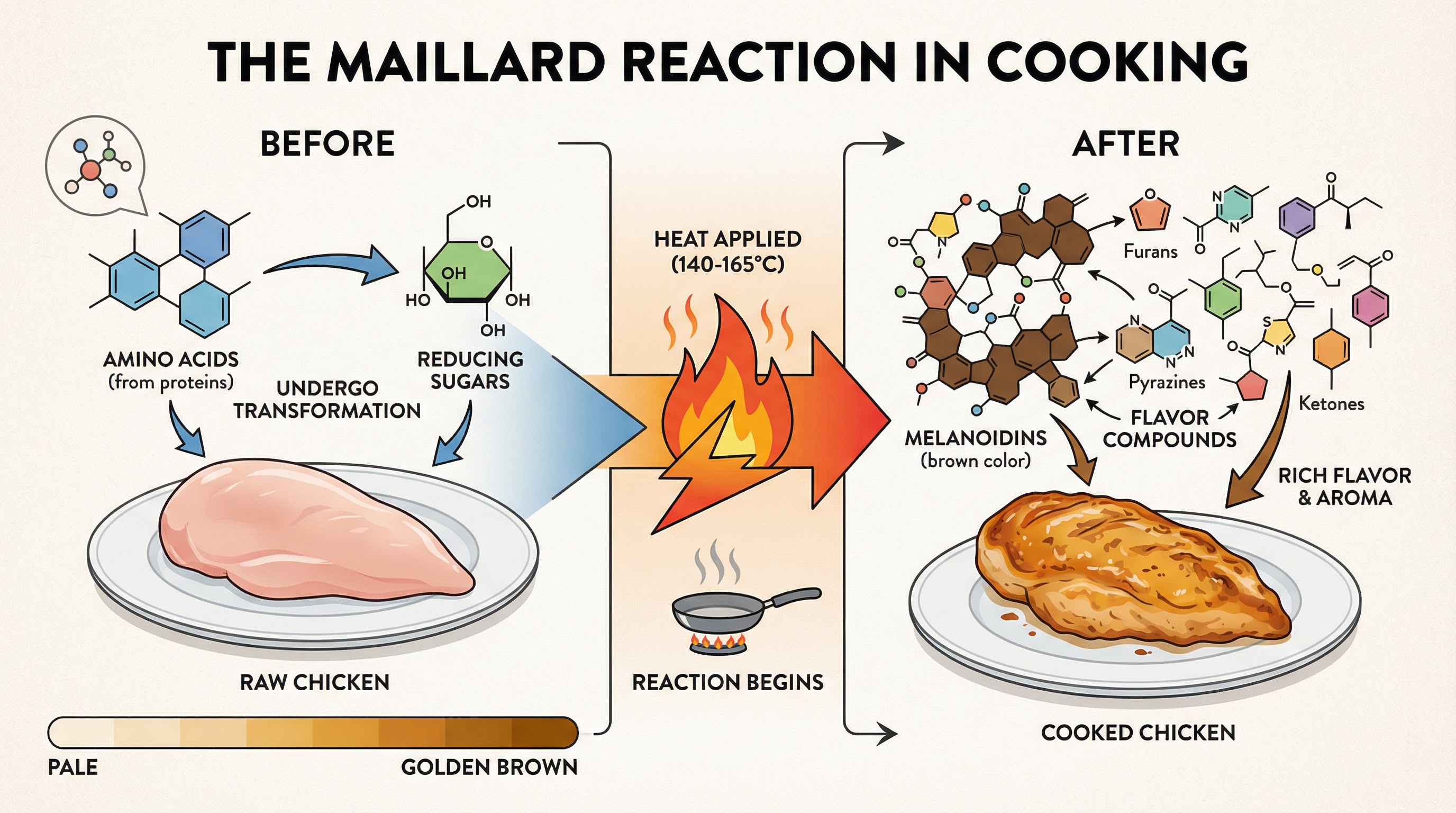
What it is: The alteration of the molecular structure of proteins, carbohydrates, and fats during cooking. Key examples include protein denaturation and coagulation (eggs turning solid), starch gelatinisation (sauces thickening), and caramelisation (sugar browning).
Why it matters: Explaining these changes is a high-tariff skill. It shows a deeper understanding beyond just describing the cooking process. For example, linking the browning of meat to the Maillard reaction is a classic way to earn credit.
Specific Knowledge: Maillard reaction, Denaturation, Coagulation, Gelatinisation, Caramelisation.
Nutritional Impact
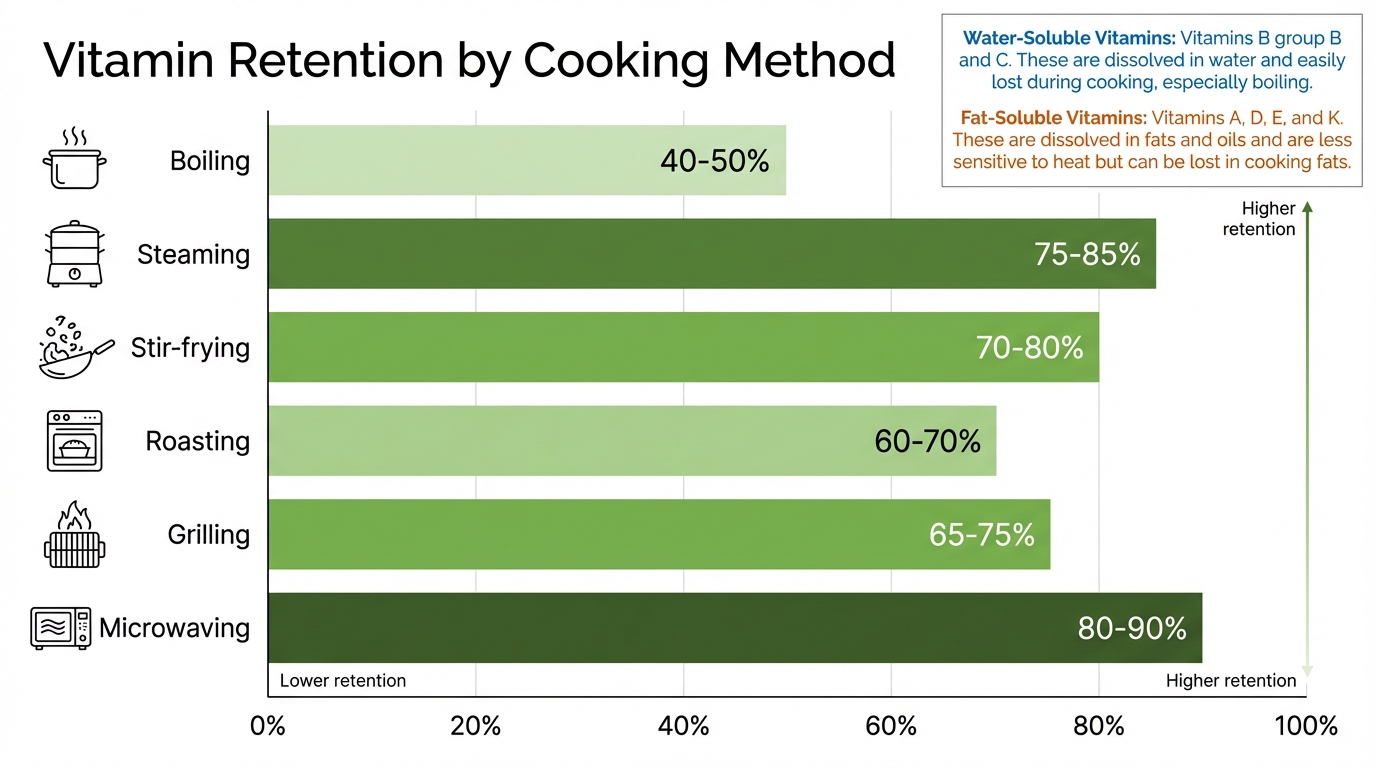
What it is: The gain or loss of nutrients as a result of the cooking process. This is particularly important for vitamins, which can be sensitive to heat, water, and air.
Why it matters: Evaluation questions often require you to compare cooking methods. A key point of comparison is their effect on nutritional value. Candidates must be specific about which vitamins are lost and why (e.g., leaching of water-soluble vitamins).
Specific Knowledge: Water-soluble vitamins (B group, C), Fat-soluble vitamins (A, D, E, K), Leaching, Oxidation.
Second-Order Concepts
Causation
Understanding why a specific cooking method is chosen is key. This involves analysing the desired outcome. For example, the cause for choosing to fry food is often to achieve a crisp texture and brown appearance, which is a direct result of the Maillard reaction.
Consequence
The consequences of choosing a cooking method are threefold: sensory (taste, texture, aroma), nutritional (vitamin loss/retention), and safety (destruction of harmful bacteria). A good answer will consider the consequences across all three areas.
Change & Continuity
Change is evident in the food itself—raw to cooked. This involves changes in colour, texture, and flavour. Continuity can be seen in the underlying principles; while cooking methods evolve, the fundamental processes of heat transfer and chemical reactions remain constant.
Significance
The significance of choosing the right cooking method is vast. It impacts palatability, making food more enjoyable to eat. It affects nutritional intake, which is vital for health. And it ensures food is safe to consume by killing pathogenic microorganisms. Justifying the choice of method based on these significance factors is a core exam skill.