Study Notes
Overview
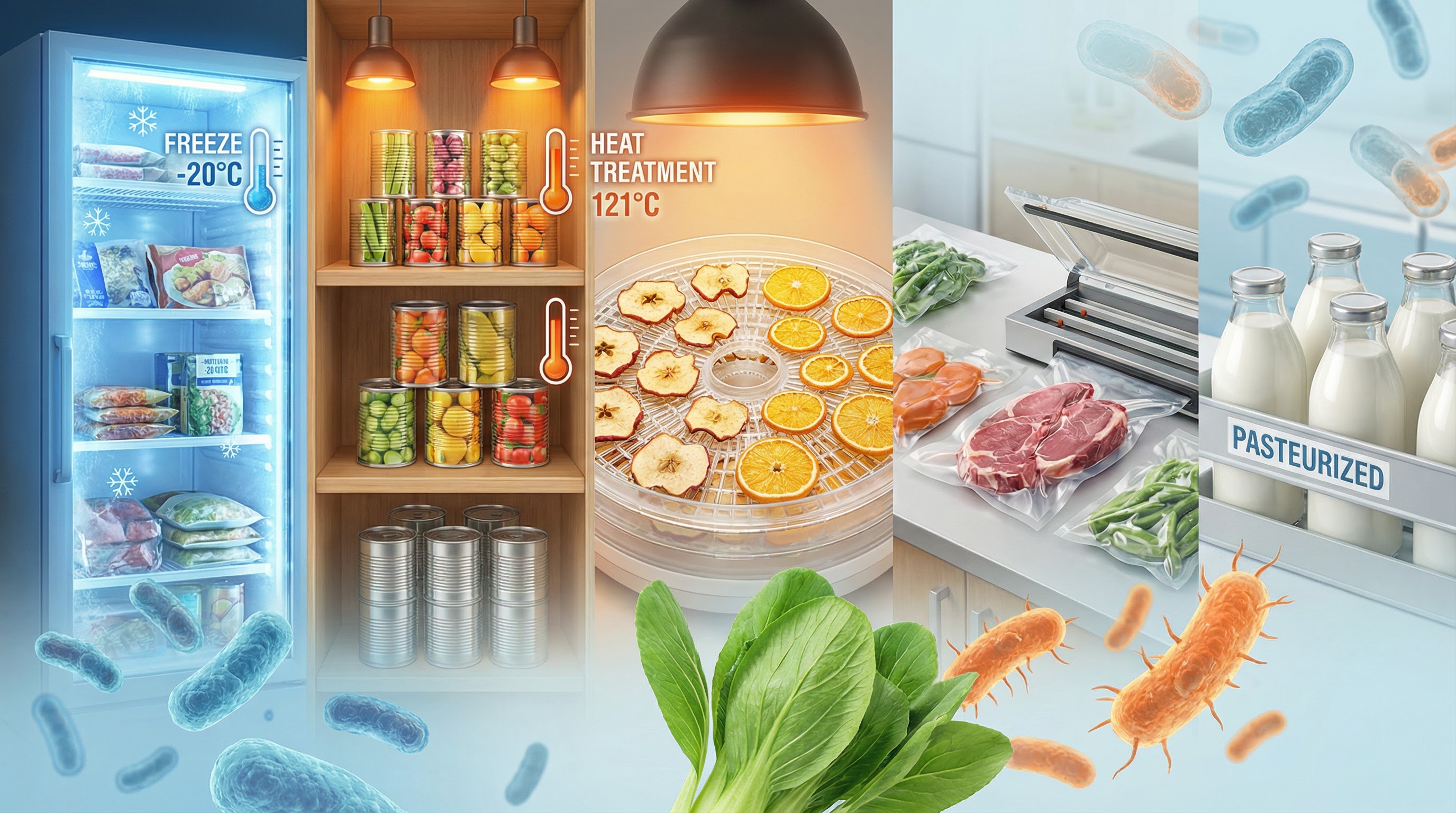
Food preservation is a cornerstone of food science and a significant component of the OCR GCSE specification. Examiners expect candidates to demonstrate a robust understanding of the scientific principles underpinning various preservation methods. This involves not just listing techniques, but explaining the mechanisms by which they inhibit microbial growth and enzymatic activity. A strong response will link specific preservation methods directly to the control of one or more of the six factors required for bacterial growth, as defined by the FAT TOM model. Furthermore, candidates must be able to differentiate between spoilage and pathogenic microorganisms, and explain the significance of this distinction for food safety. This guide will equip you with the detailed knowledge and analytical skills required to achieve high marks in this area.
Key Preservation Principles
The Science of Spoilage
What happens: Food spoilage is caused by physical damage, chemical reactions (like oxidation), and biological changes from microorganisms. For your exam, the focus is on microorganisms: yeasts, moulds, and bacteria. It is crucial to distinguish between spoilage organisms, which affect the organoleptic properties (taste, smell, texture), and pathogenic organisms, which cause food poisoning and are a major safety concern.
Why it matters: Understanding the cause of spoilage is fundamental to preventing it. Marks are awarded for identifying the specific type of spoilage and the microorganisms involved. For example, mould growth on bread is biological spoilage, while an apple turning brown is chemical spoilage (enzymic browning).
Specific Knowledge: You must know the key pathogens, such as Salmonella, E. coli, and Listeria, and the conditions they thrive in.
The FAT TOM Framework
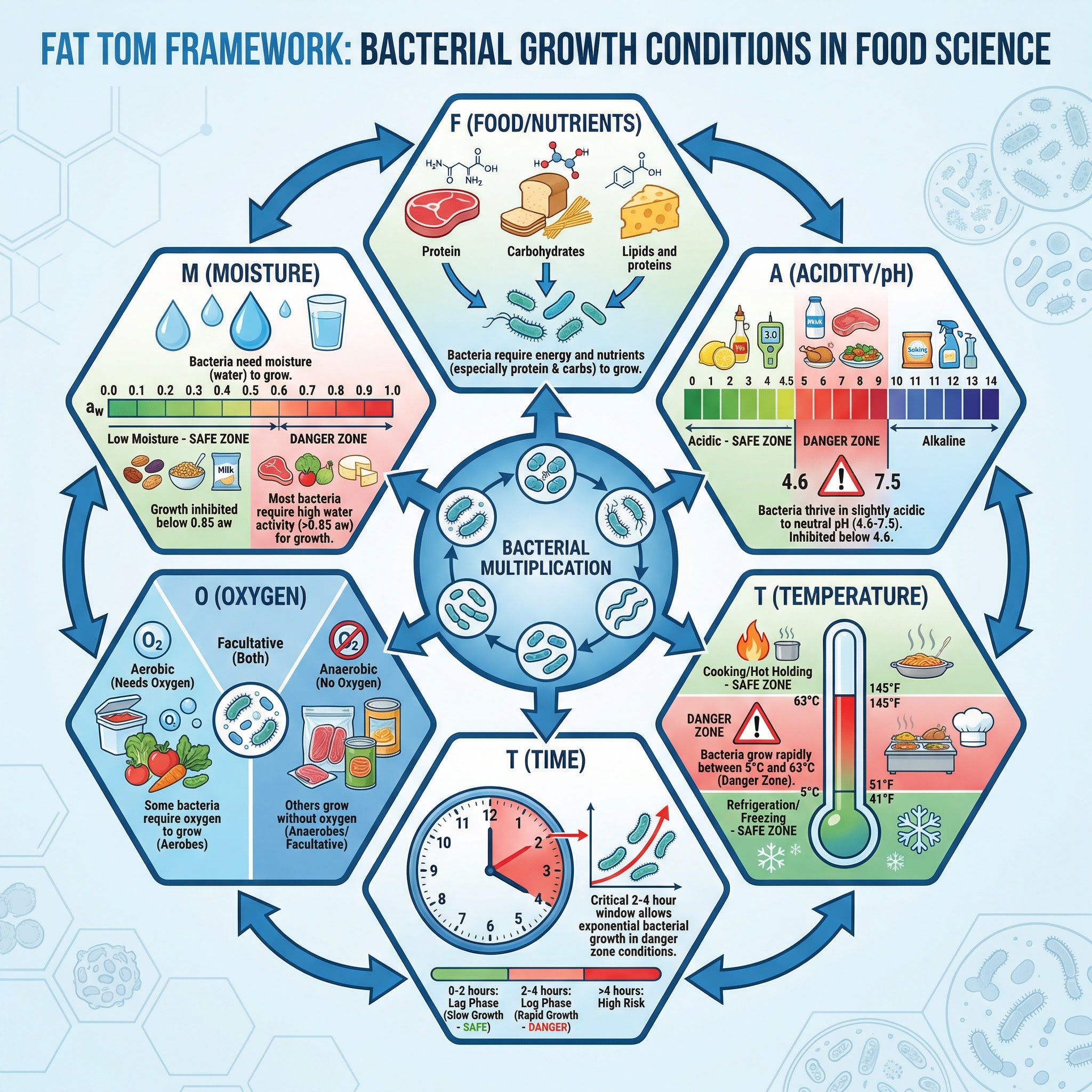
What it is: FAT TOM is a mnemonic that represents the six conditions required for microbial growth. All preservation methods work by removing or controlling at least one of these factors.
- Food: The nutrients bacteria need to grow, especially proteins and carbohydrates.
- Acidity: Bacteria prefer a neutral pH (around 7.0). High acidity (low pH) inhibits their growth.
- Temperature: The 'danger zone' for bacterial growth is between 5°C and 63°C.
- Time: Given the right conditions, bacteria can double in number every 20 minutes.
- Oxygen: Some bacteria are aerobic (require oxygen), while others are anaerobic (don't require oxygen).
- Moisture: Bacteria need water to absorb food. This is measured as 'water activity' (aw).
Why it matters: This is your analytical toolkit. In any question about preservation, you should explicitly state which FAT TOM factor is being manipulated. This demonstrates higher-level understanding and is essential for top marks.
Key Preservation Methods
Temperature Control
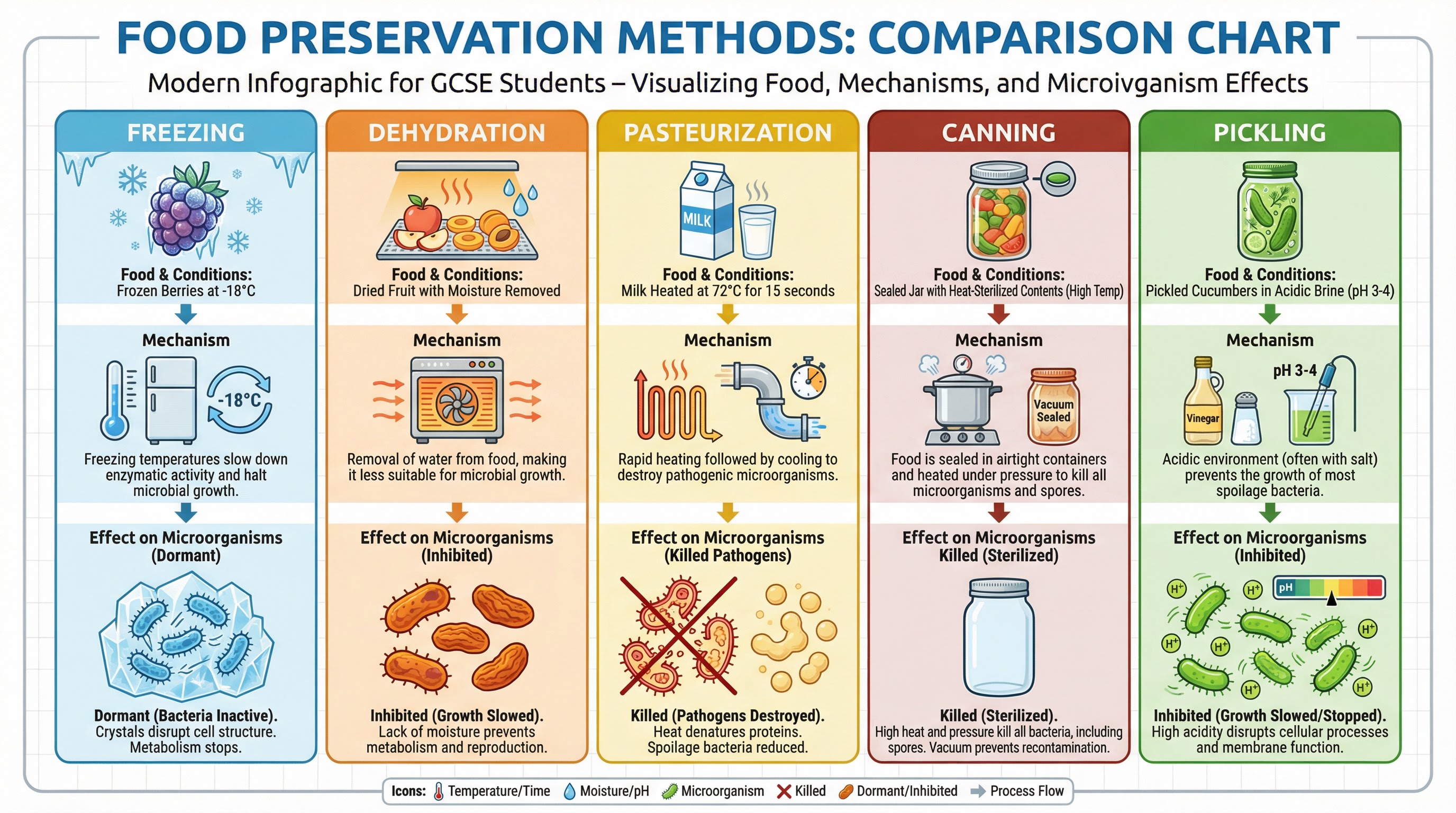
What happened: Using temperature to preserve food involves either refrigeration/freezing (cold) or heat treatments like pasteurisation and sterilisation.
- Freezing (-18°C): Renders bacteria dormant by turning available water into ice crystals. It does not kill them. This controls the Temperature factor.
- Pasteurisation (e.g., 72°C for 15 seconds for milk): A specific heat treatment that kills pathogenic bacteria but not all spoilage organisms or spores. This controls Temperature.
- Canning/Sterilisation (above 121°C): Uses high temperatures to kill all microorganisms, including spores, creating a commercially sterile product. This controls Temperature and often Oxygen by creating a vacuum seal.
Why it matters: Candidates must use precise temperatures and distinguish between killing bacteria and making them dormant. A common mistake is stating that freezing kills bacteria – this will lose you marks.
Moisture Removal
What happened: Dehydration removes water from food, reducing the water activity to a level that inhibits microbial growth.
Why it matters: This method controls the Moisture factor from FAT TOM. Examples include dried fruit, beef jerky, and powdered milk.
Acidity (pH) Control
What happened: Pickling involves preserving food in an acidic medium, like vinegar. The low pH (typically below 4.6) denatures microbial enzymes and prevents growth.
Why it matters: This method controls the Acidity factor. Candidates should be able to explain that the acidic environment is inhospitable to most bacteria.
Enzymic Browning and Prevention
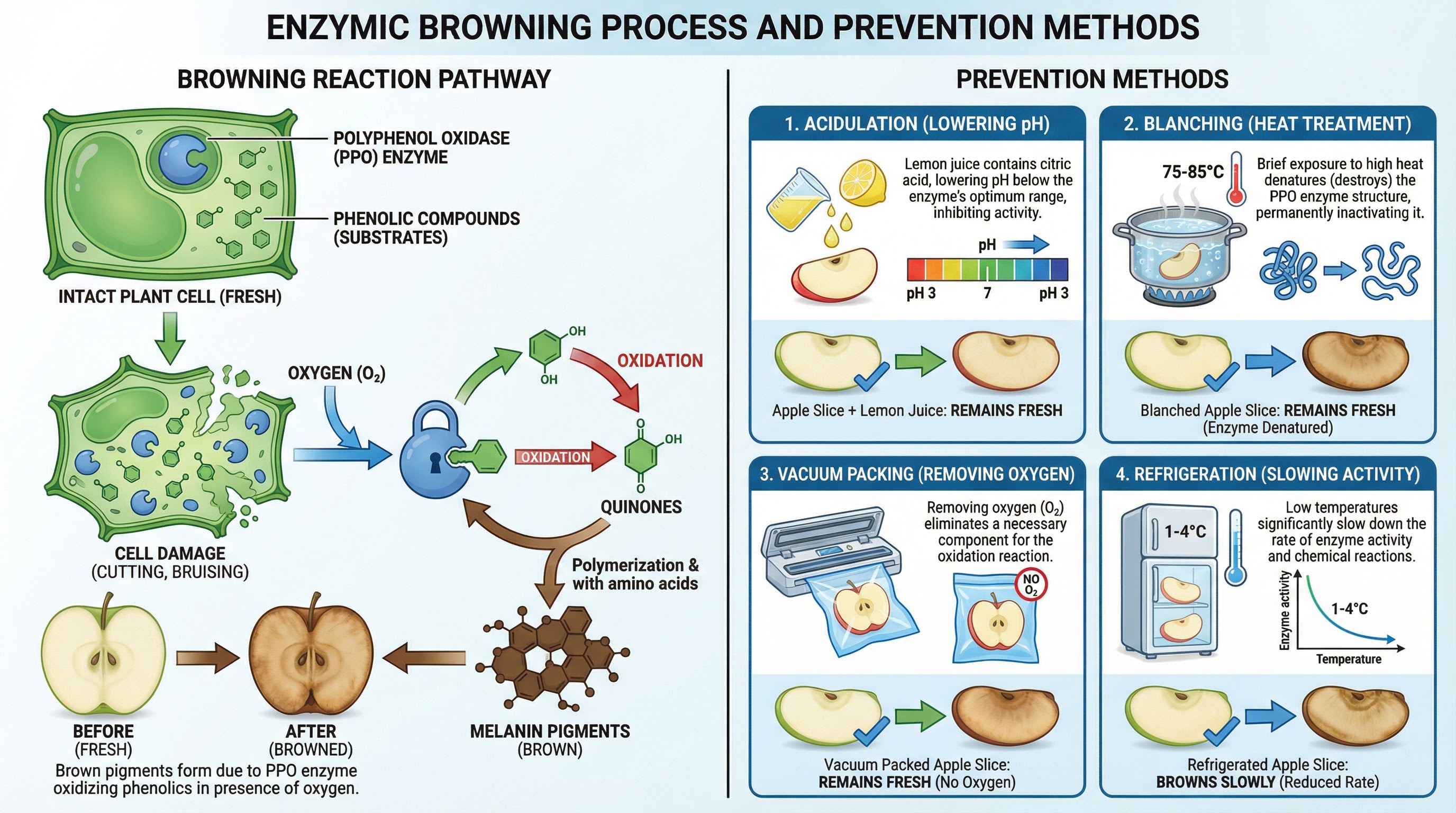
What it is: A chemical reaction that occurs when the enzyme polyphenol oxidase (PPO) in fruits and vegetables is exposed to oxygen, causing a brown discolouration.
Why it matters: This is a frequent exam topic. You must explain the roles of the enzyme, the substrate (phenolic compounds), and oxygen. Prevention methods work by controlling one of these components.
Specific Knowledge: Know the main prevention methods: Acidulation (e.g., lemon juice to lower pH), Blanching (heat to denature the enzyme), and Removing Oxygen (e.g., vacuum packing).