Study Notes
Overview
This guide covers the essential knowledge required for the Macronutrients topic in the OCR GCSE Food Preparation and Nutrition (J309) specification. Macronutrients – proteins, carbohydrates, and fats – are the nutrients the body needs in large amounts to provide energy and maintain structure. A precise understanding of their chemical makeup, classification, and function is critical for exam success. Examiners expect candidates to move beyond simple descriptions and demonstrate a deep understanding of how dietary intake of specific macronutrients directly impacts health, leading to conditions like Coronary Heart Disease (CHD), Type 2 diabetes, and obesity. This guide will break down these complex topics into clear, exam-focused sections, providing the specific terminology and analytical skills needed to achieve top grades. You will learn how to analyse diets, evaluate nutritional information, and structure your answers to meet the demands of the highest mark bands.
Proteins: The Body's Builders
Proteins are essential for growth, repair, and maintenance of all body tissues. For the exam, it is insufficient to just say 'protein'; you must refer to its constituent parts: amino acids.
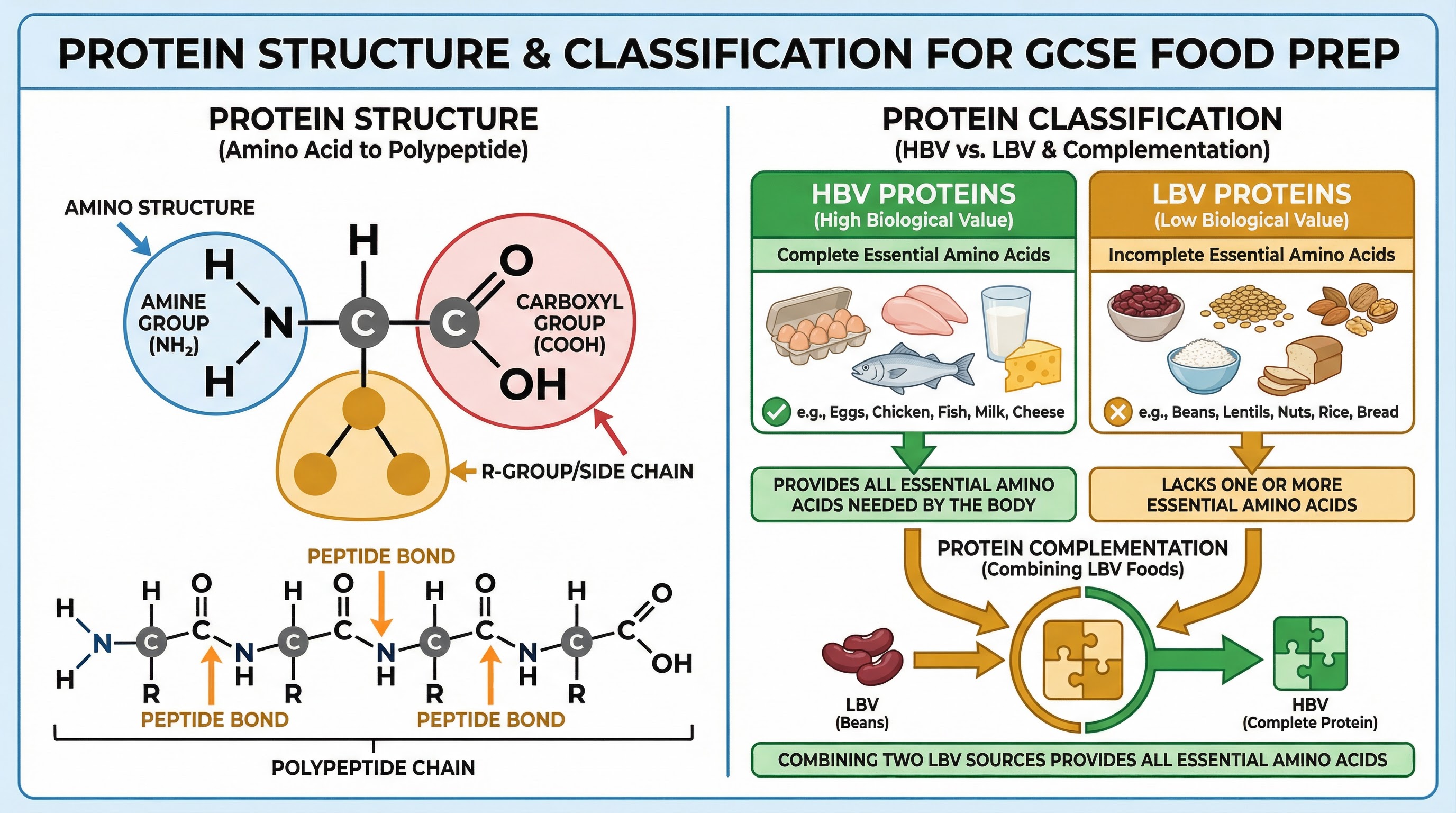
Chemical Structure: Amino acids are the building blocks of all proteins. Each amino acid has a central carbon atom bonded to:
- An Amine Group (-NH2)
- A Carboxyl Group (-COOH)
- A Hydrogen Atom (-H)
- An R-Group or side chain, which is different for each amino acid.
Amino acids link together via peptide bonds to form long chains called polypeptide chains. These chains then fold into complex three-dimensional shapes to form a functional protein.
Classification: Proteins are classified based on their amino acid profile.
- High Biological Value (HBV): These proteins contain all the essential amino acids (the 8-10 amino acids the body cannot synthesise and must obtain from the diet). They are sometimes called 'complete' proteins. Credit is given for naming sources like meat, poultry, fish, eggs, dairy products, and soya.
- Low Biological Value (LBV): These proteins are missing one or more of the essential amino acids. They are 'incomplete' proteins. Key sources include pulses (beans, lentils), nuts, seeds, and cereals (wheat, rice, oats).
Protein Complementation: This is a key concept that examiners look for, especially in questions about vegetarian or vegan diets. It is the process of combining two or more LBV protein sources in a meal to provide all the essential amino acids. For example, combining beans on toast or lentil soup with a bread roll creates a complete protein profile. Marks are awarded for explaining this mechanism.
Functions:
- Primary: Growth of new cells and tissues, and repair of existing ones.
- Secondary: Production of enzymes, hormones, and antibodies. Provision of energy is a secondary function, used only when carbohydrate and fat stores are depleted.
Carbohydrates: The Body's Fuel
Carbohydrates are the body's primary source of energy. Candidates must be able to classify them and link their consumption to health.
Chemical Structure: Carbohydrates are made of basic sugar units.
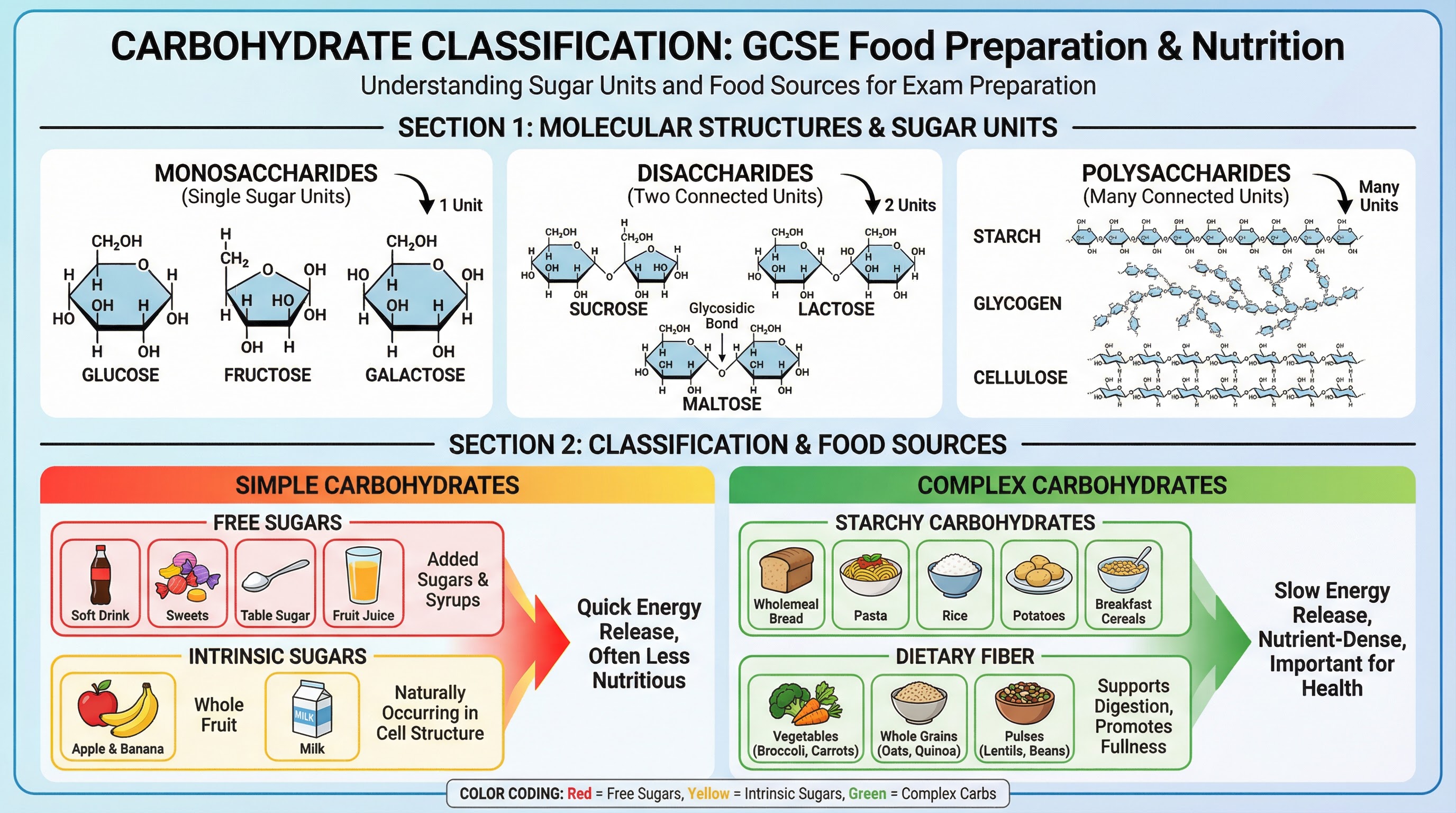
- Monosaccharides: Single sugar units (e.g., glucose, fructose, galactose).
- Disaccharides: Two sugar units joined together (e.g., sucrose, lactose, maltose).
- Polysaccharides: Many sugar units joined in long chains (e.g., starch, glycogen, cellulose/fibre).
Classification & Health Implications:
- Simple Carbohydrates (Sugars):
- Intrinsic Sugars: Found naturally within the cellular structure of foods like whole fruits, vegetables, and milk. Digested more slowly.
- Free Sugars: Added to foods by manufacturers (e.g., biscuits, cakes, fizzy drinks) or naturally present in honey, syrups, and fruit juices. These are rapidly absorbed, causing blood sugar spikes and contributing to tooth decay and obesity if consumed in excess.
- Complex Carbohydrates (Starch & Fibre):
- Starchy Carbohydrates: Found in foods like potatoes, bread, rice, and pasta. They provide a slow, steady release of energy. Wholegrain versions also provide fibre.
- Dietary Fibre (NSP): Found in vegetables, whole grains, and pulses. It is crucial for digestive health, preventing constipation, and has been shown to reduce the risk of Type 2 diabetes, heart disease, and bowel cancer.
Functions:
- Primary: To provide energy. The body breaks down carbohydrates into glucose, which is used for respiration.
- Fibre: Aids peristalsis, provides a feeling of fullness (satiety), and helps to control blood sugar levels.
Fats (Lipids): Energy & Protection
Fats are a concentrated source of energy and perform many vital functions. It is crucial to differentiate between the types of fat.
Chemical Structure: Fats are made of glycerol and fatty acids. The type of fatty acid determines the fat's properties and health effects.
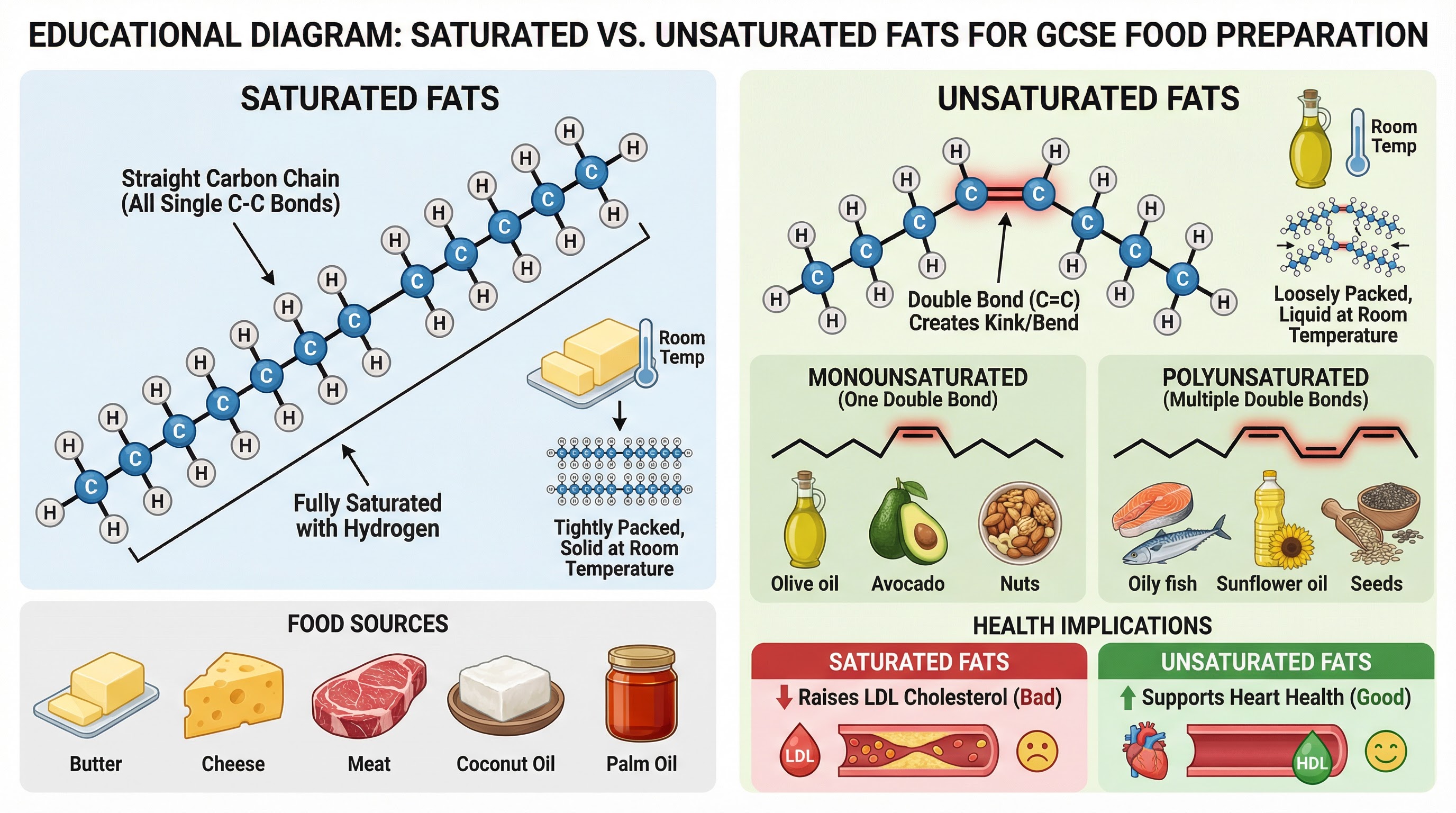
- Saturated Fatty Acids: Have no C=C double bonds in their hydrocarbon chain. The chain is 'saturated' with hydrogen atoms, making it straight. This allows the molecules to pack closely together, making them solid at room temperature. Found in butter, lard, cheese, red meat, and processed foods like cakes and pastries.
- Unsaturated Fatty Acids: Contain at least one C=C double bond. The double bonds create 'kinks' in the chain, preventing them from packing tightly, so they are liquid at room temperature (oils).
- Monounsaturated: One C=C double bond (e.g., olive oil, rapeseed oil, avocados, almonds).
- Polyunsaturated: More than one C=C double bond (e.g., sunflower oil, oily fish like salmon and mackerel, walnuts).
Health Implications:
- Saturated Fats: A high intake raises levels of LDL (Low-Density Lipoprotein) cholesterol in the blood. LDL cholesterol deposits on artery walls, causing them to narrow and harden (a process called atherosclerosis). This increases blood pressure and the risk of Coronary Heart Disease (CHD), heart attacks, and strokes.
- Unsaturated Fats: Can help to reduce LDL cholesterol and increase levels of HDL (High-Density Lipoprotein) cholesterol, which transports cholesterol away from the arteries to the liver for removal. They are associated with a reduced risk of CHD.
Functions:
- Provide a concentrated source of energy.
- Insulate the body and protect vital organs.
- Source of fat-soluble vitamins (A, D, E, K)."